Kirjojen hintavertailu. Mukana 11 342 296 kirjaa ja 12 kauppaa.

Kirjahaku

Etsi kirjoja tekijän nimen, kirjan nimen tai ISBN:n perusteella.

1000 tulosta hakusanalla Jr. Walkley

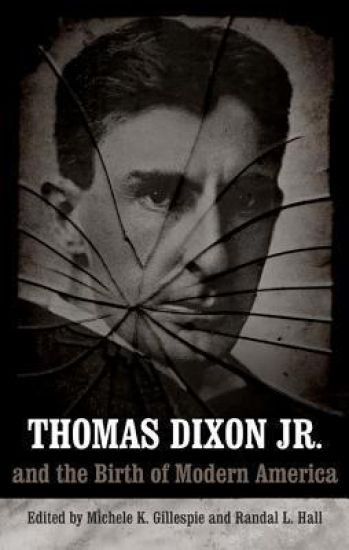
Thomas Dixon Jr. and the Birth of Modern America
A sweeping yet rigorous analysis of Dixon and his work. The collection approaches the southern intellectual through multiple methodologies - from literary theory and film studies to social history and religious studies. We get an exhaustive yet diverse perspective on Dixon's influence and legacy."" - Journal of American History.Thomas Dixon Jr. (1864-1946), best remembered today as the author of the racist novels that served as the basis for D. W. Griffith's controversial 1915 classic film The Birth of a Nation, also enjoyed great renown in his lifetime as a minister, lecturer, lawyer, and actor. Although this native southerner's blatantly racist, chauvinistic, and white supremacist views are abhorrent today, his contemporary audiences responded enthusiastically to Dixon. In Thomas Dixon Jr. and the Birth of Modern America, distinguished scholars of religion, film, literature, music, history, and gender studies offer a provocative examination of Dixon's ideas, personal life, and career and in the process illuminate the evolution of white racism in the early twentieth century and its legacy down to the present. The contributors analyse Dixon's sermons, books, plays, and films seeking to understand the appeal of his message within the white culture of the Progressive era. They also explore the critical responses of African Americans contemporary with Dixon. By delving into the context and complexity of Dixon's life, the contributors also raise fascinating questions about the power of popular culture in forming Americans' views in any age. ""An important and valuable addition to the literature on turn-of-the-century white supremacy."" - Journal of Southern History.
Zephaniah Kingsley Jr. and the Atlantic World

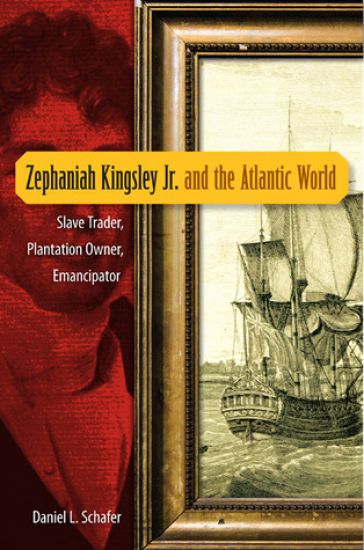
Zephaniah Kingsley Jr. and the Atlantic World

Daniel L. Schafer

University Press of Florida
2013
sidottu
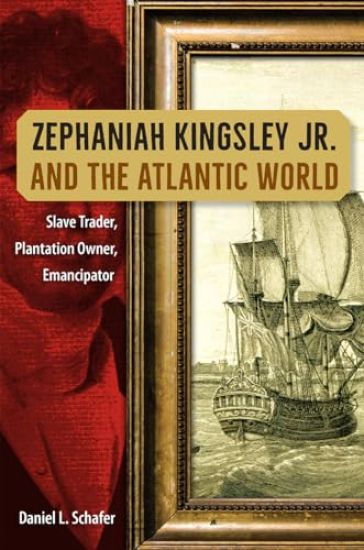
A controversial figure for his views on manumission and his unorthodox marital arrangements, Zephaniah Kingsley Jr. (1765-1843) is mostly known today for his Fort George Island plantation in Duval County, Florida, now a National Park Service site, and for his 1828 pamphlet, A Treatise on the Patriarchal System of Society, that advocated just and humane treatment of slaves, liberal emancipation policies, and granting rights to free persons of color. Paradoxically, his fortune came from the purchase, sale, and labor of enslaved Africans.In this penetrating biography, Daniel Schafer vividly chronicles Kingsley’s evolving thoughts on race and slavery, exploring his business practices and his private life. Kingsley fathered children by several enslaved women, then freed and lived with them in a unique mixed-race family. One of the women--the only one he acknowledged as his "wife" though they were never formally married--was Anta Madgigine Ndiaye (Anna Kingsley), a member of the Senegalese royal family, who was captured in a slave raid and purchased by Kingsley in Havana, Cuba.A ship captain, Caribbean merchant, and Atlantic slave trader during the perilous years of international warfare following the French Revolution, Kingsley sought protection under neutral flags, changing allegiance from Britain to the United States, Denmark, and Spain. Later, when the American acquisition of Florida brought rigid race and slavery policies that endangered the freedom of Kingsley’s mixed-race family, he responded by moving his "wives" and children to a vast agricultural settlement in Haiti that he established for free persons of color.Kingsley’s assertion that color should not be a "badge of degradation" made him unusual in the early Republic. His unique life is revealed in this fascinating reminder of the deep connections between Europe, the Caribbean, and the young United States.
Zephaniah Kingsley Jr. and the Atlantic World

Zephaniah Kingsley Jr. and the Atlantic World

Daniel L. Schafer

University Press of Florida
2024
pokkari
A biography of a controversial patriarch of a mixed-race family A controversial figure for his views on manumission and his unorthodox marital arrangements, Zephaniah Kingsley Jr. (1765-1843) is mostly known today for his Fort George Island plantation in Duval County, Florida, now a National Park Service site, and for his 1828 pamphlet, A Treatise on the Patriarchal System of Society, that advocated just and humane treatment of enslaved persons, liberal emancipation policies, and granting rights to free persons of color. Paradoxically, his fortune came from the purchase, sale, and labor of enslaved Africans.In this penetrating biography, Daniel Schafer vividly chronicles Kingsley’s evolving thoughts on race and slavery, exploring his business practices and his private life. Kingsley fathered children by several enslaved women, then freed and lived with them in a unique mixed-race family. One of the women—the only one he acknowledged as his "wife" though they were never formally married—was Anta Madgigine Ndiaye (Anna Kingsley), a member of the Senegalese royal family, who was captured in a slave raid and purchased by Kingsley in Havana, Cuba.A ship captain, Caribbean merchant, and Atlantic slave trader during the perilous years of international warfare following the French Revolution, Kingsley sought protection under neutral flags, changing allegiance from Britain to the United States, Denmark, and Spain. Later, when the American acquisition of Florida brought rigid race and slavery policies that endangered the freedom of Kingsley’s mixed-race family, he responded by moving his "wives" and children to a vast agricultural settlement in Haiti that he established for free persons of color.Kingsley’s assertion that color should not be a "badge of degradation" made him unusual in the early Republic. His unique life is revealed in this fascinating reminder of the deep connections between Europe, the Caribbean, and the young United States.
Martin Luther King Jr., Heroism, and African American Literature

Martin Luther King Jr., Heroism, and African American Literature

Trudier Harris

The University of Alabama Press
2014
sidottu
African American writers have incorporated Martin Luther King Jr. into their work since he rose to prominence in the mid-1950s. Martin Luther King Jr., Heroism, and African American Literature is a study by award-winning author Trudier Harris of King’s character and persona as captured and reflected in works of African American literature continue to evolve.One of the most revered figures in American history, King stands above most as a hero. His heroism, argues Harris, is informed by African American folk cultural perceptions of heroes. Brer Rabbit, John the Slave, Stackolee, and Railroad Bill—folk heroes all—provide a folk lens through which to view King in contemporary literature. Ambiguities and issues of morality that surround trickster figures also surround King. Nonconformist traits that define Stackolee and Railroad Bill also inform King’s life and literary portraits. Defiance of the law, uses of indirection, moral lapses, and bad habits are as much a part of the folk-transmitted biography of King as they are a part of writers’ depictions of him in literary texts.Harris first demonstrates that during the Black Arts Movement of the 1960s, when writers such as Nikki Giovanni, Sonia Sanchez, and LeRoi Jones (Amiri Baraka) were rising stars in African American poetry, King’s philosophy of nonviolence was out of step with prevailing notions of militancy (Black Power), and their literature reflected that division.In the quieter times of the 1970s and 1980s and into the twenty-first century, however, treatments of King and his philosophy in African American literature changed. Writers who initially rejected him and nonviolence became ardent admirers and boosters, particularly in the years following his assassination. By the 1980s, many writers skeptical about King had reevaluated him and began to address him as a fallen hero. To the most recent generation of writers, such as Katori Hall, King is fair game for literary creation, no matter what those portrayals may reveal, to a point where King has become simply another source of reference for creativity.Collectively these writers, among many others, illustrate that Martin Luther King Jr. provides one of the strongest influences upon the creative worlds of multiple generations of African American writers of varying political and social persuasions.
Martin Luther King Jr. and the Sermonic Power of Public Discourse
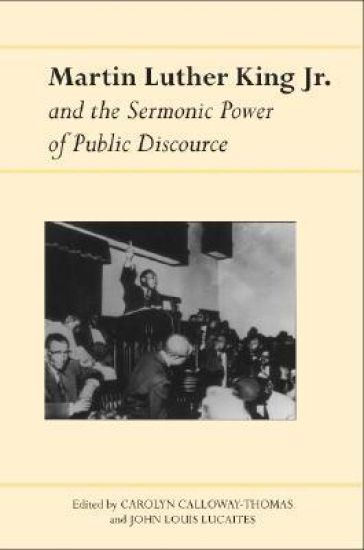
The nine essays in this volume offer critical studies of the range of King's public discourse as forms of sermonic rhetoric. They focus on five diverse and relative short examples from King's body of work: "Death of Evil on the Seashore," "Letter from Birmingham Jail," "I Have a Dream," "A Time to Break Silence," and "I've Been to the Mountaintop." Taken collectively, these five works span both the duration of King's career as a public advocate but also represent the broad scope of his efforts to craft and project a persuasive vision a beloved community that persists through time.
Martin Luther King Jr., Heroism, and African American Literature

Martin Luther King Jr., Heroism, and African American Literature

Trudier Harris

THE UNIVERSITY OF ALABAMA PRESS
2023
nidottu
Examines how representations of Martin Luther King Jr.’s character and persona in works of African American literature have evolved and reflect the changing values and mores of African American culture African American writers have incorporated Martin Luther King Jr. into their work since he rose to prominence in the mid-1950s. Martin Luther King Jr., Heroism, and African American Literature is a study by award-winning author Trudier Harris of King’s character and persona as captured and reflected in works of African American literature continue to evolve. One of the most revered figures in American history, King stands above most as a hero. His heroism, argues Harris, is informed by African American folk cultural perceptions of heroes. Brer Rabbit, John the Slave, Stackolee, and Railroad Bill—folk heroes all—provide a folk lens through which to view King in contemporary literature. Ambiguities and issues of morality that surround trickster figures also surround King. Nonconformist traits that define Stackolee and Railroad Bill also inform King’s life and literary portraits. Defiance of the law, uses of indirection, moral lapses, and bad habits are as much a part of the folk-transmitted biography of King as they are a part of writers’ depictions of him in literary texts. Harris first demonstrates that during the Black Arts Movement of the 1960s, when writers such as Nikki Giovanni, Sonia Sanchez, and LeRoi Jones (Amiri Baraka) were rising stars in African American poetry, King’s philosophy of nonviolence was out of step with prevailing notions of militancy (Black Power), and their literature reflected that division. In the quieter times of the 1970s and 1980s and into the twenty-first century, however, treatments of King and his philosophy in African American literature changed. Writers who initially rejected him and nonviolence became ardent admirers and boosters, particularly in the years following his assassination. By the 1980s, many writers skeptical about King had reevaluated him and began to address him as a fallen hero. To the most recent generation of writers, such as Katori Hall, King is fair game for literary creation, no matter what those portrayals may reveal, to a point where King has become simply another source of reference for creativity. Collectively these writers, among many others, illustrate that Martin Luther King Jr. provides one of the strongest influences upon the creative worlds of multiple generations of African American writers of varying political and social persuasions.
Joseph Seamon Cotter Jr.

Joseph Seamon Cotter Jr.

Joseph Seaman Cotter

University of Georgia Press
1990
sidottu
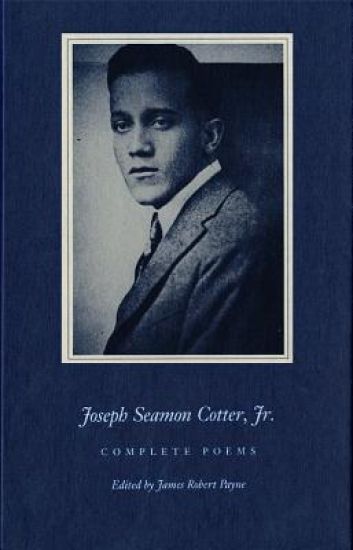
Joseph Seamon Cotter, Jr.: Complete Poems brings together for the first time all the poems of an accomplished African-American poet of the years just preceding the 1920s renaissance in black American literature.Born in Louisville, Kentucky, in 1895, Joseph Seamon Cotter, Jr., was a precocious child, reared in a strong family tradition of poetry. His father, a local educator, wrote poetry himself, and the family maintained a close friendship with the prominent poet Paul Laurence Dunbar. Encouraged by this environment, Cotter displayed literary leanings from an early age. As his father recalled, Keats was his son's favorite poet among the many writers in their extensive family library: "He never tired of the 'Ode on a Grecian Urn.'" After completing high school, Cotter attended Fisk University in Nashville, Tennessee, for two years until he contracted tuberculosis and was forced to return home. Cotter then wrote almost incessantly—and published one collection of poetry, The Band of Gideon—before his death in 1919 at age twenty-three.Rejecting the popular dialect style of his father and other highly regarded poets of his day, Cotter reflected in his poetry the broad impact of the most devastating event of the time, World War I. Though not limited to war themes, Cotter was unquestionably among the finest poets of the Great War. Displaying empathy for the experience of black soldiers, he perceives that the true enemy of these servicemen is not Germany but racial injustice, as shown in Cotter's "Sonnet to Negro Soldiers": "They shall go down unto Life's Borderland, / Walk unafraid within that Living Hell, / Nor heed the driving rain of shot and shell / That 'round them falls; but with uplifted hand / Be one with mighty hosts, an armed band / Against man's wrong to man-for such full well / They know. And from their trembling lips shall swell / A song of hope the world can understand. / All this to them shall be a glorious sign, / A glimmer of that resurrection morn, / When age-long Faith crowned with a grace benign / Shall rise and from their brows cast down the thorn / Of prejudice. E'en though through blood it be, / There breaks this day their dawn of Liberty."Cotter's poems, from the explorations of prejudice in The Band of Gideon through the later sonnet sequence "Out of the Shadows," place him among the poetic innovators of the second decade of this century.In Joseph Seamon Cotter, Jr.: Complete Poems, James Robert Payne has assembled the entire canon of a diverse poet rarely included in contemporary anthologies because his work has been inaccessible. Payne established reliable text of all of Cotter's poetry, including seven recently discovered poems that are published here for the first time. This collection includes a biographical essay, the poems, a textual commentary, and an apparatus, bringing the productive final years of Joseph Seamon Cotter, Jr., sharply into focus.
Martin Luther King Jr.

Martin Luther King Jr.

Adam Fairclough

University of Georgia Press
1995
pokkari
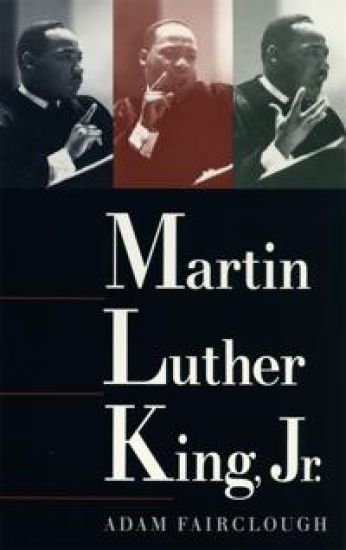
During a public career spanning only twelve years, Martin Luther King Jr. transformed the South—and the nation—and reinvigorated American democracy. From the pulpit and from jail, he inspired African Americans to rebel against white supremacy, nonviolently defying racism, bigotry, and brutality. He also sought a better way of life for all poor and powerless people, black and white alike. In this concise and readable biography, Adam Fairclough chronicles the major events of King's life and assesses his achievements as the preeminent leader of the civil rights movement.The biography begins with an examination of King's upbringing in Atlanta, Georgia, and a description of the conditions suffered by black southerners in the 1930s. After tracing King's intellectual growth through college, graduate school, and seminary, Fairclough then tracks his fortuitous involvement in the Montgomery bus boycott and his swift rise to prominence as a spokesman and leader. Subsequent chapters offer incisive accounts of King's major campaigns: the demonstrations in Albany, Georgia, where a wily police chief outwitted him; the militant protests in Birmingham, Alabama, where King transmuted police brutality into a historic victory for African Americans; and the campaign in Selma, Alabama, which paved the way for black political representation throughout the South. Fairclough also looks at other notable triumphs and struggles, from the inspirational "I Have a Dream" speech delivered at the March on Washington rally to King's ill-fated journey to Memphis to help striking sanitation workers.Throughout, Fairclough charts the major stages of King's philosophical and political growth, examining his opposition to the Vietnam War, his response to Black Power, and his growing concern for economic justice. Fairclough rounds out his portrait with an assessment of King's legacy to America and his continuing relevance to the struggle throughout the world for freedom and equality.
The Papers of Clarence Mitchell Jr., Volume I

The Papers of Clarence Mitchell Jr., Volume I

Clarence Mitchell Jr.

Ohio University Press
2005
sidottu
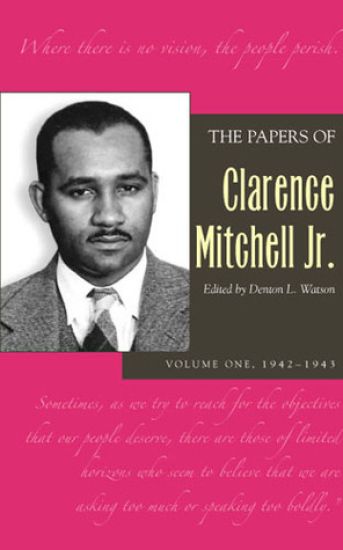
Clarence Mitchell Jr. was the driving force in the movement for passage of civil rights laws in America. The foundation for Mitchell's struggle was laid during his tenure at the Fair Employment Practice Committee, where he led implementation of President Roosevelt's policy barring racial discrimination in employment in the national defense and war industry programs. Mitchell's FEPC reports and memoranda chart the beginning of the modern civil rights movement. The first two volumes of a projected five-volume documentary edition of The Papers of Clarence Mitchell Jr. illuminate the FEPC's work as a federal affirmative-action agency and the government's struggle to enforce the nation's antidiscrimination policy in industry, federal agencies, and labor unions. Subsequent volumes will trace Mitchell's successive enlistment of seven presidents in establishing and enforcing a permanent national nondiscrimination policy. Through his efforts, Congress passed the 1957, 1960, and 1964 Civil Rights Acts prohibiting discrimination in public accommodations, federal spending, and employment based on race, color, sex, and national origin; the 1965 Voting Rights Act; and the 1968 Fair Housing Act. Editor Denton L. Watson introduces and annotates Mitchell's writings, providing context and insight for students and scholars of civil rights history, government, law, and sociology.
The Papers of Clarence Mitchell Jr., Volume II

The Papers of Clarence Mitchell Jr., Volume II

Clarence Mitchell Jr.

Ohio University Press
2005
sidottu
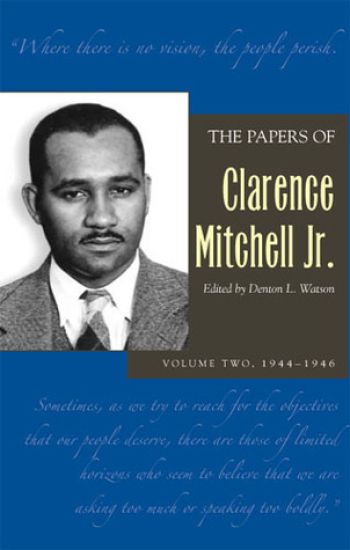
Clarence Mitchell Jr. was the driving force in the movement for passage of civil rights laws in America. The foundation for Mitchell's struggle was laid during his tenure at the Fair Employment Practice Committee, where he led implementation of President Roosevelt's policy barring racial discrimination in employment in the national defense and war industry programs. Mitchell's FEPC reports and memoranda chart the beginning of the modern civil rights movement. The first two volumes of a projected five-volume documentary edition of The Papers of Clarence Mitchell Jr. illuminate the FEPC's work as a federal affirmative-action agency and the government's struggle to enforce the nation's antidiscrimination policy in industry, federal agencies, and labor unions. Subsequent volumes will trace Mitchell's successive enlistment of seven presidents in establishing and enforcing a permanent national nondiscrimination policy. Through his efforts, Congress passed the 1957, 1960, and 1964 Civil Rights Acts prohibiting discrimination in public accommodations, federal spending, and employment based on race, color, sex, and national origin; the 1965 Voting Rights Act; and the 1968 Fair Housing Act. Editor Denton L. Watson introduces and annotates Mitchell's writings, providing context and insight for students and scholars of civil rights history, government, law, and sociology.
The Papers of Clarence Mitchell Jr., Volume III

The Papers of Clarence Mitchell Jr., Volume III

Clarence Mitchell Jr.

Ohio University Press
2010
sidottu
Born in Baltimore in 1911, Clarence Mitchell Jr. led the struggle for passage of the 1957 Civil Rights Act, the 1960 Civil Rights Act, the 1964 Civil Rights Act, the 1965 Voting Rights Act, and the 1968 Fair Housing Act. Volumes I (1942–1943) and II (1944–1946) of The Papers of Clarence Mitchell Jr., edited and annotated by Denton L. Watson, document the creation of the Fair Employment Practice Committee and its struggles to end discrimination in the war industries under the leadership of President Franklin D. Roosevelt Jr. Mitchell launched his career with the NAACP as a messianic advocate for the passage of civil rights laws by first creating programs for eliminating discriminatory employment practices in industry, labor unions, and the government. His subsequent focus included the NAACP's struggles to end segregation in the armed services and to eliminate Jim Crow in navy yards, schools on military posts, veterans hospitals, atomic energy installations, government restaurants, and many other federal establishments. Those struggles are carefully documented in the monthly and annual reports of the NAACP Labor Department and the NAACP Washington Bureau from 1946 to 1950 and from 1951 to 1954, which comprise companion volumes III and IV of The Papers of Clarence Mitchell Jr. The volumes are extensively supported by other documents in the appendix from the NAACP's archives. Volumes III and IV, furthermore, document the manner in which the NAACP utilized the newly created Leadership Conference on Civil Rights, a broad-based coalition of civil rights, civic, fraternal, labor, and religious organizations, in conjunction with the organization's branches, as its political fulcrum in implementing its developing legislative program in Congress. These volumes are an invaluable reference in tracing the NAACP's multifaceted struggle under Mitchell's leadership for passage of the civil rights laws.
The Papers of Clarence Mitchell Jr., Volume IV

The Papers of Clarence Mitchell Jr., Volume IV

Clarence Mitchell Jr.

Ohio University Press
2010
sidottu
Volume IV of The Papers of Clarence Mitchell Jr. covers 1951, the year America entered the Korean War, through 1954, when the NAACP won its Brown v. Board of Education case, in which the Supreme Court declared that segregation was discrimination and thus unconstitutional. The decision enabled Mitchell to implement the legislative program that President Truman's Committee on Civil Rights outlined in its landmark 1947 report, To Secure These Rights. The papers show how Mitchell persuaded President Truman to extend further the Fair Employment Practices Commission idea by issuing an executive order to enforce the nondiscrimination clause in government contracts with private industry; President Eisenhower further revised and strengthened this order. Mitchell expanded President Eisenhower's commitment to ending discrimination in federal funding by leading the struggle to get Congress to enact laws barring such practices in aid to education and all similar programs. Mitchell ultimately won the support of both presidents in ending segregation in many government-supported facilities and throughout the armed services. He expanded President Eisenhower's commitment to ending discrimination in federal funding by leading the struggle to get Congress to enact laws barring such practices in aid to education and all similar programs. Volumes III and IV are an invaluable reference in tracing the NAACP's multifaceted struggle under Mitchell's leadership for passage of the civil rights laws.
The Papers of Clarence Mitchell Jr., Volume V

The Papers of Clarence Mitchell Jr., Volume V

Clarence Mitchell Jr.

Ohio University Press
2022
sidottu
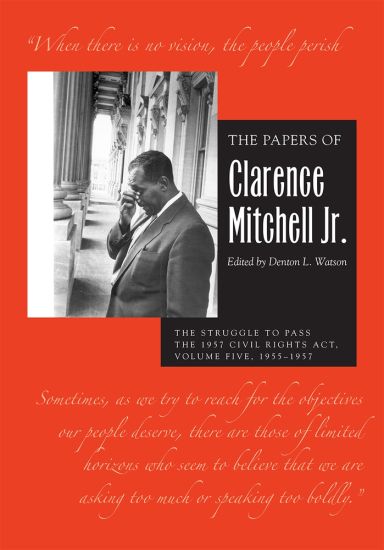
Volume V of The Papers of Clarence Mitchell Jr. records the successful effort to pass the 1957 Civil Rights Act: the first federal civil rights legislation since 1875. Prior to the US Supreme Court's landmark 1954 decision in Brown v. Board of Education, the NAACP had faced an impenetrable wall of opposition from southerners in Congress. Basing their assertions on the court's 1896 "separate but equal" decision in Plessy v. Ferguson, legislators from the South maintained that their Jim Crow system was nondiscriminatory and thus constitutional. In their view, further civil rights laws were unnecessary. In ruling that legally mandated segregation of public schools was unconstitutional, the Brown decision demolished the southerners' argument. Mitchell then launched the decisive stage of the struggle to pass modern civil rights laws. The passage of the Civil Rights Act of 1957 was the first comprehensive lobbying campaign by an organization dedicated to that purpose since Reconstruction. Coming on the heels of the Brown decision, the 1957 law was a turning point in the struggle to accord Black citizens full equality under the Constitution. The act's passage, however, was nearly derailed in the Senate by southern opposition and Senator Strom Thurmond's record-setting filibuster, which lasted more than twenty-four hours. Congress later weakened several provisions of the act but—crucially—it broke a psychological barrier to the legislative enactment of such measures. The Papers of Clarence Mitchell Jr. is a detailed record of the NAACP leader's success in bringing the legislative branch together with the judicial and executive branches to provide civil rights protections during the twentieth century.
The Papers of Clarence Mitchell Jr., Volume VI

The Papers of Clarence Mitchell Jr., Volume VI

Clarence Mitchell Jr.

Ohio University Press
2022
sidottu
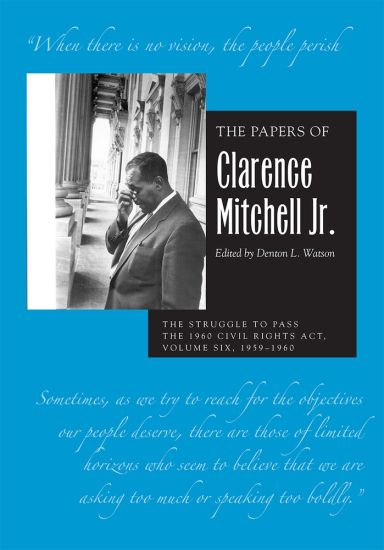
The Civil Rights Act of 1960 aimed to close loopholes in its 1957 predecessor that had allowed continued voter disenfranchisement for African Americans and for Mexicans in Texas. In early 1959, the newly seated Eighty-Sixth Congress had four major civil rights bills under consideration. Eventually consolidated into the 1960 Civil Rights Act, their purpose was to correct the weaknesses in the 1957 law. Mitchell's papers from 1959 to 1960 show the extent to which congressional resistance to the passage of meaningful civil rights laws contributed to the lunch counter sit-ins in Greensboro, North Carolina, and to subsequent demonstrations. The papers reveal how the repercussions of these events affected the NAACP's work in Washington and how, despite their dislike of demonstrations, NAACP officials used them to intensify the civil rights struggle. Among the act's seven titles were provisions authorizing federal inspection of local voter registration rolls and penalties for anyone attempting to interfere with voters on the basis of race or color. The law extended the powers of the US Commission on Civil Rights and broadened the legal definition of the verb to vote to encompass all elements of the process: registering, casting a ballot, and properly counting that ballot. Ultimately, Mitchell considered the 1960 act unsuccessful because Congress had failed to include key amendments that would have further strengthened the 1957 act. In the House, representatives used parliamentary tactics to stall employment protections, school desegregation, poll-tax elimination, and other meaningful civil rights reforms. The fight would continue. The Papers of Clarence Mitchell Jr. series is a detailed record of the NAACP leader's success in bringing the legislative branch together with the judicial and executive branches to provide civil rights protections during the twentieth century.
Thomas Ewing Jr.

Thomas Ewing Jr.

Ronald D. Smith

University of Missouri Press
2018
nidottu
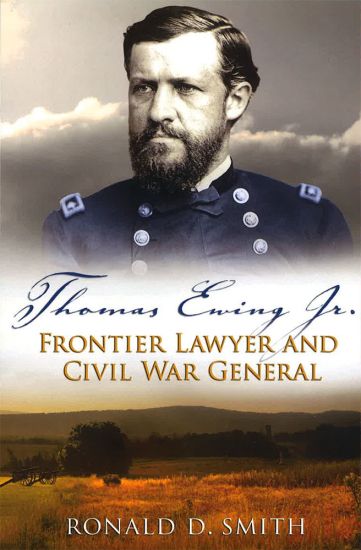
An Ohio family with roots in the South, the Ewings influenced the course of the Midwest for more than fifty years. Patriarch Thomas Ewing, a former Whig senator and cabinet member who made his fortune as a real estate lawyer, raised four major players in the nation's history—including William Tecumseh “Cump” Sherman, taken into the family as a nine-year-old, who went on to marry his foster sister Ellen. Ronald D. Smith now tells of this extraordinary clan that played a role on the national stage through the illustrious career of one of its sons.In Thomas Ewing Jr.: Frontier Lawyer and Civil War General, Smith introduces us to the Ewing family, little known except among scholars of Sherman, to show that Tom Jr. had a remarkable career of his own: first as a real estate lawyer, judge, soldier, and speculator in Kansas, then as a key figure in national politics. Smith takes readers back to Bleeding Kansas, with its border ruffians and land speculators, reconstructing the rough-and-tumble of its courtrooms to demonstrate that its turmoil was as much about claim-jumping as about slavery. He describes the seat-of-the-pants law practice in which Ewing worked with his brothers Hugh and Charlie and foster brother Cump. He then tells how Tom came to national prominence in the fight over the proslavery Lecompton Constitution, was instrumental in starting up the Union Pacific Railroad, and became the first chief justice of the Kansas Supreme Court.Ewing obtained a commission in the Union Army—as did his brothers—and raised a regiment that saw significant action in Arkansas and Missouri. After William Quantrill's raid on Lawrence, Kansas, he issued the dramatic General Order No. 11 that expelled residents from sections of western Missouri. Then this confidant of Abraham Lincoln's went on to courageously defend three of the assassination conspirators—including the disingenuous Samuel Mudd—and lobbied the key vote to block the impeachment of Andrew Johnson.Smith examines Ewing's life in meticulous detail, mining family correspondence for informative quotes and digging deep into legal records to portray lawmaking on the frontier. And while Sherman has been the focus of most previous work on the Ewings, this book fills the gaps in an interlocking family of remarkable people—one that helped shape a nation's development in its courtrooms and business suites. Thomas Ewing Jr.: Frontier Lawyer and Civil War General retells a chapter of Kansas history and opens up a panoramic view of antebellum America, the Civil War, Reconstruction, and the Gilded Age.
Lowell Thomas Jr.

Lowell Thomas Jr.

Lowell Thomas; Lew Freedman

Alaska Northwest Books
2013
sidottu
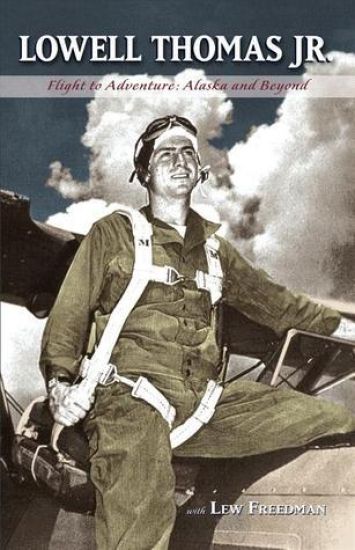
Lowell Thomas Jr. is a famed Alaskan who made his mark as a Bush pilot and by serving in state government, but who also has had a lifetime’s worth of adventures that have taken him around the world. Thomas, now eighty-nine, and living in Anchorage, is the son of one of the most widely known Americans of the twentieth century, and his connection to Lowell Thomas Sr. (1892-1981) enabled him to jump-start his life of adventure at a very early age. From the time he was fifteen, Lowell Thomas Jr. has been involved in a series of journeys that have seen him cross paths with many famous lives and take part in many historic events.
The Cartoon Art of Mike Deodato, Jr. SC

The Cartoon Art of Mike Deodato, Jr. SC

Mike Deodato Jr.

Red Giant Entertainment
2014
nidottu
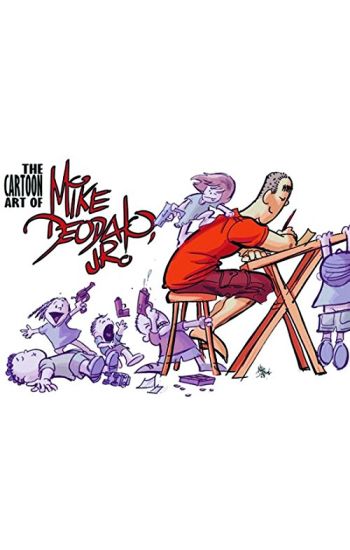
Marvel superstar Mike Deodato, Jr. creates a surprising new volume of hilarious cartoons! The comics sensation shows a new side to his art, inspired by his family life, with a comics twist added in. The man who has worked for DC, Marvel, Dark Horse, and others now combines influences of Calvin & Hobbes, Will Eisner, and others - truly sensational for any Deodato fan!
The Cartoon Art of Mike Deodato, Jr.

The Cartoon Art of Mike Deodato, Jr.

Mike Deodato Jr.

Red Giant Entertainment
2014
sidottu
Marvel superstar Mike Deodato, Jr. creates a surprising new volume of hilarious cartoons! The comics sensation shows a new side to his art, inspired by his family life, with a comics twist added in. The man who has worked for DC, Marvel, Dark Horse, and others now combines influences of Calvin & Hobbes, Will Eisner, and others — truly sensational for any Deodato fan!