Kirjojen hintavertailu. Mukana 12 371 685 kirjaa ja 12 kauppaa.

Kirjahaku

Etsi kirjoja tekijän nimen, kirjan nimen tai ISBN:n perusteella.

1000 tulosta hakusanalla Just Bendix Justesen

Just Financial Markets?

Just Financial Markets?

Oxford University Press
2017
sidottu
Well-functioning financial markets are crucial for the economic well-being and the justice of contemporary societies. The Great Financial Crisis has shown that a perspective that naively trusts in the self-regulating powers of free markets cannot capture what is at stake in understanding and regulating financial markets. The damage done by the Great Financial Crisis, including its distributive consequences, raises serious questions about the justice of financial markets as we know them. This volume brings together leading scholars from political theory, law, and economics in order to explore the relation between justice and financial markets. Broadening the perspective from a purely economic one to a liberal egalitarian one, the volume explores foundational normative questions about how to conceptualize justice in relation to financial markets, the biases in the legal frameworks of financial markets that produce unjust outcomes, and perspectives of justice on specific institutions and practices in contemporary financial markets. Written in a clear and accessible language, the volume presents analyses of how financial markets (should) function and how the Great Financial Crisis came about, proposals for how the structures of financial markets could be reformed, and analysis of why reform is not happening at the speed that would be desirable from a perspective of justice.
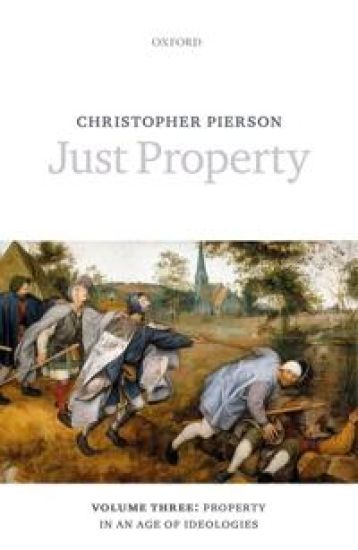
Just Property

Just Property

Christopher Pierson

Oxford University Press
2020
sidottu
This third and concluding volume of Just Property brings critical accounts of property right up to the present. The book is made up of five pairs of chapters located in five major ideological traditions of modernity: liberalism, libertarianism, social democracy, conservatism, and feminism. As before, the focus is on particular thinkers and their daring, puzzling and sometimes outrageous views. The concluding chapter returns to the project's opening questions about property and inequality and about property under the imperative of growth to limits. If we are to confront the enormous challenges that loom in front of us, we have, above all else, to think again, and quite radically, about the place of property in our collective lives.
Just Security in an Undergoverned World
Just Security in an Undergoverned World examines how humankind can manage global problems to achieve both security and justice in an age of antithesis. Global connectivity is increasing, visibly and invisiblyin trade, finance, culture, and informationhelping to spur economic growth, technological advance, and greater understanding and freedom, but global disconnects are growing as well. Ubiquitous electronics rely on high-value minerals scraped from the earth by miners kept poor by corruption and war. People abandon burning states for the often indifferent welcome of wealthier lands whose people, in turn, draw into themselves. Humanity's very success, underwritten in large part by lighting up gigatons of long-buried carbon for 200 years, now threatens humanity's future. The global governance institutions established after World War II to manage global threats, especially the twin scourges of war and poverty, have expanded in reach and impact, while paradoxically losing the political support of some of their wealthiest and most powerful members. Their problems mimic those of their members in struggling to adapt to new problems and maintain trust in norms and public bodies. This volume argues, however, that a properly mandated, managed, and modernized global architecture offers unparalleled potential to midwife solutions to intractable issuesfrom violent conflict and climate change to poverty and pandemic diseasethat transcend borders and the capacities of individual actors. It offers just security as a new framework for charing innovating solutions and strategies for effective and essential global governance.
Just Peace After Conflict

Just Peace After Conflict

Oxford University Press
2020
sidottu
The interplay between peace and justice plays an important role in any contemporary conflict. Peace can be described in a variety ways, as being 'negative' or 'positive', 'liberal' or 'democratic'. But what is it that makes a peace just? This book draws together leading scholars to study this concept of a 'just peace', analysing different elements of the transition from conflict to peace. The volume covers six core themes: conceptual approaches towards just peace, macro-principles, the nexus to security and stability, protection of persons and public goods, rule of law, and economic reform and accountability. Contributions engage with understudied issues, such as the pros and cons of robust UN mandates, the link between environmental protection and indigenous peoples, the treatment of illegal settlements, the feasibility of vetting practices, and the protection of labour rights in post-conflict economies. Overall, the book puts forward a case that just peace requires not only negotiation, agreement, and compromise, but contextual understandings of law, multiple dimensions of justice, and strategies of prevention. This is an open access title available under the terms of a CC BY-NC-ND 4.0 International licence. It is offered as a free PDF download from OUP and selected open access locations.
Just Words

Just Words

Mary Kate McGowan

Oxford University Press
2019
sidottu
We all know that speech can be harmful. But what are the harms and how exactly does the speech in question brings those harms about? Mary Kate McGowan identifies a previously overlooked mechanism by which speech constitutes, rather than merely causes, harm. She argues that speech constitutes harm when it enacts a norm that prescribes that harm. McGowan illustrates this theory by considering many categories of speech including sexist remarks, racist hate speech, pornography, verbal triggers for stereotype threat, micro-aggressions, political dog whistles, slam poetry, and even the hanging of posters. Just Words explores a variety of harms - such as oppression, subordination, discrimination, domination, harassment, and marginalization - and ways in which these harms can be remedied.
Just and Unjust Warriors

Just and Unjust Warriors

Oxford University Press
2008
sidottu
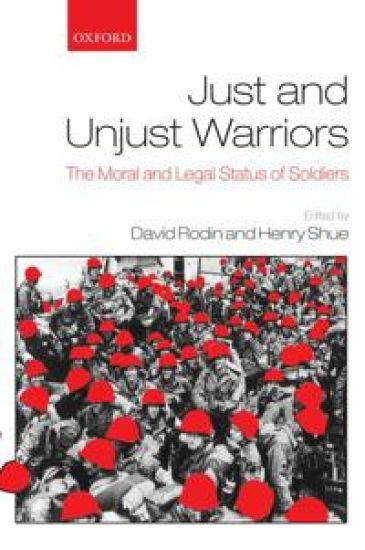
Can a soldier be held responsible for fighting in a war that is illegal or unjust? This is the question at the heart of a new debate that has the potential to profoundly change our understanding of the moral and legal status of warriors, wars, and indeed of moral agency itself. The debate pits a widely shared and legally entrenched principle of war - that combatants have equal rights and equal responsibilities irrespective of whether they are fighting in a war that just or unjust - against a set of striking new arguments. These arguments challenge the idea that there is a separation between the rules governing the justice of going to war (the jus ad bellum) and the rules governing what combatants can do in war (the jus in bello). If ad bellum and in bello rules are connected in the way these new arguments suggest, then many aspects of just war theory and laws of war would have to be rethought and perhaps reformed. This book contains eleven original and closely argued essays by leading figures in the ethics and laws of war and provides an authoritative treatment of this important new debate. The essays both challenge and defend many deeply held convictions: about the liability of soldiers for crimes of aggression, about the nature and justifiability of terrorism, about the relationship between law and morality, the relationship between soldiers and states, and the relationship between the ethics of war and the ethics of ordinary life. This book is a project of the Oxford Leverhulme Programme on the Changing Character of War.
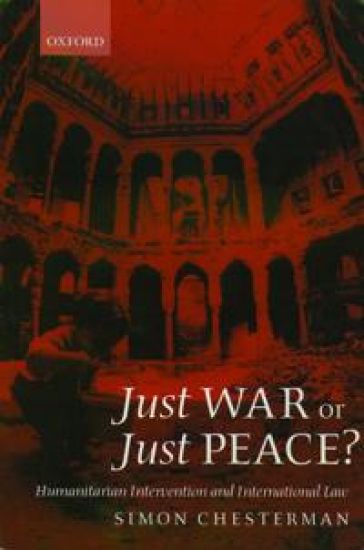
Just War or Just Peace?

Just War or Just Peace?

Simon Chesterman

Oxford University Press
2001
sidottu
The question of the legality of humanitarian intervention is a simple one - the Charter of the United Nations prohibits the use of force, with only two exceptions. This study examines the argument that a right of unilateral intervention pre-existed the charter.
Just War or Just Peace?

Just War or Just Peace?

Simon Chesterman

Oxford University Press
2002
nidottu
This text examines the long-standing arguments that a right of unilateral intervention pre-existed the Charter of the United Nations - which clearly prohibits the use of force (exceptions being self-defence and enforcement actions authorized by the Security Council).
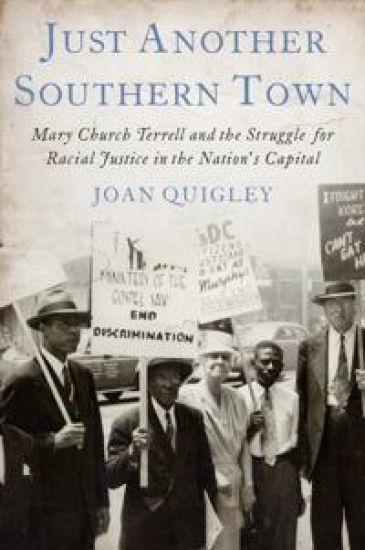
Just Another Southern Town

Just Another Southern Town

Joan Quigley

Oxford University Press Inc
2016
sidottu
In January of 1950, Mary Church Terrell, an 86-year-old charter member of the NAACP, headed into Thompson's Restaurant, just a few blocks from the White House, and requested to be served. She and her companions were informed by the manager that they could not eat in his establishment, because they were "colored. " Terrell, a former suffragette and one of the country's first college-educated African American women, took the matter to court. Three years later, the Supreme Court vindicated her outrage: United States v. Thompson was decided in June 1953, invalidating the segregation of restaurants and cafes in the nation's capital. In Just Another Southern Town, Joan Quigley recounts an untold chapter of the civil rights movement: an epic battle to topple segregation in Washington, the symbolic home of American democracy. At the book's heart is the formidable Mary Terrell and the test case she mounts seeking to enforce Reconstruction-era laws prohibiting segregation in D.C. restaurants. Through the prism of Terrell's story, Quigley reassesses Washington's relationship to civil rights history, bringing to life a pivotal fight for equality that erupted five years before Rosa Parks refused to move to the back of a Montgomery bus and a decade before the student sit-in movement rocked segregated lunch counters across the South. At a time when most civil rights scholarship begins with Brown v. Board of Education, Just Another Southern Town unearths the story of the nation's capital as an early flashpoint on race. A rich portrait of American politics and society in the mid-20th century, it interweaves Terrell's narrative with the courtroom drama of the case and the varied personalities of the justices who ultimately voted unanimously to prohibit segregated restaurants. Resonating with gestures of courage and indignation that radiate from the capital's streets and sidewalks to its marble-clad seats of power, this work restores Mary Church Terrell and the case that launched a crusade to their rightful place in the pantheon of civil rights history.
Just So Stories for Little Children

Just So Stories for Little Children

Rudyard Kipling

Oxford University Press
2009
nidottu
How did the camel get his hump? Why won't cats do as they are told"? Who invented reading and writing? How did an inquisitive little elephant change the lives of elephants everywhere. Kipling's imagined answers to such questions draw on the beast fables he heard as a child in India, as well as on folk traditions he later collected all over the world. He plays games with language, exploring the relationships between thought, speech, and written word. He also celebrates his own joy in fatherhood. The tales were told to his own and his friends' children over many years before he wrote them down, adding poems and his own illustrations. They invite older and younger readers to share a magical experience, each contributing to the other's pleasure but each can also enjoy them alone, as more jokes, subtexts, and exotic references emerge with every reading. This fully illustrated edition icludes two extra stories and Kipling's own explanation of the title. ABOUT THE SERIES: For over 100 years Oxford World's Classics has made available the widest range of literature from around the globe. Each affordable volume reflects Oxford's commitment to scholarship, providing the most accurate text plus a wealth of other valuable features, including expert introductions by leading authorities, helpful notes to clarify the text, up-to-date bibliographies for further study, and much more.
Just Another Major Crisis?

Just Another Major Crisis?

Oxford University Press
2008
sidottu
In this book some of the world's leading academic experts on American-European relations provide the most up to date presentations of the topic available today. The Iraq War represented a most serious challenge to American-European relations. Some of the contributors argue that NATO, the key of the Atlantic relationship, has been harmed beyond repair. The Cold War is over; America has become more nationalist than it used to be; Europe has become more independent-minded vis-à-vis the United States. Others argue that the war was just another major crisis, like the many crises that had affected NATO even in its golden years during the Cold War. Recently the relationship has already improved a great deal; it is likely to improve even further.
Just and Unjust Warriors

Just and Unjust Warriors

Oxford University Press
2010
nidottu
Can a soldier be held responsible for fighting in a war that is illegal or unjust? This is the question at the heart of a new debate that has the potential to profoundly change our understanding of the moral and legal status of warriors, wars, and indeed of moral agency itself. The debate pits a widely shared and legally entrenched principle of war-that combatants have equal rights and equal responsibilities irrespective of whether they are fi ghting in a war that is just or unjust-against a set of striking new arguments. These arguments challenge the idea that there is a separation between the rules governing the justice of going to war (the jus ad bellum) and the rules governing what combatants can do in war (the jus in bello). If ad bellum and in bello rules are connected in the way these new arguments suggest, then many aspects of just war theory and laws of war would have to be rethought and perhaps reformed. This book contains eleven original and closely argued essays by leading figures in the ethics and laws of war and provides an authoritative treatment of this important new debate. The essays both challenge and defend many deeply held convictions: about the liability of soldiers for crimes of aggression, about the nature and justifi ability of terrorism, about the relationship between law and morality, the relationship between soldiers and states, and the relationship between the ethics of war and the ethics of ordinary life. This book is a project of the Oxford Leverhulme Programme on the Changing Character of War.
Just Emotions

Just Emotions

Meredith Rossner

Oxford University Press
2013
sidottu
Even as restorative justice has captured the attention of justice practitioners, academics and communities worldwide and most research suggests that it has the potential to repair the harm of a criminal offense and reduce offending, there is also evidence that it can have no effect or even make things worse. Just Emotions: Rituals of Restorative Justice attempts to address these conflicting findings by analyzing how conferences work as a unique form of justice ritual. With a pioneering new approach to the micro-level study of the processes and emotions involved in successful conferences, this book offers clues on how to improve the practice and increase successful outcomes. Using an eclectic methodological approach, the author presents a model that adapts Goffman's and Collins' ideas about the interaction ritual chain by focusing on participants' emotions, emotional turning points, and the emergence of rhythm and solidarity between participants. The approach involves a contrasting systematic empirical program, including a combination of qualitative interviews, detailed observations of discourse, face and demeanour, and quantitative analysis of systematically observed conferences, in order to improve the capacity of facilitators and practitioners to produce successful outcomes. Offering an exploration of how rituals unfold dynamically in space and time, alongside analysis of both failed and successful rituals, Just Emotions provides a model of the ritual elements of restorative justice and how these rituals may impact reoffending.
Just Property

Just Property

Christopher Pierson

Oxford University Press
2013
sidottu
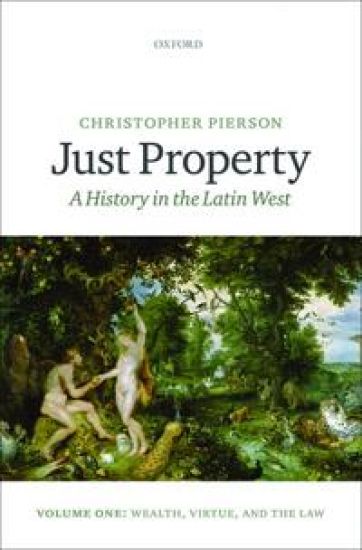
We live in a world which is characterised by both a radical inequality in wealth and incomes and the accelerating depletion of scarce natural resources. One of the things that prevents us from addressing these problems, perhaps even prevents us from seeing them as problems, is our belief that individuals and corporations have claims to certain resources and income streams that are non-negotiable, even when these claims seem manifestly hostile to our collective long-term well-being. This book is an attempt to understand how, why and when we came to believe these things. This first volume traces ideas about private property and its justification in the Latin West, starting with the ancient Greeks. It follows several lines of thinking which run through the Roman and medieval worlds. It traces the profound impact of the rise of Christianity and the instantiation of both natural and Roman Law. It considers the complex interplay of religious and legal ideas as these developed through the Renaissance, the Reformation and the counter-Reformation leading on to the ideas associated with modern natural law. The first volume concludes with a close re-reading of Locke. We can find well-made arguments for private property throughout this history but these were not always the arguments which we now assume them to have been and they were almost always radically conditional, qualified by other considerations, above all, a sense of what the securing of the common good required. These arguments included an appeal to the natural law, to the dispensations of a just God, to utility, to securing economic growth and to maintaining the peace. They almost never included the claim that individuals have naturally- or God-given rights that trump the well-being, especially the basic well-being, of other individuals. In late modernity, we have lost sight of many of these arguments - to our collective loss.
Just Property

Just Property

Christopher Pierson

Oxford University Press
2016
sidottu
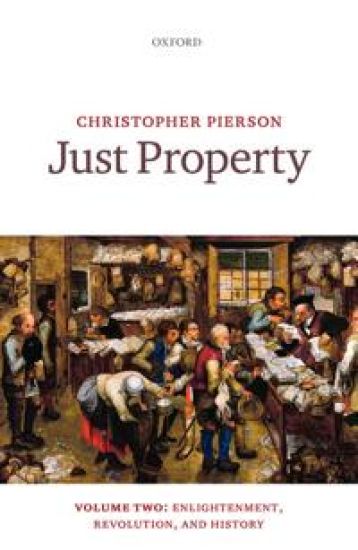
Property remains the bedrock of the societies we all inhabit. It underpins our core institutions - including families, states and economies - and it is the medium through which the intensifying politics of inequality is played out. There is plenty of evidence that its importance is increasing in a world of growing wealth inequality and depletion of natural resources. Volume Two of Just Property traces the development of ideas about property in the Western world from the early eighteenth century, through the Enlightenment and the experience of the French Revolution, to the critical stance of socialists and anarchists in the nineteenth century. It ranges across the thought of Bernard Mandeville, David Hume, Adam Smith, Voltaire, Rousseau, Kant, Hegel, the Abbe de Sieyes, Burke, Wollstonecraft, Charles Fourier, Karl Marx, Proudhon and Peter Kropotkin. Many themes persist from an earlier period, as does the influence of Christianity and the Roman Law but there are also many innovations. In general, the authority of God and the natural law recedes and the themes of utility and securing general welfare became more prominent. In the wake of Locke, labour, though sometimes in the form of 'past labour', that is capital, attains a new prominence. For its admirers, a newly-unfettered private property is the means of securing personal freedom, constraining authoritarian governments, promoting the arts and sciences, and delivering an unprecedented improvement in the material condition of the whole population. For its critics, private property is the central component in a new political economy of systemic and unlimited class exploitation. It penetrates everywhere and corrupts everything that it touches. With these arguments, we are clearly on the terrain of modernity, witnessing a set of arguments and counter-arguments with which we all still struggle.
Just Wars, Holy Wars, and Jihads

Just Wars, Holy Wars, and Jihads

Oxford University Press Inc
2012
nidottu
Just Wars, Holy Wars, and Jihads explores the development of ideas of morally justified or legitimate war in Western and Islamic civilizations. Historically, these ideas have been grouped under three labels: just war, holy war, and jihad. A large body of literature exists exploring the development of just war and holy war concepts in the West and of jihad in Islam. Yet, to date, no book has investigated in depth the historical interaction between Western notions of just or holy war and Muslim definitions of jihad. This book is a major contribution to the comparative study of the ethics of war and peace in the West and Islam. Its twenty chapters explore two broad questions: 1. What historical evidence exists that Christian and Jewish writers on just war and holy war and Muslim writers on jihad knew of the other tradition? 2. What is the evidence in treatises, chronicles, speeches, ballads, and other historical records, or in practice, that either tradition influenced the other? The book surveys the period from the rise of Islam in the early seventh century to the present day. Part One surveys the impact of the early Islamic conquests upon Byzantine, Syriac, and Muslim thinking on justified war. Part Two probes developments during the Crusades. Part Three focuses on the early modern period in Europe and the Ottoman Empire, followed by analysis of the era of European imperialism in Part Four. Part Five brings the discussion into the present period, with chapters analyzing the impact of international law and terrorism on conceptions of just war and jihad.
Just Wars, Holy Wars, and Jihads

Just Wars, Holy Wars, and Jihads

Oxford University Press Inc
2012
sidottu
Just Wars, Holy Wars, and Jihads explores the development of ideas of morally justified or legitimate war in Western and Islamic civilizations. Historically, these ideas have been grouped under three labels: just war, holy war, and jihad. A large body of literature exists exploring the development of just war and holy war concepts in the West and of jihad in Islam. Yet, to date, no book has investigated in depth the historical interaction between Western notions of just or holy war and Muslim definitions of jihad. This book is a major contribution to the comparative study of the ethics of war and peace in the West and Islam. Its twenty chapters explore two broad questions: 1. What historical evidence exists that Christian and Jewish writers on just war and holy war and Muslim writers on jihad knew of the other tradition? 2. What is the evidence in treatises, chronicles, speeches, ballads, and other historical records, or in practice, that either tradition influenced the other? The book surveys the period from the rise of Islam in the early seventh century to the present day. Part One surveys the impact of the early Islamic conquests upon Byzantine, Syriac, and Muslim thinking on justified war. Part Two probes developments during the Crusades. Part Three focuses on the early modern period in Europe and the Ottoman Empire, followed by analysis of the era of European imperialism in Part Four. Part Five brings the discussion into the present period, with chapters analyzing the impact of international law and terrorism on conceptions of just war and jihad.
Just Sentencing

Just Sentencing

Richard S. Frase

Oxford University Press Inc
2013
sidottu
What are the most important purposes of punishment, in general and in particular cases? What makes just sentencing? These eternal questions are very difficult to answer because traditional as well as emerging sentencing purposes often conflict. Retributive and non-retributive institutions and intuitions of justice are both deeply-rooted and each equally hard to ignore. There is no generally accepted or well-elaborated theory to guide and evaluate recent or proposed sentencing changes, and most of the major books on sentencing theory are outdated. There is a compelling need for a new sentencing model. In Just Sentencing, Richard Frase describes and defends a hybrid sentencing model that integrates theory and practice--blending and balancing both the competing principles of retribution and rehabilitation and the procedural concern of weighing rules against discretion. Frase lays out a sentencing reform model based on the theory of limiting retributivism. The theory accommodates retributive values--especially the human-rights-based need to limit maximum sanction severity--along with crime-control goals such as deterrence, incapacitation, rehabilitation, and moral education. It also promotes efficiency and provides sufficient flexibility to incorporate victim and community participation, local values and resource limitations, and restorative justice programs. Frase presents his significantly expanded version of the limiting retributive model and distinguishes it from versions proposed by others. Next, he demonstrates the practical feasibility and widespread support for this approach by showing how it has been successfully implemented in Minnesota, while also identifying the less developed limiting retributive elements found in almost all Western countries. The final part of the book identifies and attempts to resolve the model's most important theoretical and practical challenges, and suggest further improvements. Just Sentencing is the first book in over forty years to present a fully developed punishment theory which incorporates both utilitarian and retributive sentencing purposes.
Just Enough Physiology

Just Enough Physiology

James R. Munis

Oxford University Press Inc
2012
nidottu
Just Enough Physiology takes the reader on a guided tour of cardiopulmonary physiology. You'll discover how the heart, lungs, and circulation work in extreme environments so that you're better equipped to understand how they function-or malfunction-at the bedside, in the operating room, or in the intensive care unit. Just Enough Physiology also shows the field through the eyes of some of its most colorful pioneers. While the stories are fascinating in their own right, they also reinforce the foundational principles of physiology and reveal how those discoveries were made-sometimes at great risk, and often against stiff resistance. Written as bite-sized topics, Just Enough Physiology caters to the way people learn, study, and remember. Every subject can be read and mastered in one brief sitting. Like the brain teasers that are included at the end of each chapter, Just Enough Physiology emphasizes the logic, and not just the details, behind physiology. Just Enough Physiology will prepare all students and physicians-in-training for board exams while also teaching them how to think like a physiologist.
Just and Unjust Peace

Just and Unjust Peace

Daniel Philpott

Oxford University Press Inc
2012
sidottu
In the wake of massive injustice, how can justice be achieved and peace restored? Is it possible to find a universal standard that will work for people of diverse and often conflicting religious, cultural, and philosophical backgrounds? In Just and Unjust Peace, Daniel Philpott offers an innovative and hopeful response to these questions. He challenges the approach to peace-building that dominates the United Nations, western governments, and the human rights community. While he shares their commitments to human rights and democracy, Philpott argues that these values alone cannot redress the wounds caused by war, genocide, and dictatorship. Both justice and the effective restoration of political order call for a more holistic, restorative approach. Philpott answers that call by proposing a form of political reconciliation that is deeply rooted in three religious traditions--Christianity, Islam, and Judaism--as well as the restorative justice movement. These traditions offer the fullest expressions of the core concepts of justice, mercy, and peace. By adapting these ancient concepts to modern constitutional democracy and international norms, Philpott crafts an ethic that has widespread appeal and offers real hope for the restoration of justice in fractured communities. From the roots of these traditions, Philpott develops six practices--building just institutions and relations between states, acknowledgment, reparations, restorative punishment, apology and, most important, forgiveness--which he then applies to real cases, identifying how each practice redresses a unique set of wounds. Focusing on places as varied as Bosnia, Iraq, South Africa, Germany, Sierra Leone, Timor-Leste, Chile and many others--and drawing upon the actual experience of victims and perpetrators--Just and Unjust Peace offers a fresh approach to the age-old problem of restoring justice in the aftermath of widespread injustice.