

Kirjahaku
Etsi kirjoja tekijän nimen, kirjan nimen tai ISBN:n perusteella.
1000 tulosta hakusanalla Kin Hubbard
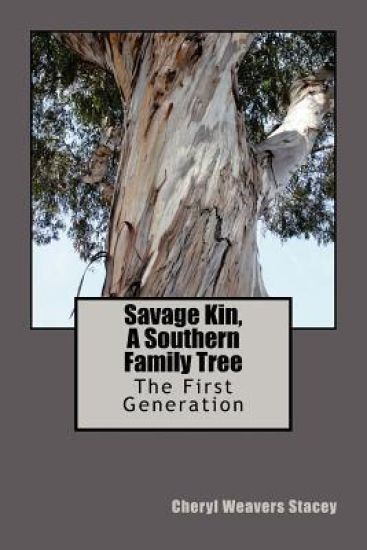
Savage Kin, A Southern Family Tree: The First Generation
Cheryl Weavers Stacey
Createspace Independent Publishing Platform
2011
nidottu

Dragon Kin: and other fantasy stories
Vanessa T. Finaughty
Createspace Independent Publishing Platform
2011
nidottu

The perils of power... Keira Kelly has come into her full powers, and they are frighteningly strong, creating a distance between her and her human friends in her beloved Rio Seco. It is time to obey her great-great-grandmother Gigi's orders and rejoin her family in northwest Canada, where Keira can learn to handle her dangerous new skills. She'll have friends with her every step of the way -- her shapeshifter brother Tucker, his beloved Niko, and, to Keira's dismay, her cousin on her mother's side, Daffyd ap Geraint, the Sidhe prince who suddenly appeared in her life and now refuses to leave -- but her vampire lover Adam has insisted on staying in Texas. And while there are certainly perks to being Family, such as a private Learjet for the flight to Canada and a fabulous penthouse condo overlooking Vancouver, there are threats looming that nobody, not even Gigi, anticipated. Keira's Sidhe inheritance from her mother is far more important than anyone ever realized, and the fate of the Family may depend upon what she does next....

The Indigenous Canela inhabit a vibrant multispecies community of nearly 3,000 people and over 300 types of cultivated and wild plants living together in Maranhão State in the Brazilian Cerrado (savannah), a biome threatened with deforestation and climate change. In the face of these environmental threats, Canela women and men work to maintain riverbank and forest gardens and care for their growing crops, whom they consider to be, literally, children. This nurturing, loving relationship between people and plants—which offers a thought-provoking model for supporting multispecies survival and well-being throughout the world—is the focus of Plant Kin.Theresa L. Miller shows how kinship develops between Canela people and plants through intimate, multi-sensory, and embodied relationships. Using an approach she calls “sensory ethnobotany,” Miller explores the Canela bio-sociocultural life-world, including Canela landscape aesthetics, ethnobotanical classification, mythical storytelling, historical and modern-day gardening practices, transmission of ecological knowledge through an education of affection for plant kin, shamanic engagements with plant friends and lovers, and myriad other human-nonhuman experiences. This multispecies ethnography reveals the transformations of Canela human-environment and human-plant engagements over the past two centuries and envisions possible futures for this Indigenous multispecies community as it reckons with the rapid environmental and climatic changes facing the Brazilian Cerrado as the Anthropocene epoch unfolds.
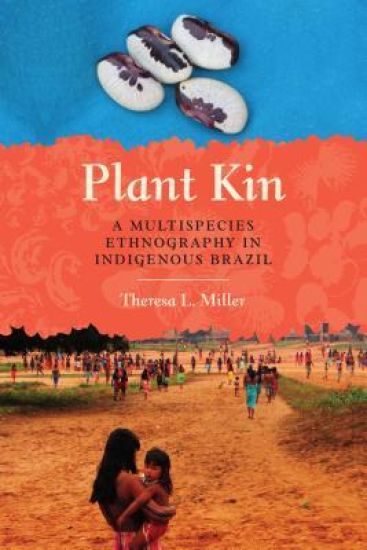
The Indigenous Canela inhabit a vibrant multispecies community of nearly 3,000 people and over 300 types of cultivated and wild plants living together in MaranhÃo State in the Brazilian Cerrado (savannah), a biome threatened with deforestation and climate change. In the face of these environmental threats, Canela women and men work to maintain riverbank and forest gardens and care for their growing crops, whom they consider to be, literally, children. This nurturing, loving relationship between people and plants-which offers a thought-provoking model for supporting multispecies survival and well-being throughout the world-is the focus of Plant Kin.Theresa L. Miller shows how kinship develops between Canela people and plants through intimate, multi-sensory, and embodied relationships. Using an approach she calls “sensory ethnobotany,” Miller explores the Canela bio-sociocultural life-world, including Canela landscape aesthetics, ethnobotanical classification, mythical storytelling, historical and modern-day gardening practices, transmission of ecological knowledge through an education of affection for plant kin, shamanic engagements with plant friends and lovers, and myriad other human-nonhuman experiences. This multispecies ethnography reveals the transformations of Canela human-environment and human-plant engagements over the past two centuries and envisions possible futures for this Indigenous multispecies community as it reckons with the rapid environmental and climatic changes facing the Brazilian Cerrado as the Anthropocene epoch unfolds.




My Kin's Family Trees
Tatay Jobo Elizes Pub
Createspace Independent Publishing Platform
2013
nidottu

Zuni Kin and Clan is a book written by Alfred Louis Kroeber that explores the social organization and kinship system of the Zuni people, a Native American tribe residing in New Mexico. The book provides a detailed account of the Zuni's complex kinship system, which is based on matrilineal clans and includes a variety of kinship terms and relationships.Kroeber's work is based on extensive fieldwork and observations of Zuni society, and he draws on a range of sources including Zuni mythology, oral histories, and ethnographic accounts. The book covers topics such as marriage, inheritance, naming practices, and the role of kinship in Zuni society.In addition to its insights into Zuni culture and society, Zuni Kin and Clan is also notable for its contributions to the field of anthropology. Kroeber's analysis of the Zuni kinship system influenced subsequent research on kinship and social organization in other cultures, and the book remains an important reference for scholars and students of anthropology.This Is A New Release Of The Original 1917 Edition.This scarce antiquarian book is a facsimile reprint of the old original and may contain some imperfections such as library marks and notations. Because we believe this work is culturally important, we have made it available as part of our commitment for protecting, preserving, and promoting the world's literature in affordable, high quality, modern editions, that are true to their original work.




Four children embark on a quest for a new land at the dawn of human history Africa, two hundred thousand years ago: Suth and Noli were orphaned the night the murderous strangers came, speaking an unfamiliar language and bringing violence to the peaceful Moonhawk tribe. Determined not to die in the desert, Suth and Noli slip away with Ko and Mana. Suth, the eldest, leads them; Noli’s dreams of the future guide them. Ko gives them courage; Mana gives them peace. Their search for a new Good Place, one of food and safety, will take them across the valleys and plains of prehistoric Africa and bring them together as a tribe and as a family.

Brothers divided by WWII reunite on a mission of justice in the chaos of early Cold War Europe in this historical espionage thriller. Occupied Munich, 1946: Irina, a Cossack refugee, confesses to murdering a GI, but American captain Harry Kaspar doesn’t buy it. As Harry scours the devastated city for the truth, it leads him to his long-lost German brother, Max, who returned to Hitler’s Germany before the war. Max has a questionable past, and he needs Harry for the cause that could redeem him: rescuing Irina’s stranded clan of Cossacks. Disowned by the Allies, they are now being hunted by Soviet death squads—the cold-blooded upshot of a callous postwar policy. As a harsh winter brews and the Cold War looms, Harry and Max embark on a desperate rescue mission along the German-Czech border. As a mysterious figure shadows them, everyone is suspect—even those who have pledged to help. But before the Kaspar brothers can save the innocent victims of peace, grave secrets threaten to damn them all.
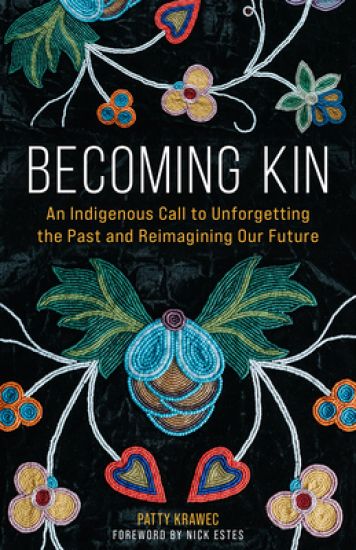
We find our way forward by going back. The invented history of the Western world is crumbling fast, Anishinaabe writer Patty Krawec says, but we can still honor the bonds between us. Settlers dominated and divided, but Indigenous peoples won't just send them all home. Weaving her own story with the story of her ancestors and with the broader themes of creation, replacement, and disappearance, Krawec helps readers see settler colonialism through the eyes of an Indigenous writer. Settler colonialism tried to force us into one particular way of living, but the old ways of kinship can help us imagine a different future. Krawec asks, What would it look like to remember that we are all related? How might we become better relatives to the land, to one another, and to Indigenous movements for solidarity? Braiding together historical, scientific, and cultural analysis, Indigenous ways of knowing, and the vivid threads of communal memory, Krawec crafts a stunning, forceful call to unforget our history. This remarkable sojourn through Native and settler history, myth, identity, and spirituality helps us retrace our steps and pick up what was lost along the way: chances to honor rather than violate treaties, to see the land as a relative rather than a resource, and to unravel the history we have been taught.

Maeve Jackson is starting over after a broken engagement-and mustering out of the Army. No job and no prospects, she spins out on black ice and totals her car. When struggling vintner Luke Kaylor stops to help, they discover they're distantly related. On a shoestring budget to convert his vineyard into a winery, he makes her a deal: prune grapevines in exchange for room and board. But forgotten diaries and a haunted cabin kickstart a five-generational mystery with ancestors that have bones to pick. As carnal urges propel them into each other's arms, they wonder: Is their attraction physical...or metaphysical?


Slick Kin Folks: Never Trust Them Completely
Joseph Richard Turner Jr
Createspace Independent Publishing Platform
2015
nidottu