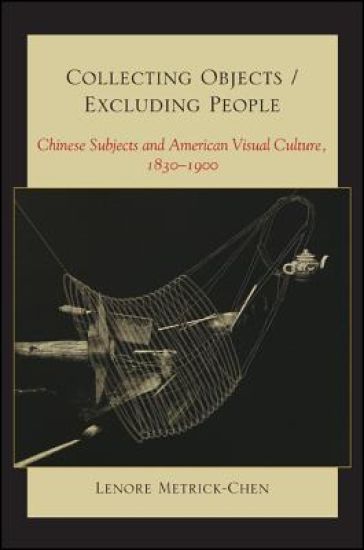
Combining aesthetic and political history, explores the influence of Chinese people and objects on American visual culture.In Collecting Objects / Excluding People, Lenore Metrick-Chen demonstrates an unknown impact of Chinese immigration upon nineteenth-century American art and visual culture. The American ideas of "Chineseness" ranged from a negative portrayal to an admiring one and these varied images had an effect on museum art collections and advertising images. They brought new ideas into American art theory, anticipating twentieth-century Modernism. Metrick-Chen shows that efforts to construct a cultural democracy led to the creation of unforeseen new categories for visual objects and unanticipated social changes. Collecting Objects / Excluding People reveals the power of images upon culture, the influence of media representation upon the lives of Chinese immigrants, and the impact of political ideology upon the definition of art itself.
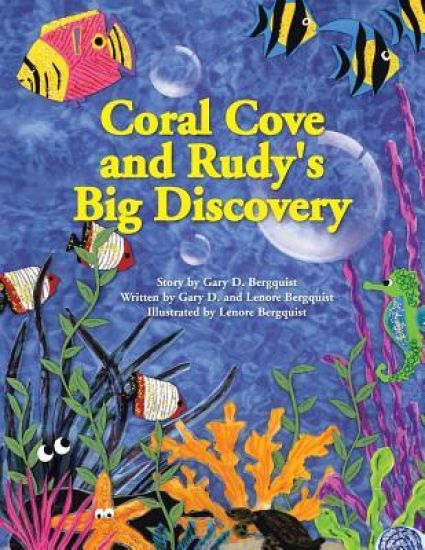
Being separated from one's parents is one of the most traumatic events in a young one's life. After a violent storm, Rudy becomes separated from his family and is all alone in the deep, dark ocean. After swimming frantically for a whole day trying to find his family he finally settles alone and hungry in some rocks and sleeps. The next morning, only through fate is he able to arrive in a beautiful, blue lagoon. There he finds himself under the safe keeping and the tutelage of Mother Angel Fish and her family. As he grows up he realizes that all the fishes have special traits about them. Whether it is the butterfly fish that can hide in the coral because her body is so thin or the beautiful colors of the angel fish Rudy wonders if there is anything special about him because he is so small and grey. Through a frightening turn of events where the lagoon is turned upside down from a very traumatic experience, he discovers who and what he is and becomes the hero of Coral Cove.
of witnesses and on confessions, and the prevention of crime. In 1900, Alfred Binet, the French psychologist who developed the first standard ized intelligence test, the Stanford-Binet, testified in court about the use of psychological tests with delinquents and criminals. These tests were later used in large scale for screening potential police as well as criminals and by World War II in the 1940's, were used in many different ways to classify and design treatment for soldiers. In fact, the use of scientific psychometric tests has continued to be one of the strong assets the psychologist can bring to the law. In 1911, a Belgium psychologist, Varendonck testified that child witnesses did not have the mental capacity of adults and their testimony should not be admitted in courts. That same year, a German psychologist, Carl Marbe testified about proximate cause in a civil lawsuit. He described the psychological experiments used to determine that alcohol can have a negative impact on a person's reaction time and subsequent behavior. In the United States the introduction of expert witness testimony took a similar route. In 1921 a case called, State v. Driver recognized that a psy chologist could be an expert on juvenile delinquency, but the court rejected that psychologist's testimony, anyhow. One of the first cases that set the standards of admitting all experts, including psychologists, called the Frye standard was decided in 1923.
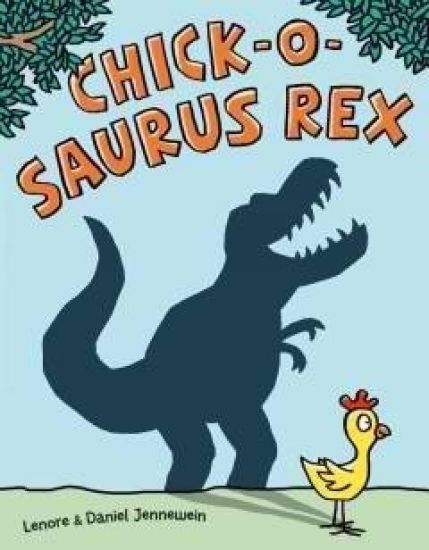
A bullied little chicken discovers his inner strength along with some surprising dinosaur ancestry in this farmyard tale with huge heart. Little Chick just wants to belong, but the bullies of the barnyard--Little Donkey, Little Pig, and Little Sheep--won't let him play in their tree house because he is a chicken, and chickens are not strong and brave. Little Chick sees their point: What have chickens done besides invent the chicken dance and cross the road? But when his father shows Little Chick the family photo album, he learns something HUGE: He is related to the gigantic and ferocious Tyrannosaurus rex Armed with this new knowledge, Little Chick returns to the tree house just in time to rescue the bullies from a scary wolf--and prove that strength and bravery have nothing to do with size.
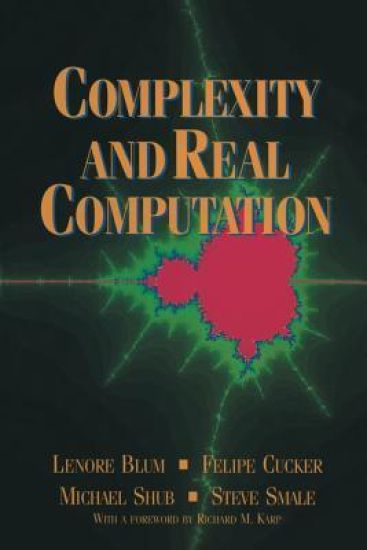
Computational complexity theory provides a framework for understanding the cost of solving computational problems, as measured by the requirement for resources such as time and space. The objects of study are algorithms defined within a formal model of computation. Upper bounds on the computational complexity of a problem are usually derived by constructing and analyzing specific algorithms. Meaningful lower bounds on computational complexity are harder to come by, and are not available for most problems of interest. The dominant approach in complexity theory is to consider algorithms as oper ating on finite strings of symbols from a finite alphabet. Such strings may represent various discrete objects such as integers or algebraic expressions, but cannot rep resent real or complex numbers, unless the numbers are rounded to approximate values from a discrete set. A major concern of the theory is the number of com putation steps required to solve a problem, as a function of the length of the input string.