
Kirjahaku
Etsi kirjoja tekijän nimen, kirjan nimen tai ISBN:n perusteella.
1000 tulosta hakusanalla Lydia Morrison
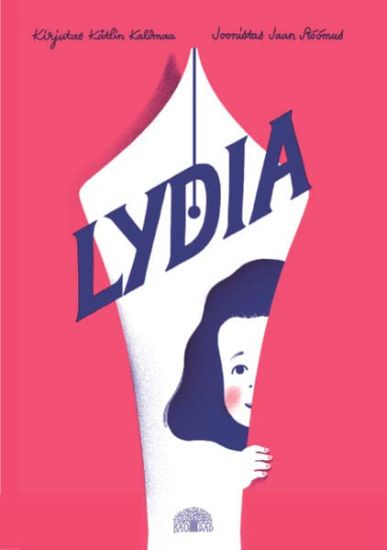
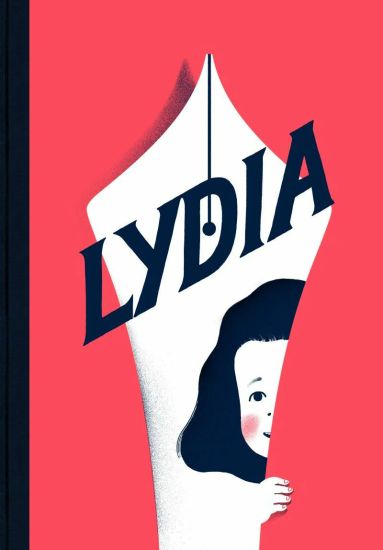
Tämä on kirja Viron suurimmasta runoilijasta Lydia Koidulasta. Tarina alkaa, kun tyttö ei ole vielä syntynytkään. Sitten hän saapuu, hänelle annetaan nimi ja pian hän jo alkaakin kirjoittaa runoja. Ne auttoivat virolaisia selviämään vaikeasta Venäjän vallan ajasta. Lydia Koidula on kirjoittanut myös Paciuksen Maamme-laulun vironkieliset sanat. Se on Viron kansallislaulu.Kun Lydia syntyi, ei ollut yhtä Viroa. Viron sijasta olivat Viron ja Liivinmaan kuvernementti, jotka molemmat kuuluivat Venäjän valtakuntaan.Kuten nytkin, siellä asui monia eri kansoja, mutta viralliset kielet olivat saksa ja venäjä. Lydia puolusti kiihkeästi virolaisten oikeutta omaan kieleensä ja kulttuuriinsa.Kätlin Kaldmaa ( S.1970) on virolainen kirjailija, kriitikko ja kääntäjä. Hän on opiskellut Tarton yliopistossa virolaista filologiaa ja Tallinnan yliopistossa englantilaista filologiaa. Kaldmaa on kirjoittanut lastenkirjoja, runoja ja proosaa ja hän on voittanut Friedebert Tuglas -palkinnon vuonna 2012.Teoksen kuvituksen on laatinut Jaan Roomus.Lydia valittiin vuonna 2022 Virossa vuoden kirjaksi.

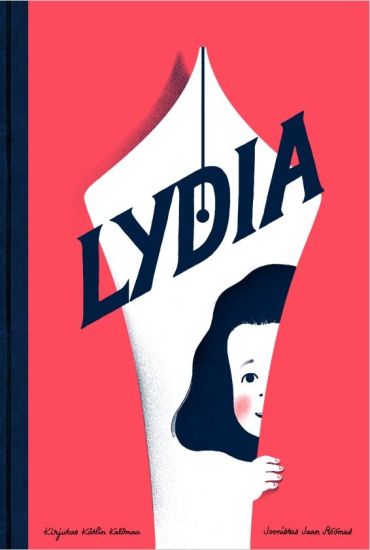
Lydia föds 1843 och i denna bok får vi följa hennes liv tillsammans med landet Estlands födelse och historia. Elas kord üks tüdruk, kes sündis 1843. aasta detsembrikuus Vändra köstrimajas ja tema nimeks sai Lydia Emilie Florentine Jannsen. Lydia oli Jannsenite pere esimene laps. Tema isa oli ajakirjanik ja koolmeister Johann Voldemar Jannsen, kes asutas Postimehe. Lydia ema Juliana Emilie Koch kasvatas lapsi ja õpetas neile saksa keelt.Kui Lydia sündis, ei olnud ühte Eestit olemas. Eesti asemel olid Eestimaa kubermang ja Liivimaa kubermang, mis mõlemad kuulusid Venemaa Keisririigi alla. Nii nagu praegu, elas siin ka toona palju erinevaid rahvaid, ametlikud keeled olid aga saksa ja vene keel. Lydia kaitses kogu oma elu tuliselt maarahva õigust oma keelele ja kultuurile ning oli üks laulupeo idee kandjatest.See siin on lugu ühest eesti tüdrukust, kes kasvas üles Liivimaa kubermangus, sai Eesti kirjanikuks, rajas Soome silla, abiellus lätlasega ja läks elama Kroonlinna.
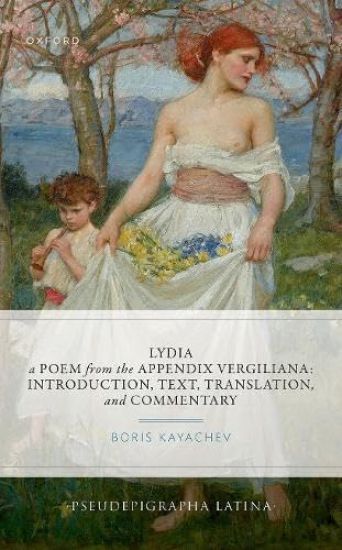
Lydia, a Poem from the Appendix Vergiliana
Oxford University Press
2023
sidottu
This volume offers the first comprehensive literary and philological commentary on the Lydia, in any language. At its core is a freshly edited Latin text of the poem, which systematically reconsiders the paradosis as well as earlier textual scholarship and endorses numerous improvements against current editions. Besides scrutinizing all the textual problems and adopted solutions, the commentary provides a thorough linguistic exegesis of the text as well as a wide-ranging discussion of the poem's rich intertextuality, both Latin and Greek. The Lydia's literary side is also the main focus in the introduction, which challenges the established communis opinio that views the Lydia as a dateless anonymous imitation of Virgilian bucolic, by situating it in the literary context of the Late Republic: it highlights, for the first time, the centrality of Greek bucolic, in particular of Bion's Lament for Adonis and the anonymous Lament for Bion, in the Lydia's literary genealogy and tentatively revives the old attribution to Valerius Cato, as well as exploring the poem's relationship with its better-known sibling, the Dirae. The work is complete with an English translation, aimed to serve as a guide to the Latin text for readers without a solid background in the ancient language.

Lydia Mendoza began her legendary musical career as a child in the 1920s, singing for pennies and nickels on the streets of downtown San Antonio. She lived most of her adult life in Houston, Texas, where she was born. The life story of this Chicana icon encompasses a 60-year singing career that began with the dawn of the recording industry in the 1920s and continued well into the 1980s, ceasing only after she suffered a devastating stroke. Her status as a working-class idol continues to this day, making her one of the most prominent and long-standing performers in the history of the recording industry and a champion of Chicana/o music. This bilingual edition presents Lydia Mendoza's historia in an interview between the artist and Yolanda Broyles-González: first is the English translation, then the Spanish original, as told by Mendoza herself. Broyles-González concludes the volume with an extended essay on the significance of Mendoza's career and her place in Tejana music and Chicana studies.
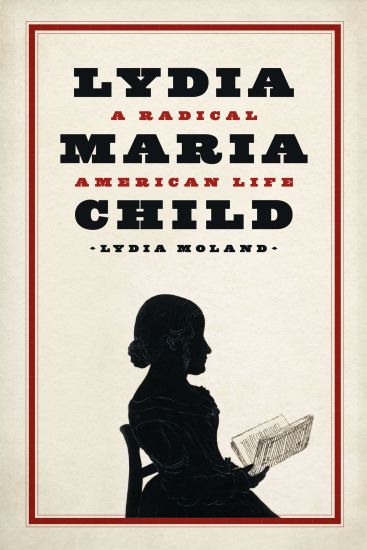
Now in paperback, a compelling biography of Lydia Maria Child, one of nineteenth-century America’s most courageous abolitionists. By 1830, Lydia Maria Child had established herself as something almost unheard of in the American nineteenth century: a beloved and self-sufficient female author. Best known today for the immortal poem “Over the River and through the Wood,” Child had become famous at an early age for spunky self-help books and charming children’s stories. But in 1833, Child shocked her readers by publishing a scathing book-length argument against slavery in the United States—a book so radical in its commitment to abolition that friends abandoned her, patrons ostracized her, and her book sales plummeted. Yet Child soon drew untold numbers to the abolitionist cause, becoming one of the foremost authors and activists of her generation. Lydia Maria Child: A Radical American Life tells the story of what brought Child to this moment and the extraordinary life she lived in response. Through Child’s example, philosopher Lydia Moland asks questions as pressing and personal in our time as they were in Child’s: What does it mean to change your life when the moral future of your country is at stake? When confronted by sanctioned evil and systematic injustice, how should a citizen live? Child’s lifetime of bravery, conviction, humility, and determination provides a wealth of spirited guidance for political engagement today.
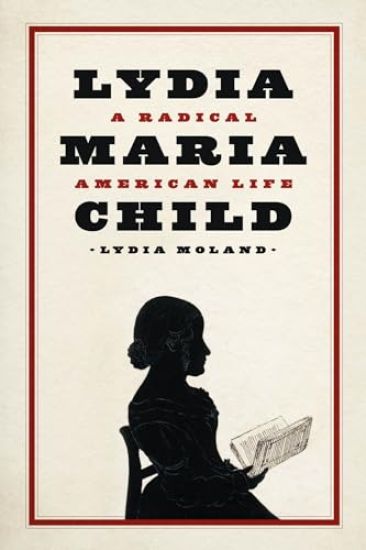
Now in paperback, a compelling biography of Lydia Maria Child, one of nineteenth-century America’s most courageous abolitionists. By 1830, Lydia Maria Child had established herself as something almost unheard of in the American nineteenth century: a beloved and self-sufficient female author. Best known today for the immortal poem “Over the River and through the Wood,” Child had become famous at an early age for spunky self-help books and charming children’s stories. But in 1833, Child shocked her readers by publishing a scathing book-length argument against slavery in the United States—a book so radical in its commitment to abolition that friends abandoned her, patrons ostracized her, and her book sales plummeted. Yet Child soon drew untold numbers to the abolitionist cause, becoming one of the foremost authors and activists of her generation. Lydia Maria Child: A Radical American Life tells the story of what brought Child to this moment and the extraordinary life she lived in response. Through Child’s example, philosopher Lydia Moland asks questions as pressing and personal in our time as they were in Child’s: What does it mean to change your life when the moral future of your country is at stake? When confronted by sanctioned evil and systematic injustice, how should a citizen live? Child’s lifetime of bravery, conviction, humility, and determination provides a wealth of spirited guidance for political engagement today.
The Collected Stories of Lydia Davis is the complete collection of short fiction from the world-renowned Lydia Davis.WINNER OF THE MAN BOOKER INTERNATIONAL PRIZE 2013.'Big rejoicing: Lydia Davis has won the Man Booker International prize. Never did a book award deliver such a true match-winning punch. Best of all, a new audience will read her now and find her wit, her vigour and rigour, her funniness, her thoughtfulness, and the precision of form, which mark Davis out as unique.Daring, excitingly intelligent and often wildly comic [she] reminds you, in a world that likes to bandy its words about, what words such as economy, precision and originality really mean. This is a writer as mighty as Kafka, as subtle as Flaubert and as epoch-making, in her own way, as Proust. A two-liner from Davis, or a seemingly throwaway paragraph, will haunt. What looks like a game will open to deep seriousness; what looks like philosophy will reveal playfulness, tragicomedy, ordinariness; what looks like ordinariness will ask you to look again at Davis's writing. In its acuteness, it always asks attentiveness, and it repays this by opening up to its reader like possibility, or like a bush covered in flowerheads.She's a joy. There's no writer quite like her' Ali Smith'What stories. Precise and piercing, extremely funny. Nearly all are unlike anything you've ever read' Metro'I loved these stories. They are so well-written, with such clarity of thought and precision of language. Excellent' William Leith, Evening Standard'Remarkable. Some of the most moving fiction - on death, marriage, children - of recent years. To read Collected Stories is to be reminded of the grand, echoing mind-chambers created by Sebald or recent Coetzee. A writer of vast intelligence and originality' Independent on Sunday'A body of work probably unique in American writing, in its combination of lucidity, aphoristic brevity, formal originality, sly comedy, metaphysical bleakness, philosophical pressure and human wisdom' New Yorker'Davis is a high priestess of the startling, telling detail. She can make the most ordinary things, such as couples talking, or someone watching television, bizarre, almost mythical. I felt I had encountered a most original and daring mind' Colm Toibin, Daily TelegraphLydia Davis is the author of one novel and seven story collections, the most recent of which was a finalist for the 2007 National Book Award. She is the recipient of a MacArthur Fellowship and was named a Chevalier of the Order of Arts and Letters by the French government for her fiction and her translations of modern writers including Maurice Blanchot, Michel Leiris and Marcel Proust.
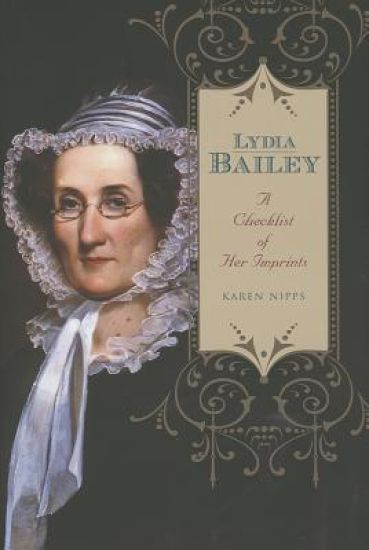
Little known today, Lydia Bailey was a leading printer in Philadelphia for decades. Her career began in 1808—when her husband, Robert, died, leaving her with the family business to manage—and ended in 1861, when she retired at the age of eighty-two. During her career, she operated a shop that at its height had more than forty employees, acted as city printer for over thirty years, and produced almost a thousand imprints bearing her name. Not surprisingly, sources reveal that she was closely associated with many of her now better-known contemporaries both in the book trade and beyond, people like her father-in-law, Francis Bailey; Mathew Carey; Philip Freneau; and Harriet Livermore. Through a detailed examination and analysis of various sources, Karen Nipps portrays Bailey’s experience within the context of her social, political, religious, and book environments.Lydia Bailey is the first monograph on a woman printer during the handpress period. It consists of a historical essay detailing Bailey’s life and analyzing her role in the contemporary book trade, followed by a checklist of her known imprints. In addition, appendixes offer further statistical information on the activities of her shop. Together, these provide rich material for other book historians as well as for historians of the early Republic, gender, and technology.
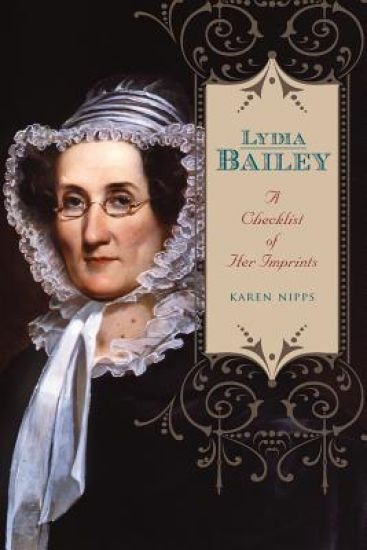
Little known today, Lydia Bailey was a leading printer in Philadelphia for decades. Her career began in 1808—when her husband, Robert, died, leaving her with the family business to manage—and ended in 1861, when she retired at the age of eighty-two. During her career, she operated a shop that at its height had more than forty employees, acted as city printer for over thirty years, and produced almost a thousand imprints bearing her name. Not surprisingly, sources reveal that she was closely associated with many of her now better-known contemporaries both in the book trade and beyond, people like her father-in-law, Francis Bailey; Mathew Carey; Philip Freneau; and Harriet Livermore. Through a detailed examination and analysis of various sources, Karen Nipps portrays Bailey’s experience within the context of her social, political, religious, and book environments.Lydia Bailey is the first monograph on a woman printer during the handpress period. It consists of a historical essay detailing Bailey’s life and analyzing her role in the contemporary book trade, followed by a checklist of her known imprints. In addition, appendixes offer further statistical information on the activities of her shop. Together, these provide rich material for other book historians as well as for historians of the early Republic, gender, and technology.
The Collected Stories of Lydia Davis is an event in American letters. Lydia Davis is one of our most original and influential writers. She has been called "an American virtuoso of the short story form" (Salon) and "one of the quiet giants . . . of American fiction" (Los Angeles Times Book Review). Now, for the first time, Davis's short stories are collected in one volume, from the groundbreaking Break It Down (1986) to the 2007 National Book Award nominee Varieties of Disturbance. "Among the true originals of contemporary American short fiction." --San Francisco Chronicle

This inaugural volume in the Forgotten Stars of the Musical Theatre series sets Lydia Thompson, queen of burlesque, under the spotlight. The series will attempt to resurrect theatre performers and writers who were famous in their era, yet who have since inexplicably faded from popular memory. Outlandish tales of Lydia's touring burlesque company, the British Blondes, and such lurid episodes as her horsewhipping of a Chicago editor, a romance with a Russian Grand Duke and a lesbian attacker have left her with a reputation as a bawdy burlesquer, but Kurt Gänzl argues she was nothing of the kind. Through this biography, the reader will learn the whole and hitherto untold story of this fascinating, multi-dimensional musical-theatre star.
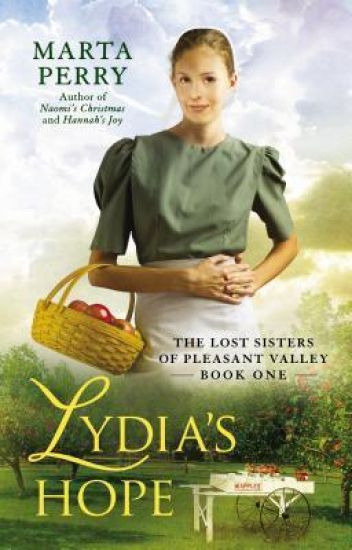
An Amish woman is shocked when she learns of the siblings she never knew existed in the first Lost Sisters of Pleasant Valley novel. With no memory of her birth parents, or the tragic accident that took their lives, Lydia Beachy has always been grateful for the aunt and uncle who took her in and raised her as their own. Now a married woman with two sons, Lydia finds her life turned upside down when she discovers that she has two younger sisters: Susanna, who was adopted by an Amish family in another community, and Chloe, who was raised by their grandmother among the Englisch. Angry and confused, Lydia first seeks out Susanna but stops short of telling her the truth. To track down Chloe, she enlists the help of a neighbor who has spent some years in the Englisch world. Meanwhile, Lydia’s husband, Adam, is keeping a secret of his own. Lydia yearns to be united with the sisters she has never known, but will revealing herself to them tear their lives apart...or enrich them beyond all imagining?
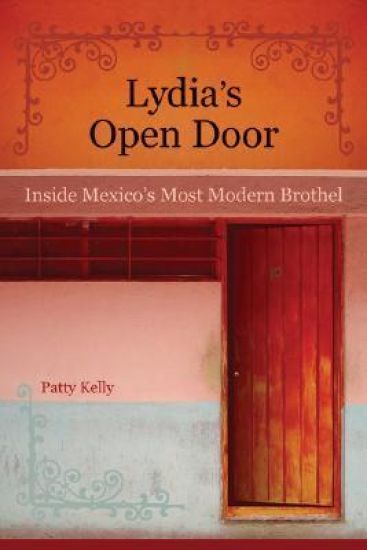
In this groundbreaking ethnographic study, Patty Kelly examines the lives of the women who work in the Zona Galactica, a state-run brothel in Chiapas' capital city. By delving into lives that would otherwise go unremarked, Kelly documents the modernization of the sex industry during the neoliberal era in the city of Tuxtla Gutierrez and illustrates how state-regulated sex became part of a broader effort by government officials to bring modernity to Chiapas, one of Mexico's poorest and most conflicted states. Kelly's innovative approach locates prostitution in a political-economic context by treating it as work. Most valuably, she conveys her analysis through vivid portraits of the lives of the sex workers themselves and shows how the women involved are neither victims nor heroines.
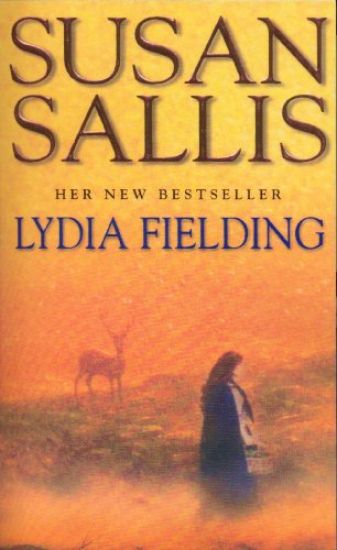
By the Sunday Times bestselling author and multi-million copy seller Susan Sallis, this is a beautiful and moving novel perfect for fans of Maeve Binchy, Lucinda Riley and Rosamunde Pilcher.READERS ARE LOVING LYDIA FIELDING!"A wonderful story. Highly recommend." - 5 STARS"A story that kept me wanting to turn the pages...I was hooked..." - 5 STARS"The story has great pace and I couldn't put it down." - 5 STARS*****************************************************************A THWARTED LOVE. A SEARCH FOR A NEW LIFE FREE FROM HEARTBREAK. When Lydia celebrates her coming of age, the whole of her Exmoor village celebrates with her. Two men attract her interest that night: handsome, ambitious Gus Pascoe, who covets the land her father farms; and Wesley Peters, brought up as a strict Methodist, whose seemingly upright religious family hides a terrible secret.Wesley wants only to protect and cherish Lydia, but when his sister becomes the scandal of the neighbourhood and is forced to marry Lydia's brother, Alan, a bitterness grows between the two families which threatens to keep Lydia and Wesley apart forever. In despair Lydia flees to Bristol. Will she be able to free herself from the tragedy and heartbreak of her past life?

He met her and She met him Jay & Lydia 的相遇,帶來生命無限美好。這場婚禮最特別的地方,是挽著對方的手 ,成為一生所愛吧。 這是一場溫馨又感人的婚禮紀錄,點點滴滴都充滿恩典與祝福。Their beautiful wedding day captured in pictures and memories stored for a lifetime.
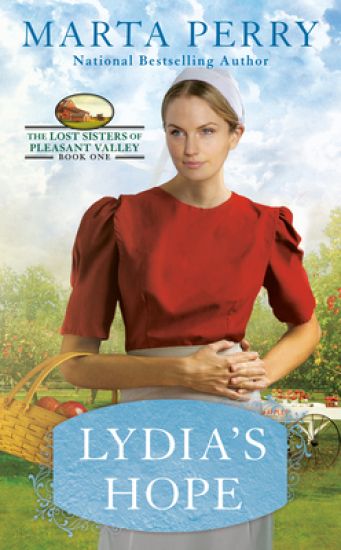
An Amish woman is shocked when she learns of the siblings she never knew existed in the first Lost Sisters of Pleasant Valley novel. With no memory of her birth parents, or the tragic accident that took their lives, Lydia Beachy has always been grateful for the aunt and uncle who took her in and raised her as their own. Now a married woman with two sons, Lydia finds her life turned upside down when she discovers that she has two younger sisters: Susanna, who was adopted by an Amish family in another community, and Chloe, who was raised by their grandmother among the Englisch. Angry and confused, Lydia first seeks out Susanna but stops short of telling her the truth. To track down Chloe, she enlists the help of a neighbor who has spent some years in the Englisch world. Meanwhile, Lydia's husband, Adam, is keeping a secret of his own. Lydia yearns to be united with the sisters she has never known, but will revealing herself to them tear their lives apart...or enrich them beyond all imagining?