Kirjojen hintavertailu. Mukana 11 244 527 kirjaa ja 12 kauppaa.

Kirjahaku

Etsi kirjoja tekijän nimen, kirjan nimen tai ISBN:n perusteella.

1000 tulosta hakusanalla Maral Atmaca

Moral Fictionalism

Moral Fictionalism

Mark Eli Kalderon

Clarendon Press
2005
sidottu
Moral realists maintain that morality has a distinctive subject matter. Specifically, realists maintain that moral discourse is representational, that moral sentences express moral propositions - propositions that attribute moral properties to things. Noncognitivists, in contrast, maintain that the realist imagery associated with morality is a fiction, a reification of our noncognitive attitudes. The thought that there is a distinctively moral subject matter is regarded as something to be debunked by philosophical reflection on the way moral discourse mediates and makes public our noncognitive attitudes. The realist fiction might be understood as a philosophical misconception of a discourse that is not fundamentally representational but whose intent is rather practical. There is, however, another way to understand the realist fiction. Perhaps the subject matter of morality is a fiction that stands in no need of debunking, but is rather the means by which our attitudes are conveyed. Perhaps moral sentences express moral propositions, just as the realist maintains, but in accepting a moral sentence competent speakers do not believe the moral proposition expressed but rather adopt the relevant non-cognitive attitudes. Noncognitivism, in its primary sense, is a claim about moral acceptance: the acceptance of a moral sentence is not moral belief but is some other attitude. Standardly, non-cognitivism has been linked to non-factualism - the claim that the content of a moral sentence does not consist in its expressing a moral proposition. Indeed, the terms 'noncognitivism' and 'nonfactualism' have been used interchangeably. But this misses an important possibility, since moral content may be representational but the acceptance of moral sentences might not be belief in the moral proposition expressed. This possibility constitutes a novel form of noncognitivism, moral fictionalism. Whereas nonfactualists seek to debunk the realist fiction of a moral subject matter, the moral fictionalist claims that that fiction stands in no need of debunking but is the means by which the noncognitive attitudes involved in moral acceptance are conveyed by moral utterance. Moral fictionalism is noncognitivism without a non-representational semantics.
Moral Realism

Moral Realism

Russ Shafer-Landau

Clarendon Press
2005
nidottu
Moral Realism is a systematic defence of the idea that there are objective moral standards. In the tradition of Plato and G. E. Moore, Russ Shafer-Landau argues that there are moral principles that are true independently of what anyone, anywhere, happens to think of them. These principles are a fundamental aspect of reality, just as much as those that govern mathematics or the natural world. They may be true regardless of our ability to grasp them, and their truth is not a matter of their being ratified from any ideal standpoint, nor of being the object of actual or hypothetical consensus, nor of being an expression of our rational nature. Shafer-Landau accepts Plato's and Moore's contention that moral truths are sui generis. He rejects the currently popular efforts to conceive of ethics as a kind of science, and insists that moral truths and properties occupy a distinctive area in our ontology. Unlike scientific truths, the fundamental moral principles are knowable a priori. And unlike mathematical truths, they are essentially normative: intrinsically action-guiding, and supplying a justification for all who follow their counsel. Moral Realism is the first comprehensive treatise defending non-naturalistic moral realism in over a generation. It ranges over all of the central issues in contemporary metaethics, and will be an important source of discussion for philosophers and their students interested in issues concerning the foundations of ethics.
Moral Motivation

Moral Motivation

Oxford University Press Inc
2016
sidottu
Moral Motivation presents a history of the concept of moral motivation. The book consists of ten chapters by eminent scholars in the history of philosophy, covering Plato, Aristotle, later Peripatetic philosophy, medieval philosophy, Spinoza, Locke, Hume, Kant, Fichte and Hegel, and the consequentialist tradition. In addition, four interdisciplinary "Reflections" discuss how the topic of moral motivation arises in epic poetry, Cicero, early opera, and Theodore Dreiser. Most contemporary philosophical discussions of moral motivation focus on whether and how moral beliefs by themselves motivate an agent (at least to some degree) to act. In much of the history of the concept, especially before Hume, the focus is rather on how to motivate people to act morally as well as on what sort of motivation a person must act from (or what end an agents acts for) in order to be a genuinely ethical person or even to have done a genuinely ethical action. The book shows the complexity of the historical treatment of moral motivation and, moreover, how intertwined moral motivation is with central aspects of ethical theory.
Moral Motivation

Moral Motivation

Oxford University Press Inc
2016
nidottu
Moral Motivation presents a history of the concept of moral motivation. The book consists of ten chapters by eminent scholars in the history of philosophy, covering Plato, Aristotle, later Peripatetic philosophy, medieval philosophy, Spinoza, Locke, Hume, Kant, Fichte and Hegel, and the consequentialist tradition. In addition, four interdisciplinary "Reflections" discuss how the topic of moral motivation arises in epic poetry, Cicero, early opera, and Theodore Dreiser. Most contemporary philosophical discussions of moral motivation focus on whether and how moral beliefs by themselves motivate an agent (at least to some degree) to act. In much of the history of the concept, especially before Hume, the focus is rather on how to motivate people to act morally as well as on what sort of motivation a person must act from (or what end an agents acts for) in order to be a genuinely ethical person or even to have done a genuinely ethical action. The book shows the complexity of the historical treatment of moral motivation and, moreover, how intertwined moral motivation is with central aspects of ethical theory.
Moral Aims

Moral Aims

Cheshire Calhoun

Oxford University Press Inc
2015
sidottu
We rely on two different conceptions of morality. On the one hand, we think of morality as a correct action guide. Morality is accessed by taking up a critical, reflective point of view where our concern is with identifying the moral rules that would be the focus of the requiring activities of persons in a hypothetical social world whose participants were capable of accessing the justifications for everyone's endorsing just this set of rules. On the other hand, in doing virtually anything connected with morality--making demands, offering excuses, justifying choices, expressing moral attitudes, getting uptake on our resentments, and the like-we rely on social practices of morality and shared moral understandings that make our moral activities and attitudes intelligible to others. This second conception of morality, unlike the first, is not shaped by the aim of getting it right or the contrast between correct and merely supposed moral requirements. It is shaped by the moral aim of practicing morality with others within an actual, not merely hypothetical, scheme of social cooperation. If practices based on misguided moral norms seem not to be genuine morality under the first conception, merely hypothetical practices seem not to be the genuine article under the second conception. The premise of this book, which collects together nine previously published essay and a new introduction, is that both conceptions are indispensable. But exactly how is the moral theorist to go about working simultaneously with two such different conceptions of morality? The book's project is not to construct an overarching methodology for handling the two conceptions of morality. Instead, it is to provide case studies of that work being done.
Moral Brains

Moral Brains

S. Matthew Liao

Oxford University Press Inc
2016
sidottu
In the last fifteen years, there has been significant interest in studying the brain structures involved in moral judgments using novel techniques from neuroscience such as functional magnetic resonance imaging (fMRI). Many people, including a number of philosophers, believe that results from neuroscience have the potential to settle seemingly intractable debates concerning the nature, practice, and reliability of moral judgments. This has led to a flurry of scientific and philosophical activities, resulting in the rapid growth of the new field of moral neuroscience. There is now a vast array of ongoing scientific research devoted towards understanding the neural correlates of moral judgments, accompanied by a large philosophical literature aimed at interpreting and examining the methodology and the results of this research. This is the first volume to take stock of fifteen years of research of this fast-growing field of moral neuroscience and to recommend future directions for research. It features the most up-to-date research in this area, and it presents a wide variety of perspectives on this topic.
Moral Brains

Moral Brains

S. Matthew Liao

Oxford University Press Inc
2016
nidottu
In the last fifteen years, there has been significant interest in studying the brain structures involved in moral judgments using novel techniques from neuroscience such as functional magnetic resonance imaging (fMRI). Many people, including a number of philosophers, believe that results from neuroscience have the potential to settle seemingly intractable debates concerning the nature, practice, and reliability of moral judgments. This has led to a flurry of scientific and philosophical activities, resulting in the rapid growth of the new field of moral neuroscience. There is now a vast array of ongoing scientific research devoted towards understanding the neural correlates of moral judgments, accompanied by a large philosophical literature aimed at interpreting and examining the methodology and the results of this research. This is the first volume to take stock of fifteen years of research of this fast-growing field of moral neuroscience and to recommend future directions for research. It features the most up-to-date research in this area, and it presents a wide variety of perspectives on this topic.
Moral Minorities and the Making of American Democracy

Moral Minorities and the Making of American Democracy

Kyle G. Volk

Oxford University Press Inc
2014
sidottu
Should the majority always rule? If not, how should the rights of minorities be protected? In Moral Minorities and the Making of American Democracy, historian Kyle G. Volk unearths the origins of modern ideas and practices of minority-rights politics. Focusing on controversies spurred by the explosion of grassroots moral reform in the early nineteenth century, he shows how a motley but powerful array of self-understood minorities reshaped American democracy as they battled laws regulating Sabbath observance, alcohol, and interracial contact. Proponents justified these measures with the "democratic" axiom of majority rule. In response, immigrants, black northerners, abolitionists, liquor dealers, Catholics, Jews, Seventh-day Baptists, and others articulated a different vision of democracy requiring the protection of minority rights. These moral minorities prompted a generation of Americans to reassess whether "majority rule" was truly the essence of democracy, and they ensured that majority tyranny would no longer be just the fear of elites and slaveholders. Beginning in the mid-nineteenth-century, minority rights became the concern of a wide range of Americans attempting to live in an increasingly diverse nation. Volk reveals that driving this vast ideological reckoning was the emergence of America's tradition of popular minority-rights politics. To challenge hostile laws and policies, moral minorities worked outside of political parties and at the grassroots. They mobilized elite and ordinary people to form networks of dissent and some of America's first associations dedicated to the protection of minority rights. They lobbied officials and used constitutions and the common law to initiate "test cases" before local and appellate courts. Indeed, the moral minorities of the mid-nineteenth century pioneered fundamental methods of political participation and legal advocacy that subsequent generations of civil-rights and civil-liberties activists would adopt and that are widely used today.
Moral Failure

Moral Failure

Lisa Tessman

Oxford University Press Inc
2015
sidottu
Moral Failure: On the Impossible Demands of Morality asks what happens when the sense that "I must" collides with the realization that "I can't." Bringing together philosophical and empirical work in moral psychology, Lisa Tessman here examines moral requirements that are non-negotiable and that contravene the principle that "ought implies can." In some cases, it is because two non-negotiable requirements conflict that one of them becomes impossible to satisfy, and yet remains binding. In other cases, performing a particular action may be non-negotiably required -- even if it is impossible -- because not performing the action is unthinkable. After offering both conceptual and empirical explanations of the experience of impossible moral requirements and the ensuing failures to fulfill them, Tessman considers what to make of such experience, and in particular, what role such experience has in the construction of value and of moral authority. According to the constructivist account that the book proposes, some moral requirements can be authoritative even when they are impossible to fulfill. Tessman points out a tendency to not acknowledge the difficulties that impossible moral requirements and unavoidable moral failures create in moral life, and traces this tendency through several different literatures, from scholarship on Holocaust testimony to discussions of ideal and nonideal theory, from theories of supererogation to debates about moral demandingness and to feminist care ethics.
Moral Psychology and Human Action in Aristotle
Both Aristotle and moral psychology have been flourishing areas of philosophical inquiry in recent years. This volume aims to bring the two streams of research together, offering a fresh infusion of Aristotelian insights into moral psychology and philosophy of action, and the application of developed philosophical sensibility as regards the reading of Aristotelian texts. The contributors offer stimulating new examinations of Aristotle's understanding of the various psychological states, dispositions, processes, and acts -- including reasoning and deliberation -- that contribute to the understanding of human action and its ethical appraisal.
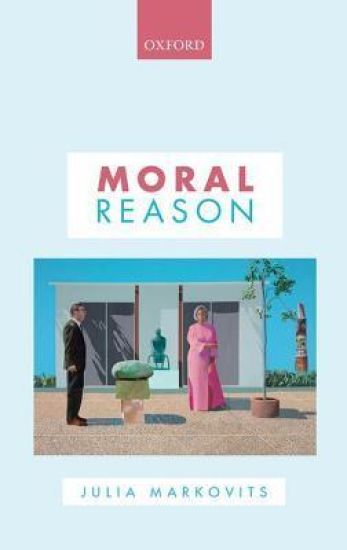
Moral Reason

Moral Reason

Julia Markovits

Oxford University Press
2014
sidottu
What is it to have a reason to do something? is one sort of question; what is it we have reason to do? is another. These questions are often explored separately. But our answers to them may not be independent: what reasons are may have implications for what reasons there are. So the door is opened to a troubling tension--the account of what reasons are that is most plausible in its own right could entail a view of what we have reason to do that is independently implausible. In fact, it looks like this is the case. In the first half of Moral Reason, Julia Markovits develops and defends a version of a desire-based, internalist, account of what normative reasons are. But does that account entail that there are no moral reasons that apply to all of us, regardless of what we happen to desire? It may look obvious that it does--that a bullet must be bitten somewhere. If what we have reason to do depends on what we antecedently desire, corrected only for misinformation and procedural irrationalities, and if desires differ from person to person, there seems to be no basis for assuming that everyone has reason to be moral. But the bullet may yet be avoided. In the second half of the book, Markovits shows how we may do so, building on Kant's argument for his formula of humanity to provide an internalist defense of universal moral reasons. In doing so, she provides a more satisfying answer to the age-old question: why be moral?
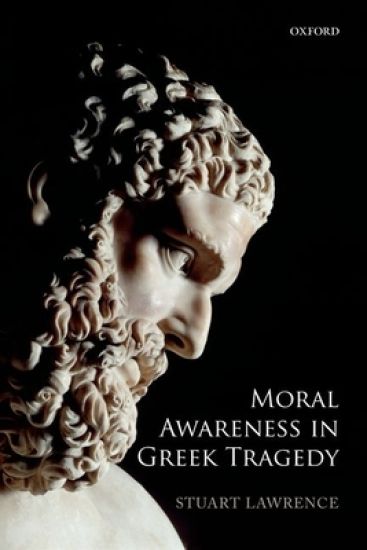
Moral Awareness in Greek Tragedy

Moral Awareness in Greek Tragedy

Stuart Lawrence

Oxford University Press
2013
sidottu
Lawrence's volume provides a detailed discussion and analyses of the moral awareness of major characters in Greek tragedy, focusing particularly on the characters' recognition of moral issues and crises, their ability to reflect on them, and their consciousness of doing so. Beginning with a definition of morality and examining the implications of analysing the moral performance of fictional characters, Lawrence considers concepts of the self and the problem of autonomy and personal responsibility in the context of divine intervention, which is a crucial feature of the genre. The volume then moves on to the individual plays (Aeschylus' Seven Against Thebes and Oresteia; Sophocles' Ajax, Trachiniae, Oedipus Tyrannus, Electra, and Philoctetes; and Euripides' Medea, Hecuba, Hippolytus, Heracles, Electra, and Bacchae), focusing in each case on a crisis or crises faced by a major character and examining the background which led to it. Lawrence then considers the individual character's moral response and relates it to the critical issues formulated in the volume's opening discussions. The book will be important to any student of Classical Studies and those in Philosophy or Literature interested in a theoretical discussion of the morality of literary characters.
Moral Awareness in Greek Tragedy

Moral Awareness in Greek Tragedy

Stuart Lawrence

Oxford University Press
2013
nidottu
Lawrence's volume provides a detailed discussion and analyses of the moral awareness of major characters in Greek tragedy, focusing particularly on the characters' recognition of moral issues and crises, their ability to reflect on them, and their consciousness of doing so. Beginning with a definition of morality and examining the implications of analysing the moral performance of fictional characters, Lawrence considers concepts of the self and the problem of autonomy and personal responsibility in the context of divine intervention, which is a crucial feature of the genre. The volume then moves on to the individual plays (Aeschylus' Seven Against Thebes and Oresteia; Sophocles' Ajax, Trachiniae, Oedipus Tyrannus, Electra, and Philoctetes; and Euripides' Medea, Hecuba, Hippolytus, Heracles, Electra, and Bacchae), focusing in each case on a crisis or crises faced by a major character and examining the background which led to it. Lawrence then considers the individual character's moral response and relates it to the critical issues formulated in the volume's opening discussions. The book will be important to any student of Classical Studies and those in Philosophy or Literature interested in a theoretical discussion of the morality of literary characters.
Moral Character

Moral Character

Christian B. Miller

Oxford University Press
2013
sidottu
Christian Miller presents a new account of moral character. Most of our friends, colleagues, and even family members are not virtuous people. They do not have virtues such as compassion, honesty, or courage. But at the same time, they are not vicious people either. They do not have vices such as cruelty, dishonesty, or cowardice. Instead most people today have characters which do not qualify as either virtuous or vicious. They have many positive moral features, but also many negative ones too. Our characters are decidedly mixed, and are much more complex than we might have thought. On the one hand, many of us would kill an innocent person in a matter of minutes under pressure from an authority figure as part of a psychology study. Or we would pretend to not see someone collapse from an apparent heart attack across the street. Or we would make a wide circle around someone's dropped papers rather than stop to help pick them up. Yet it is also true that many of us would help another person when we are by ourselves and hear sounds of a non-ambiguous emergency in the next room. Or we would come to the aid of a friend when feeling empathy for her need, and do so for altruistic rather than egoistic reasons. In Moral Character: An Empirical Theory Miller outlines a new picture of our moral character which involves what are called Mixed Character Traits. This picture can help make sense of how most of us are less than virtuous people but also morally better than the vicious.
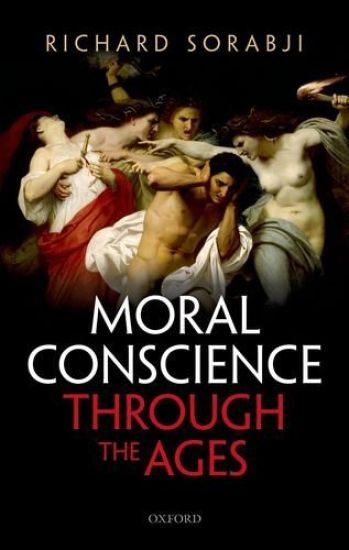
Moral Conscience through the Ages

Moral Conscience through the Ages

Richard Sorabji

Oxford University Press
2014
sidottu
In Moral Conscience through the Ages, Richard Sorabji brings his erudition and philosophical acumen to bear on a fundamental question: what is conscience? Examining the ways we have conceived of that little voice in our heads - our self-directed judge - he teases out its most enduring elements, the aspects that have survived from the Greek playwrights in the fifth century BCE through St Paul, the Church Fathers, Catholics and Protestants, all the way to the 17th centurys political unrest and the critics and champions of the eighteenth to twentieth centuries. Sorabji traces a history of conscience over this long period and examines an impressive breadth of recurrent topics: the longing for different kinds of freedom of conscience, the proper limits of freedom itself, protests at consciences being terrorized, dilemmas of conscience, the value of conscience to human beings, its secularization, its reliability, and ways to improve it. These historical issues are alive today, with fresh concerns about topics such as conscientious objection, the force of conscience, or the balance between freedoms of conscience, religion, and speech. The result is a stunningly comprehensive look at a central component of our moral understanding.
Moral Psychology with Nietzsche

Moral Psychology with Nietzsche

Brian Leiter

Oxford University Press
2019
sidottu
Brian Leiter defends a set of radical ideas from Nietzsche: there is no objectively true morality, there is no free will, no one is ever morally responsible, and our conscious thoughts and reasoning play almost no significant role in our actions and how our lives unfold. Leiter presents a new interpretation of main themes of Nietzsche's moral psychology, including his anti-realism about value (including epistemic value), his account of moral judgment and its relationship to the emotions, his conception of the will and agency, his scepticism about free will and moral responsibility, his epiphenomenalism about certain kinds of conscious mental states, and his views about the heritability of psychological traits. In combining exegesis with argument, Leiter engages the views of philosophers like Harry Frankfurt, T. M. Scanlon, and Gary Watson, and psychologists including Daniel Wegner, Benjamin Libet, and Stanley Milgram. Nietzsche emerges not simply as a museum piece from the history of ideas, but as a philosopher and psychologist who exceeds David Hume for insight into human nature and the human mind, repeatedly anticipates later developments in empirical psychology, and continues to offer sophisticated and unsettling challenges to much conventional wisdom in both philosophy and psychology.
Moral Mazes

Moral Mazes

Robert Jackall

Oxford University Press Inc
2009
nidottu
This classic study of ethics in business presents an eye-opening account of how corporate managers think the world works, and how big organizations shape moral consciousness. Robert Jackall takes the reader inside a topsy-turvy world where hard work does not necessarily lead to success, but sharp talk, self-promotion, powerful patrons, and sheer luck might. What sort of everyday rules-in-use do people play by when there are no fixed standards to explain why some succeed and others fail? In the words of one corporate manager, those rules boil down to this maxim: ¨What is right in the corporation is what the guy above you wants from you. That's what morality is in the corporation.¨ This brilliant, disturbing, funny look at the ethos of the corporate world presents compelling real life stories of the men and women charged with running the businesses of America. This anniversary edition includes an afterword by the author linking the themes of Moral Mazes to the financial tsunami that engulfed the world economy in 2008.
Moral, Believing Animals

Moral, Believing Animals

Christian Smith

Oxford University Press Inc
2009
nidottu
What kind of animals are human beings? And how do our visions of the human shape our theories of social action and institutions? In Moral, Believing Animals, Christian Smith advances a creative theory of human persons and culture that offers innovative, challenging answers to these and other fundamental questions in sociological, cultural, and religious theory. Smith suggests that human beings have a peculiar set of capacities and proclivities that distinguishes them significantly from other animals on this planet. Despite the vast differences in humanity between cultures and across history, no matter how differently people narrate their lives and histories, there remains an underlying structure of human personhood that helps to order human culture, history, and narration. Drawing on important recent insights in moral philosophy, epistemology, and narrative studies, Smith argues that humans are animals who have an inescapable moral and spiritual dimension. They cannot avoid a fundamental moral orientation in life and this, says Smith, has profound consequences for how sociology must study human beings.
Moral Time

Moral Time

Donald Black

Oxford University Press Inc
2011
sidottu
Conflict attracts a great deal of attention--as much or more than any other element of human life. People generally dislike it, and try to prevent and avoid it as much as possible. So why do clashes of right and wrong occur? And why are some clashes worse than others? In Moral Time, Donald Black shows how changes in intimacy (friends or strangers?), inequality (rich or poor?), and cultural diversity (Christian or Jew?) all determine when conflict happens. A reduction of closeness or a display of disrespect alters a relationship, for example, and the greater and faster the change, the more likely conflict will ensue. Throughout the book, Black applies his theory to an astounding range of human behavior, from bad manners to crime and warfare, accusations of witchcraft, racism, and anti-Semitism, conflict about creativity in science and art. Written in Black's trademark straightforward style, Moral Time is a powerful and incisive new take on conflict--a fundamental and inescapable feature of social life.
Moral Machines

Moral Machines

Wendell Wallach; Colin Allen

Oxford University Press Inc
2010
nidottu
"An invaluable guide to avoiding the stuff of science-fiction nightmares."--John Gilby, Times Higher Education "Moral Machines is a fine introduction to the emerging field of robot ethics. There is much here that will interest ethicists, philosophers, cognitive scientists, and roboticists."-Peter Danielson, Notre Dame Philosophical Reviews "Written with an abundance of examples and lessons learned, scenarios of incidents that may happen, and elaborate discussions on existing artificial agents on the cutting edge of research/practice, Moral Machines goes beyond what is known as computer ethics into what will soon be called the discipline of machine morality. Highly recommended."-G. Trajkovski, CHOICE "...the book does succeed in making the essential point that the phrase 'moral machine' is not an oxymoron. It also provides a window onto an area of research with which psychologists are unlikely to be familiar and one from which, at some point, we may be able to learn quite a lot."-PsycCRITIQUES "Moral Machines represents a valuable addition to, and extension of, the current literature on machine morality. As the development of autonomous artificial moral agents becomes closer to being realized, I suspect that this book will only gain in importance."--Metapsychology