Kirjojen hintavertailu. Mukana 11 627 220 kirjaa ja 12 kauppaa.

Kirjahaku

Etsi kirjoja tekijän nimen, kirjan nimen tai ISBN:n perusteella.

1000 tulosta hakusanalla Marcel Henaff

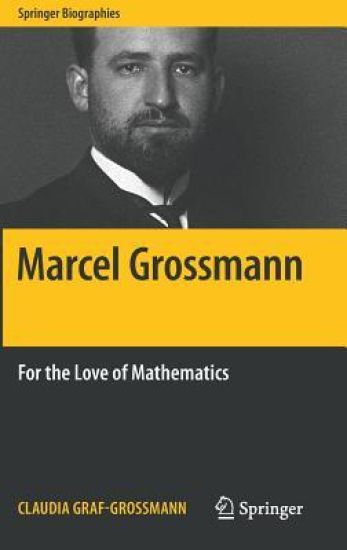
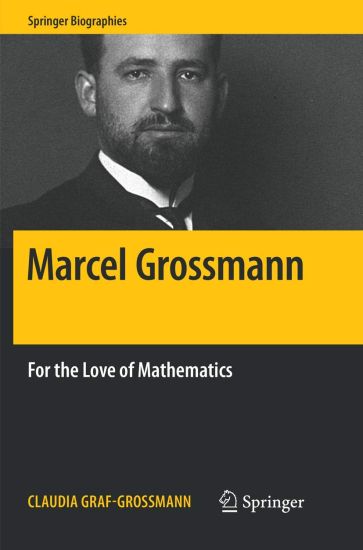
Marcel Grossmann

Marcel Grossmann

Claudia Graf-Grossmann

Springer
2019
nidottu
Zurich, summer 1912. Albert Einstein has just returned from Prague to the city on the Limmat. He sends a plea for help to his former fellow student, the mathematician Marcel Grossmann (1878-1936), for he is in need of assistance with the mathematical calculations of his general theory of relativity. What then follows is one of the most fascinating chapters of science history, with far-reaching consequences for the lives of the two friends. Marcel Grossmann’s granddaughter paints here a picture of a fiery and many-talented scientist and patriot. She traces the influence of an entrepreneurial family during Germany’s rapid industrial expansion in the late 19th century. The family’s fluctuating fortunes take the story to the vibrant city of Budapest on the Danube; they enable readers to sense the pioneering spirit at Zurich’s young Polytechnic Institute (now ETH Zurich) – but also reflect the worries and hardships of the First World War and interwar years. The Foreword is written by Prof. Remo Ruffini, founder and president of the International Center for Relativistic Astrophysics and the Marcel Grossmann Meetings. Last but not least, an extensive contribution by Dr. Tilman Sauer offers a scientific-historical appreciation of Marcel Grossmann’s enduring contributions.

Marcel Breuer

Marcel Breuer

Lars Muller Publishers
2018
nidottu
Marcel Breuer (1902-1981) is celebrated as a furniture designer, teacher, and architect who changed the American house after his emigration from Hungary to the U.S.A. in 1937. More recently historians, architects, and-with the reopening in New York of the great megalith of his Whitney Museum as the Met Breuer-a larger public are gaining new insights into the cities and large-scale buildings Breuer planned. Often seen as a pioneer of a "Brutalist modernism" of reinforced concrete, Breuer might best be understood through the lens of the changing institutional structures in and for which he worked, a vantage developed in the fresh approaches gathered here in essays by a group of younger scholars. These essays draw on an abundance of newly available documents held in the Breuer Archive at Syracuse University, now accessible online.
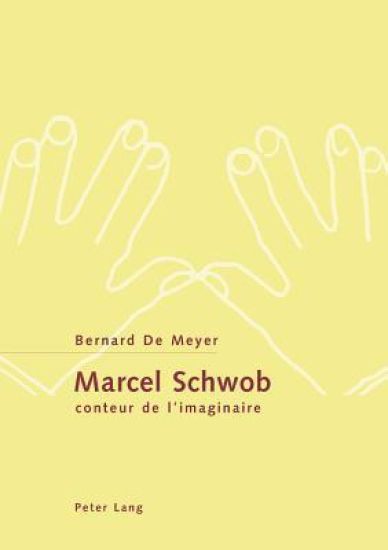
Marcel Schwob, Conteur de l'Imaginaire

Marcel Schwob, Conteur de l'Imaginaire

Bernard De Meyer

Peter Lang Gmbh, Internationaler Verlag Der Wissenschaften
2004
nidottu
Ecrivain pr coce et renomm durant les derni res ann es du XIXe si cle, Marcel Schwob abandonna cependant bien rapidement la plume. Cette panne d' criture fut expliqu e, par manque de preuves et de t moignages directs, par des v nements dans la vie de l'auteur. Il nous semble toutefois que l' volution de l' criture de la fiction l'int rieur m me des contes a men une impasse, de laquelle l'auteur, en qu te d'une nouvelle inspiration, ne pouvait se soustraire. Une analyse minutieuse des r cits brefs indiquera comment la conception m me de l'imaginaire, de l' criture et de la r criture chez Schwob, impr gn par la vision d cadento-symboliste, sous-tend l'oeuvre et annonce sa limite, sa propre mort. L' rudition tant vant e de l'auteur du Livre de Monelle, permettant une cr ation riche et originale pour son poque, concourt l' touffement de la fiction. En particulier, les recherches linguistiques de l' crivain, principalement sur l'argot, se trouvent la base de cette aventure litt raire. De son premier conte paru dans une revue aux Vies imaginaires, le lecteur assiste l' laboration d'une litt rature de l'impossible.
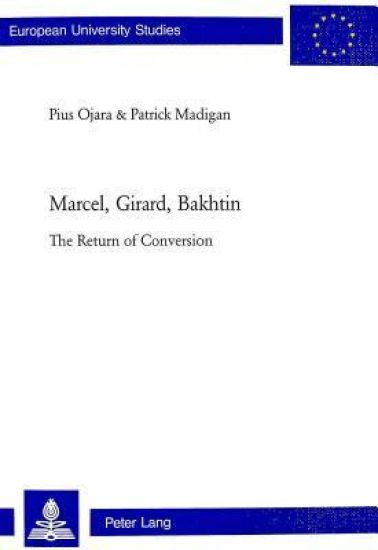
Marcel, Girard, Bakhtin

Marcel, Girard, Bakhtin

Pius Ojara; Patrick Madigan

Verlag Peter Lang
2004
nidottu
This book is about the human disruption and restlessness in the modern world and the way in which three important 20th century thinkers - Gabriel Marcel, Rene Girard and Mikhail Bakhtin - dealt with the subject. Although all three emerged from different backgrounds they produced remarkably parallel philosophies that centered on the human condition and pointed out the need for -conversion-. The first part of the book elaborates Gabriel Marcel's thought and the relationship between religion and the human quest for personal and transpersonal harmony. Further chapters provide surveys on the philosophies of -conversion- of Girard, Bakhtin and Rousseau. The book is a contribution to the discussion about human religious consciousness."
Marcel Proust und Tacitus

Marcel Proust und Tacitus

Jens Petersen

De Gruyter
2021
sidottu
Marcel Proust zitiert und erwähnt Tacitus nicht nur in Briefen und seinem unvollendet gebliebenen 'Jean Santeuil', sondern vor allem auch in seinem Hauptwerks 'A la recherche du temps perdu'. Der Autor versucht zu zeigen, dass diese Erwähnungen in die Mitte des Proustschen Werkes führen.
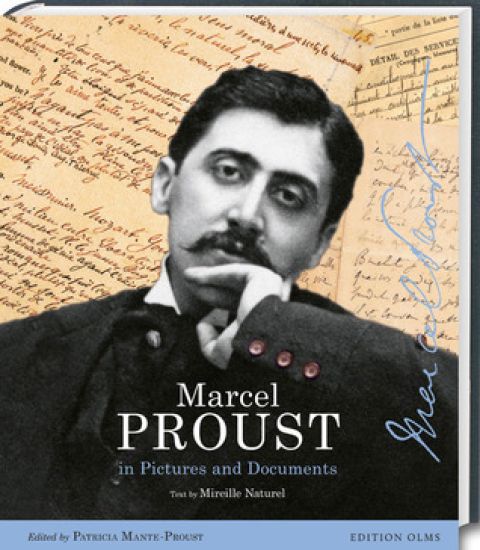
Marcel Proust

Marcel Proust

Edition Olms
2013
sidottu
"For a long time I used to go to bed early": possibly the most famous opening line in the French language and the first words of a masterly work whose author himself would even compare to a cathedral. In Search of Lost Time, the work of a man: Marcel Proust, the man of the work. Never before had a writer taken introspection and the workings of memory to such a level, and in the course of this prodigious quest brought a quasi-mystical aura to the taste of the humble Madeleine for generations of readers around the world. A work of keys, famously obscure -- that famous Proustian phrase -- and yet overflowing with fantasies, "In Search of Lost Time" gives us an invitation to penetrate the mysteries and secrets of its author. He is often described as a nervous, painfully shy individual, hiding away in his cork-lined bedroom; but between his fantasies and his real life experiences, who was the real Marcel Proust? And what can we learn from the famous Questionnaire to which he replied and which now carries his name? Containing many photographs, manuscripts and other unique documents, some of them never before published, this book -- the first of its kind about this literary genius -- celebrates the life and an era that have become timeless through the magic of the author's unique style.
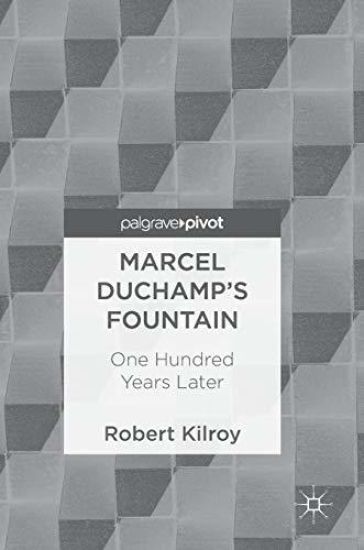
Marcel Duchamp’s Fountain

Marcel Duchamp’s Fountain

Robert Kilroy

Birkhauser Verlag AG
2017
sidottu
This book marks the centenary of Marcel Duchamp’s Fountain by critically re-examining the established interpretation of the work. It introduces a new methodological approach to art-historical practice rooted in a revised understanding of Lacan, Freud and Slavoj Žižek. In weaving an alternative narrative, Kilroy shows us that not only has Fountain been fundamentally misunderstood but that this very misunderstanding is central to the work’s significance. The author brings together Duchamp’s own statements to argue Fountain’s verdict was strategically stage-managed by the artist in order to expose the underlying logic of its reception, what he terms ‘The Creative Act.’ This book will be of interest to a broad range of readers, including art historians, psychoanalysts, scholars and art enthusiasts interested in visual culture and ideological critique.
Marcel Grossmann

Marcel Grossmann

Claudia Graf-Grossmann

Springer
2018
sidottu
Zurich, summer 1912. Albert Einstein has just returned from Prague to the city on the Limmat. He sends a plea for help to his former fellow student, the mathematician Marcel Grossmann (1878-1936), for he is in need of assistance with the mathematical calculations of his general theory of relativity. What then follows is one of the most fascinating chapters of science history, with far-reaching consequences for the lives of the two friends. Marcel Grossmann’s granddaughter paints here a picture of a fiery and many-talented scientist and patriot. She traces the influence of an entrepreneurial family during Germany’s rapid industrial expansion in the late 19th century. The family’s fluctuating fortunes take the story to the vibrant city of Budapest on the Danube; they enable readers to sense the pioneering spirit at Zurich’s young Polytechnic Institute (now ETH Zurich) – but also reflect the worries and hardships of the First World War and interwar years. The Foreword is written by Prof. Remo Ruffini, founder and president of the International Center for Relativistic Astrophysics and the Marcel Grossmann Meetings. Last but not least, an extensive contribution by Dr. Tilman Sauer offers a scientific-historical appreciation of Marcel Grossmann’s enduring contributions.