Kirjojen hintavertailu. Mukana 12 398 634 kirjaa ja 12 kauppaa.

Kirjahaku

Etsi kirjoja tekijän nimen, kirjan nimen tai ISBN:n perusteella.

1000 tulosta hakusanalla Mark Johnson

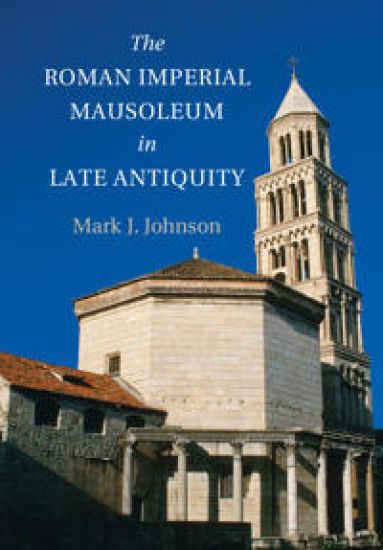
The Roman Imperial Mausoleum in Late Antiquity

The Roman Imperial Mausoleum in Late Antiquity

Mark J. Johnson

Cambridge University Press
2014
pokkari
This book is the first comprehensive study of the mausolea of the later Roman emperors. Constructed between c.AD 244 and 450 and bridging the transition from paganism to Christianity within the empire, these important buildings shared a common design, that of domed rotunda. Mark Johnson examines the symbolism and function of the mausolea, demonstrating for the first time that these monuments served as temples and shrines to the divinized emperors. Through an examination of literary sources and the archaeological record, he identifies which buildings were built as imperial tombs. Each building is examined to determine its place in the development of the type as well as for its unique features within the group. Recognizing the strong relationship between the mausolea built for pagan and Christian emperors, Johnson also analyzes their important differences.
Developmental Cognitive Neuroscience

Developmental Cognitive Neuroscience

Mark H. Johnson; Michelle D. H. de Haan

John Wiley Sons Inc
2015
sidottu
Developmental Cognitive Neuroscience, 4th Edition, is a revised and updated edition of the landmark text focusing on the development of brain and behaviour during infancy, childhood, and adolescence. Offers a comprehensive introduction to all issues relating to the nature of brain-behaviour relationships and developmentNew or greatly expanded coverage of topics such as epigenetics and gene expression, cell migration and stem cells, sleep and learning/memory, socioeconomic status and development of prefrontal cortex functionIncludes a new chapter on educational neuroscience, featuring the latest findings on the application of cognitive neuroscience methods in school-age educational contextsIncludes a variety of student-friendly features such as chapter-end discussion, practical applications of basic research, and material on recent technological breakthroughs
A Concise Introduction to Programming in Python
A Concise Introduction to Programming in Python, Second Edition provides a hands-on and accessible introduction to writing software in Python, with no prior programming experience required.The Second Edition was thoroughly reorganized and rewritten based on classroom experience to incorporate: A spiral approach, starting with turtle graphics, and then revisiting concepts in greater depth using numeric, textual, and image data Clear, concise explanations written for beginning students, emphasizing core principles A variety of accessible examples, focusing on key concepts Diagrams to help visualize new concepts New sections on recursion and exception handling, as well as an earlier introduction of lists, based on instructor feedbackThe text offers sections designed for approximately one class period each, and proceeds gradually from procedural to object-oriented design. Examples, exercises, and projects are included from diverse application domains, including finance, biology, image processing, and textual analysis. It also includes a brief "How-To" sections that introduce optional topics students may be interested in exploring.The text is written to be read, making it a good fit in flipped classrooms. Designed for either classroom use or self-study, all example programs and solutions to odd-numbered exercises (except for projects) are available at: http://www.central.edu/go/conciseintro/.
A Concise Introduction to Programming in Python
A Concise Introduction to Programming in Python, Second Edition provides a hands-on and accessible introduction to writing software in Python, with no prior programming experience required.The Second Edition was thoroughly reorganized and rewritten based on classroom experience to incorporate: A spiral approach, starting with turtle graphics, and then revisiting concepts in greater depth using numeric, textual, and image data Clear, concise explanations written for beginning students, emphasizing core principles A variety of accessible examples, focusing on key concepts Diagrams to help visualize new concepts New sections on recursion and exception handling, as well as an earlier introduction of lists, based on instructor feedbackThe text offers sections designed for approximately one class period each, and proceeds gradually from procedural to object-oriented design. Examples, exercises, and projects are included from diverse application domains, including finance, biology, image processing, and textual analysis. It also includes a brief "How-To" sections that introduce optional topics students may be interested in exploring.The text is written to be read, making it a good fit in flipped classrooms. Designed for either classroom use or self-study, all example programs and solutions to odd-numbered exercises (except for projects) are available at: http://www.central.edu/go/conciseintro/.
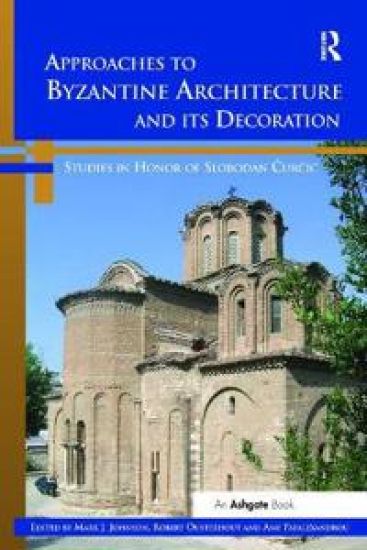
Approaches to Byzantine Architecture and its Decoration

Approaches to Byzantine Architecture and its Decoration

Mark J. Johnson; Amy Papalexandrou

Routledge
2017
nidottu
The fourteen essays in this collection demonstrate a wide variety of approaches to the study of Byzantine architecture and its decoration, a reflection of both newer trends and traditional scholarship in the field. The variety is also a reflection of Professor Curcic’s wide interests, which he shares with his students. These include the analysis of recent archaeological discoveries; recovery of lost monuments through archival research and onsite examination of material remains; reconsidering traditional typological approaches often ignored in current scholarship; fresh interpretations of architectural features and designs; contextualization of monuments within the landscape; tracing historiographic trends; and mining neglected written sources for motives of patronage. The papers also range broadly in terms of chronology and geography, from the Early Christian through the post-Byzantine period and from Italy to Armenia. Three papers examine Early Christian monuments, and of these two expand the inquiry into their architectural afterlives. Others discuss later monuments in Byzantine territory and monuments in territories related to Byzantium such as Serbia, Armenia, and Norman Italy. No Orthodox church being complete without interior decoration, two papers discuss issues connected to frescoes in late medieval Balkan churches. Finally, one study investigates the continued influence of Byzantine palace architecture long after the fall of Constantinople.
A Concise Introduction to Data Structures using Java
A student-friendly text, A Concise Introduction to Data Structures Using Java takes a developmental approach, starting with simpler concepts first and then building toward greater complexity. Important topics, such as linked lists, are introduced gradually and revisited with increasing depth. More code and guidance are provided at the beginning, allowing students time to adapt to Java while also beginning to learn data structures. As students develop fluency in Java, less code is provided and more algorithms are outlined in pseudocode. The text is designed to support a second course in computer science with an emphasis on elementary data structures. The clear, concise explanations encourage students to read and engage with the material, while partial implementations of most data structures give instructors the flexibility to develop some methods as examples and assign others as exercises. The book also supplies an introductory chapter on Java basics that allows students who are unfamiliar with Java to quickly get up to speed. The book helps students become familiar with how to use, design, implement, and analyze data structures, an important step on the path to becoming skilled software developers.
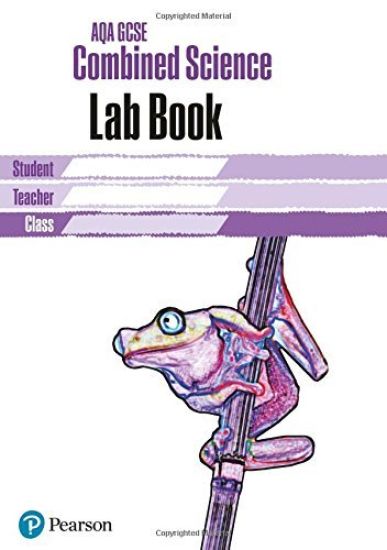
AQA GCSE Combined Science Lab Book

AQA GCSE Combined Science Lab Book

Mark Levesley; Penny Johnson; Susan Kearsey; Iain Brand; Nigel Saunders

Pearson Education Limited
2017
nidottu
This Lab Book includes: all the instructions students need to perform the required practicals, consistent with AQA's best-selling resources writing frames for students to record their results and reflect on their work apparatus and techniques (AT) skills self-assessment, so that students can track their progress covering AT practical requirements a full set of answers at the back. The book covers the full range of practicals needed to cover AQA's practical requirements for both the Trilogy and Synergy courses.
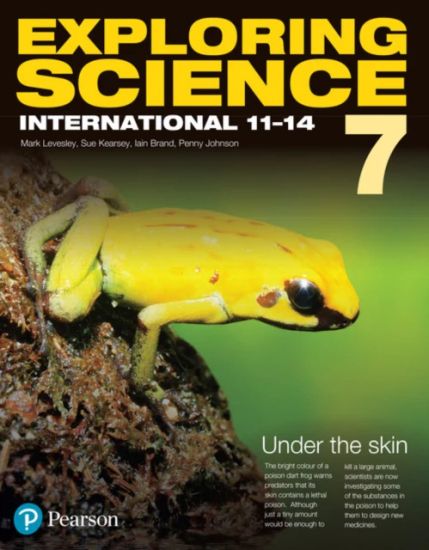
Exploring Science International Year 7 Student Book

Exploring Science International Year 7 Student Book

Mark Levesley; Penny Johnson; Susan Kearsey; Iain Brand

Pearson Education Limited
2019
nidottu
Subject: science; biology, chemistry, and physics Level: Key Stage 3 (age 11–14) Exciting, real-world 11–14 science that builds a base for International GCSEs. Pearson’s popular 11–14 Exploring Science course – loved by teachers for its exciting, real-world science – inspires the next generation of scientists. With brand-new content, this 2019 International edition builds a base for progression to International GCSE Sciences and fully covers the content of the 13+ Common Entrance Exam. Exciting, real-world science that inspires the next generation of scientists. Explore real-life science that learners can relate to, with stunning videos and photographs. Provides content for a broad and balanced science curriculum, while building the skills needed for International GCSE sciences and the 13+ Common Entrance Exam. Choose from two Student Book course options to match the way your school teaches 11–14 science. The Student Books are arranged by year (Year 7, 8 and 9) or by science (biology, chemistry, physics). This Student Book contains all Year 7 biology, chemistry and physics content. Learn more about this series, and access free samples, on our website: www.pearsonschools.co.uk/ExploringScienceInternational.
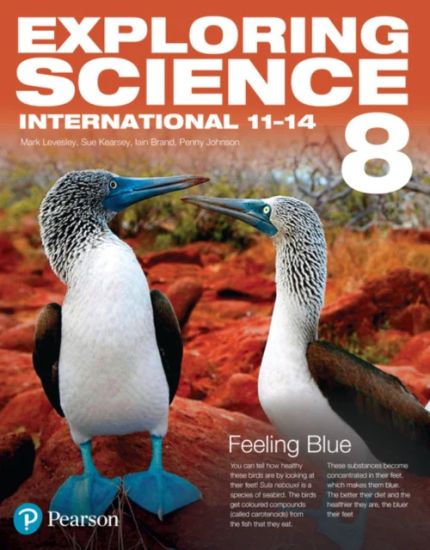
Exploring Science International Year 8 Student Book

Exploring Science International Year 8 Student Book

Mark Levesley; Penny Johnson; Susan Kearsey; Janet Blair

Pearson Education Limited
2019
nidottu
Subject: science; biology, chemistry, and physics Level: Key Stage 3 (age 11–14) Exciting, real-world 11–14 science that builds a base for International GCSEs Pearson’s popular 11–14 Exploring Science course – loved by teachers for its exciting, real-world science – inspires the next generation of scientists. With brand-new content, this 2019 International edition builds a base for progression to International GCSE Sciences and fully covers the content of the 13+ Common Entrance Exam. Exciting, real-world science that inspires the next generation of scientists. Explore real-life science that learners can relate to, with stunning videos and photographs. Provides content for a broad and balanced science curriculum, while building the skills needed for International GCSE sciences and the 13+ Common Entrance Exam. Choose from two Student Book course options to match the way your school teaches 11–14 science. The Student Books are arranged by year (Year 7, 8 and 9) or by science (biology, chemistry, physics). This Student Book contains all Year 8 biology, chemistry and physics content. Learn more about this series, and access free samples, on our website: www.pearsonschools.co.uk/ExploringScienceInternational.
Exploring Science International Physics Student Book

Exploring Science International Physics Student Book

Mark Levesley; Penny Johnson

Pearson Education Limited
2019
nidottu
Subject: Science; Physics (other titles available for biology and chemistry) Level: KS3 (age 11–14) Exciting, real-world 11–14 science that builds a base for International GCSEs Pearson’s popular 11–14 Exploring Science course – loved by teachers for its exciting, real-world science – inspires the next generation of scientists. With brand-new content, this 2019 International edition builds a base for progression to International GCSE Sciences and fully covers the content of the 13+ Common Entrance Exam. Exciting, real-world science that inspires the next generation of scientists. Explore real-life science that learners can relate to, with stunning videos and photographs. Provides content for a broad and balanced science curriculum, while building the skills needed for International GCSE sciences and the 13+ Common Entrance Exam. Choose from two Student Book course options to match the way your school teaches 11–14 science. The Student Books are arranged by year (Year 7, 8 and 9) or by science (biology, chemistry, physics). This Student Book contains all physics content for Years 7, 8 and 9 (11–14). Learn more about this series, and access free samples, on our website: www.pearsonschools.co.uk/ExploringScienceInternational
Operational Communication: Theory and Practice

Operational Communication: Theory and Practice

Edward Johnson; Mark Garner; Larry Johnson

PALGRAVE MACMILLAN
2008
sidottu
Operational communication is the study and design of communication procedures and practice for agencies responsible for the control, protection, transport, etc. of large numbers of people, vehicles, and goods in a public arena. Much attention has been paid to the technological aspects, but not enough to the practices of those using the technology. Thisbook is the first general introduction to the field.