Kirjojen hintavertailu. Mukana 11 342 296 kirjaa ja 12 kauppaa.

Kirjahaku

Etsi kirjoja tekijän nimen, kirjan nimen tai ISBN:n perusteella.

1000 tulosta hakusanalla Matthew Turley

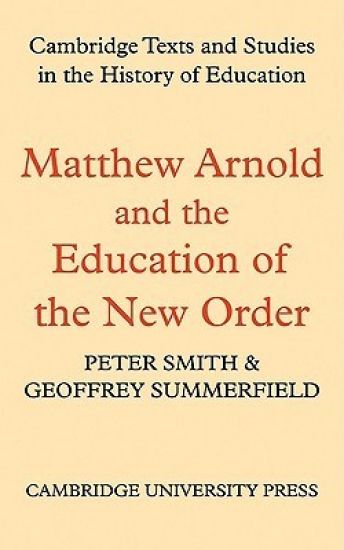
Matthew Arnold and the Education of the New Order
A selection from Arnold's writing on education, other than Culture and Anarchy. All the pieces stem from his work as Inspector of Schools: they illustrate his concern both with the principles that must be established as a basis for the education of an industrial democracy and his practical concern with the day-to-day running of schools. 'Democracy' was first published as the introduction to The Popular Education of France. It faces the fundamental political problems and outlines the general objectives of a state educational system. 'A French Eton' was the result of the same examination of French education to see what the British could learn from it; here he considers private education for the middle-classes. 'The twice-revised code' criticises the national Revised Code of 1862: a system founded on gross utilitarianism. Extracts from Arnold's reports as an inspector show the man of principle at work in particular circumstances and relating what he sees to what he would wish to see. The speech on his retirement comments on his lifetime of active involvement in education.
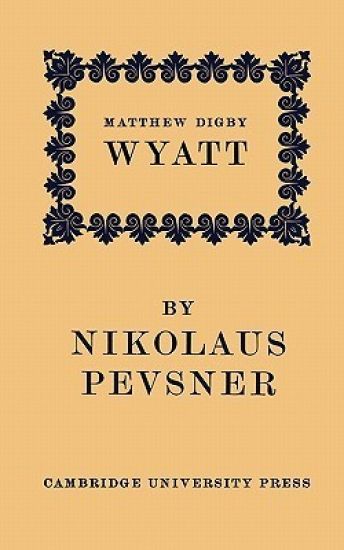
Matthew Digby Wyatt: The First Cambridge Slade Professor of Fine Art
For more than one reason Professor Pevsner, eleventh Slade Professor of Fine Art in the University of Cambridge, takes as the topic of his Inaugural Lecture Matthew Digby Wyatt, the Victorian architect and the first Slade Professor. He begins by inspecting some of Wyatt's major works - Addenbrooke's Hospital at Cambridge and the Paddington Station among them. Presently he allows himself to be diverted from his light architectural candour about Wyatt's buildings to an account of Wyatt's more general interests in design, and so to investigate the Victorian arena, with Pugin, Ruskin, and Morris, the conservative idealists, preaching one gospel, and Wyatt, Cole, and the Prince Consort preaching something different. The battle being fought was, as the Professor's 1950 text shows, deeply important; and its effects remain.
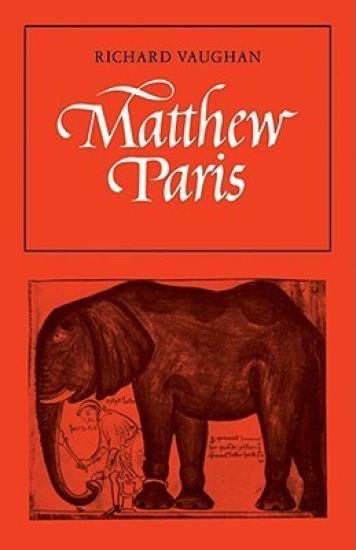
Matthew Paris

Matthew Paris

Richard Vaughan

Cambridge University Press
1979
pokkari
Professor Vaughan's book on the life and works of Matthew Paris is a full-scale study of one of the most important of the medieval chroniclers of European as well as British history. First published in 1958, it is re-issued in recognition of its continuing importance as an essential reference for all students of medieval and ecclesiastical history. A supplementary bibliography has been added to take account of updated scholarship.
Matthew's Emmanuel

Matthew's Emmanuel

David D. Kupp

Cambridge University Press
1996
sidottu
This book was first published in 1996. Matthew uniquely highlights Jesus as 'Emmanuel', but almost wholly overlooked are the deeper implications of this 'presence' motif for Matthean Christology, as well as its centripetal force on his readers. With regard to the rhetorical, historical and theological dimensions of the text, Dr Kupp takes a multi-disciplinary approach. The three verses commonly cited are only the starting point for the weaving of the Emmanuel Messiah into the story-telling, redaction and Christology of the Gospel. Kupp employs the lenses of both narrative and historical criticism to produce the first monograph in English on the subject of divine presence in Matthew. After giving primacy to a whole-story reading, Kupp finds its roots in the familiar social and literary contexts of Sinai, Jerusalem and the Jewish scriptures. Matthew's Gospel is a story that compels, a text with a history and a Christological treatise.
Matthew and Paul

Matthew and Paul

Roger Mohrlang

Cambridge University Press
2004
pokkari
The purpose of this study is to investigate and compare the basic structures of Matthew's and Paul's ethics, rather than to deal in detail with their teaching on specific moral issues. Dr Mohrlang discusses their perspectives under the five headings of ‘law', ‘reward and punishment', ‘relationship to Christ and the role of grace', ‘love', and ‘inner forces', and gives special attention to the question of ethical motivation. There is no absolute contrast, however, since elements both of law and of grace are found in both writers, and for both it is their understanding of Christ that is decisive. The comparison is highly illuminating, and serves to throw into clear relief the more striking characteristics of each writer's ethical system. It should prove of considerable value to students both of New Testament ethics and of Matthean and Pauline theology and to those interested in the larger question of unity and diversity in the New Testament as a whole.
Matthew's Trilogy of Parables

Matthew's Trilogy of Parables

Wesley G. Olmstead

Cambridge University Press
2003
sidottu
Wesley Olmstead examines the parables of the Two Sons, the Tenants and the Wedding Feast against the backdrop of the wider Matthean narrative. He explores Matthew's characterization of the Jewish leaders, the people and the nations, and assesses the respective roles of Israel and the nations in the plot of Matthew's Gospel. Against the current of contemporary Matthean scholarship, Olmstead argues both that the judgement this trilogy announces falls upon Israel (and not only her leaders) and that these parables point to the future inclusion of the nations in the nation that God had promised to raise up from Abraham. Bringing both literary-critical and redaction-critical tools to bear on the texts at hand, Olmstead not only elucidates the intended meanings of this parabolic trilogy but also attempts to determine the responses they elicited from their first readers. Transcending Matthean scholarship, this book has implications for all Gospel studies.