Kirjojen hintavertailu. Mukana 11 342 296 kirjaa ja 12 kauppaa.

Kirjahaku

Etsi kirjoja tekijän nimen, kirjan nimen tai ISBN:n perusteella.

1000 tulosta hakusanalla Michael J. Perry

Sacred Economies

Sacred Economies

Michael J. Walsh

Columbia University Press
2010
sidottu
Buddhist monasteries in medieval China employed a variety of practices to ensure their ascendancy and survival. Most successful was the exchange of material goods for salvation, as in the donation of land, which allowed monks to spread their teachings throughout China. By investigating a variety of socioeconomic spaces produced and perpetuated by Chinese monasteries, Michael J. Walsh reveals the "sacred economies" that shaped early Buddhism and its relationship with consumption and salvation. Centering his study on Tiantong, a Buddhist monastery that has thrived for close to seventeen centuries in southeast China, Walsh follows three main topics: the spaces monks produced, within and around which a community could pursue a meaningful existence; the social and economic avenues through which monasteries provided diverse sacred resources and secured the primacy of Buddhist teachings within an agrarian culture; and the nature of "transactive" participation within monastic spaces, which later became a fundamental component of a broader Chinese religiosity. Unpacking these sacred economies and repositioning them within the history of religion in China, Walsh encourages a different approach to the study of Chinese religion, emphasizing the critical link between religious exchange and the production of material culture.
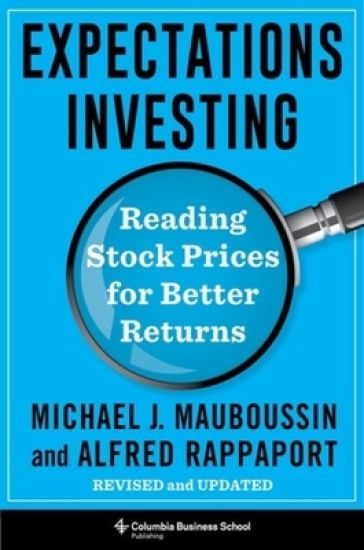
Expectations Investing

Expectations Investing

Michael J. Mauboussin; Alfred Rappaport

Columbia University Press
2021
sidottu
Most investment books try to assess the attractiveness of a stock price by estimating the value of the company. Expectations Investing provides a powerful and insightful alternative to identifying gaps between price and value.Michael J. Mauboussin and Alfred Rappaport suggest that an investor start with a known quantity, the stock price, and ask what it implies for future financial results. After showing how to read expectations, Mauboussin and Rappaport provide a guide to rigorous strategic and financial analysis to help investors assess the likelihood of revisions to these expectations. Their framework traces value creation from the triggers that shape a company’s performance to the impact on the value drivers. This allows a practitioner of expectations investing to determine whether a stock is an attractive buy or sell candidate.Investors who read this book will be able to evaluate stocks of companies in any sector or geography more effectively than those who use the standard approaches of most investors. Managers can use the book’s principles to devise, adjust, and communicate their company’s strategy in light of shareholder expectations.This revised and updated edition reflects the many changes in accounting and the business landscape since the book was first published and provides a wealth of new examples and case studies.
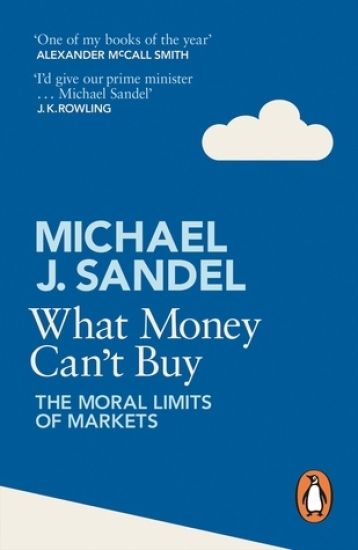
What Money Can't Buy

What Money Can't Buy

Michael J. Sandel

Penguin Books Ltd.
2013
pokkari
Should we financially reward children for good marks? Is it ethical to pay people to donate organs? What about hiring mercenaries to fight our wars, outsourcing inmates to for-profit prisons or selling citizenship? In this title, the author asks: Isn't there something wrong with a world in which everything is for sale?
Portraits Of Dread, A Gallery Of Decidedly Evil Short Stories
In this collection, MOTHER CALLED TODAY a woman becomes increasingly fearful of her demanding mother's incessant phone calls. She has a horrible secret about her mother, something she is too scared to share with anyone. THE LITTLE MAN ON TOP OF THE WARDROBE Four year old James has always been good about going to bed but recently he's been too scared to go to sleep. There is a little man on top of his wardrobe and it wants his soul.Of course that's just his overactive childhood imagination Isn't it? A GLUTTON FOR PUNISHMENT we visit a future that isn't too hard to imagine. It's a world where the overweight are social pariahs, where a government controls their eating and shopping and failure to loose weight after three attempts results in the obese being sent to a detention camp. Lynda has just been sent to one such camp and she's about to learn a horrifying government secret which shows they till have one final use for the overweight.
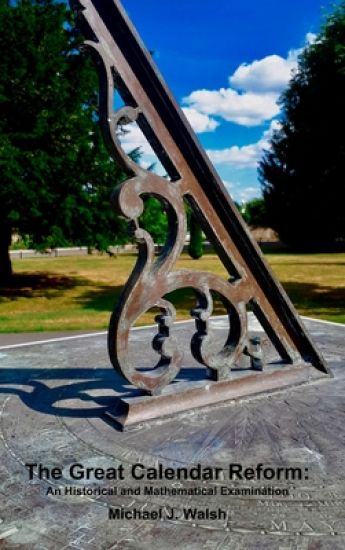
The Great Calendar Reform

The Great Calendar Reform

Michael J Walsh

Lulu.com
2018
sidottu
The calendar introduced by Pope Gregory XIII is now the most widely used civil calendar in the world. The older calendar introduced by Julius Caesar in 45 B.C. underestimated the length of the year by about 11 minutes. As centuries passed, the accumulated error grew. By the late 1500s the Julian calendar was behind by twelve days. Set amid the backdrop of the Reformation and the Renaissance, a time of great schism in the Christian world, the story of the calendar reform is an intriguing one. A central part concerns the antagonistic relationship between two of the great intellectual figures of the 16th century: the pro-reform mathematician Christopher Clavius and the anti-reform literary scholar Joseph Scaliger. In this book, the author provides an accessible mathematical description of the old and new calendars as well as a detailed discussion of the historical context for, and the main players involved in the calendar reform.
Choice Cuts-A Bite From The Dark Realm

Choice Cuts-A Bite From The Dark Realm

Michael J Elliott

Lulu.com
2018
pokkari
Welcome to The Dark Realm, where the residents are eager to regale you with stories both dark and disturbing. In this collection you'll find such gems as: PENANCE In the bowels of her convent, Sister Elizabeta is locked away awiting her punishment from The Mother Superior. This is no ordinary convent and Elizabeta is no ordinary nun. SPEAK NO EVIL: A deaf woman comes up with a gruesome way to punish her philandering boyfriend. A BITE FROM THE DARK REALM: A young supermarket worker discovers a strange race of tiny creatures living in the store room. They're lke Brownies only much more aggressive, oh and they're carnivores. HOW DOES YOUR GARDEN GROW?: Davey and Ox are two unemployed British youths who aren't above stealing to make some extra cash.When they learn that local gardener, Mary McKenzie will be raising money for charity they think they've found an easy job. The residents of Mary's garden may have other ideas. These and eight more stories await you within.
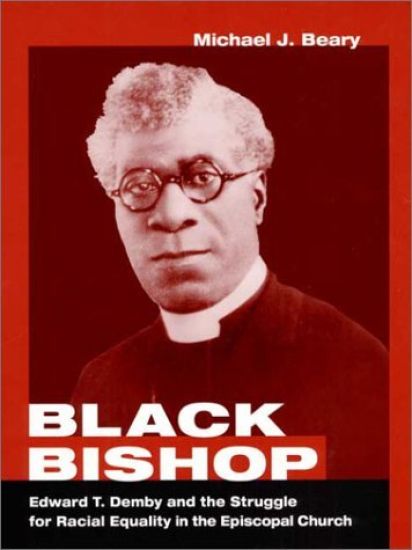
Black Bishop

Black Bishop

Michael J. Beary

University of Illinois Press
2000
sidottu
America’s first Black bishop and his struggle to rebuild the African American presence inside the Episcopal Church In 1918, the Right Reverend Edward T. Demby took up the reins as Suffragan (assistant) Bishop for Colored Work in Arkansas and the Province of the Southwest, an area encompassing Arkansas, Texas, Kansas, Oklahoma, Missouri, and New Mexico. Set within the context of a series of experiments in black leadership conducted by the Episcopal Diocese of Arkansas in the early decades of the twentieth century, Demby's tenure in a segregated ministry illuminates the larger American experience of segregation disguised as a social good. Intent on demonstrating the industry and self-reliance of black Episcopalians to the church at large, Demby set about securing black priests for the diocese, baptizing and confirming communicants, and building schools and other institutions of community service. A gifted leader and a committed Episcopalian, Demby recognized that black service institutions, such as schools, hospitals, and orphanages, would be the means to draw African Americans back to the Episcopal Church, which they had abandoned in droves after emancipation as the church of their former masters. For more than twenty years, hamstrung by white apathy, lack of funds, jurisdictional ambiguity, and the Great Depression, Demby doggedly tried to establish the credibility of a ministry that was as ill-conceived as it was well intended. Michael J. Beary skillfully narrates the shifting alliances within the Episcopal Church and shows how race was but one aspect of a more elemental struggle for power. He demonstrates how Demby's steadiness of purpose and non-confrontational manner gathered allies on both sides of the color line and how, ultimately, his judgment and the weight of his experience carried the church past its segregationist experiment.
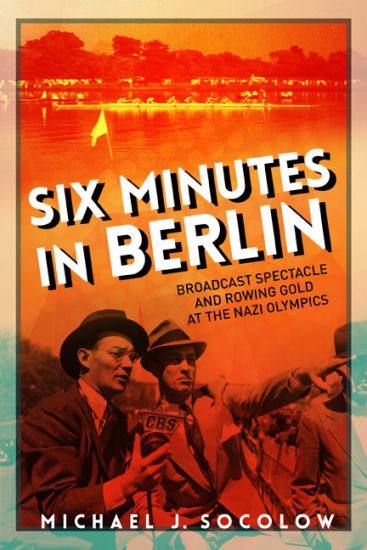
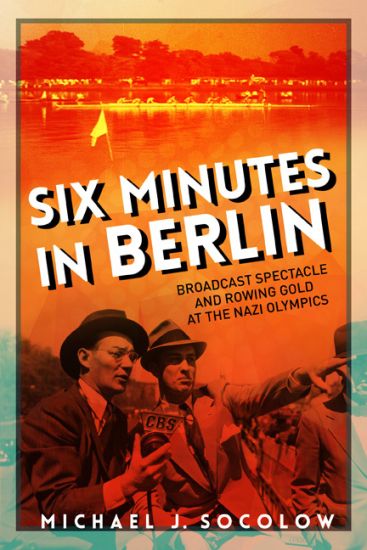
Six Minutes in Berlin

Six Minutes in Berlin

Michael J Socolow

University of Illinois Press
2016
sidottu
The Berlin Olympics, August 14, 1936. German rowers, dominant at the Games, line up against America's top eight-oared crew. Hundreds of millions of listeners worldwide wait by their radios. Leni Riefenstahl prepares her cameramen. Grantland Rice looks past the 75,000 spectators crowding the riverbank. Above it all, the Nazi leadership, flush with the propaganda triumph the Olympics have given their New Germany, await a crowning victory they can broadcast to the world. The Berlin Games matched cutting-edge communication technology with compelling sports narrative to draw the blueprint for all future sports broadcasting. A global audience--the largest cohort of humanity ever assembled--enjoyed the spectacle via radio. This still-novel medium offered a "liveness," a thrilling immediacy no other technology had ever matched. Michael J. Socolow's account moves from the era's technological innovations to the human drama of how the race changed the lives of nine young men. As he shows, the origins of global sports broadcasting can be found in this single, forgotten contest. In those origins we see the ways the presentation, consumption, and uses of sport changed forever.
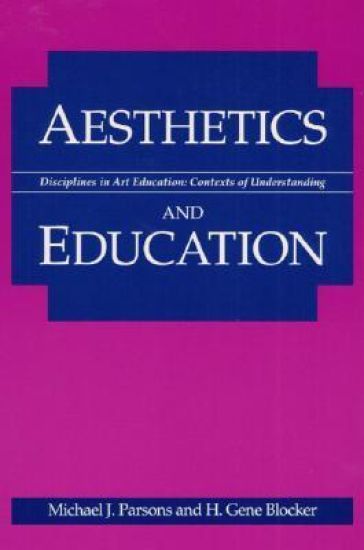
AESTHETICS & EDUCATION

AESTHETICS & EDUCATION

Michael J Parsons; H Gene Blocker

University of Illinois Press
1993
nidottu
What is the appropriate content of aesthetics for students of art at different age levels? How can it best be taught? How should it be combined with studio work and other art disciplines? Michael J. Parsons and H. gene Blocker answer these and other questions in a volume designed to help art educators, potential educators, and curriculum developers integrate aesthetics into the study of art in the school curriculum. The two introduce some of the philosophical problems and questions in art, encouraging teachers and others to form a personal outlook on these issues.
The Roots of Rough Justice

The Roots of Rough Justice

Michael J. Pfeifer

University of Illinois Press
2014
nidottu
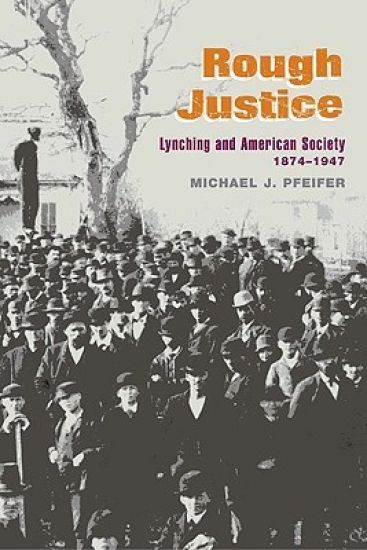
In this deeply researched prequel to his 2006 study Rough Justice: Lynching and American Society, 1874–1947, Michael J. Pfeifer analyzes the foundations of lynching in American social history. Scrutinizing the vigilante movements and lynching violence that occurred in the middle decades of the nineteenth century on the Southern, Midwestern, and far Western frontiers, The Roots of Rough Justice: Origins of American Lynching offers new insights into collective violence in the pre-Civil War era. Pfeifer examines the antecedents of American lynching in an early modern Anglo-European folk and legal heritage. He addresses the transformation of ideas and practices of social ordering, law, and collective violence in the American colonies, the early American Republic, and especially the decades before and immediately after the American Civil War. His trenchant and concise analysis anchors the first book to consider the crucial emergence of the practice of lynching of slaves in antebellum America. Pfeifer also leads the way in analyzing the history of American lynching in a global context, from the early modern British Atlantic to the legal status of collective violence in contemporary Latin America and sub-Saharan Africa. Seamlessly melding source material with apt historical examples, The Roots of Rough Justice tackles the emergence of not only the rhetoric surrounding lynching, but its practice and ideology. Arguing that the origins of lynching cannot be restricted to any particular region, Pfeifer shows how the national and transatlantic context is essential for understanding how whites used mob violence to enforce the racial and class hierarchies across the United States.
Six Minutes in Berlin

Six Minutes in Berlin

Michael J Socolow

University of Illinois Press
2016
nidottu
The Berlin Olympics, August 14, 1936. German rowers, dominant at the Games, line up against America's top eight-oared crew. Hundreds of millions of listeners worldwide wait by their radios. Leni Riefenstahl prepares her cameramen. Grantland Rice looks past the 75,000 spectators crowding the riverbank. Above it all, the Nazi leadership, flush with the propaganda triumph the Olympics have given their New Germany, await a crowning victory they can broadcast to the world. The Berlin Games matched cutting-edge communication technology with compelling sports narrative to draw the blueprint for all future sports broadcasting. A global audience--the largest cohort of humanity ever assembled--enjoyed the spectacle via radio. This still-novel medium offered a "liveness," a thrilling immediacy no other technology had ever matched. Michael J. Socolow's account moves from the era's technological innovations to the human drama of how the race changed the lives of nine young men. As he shows, the origins of global sports broadcasting can be found in this single, forgotten contest. In those origins we see the ways the presentation, consumption, and uses of sport changed forever.
Oceans of Kansas, Second Edition

Oceans of Kansas, Second Edition

Michael J. Everhart

Indiana University Press
2017
sidottu
Revised, updated, and expanded with the latest interpretations and fossil discoveries, the second edition of Oceans of Kansas adds new twists to the fascinating story of the vast inland sea that engulfed central North America during the Age of Dinosaurs. Giant sharks, marine reptiles called mosasaurs, pteranodons, and birds with teeth all flourished in and around these shallow waters. Their abundant and well-preserved remains were sources of great excitement in the scientific community when first discovered in the 1860s and continue to yield exciting discoveries 150 years later. Michael J. Everhart vividly captures the history of these startling finds over the decades and re-creates in unforgettable detail these animals from our distant past and the world in which they lived—above, within, and on the shores of America's ancient inland sea.
The Importance of Small Decisions

The Importance of Small Decisions

Michael J. O'Brien; R. Alexander Bentley; William A. Brock; John Maeda

MIT Press
2019
sidottu
How people make decisions in an era of too much information and fake news.Humans originally evolved in a world of few choices. Prehistoric, preindustrial, and predigital eras required fewer decisions than today's all-access, always-on world of too much information. Economists have largely discarded the idea that agents act rationally and the market follows suit. It seems that no matter how small or innocuous a decision might seem, there's almost no way to guess the effect it might have. The authors of The Importance of Small Decisions view decisions and their outcomes from a different perspective: as key elements in the evolution of culture. In this trailblazing book, they examine different kinds of decisions and map the outcomes, both short- and long-term. Drawing on this, they introduce a map of social behavior that captures the essential elements of human decision-making.The authors look at the New England Patriots' decision in 2000 to draft an underachieving college quarterback named Tom Brady; they consider Warren Buffett's investment strategy; and they chart the "dancing landscape" of a college applicant's decision-making environment. Finally, they show that decisions can be ranked according to transparency of choice and social influence. When fake news seems indistinguishable from real news and when the internet offers a cacophony of voices, they warn, we can't afford to crowdsource our decisions.
Who You Are

Who You Are

Michael J. Spivey

MIT Press
2020
sidottu
Why you are more than just a brain, more than just a brain-and-body, and more than all your assumptions about who you are.Who are you? Are you just a brain? A brain and a body? All the things you have done and the friends you have made? Many of us assume that who we really are is something deep inside us, an inner sanctuary that contains our true selves. In Who You Are, Michael Spivey argues that the opposite is true: that you are more than a brain, more than a brain-and-body, and more than all your assumptions about who you are. Rather than peeling layers away to reveal the inner you, Spivey traces who you are outward. You may already feel in your heart that something outside your body is actually part of you-a child, a place, a favorite book. Spivey confirms this intuition with scientific findings.With each chapter, Spivey incrementally expands a common definition of the self. After (gently) helping you to discard your assumptions about who you are, he draws on research in cognitive science and neuroscience to explain the back-and-forth among all the regions of the brain and the interaction between the brain and body. He then makes the case for understanding objects and locations in your environment as additional parts of who we are. Going even further, he shows that, just as interaction links brain, body, and environment, ever-expanding systems of interaction link humans to other humans, to nonhuman animals, and to nonliving matter. This may seem an interaction or two too far. But you don't have to take his word for it-just consider the evidence he presents.
Spaceflight

Spaceflight

Michael J. Neufeld

MIT Press
2018
pokkari
A concise history of spaceflight, from military rocketry through Sputnik, Apollo, robots in space, space culture, and human spaceflight today.Spaceflight is one of the greatest human achievements of the twentieth century. The Soviets launched Sputnik, the first satellite, in 1957; less than twelve years later, the American Apollo astronauts landed on the Moon. In this volume of the MIT Press Essential Knowledge series, Michael Neufeld offers a concise history of spaceflight, mapping the full spectrum of activities that humans have developed in space.Neufeld explains that "the space program" should not be equated only with human spaceflight. Since the 1960s, unmanned military and commercial spacecraft have been orbiting near the Earth, and robotic deep-space explorers have sent back stunning images of faraway planets. Neufeld begins with the origins of space ideas and the discovery that rocketry could be used for spaceflight. He then discusses the Soviet-U.S. Cold War space race and reminds us that NASA resisted adding female astronauts even after the Soviets sent the first female cosmonaut into orbit. He analyzes the two rationales for the Apollo program: prestige and scientific discovery (this last something of an afterthought). He describes the internationalization and privatization of human spaceflight after the Cold War, the cultural influence of space science fiction, including Star Trek and Star Wars, space tourism for the ultra-rich, and the popular desire to go into space. Whether we become a multiplanet species, as some predict, or continue to call Earth home, this book offers a useful primer.
Yours Lord

Yours Lord

Michael J. Wright

Mowbray
1992
nidottu
Christian stewardship has changed and grown into a much broader and richer vision of grateful response to God for all creation. This book helps us with our attitude to money, lifestyle, and generosity; gives guidance on making a mission statment, coping with change, personal appraisal and action. It is backed by the Council of Churches for Britain and Ireland Christian Stewardship Network, the Christian Stewardship Committee of the Central Board of Finance of the Church of England, the Archbishop of the Church in Wales, the Moderator of the General Assembly of the Church of Scotland, the General Secretary of the Baptist Union, the Moderator of the General Assembly of the United Reformed Church, the Territorial Commander of the Salvation Army and the Secretary of the Methodist Stewardship Organisation.
Godly Letters

Godly Letters

Michael J. Colacurcio

University of Notre Dame Press
2006
sidottu
In Godly Letters, Michael J. Colacurcio analyzes a treasury of works written by the first generation of seventeenth-century American Puritans. Arguing that insufficient scrutiny has been given this important oeuvre, he calls for a reevaluation of the imaginative and creative qualities of America's early literature of inspired ecclesiological experiment, one that focuses on the quality of the works as well as the demanding theology they express. Colacurcio gives a detailed, richly contextualized account of the meaning of these "godly letters" in rhetorical, theological, and political terms. From his close readings of the major texts by the first generation of Puritans-including William Bradford, Thomas Hooker, Edward Johnson, John Winthrop, Thomas Shepard, and John Cotton-he expertly illuminates qualities other studies have often overlooked. In his words, close study of the literature yields work "comprehensive, circumspect, determined subtle, energetic, relentlessly intellectual, playful in spite of their cultural prohibitions, in spite of themselves, even, they are in every way remarkable products of a culture that . . . assigned an extraordinarily high place to the life of words." Magisterial in sweep, Godly Letters is likely to stand as the definitive work on the Puritan literary achievement.
Godly Letters

Godly Letters

Michael J. Colacurcio

University of Notre Dame Press
2017
nidottu
In Godly Letters, Michael J. Colacurcio analyzes a treasury of works written by the first generation of seventeenth-century American Puritans. Arguing that insufficient scrutiny has been given this important oeuvre, he calls for a reevaluation of the imaginative and creative qualities of America's early literature of inspired ecclesiological experiment, one that focuses on the quality of the works as well as the demanding theology they express. Colacurcio gives a detailed, richly contextualized account of the meaning of these "godly letters" in rhetorical, theological, and political terms. From his close readings of the major texts by the first generation of Puritans-including William Bradford, Thomas Hooker, Edward Johnson, John Winthrop, Thomas Shepard, and John Cotton-he expertly illuminates qualities other studies have often overlooked. In his words, close study of the literature yields work "comprehensive, circumspect, determined subtle, energetic, relentlessly intellectual, playful in spite of their cultural prohibitions, in spite of themselves, even, they are in every way remarkable products of a culture that . . . assigned an extraordinarily high place to the life of words." Magisterial in sweep, Godly Letters is likely to stand as the definitive work on the Puritan literary achievement.