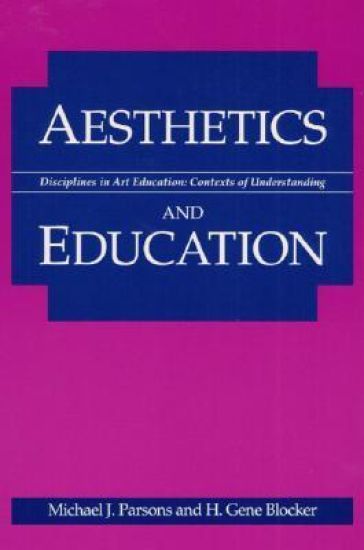
What is the appropriate content of aesthetics for students of art at different age levels? How can it best be taught? How should it be combined with studio work and other art disciplines? Michael J. Parsons and H. gene Blocker answer these and other questions in a volume designed to help art educators, potential educators, and curriculum developers integrate aesthetics into the study of art in the school curriculum. The two introduce some of the philosophical problems and questions in art, encouraging teachers and others to form a personal outlook on these issues.
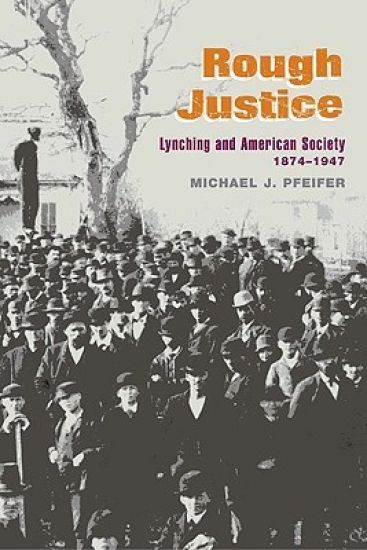
In this deeply researched prequel to his 2006 study Rough Justice: Lynching and American Society, 1874–1947, Michael J. Pfeifer analyzes the foundations of lynching in American social history. Scrutinizing the vigilante movements and lynching violence that occurred in the middle decades of the nineteenth century on the Southern, Midwestern, and far Western frontiers, The Roots of Rough Justice: Origins of American Lynching offers new insights into collective violence in the pre-Civil War era. Pfeifer examines the antecedents of American lynching in an early modern Anglo-European folk and legal heritage. He addresses the transformation of ideas and practices of social ordering, law, and collective violence in the American colonies, the early American Republic, and especially the decades before and immediately after the American Civil War. His trenchant and concise analysis anchors the first book to consider the crucial emergence of the practice of lynching of slaves in antebellum America. Pfeifer also leads the way in analyzing the history of American lynching in a global context, from the early modern British Atlantic to the legal status of collective violence in contemporary Latin America and sub-Saharan Africa. Seamlessly melding source material with apt historical examples, The Roots of Rough Justice tackles the emergence of not only the rhetoric surrounding lynching, but its practice and ideology. Arguing that the origins of lynching cannot be restricted to any particular region, Pfeifer shows how the national and transatlantic context is essential for understanding how whites used mob violence to enforce the racial and class hierarchies across the United States.
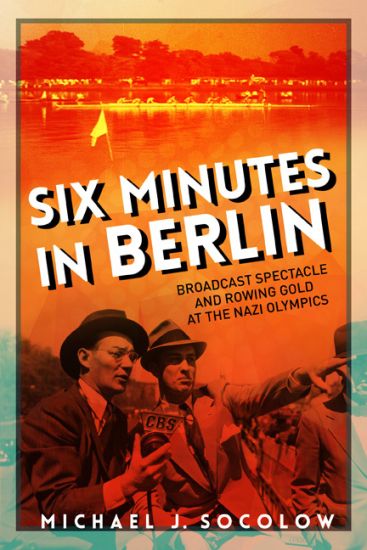
The Berlin Olympics, August 14, 1936. German rowers, dominant at the Games, line up against America's top eight-oared crew. Hundreds of millions of listeners worldwide wait by their radios. Leni Riefenstahl prepares her cameramen. Grantland Rice looks past the 75,000 spectators crowding the riverbank. Above it all, the Nazi leadership, flush with the propaganda triumph the Olympics have given their New Germany, await a crowning victory they can broadcast to the world. The Berlin Games matched cutting-edge communication technology with compelling sports narrative to draw the blueprint for all future sports broadcasting. A global audience--the largest cohort of humanity ever assembled--enjoyed the spectacle via radio. This still-novel medium offered a "liveness," a thrilling immediacy no other technology had ever matched. Michael J. Socolow's account moves from the era's technological innovations to the human drama of how the race changed the lives of nine young men. As he shows, the origins of global sports broadcasting can be found in this single, forgotten contest. In those origins we see the ways the presentation, consumption, and uses of sport changed forever.
Revised, updated, and expanded with the latest interpretations and fossil discoveries, the second edition of Oceans of Kansas adds new twists to the fascinating story of the vast inland sea that engulfed central North America during the Age of Dinosaurs. Giant sharks, marine reptiles called mosasaurs, pteranodons, and birds with teeth all flourished in and around these shallow waters. Their abundant and well-preserved remains were sources of great excitement in the scientific community when first discovered in the 1860s and continue to yield exciting discoveries 150 years later. Michael J. Everhart vividly captures the history of these startling finds over the decades and re-creates in unforgettable detail these animals from our distant past and the world in which they lived—above, within, and on the shores of America's ancient inland sea.
How people make decisions in an era of too much information and fake news.Humans originally evolved in a world of few choices. Prehistoric, preindustrial, and predigital eras required fewer decisions than today's all-access, always-on world of too much information. Economists have largely discarded the idea that agents act rationally and the market follows suit. It seems that no matter how small or innocuous a decision might seem, there's almost no way to guess the effect it might have. The authors of The Importance of Small Decisions view decisions and their outcomes from a different perspective: as key elements in the evolution of culture. In this trailblazing book, they examine different kinds of decisions and map the outcomes, both short- and long-term. Drawing on this, they introduce a map of social behavior that captures the essential elements of human decision-making.The authors look at the New England Patriots' decision in 2000 to draft an underachieving college quarterback named Tom Brady; they consider Warren Buffett's investment strategy; and they chart the "dancing landscape" of a college applicant's decision-making environment. Finally, they show that decisions can be ranked according to transparency of choice and social influence. When fake news seems indistinguishable from real news and when the internet offers a cacophony of voices, they warn, we can't afford to crowdsource our decisions.
Why you are more than just a brain, more than just a brain-and-body, and more than all your assumptions about who you are.Who are you? Are you just a brain? A brain and a body? All the things you have done and the friends you have made? Many of us assume that who we really are is something deep inside us, an inner sanctuary that contains our true selves. In Who You Are, Michael Spivey argues that the opposite is true: that you are more than a brain, more than a brain-and-body, and more than all your assumptions about who you are. Rather than peeling layers away to reveal the inner you, Spivey traces who you are outward. You may already feel in your heart that something outside your body is actually part of you-a child, a place, a favorite book. Spivey confirms this intuition with scientific findings.With each chapter, Spivey incrementally expands a common definition of the self. After (gently) helping you to discard your assumptions about who you are, he draws on research in cognitive science and neuroscience to explain the back-and-forth among all the regions of the brain and the interaction between the brain and body. He then makes the case for understanding objects and locations in your environment as additional parts of who we are. Going even further, he shows that, just as interaction links brain, body, and environment, ever-expanding systems of interaction link humans to other humans, to nonhuman animals, and to nonliving matter. This may seem an interaction or two too far. But you don't have to take his word for it-just consider the evidence he presents.
A concise history of spaceflight, from military rocketry through Sputnik, Apollo, robots in space, space culture, and human spaceflight today.Spaceflight is one of the greatest human achievements of the twentieth century. The Soviets launched Sputnik, the first satellite, in 1957; less than twelve years later, the American Apollo astronauts landed on the Moon. In this volume of the MIT Press Essential Knowledge series, Michael Neufeld offers a concise history of spaceflight, mapping the full spectrum of activities that humans have developed in space.Neufeld explains that "the space program" should not be equated only with human spaceflight. Since the 1960s, unmanned military and commercial spacecraft have been orbiting near the Earth, and robotic deep-space explorers have sent back stunning images of faraway planets. Neufeld begins with the origins of space ideas and the discovery that rocketry could be used for spaceflight. He then discusses the Soviet-U.S. Cold War space race and reminds us that NASA resisted adding female astronauts even after the Soviets sent the first female cosmonaut into orbit. He analyzes the two rationales for the Apollo program: prestige and scientific discovery (this last something of an afterthought). He describes the internationalization and privatization of human spaceflight after the Cold War, the cultural influence of space science fiction, including Star Trek and Star Wars, space tourism for the ultra-rich, and the popular desire to go into space. Whether we become a multiplanet species, as some predict, or continue to call Earth home, this book offers a useful primer.
Christian stewardship has changed and grown into a much broader and richer vision of grateful response to God for all creation. This book helps us with our attitude to money, lifestyle, and generosity; gives guidance on making a mission statment, coping with change, personal appraisal and action. It is backed by the Council of Churches for Britain and Ireland Christian Stewardship Network, the Christian Stewardship Committee of the Central Board of Finance of the Church of England, the Archbishop of the Church in Wales, the Moderator of the General Assembly of the Church of Scotland, the General Secretary of the Baptist Union, the Moderator of the General Assembly of the United Reformed Church, the Territorial Commander of the Salvation Army and the Secretary of the Methodist Stewardship Organisation.
In Godly Letters, Michael J. Colacurcio analyzes a treasury of works written by the first generation of seventeenth-century American Puritans. Arguing that insufficient scrutiny has been given this important oeuvre, he calls for a reevaluation of the imaginative and creative qualities of America's early literature of inspired ecclesiological experiment, one that focuses on the quality of the works as well as the demanding theology they express. Colacurcio gives a detailed, richly contextualized account of the meaning of these "godly letters" in rhetorical, theological, and political terms. From his close readings of the major texts by the first generation of Puritans-including William Bradford, Thomas Hooker, Edward Johnson, John Winthrop, Thomas Shepard, and John Cotton-he expertly illuminates qualities other studies have often overlooked. In his words, close study of the literature yields work "comprehensive, circumspect, determined subtle, energetic, relentlessly intellectual, playful in spite of their cultural prohibitions, in spite of themselves, even, they are in every way remarkable products of a culture that . . . assigned an extraordinarily high place to the life of words." Magisterial in sweep, Godly Letters is likely to stand as the definitive work on the Puritan literary achievement.
In Godly Letters, Michael J. Colacurcio analyzes a treasury of works written by the first generation of seventeenth-century American Puritans. Arguing that insufficient scrutiny has been given this important oeuvre, he calls for a reevaluation of the imaginative and creative qualities of America's early literature of inspired ecclesiological experiment, one that focuses on the quality of the works as well as the demanding theology they express. Colacurcio gives a detailed, richly contextualized account of the meaning of these "godly letters" in rhetorical, theological, and political terms. From his close readings of the major texts by the first generation of Puritans-including William Bradford, Thomas Hooker, Edward Johnson, John Winthrop, Thomas Shepard, and John Cotton-he expertly illuminates qualities other studies have often overlooked. In his words, close study of the literature yields work "comprehensive, circumspect, determined subtle, energetic, relentlessly intellectual, playful in spite of their cultural prohibitions, in spite of themselves, even, they are in every way remarkable products of a culture that . . . assigned an extraordinarily high place to the life of words." Magisterial in sweep, Godly Letters is likely to stand as the definitive work on the Puritan literary achievement.
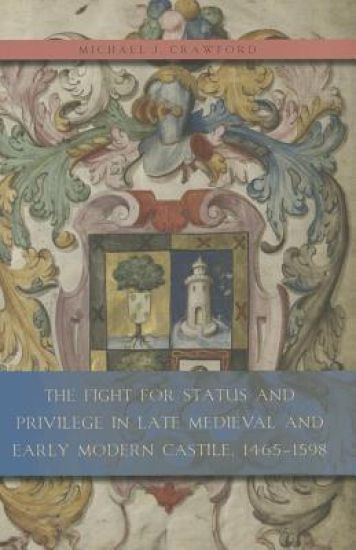
In The Fight for Status and Privilege in Late Medieval and Early Modern Castile, 1465–1598, Michael Crawford investigates conflicts about and resistance to the status of hidalgo, conventionally understood as the lowest, most heavily populated rank in the Castilian nobility. It is generally accepted that legal privileges were based on status and class in this premodern society. Crawford presents and explains the contentious realities and limitations of such legal privileges, particularly the conventional claim of hidalgo exemption from taxation. He focuses on efforts to claim these privileges as well as opposing efforts to limit and manage them. Although historians of Spain acknowledge such conflicts, especially lawsuits associated with this status, none have focused a study on this extraordinarily widespread phenomenon. This book analyzes the inevitable contradictions inherent in negotiation for and the implementation of privilege, scrutinizing the many jurisdictions that intervened in these struggles and debates, including the crown, judiciary, city council, and financial authorities. Ultimately, this analysis imparts important insights about the nature of sixteenth-century Castilian society with wide-ranging implications about the relationship between social status and legal privileges in the early modern period as a whole.
In The Fight for Status and Privilege in Late Medieval and Early Modern Castile, 1465–1598, Michael Crawford investigates conflicts about and resistance to the status of hidalgo, conventionally understood as the lowest, most heavily populated rank in the Castilian nobility. It is generally accepted that legal privileges were based on status and class in this premodern society. Crawford presents and explains the contentious realities and limitations of such legal privileges, particularly the conventional claim of hidalgo exemption from taxation. He focuses on efforts to claim these privileges as well as opposing efforts to limit and manage them. Although historians of Spain acknowledge such conflicts, especially lawsuits associated with this status, none have focused a study on this extraordinarily widespread phenomenon. This book analyzes the inevitable contradictions inherent in negotiation for and the implementation of privilege, scrutinizing the many jurisdictions that intervened in these struggles and debates, including the crown, judiciary, city council, and financial authorities. Ultimately, this analysis imparts important insights about the nature of sixteenth-century Castilian society with wide-ranging implications about the relationship between social status and legal privileges in the early modern period as a whole.
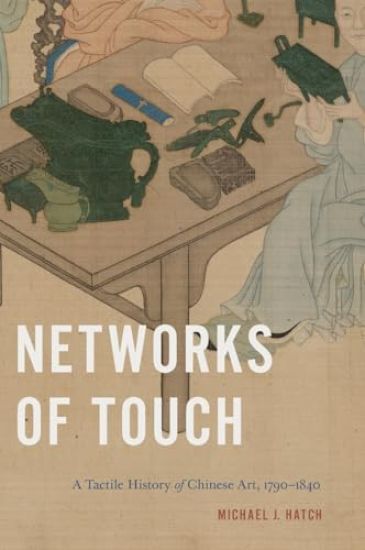
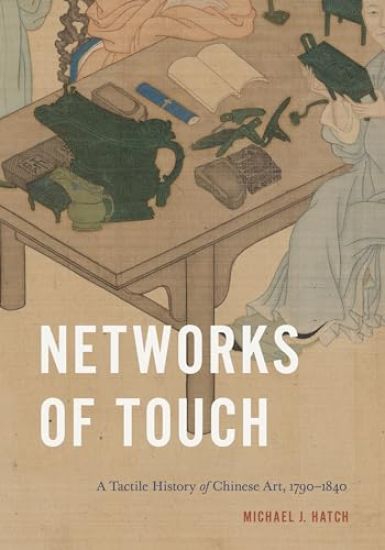
In early nineteenth-century China, a remarkable transformation took place in the art world: artists among China’s educated elites began to use touch to forge a more authentic relationship to the past, to challenge stagnant artistic canons, and to foster deeper human connections. Networks of Touch is an engaging exploration of this sensory turn.In this book, Michael J. Hatch examines the artistic network of Ruan Yuan (1764–1849), a scholar-official whose patronage supported a generation of artists and learned people who prioritized epigraphic research as a means of truing the warped contours of Confucian heritage. Their work instigated an “epigraphic aesthetic”—an appropriation of the stylistic, material, and tactile features of ancient inscribed objects and their reproductive technologies—in late eighteenth- and early nineteenth-century artwork. Rubbings, a reduplicative technology, challenged the dominance of brushwork as the bearer of artistic authority. While brushwork represented the artist’s physical presence through ink and paper, rubbings were direct facsimiles of tactile experiences with objects. This shift empowered artists and scholars to transcend traditional conventions and explore new mediums, uniting previously separate image-making practices while engaging audiences through the senses.Centering on touch and presenting a fresh perspective on early nineteenth-century literati art in China, this volume sheds light on a period often dismissed as lacking innovation and calls into question optical realism’s perceived supremacy in reshaping the sensory experience of the modern Chinese viewer.
In early nineteenth-century China, a remarkable transformation took place in the art world: artists among China’s educated elites began to use touch to forge a more authentic relationship to the past, to challenge stagnant artistic canons, and to foster deeper human connections. Networks of Touch is an engaging exploration of this sensory turn. In this book, Michael J. Hatch examines the artistic network of Ruan Yuan (1764–1849), a scholar-official whose patronage supported a generation of artists and learned people who prioritized epigraphic research as a means of truing the warped contours of Confucian heritage. Their work instigated an “epigraphic aesthetic”—an appropriation of the stylistic, material, and tactile features of ancient inscribed objects and their reproductive technologies—in late eighteenth- and early nineteenth-century artwork. Rubbings, a reduplicative technology, challenged the dominance of brushwork as the bearer of artistic authority. While brushwork represented the artist’s physical presence through ink and paper, rubbings were direct facsimiles of tactile experiences with objects. This shift empowered artists and scholars to transcend traditional conventions and explore new mediums, uniting previously separate image-making practices while engaging audiences through the senses. Centering on touch and presenting a fresh perspective on early nineteenth-century literati art in China, this volume sheds light on a period often dismissed as lacking innovation and calls into question optical realism’s perceived supremacy in reshaping the sensory experience of the modern Chinese viewer.
One of the most widely accepted theories of motivation is a trichotomy of needs theory popularized by David C. McClelland of Harvard University. Many organizational behavior textbooks today discuss McClelland's need for achievement, need for affiliation, and need for power. The three needs have been found to possess predictive power in a wide variety of settings, particularly organizational ones. Impressed by the ability of the three needs to explain behavior, but aware of the measurement problems associated with the Thematic Apperception Test which is used to assess these needs, the author searched for an alternative measurement approach. This book reports on those design efforts, validation of the instrument, and use of the instrument in organizational settings.
It is to be hoped that this analysis of the Dominican situation by two persons who have given it much attention, . . . will help the understanding of deep problems of the Republic to which the American government may, in its wisdom, address itself. Robert Wesson, Series Editor . . . Wiarda and Kryzanek have written a splended overview that meets a major need in the literature. Recommended for upper-division undergraduate students and general readers. ChoiceAlthough not usually considered one of the major players in Wetern hemispheric affairs, the Dominican Republic offers the student and professional interested in Latin America a nearby laboratory in which to study the effects of dictatorship, economic intervention, and revolutionary change. The Dominican Republic is also at the center of North-South, East-West currents swirling through the Caribbean Basin. This comprehensive study interweaves the complex interrelations between the international scene and the internal character and development of Dominican national life.
Startling changes are taking place in Western Europe; this study argues that the U.S. strategic response should be no less dramatic. Michael J. Collins describes a creation of a new type of political organization--a new way for nations to integrate themselves politically in Western Europe--and contends that this new model is dynamic enough to rival older historical paradigms. Western Europeans are making massive changes in their international arrangements, with each other and the outside world, to permit a natural evolution of national cultures along with the development of an intra-European culture. This changing political and economic situation in Europe has already affected the way the United States looks at the world diplomatically, and it may soon alter the general thrust of U.S. military strategy with regard to NATO. Europeans and Americans alike are questioning how much longer a united Europe can expect American troops to defend them against the Soviet Union, now that the Cold War era has ended. U.S. military strategy must change because the world is changing, and the increasing power of Western Europe is a major factor in the equation.Collins concludes that the Common Market Countries can no longer be understood as a simple collection of nation-states joined in a cartel or economic alliance, calling for a change in U.S. foreign policy and strategy. Chapter 1 describes the developments in Western Europe since World War II. Chapters 2 and 3 discuss how the new Western European alliance interacts along both military and political lines. Chapter Four describes the character of Western Europe and the replacement of the nation-state concept with a new flexibility in dealing with each other and the surrender of sovereignty by the constituent states in limited but decisive areas. The final two chapters suggest possible policy and strategic responses by the United States. A chapter on strategic implications is bound to be controversial, particularly to traditional military strategists. These thought-provoking analyses and policy implementations will interest scholars and students of European History and Politics, Comparative Politics, United States Foreign Policy and Defense, as well as government policy makers and decision makers in international business.
This study provides a timely and useful benchmark for analysis of the effects of the recently negotiated North American Free Trade Agreement on investment flows. It also presents a unified history of foreign investment in Canada, Mexico, and the United States over the twentieth century, stressing interactions among these countries and their changing policies towards inward and outward investment. Twomey analyzes economic theories of foreign investment from the perspectives of neoclassical economics and political science and places them in the context of the ongoing debate over neo-protectionist policies and the role of the United States in the global economy.