Kirjojen hintavertailu. Mukana 11 342 296 kirjaa ja 12 kauppaa.

Kirjahaku

Etsi kirjoja tekijän nimen, kirjan nimen tai ISBN:n perusteella.

1000 tulosta hakusanalla Michael Neubert

Michael Collins and the Financing of Violent Political Struggle
Michael Collins was a pivotal figure in the Irish struggle for independence and his legacy has resonated ever since. Whilst Collins’ role as a guerrilla leader and intelligence operative is well documented, his actions as the clandestine Irish government Minister of Finance have been less studied. The book analyses how funds were raised and transferred in order that the IRA could initiate and sustain the military struggle, and lay the financial foundations of an Irish state.Nicholas Ridley examines the legacy of these actions by comparing Collins’ modus operandi for raising and transferring clandestine funds to those of more modern groups engaged in political violence, as well as the laying of foundations for Irish financial and fiscal regulation.
Michael Eigen

Michael Eigen

Loray Daws

TAYLOR FRANCIS LTD
2022
sidottu
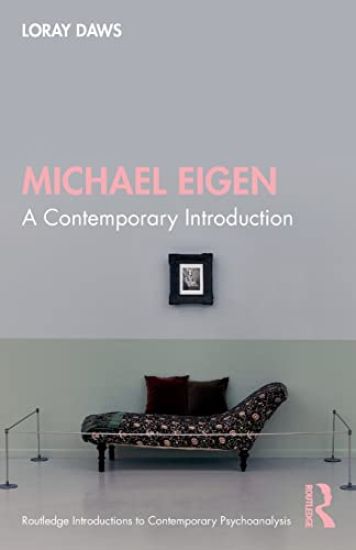
This insightful book critically reviews and presents an accessible introduction to the life and work of one of the most celebrated modern psychoanalysts, Michael Eigen.With work spanning over five decades, countless articles, and thirty published book volumes, Daws explores Eigen’s main works through key themes and concepts such as working with our psychotic core, psychic deadness, primary affects, and the need for spirituality for practicing psychoanalysts. The book covers Eigen’s early life and formative clinical years, explores his re-reading of Freud, Jung and Lacan, and lastly covers Eigen’s Seoul seminars, the impact of trauma, the importance of faith and the use of Kabbalah as a framework for analysis.This book will not only engage the first-time Eigen reader, but will also be of much interest to the experienced psychologist and psychoanalyst already familiar with Eigen’s work.
Michael Eigen

Michael Eigen

Loray Daws

TAYLOR FRANCIS LTD
2022
nidottu
This insightful book critically reviews and presents an accessible introduction to the life and work of one of the most celebrated modern psychoanalysts, Michael Eigen.With work spanning over five decades, countless articles, and thirty published book volumes, Daws explores Eigen’s main works through key themes and concepts such as working with our psychotic core, psychic deadness, primary affects, and the need for spirituality for practicing psychoanalysts. The book covers Eigen’s early life and formative clinical years, explores his re-reading of Freud, Jung and Lacan, and lastly covers Eigen’s Seoul seminars, the impact of trauma, the importance of faith and the use of Kabbalah as a framework for analysis.This book will not only engage the first-time Eigen reader, but will also be of much interest to the experienced psychologist and psychoanalyst already familiar with Eigen’s work.
Michael Chekhov and Sanford Meisner
Michael Chekhov and Sanford Meisner: Collisions and Convergence in Actor Training offers a comprehensive analysis of the Sanford Meisner Acting Technique in comparison to the Michael Chekhov Acting Technique. This compilation reveals the connections as well as the contradictions between these two very different approaches, while highlighting meaningful bridges and offering in-depth essays from a variety of sources, including master teachers with years of experience and new and rising stars in the field. The authors provide philosophical arguments on actor training, innovative approaches to methodology, and explorations into integration, as well as practical methods of application for the classroom or rehearsal room, or scaffolded into a curriculum.Michael Chekhov and Sanford Meisner: Collisions and Convergence in Actor Training is an excellent resource for professors teaching Introductory, Intermediate or Advanced Acting Technique as well as acting program directors and department chairs seeking new, impactful research on actor training.
Michael Chekhov and Sanford Meisner
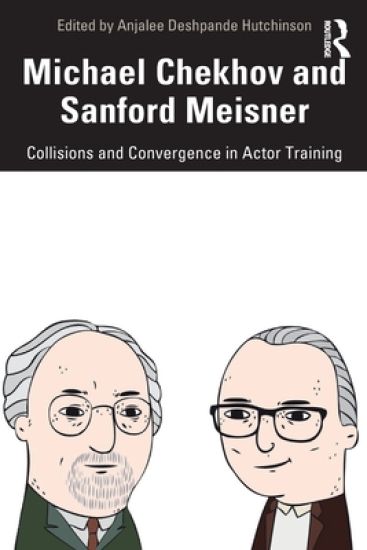
Michael Chekhov and Sanford Meisner: Collisions and Convergence in Actor Training offers a comprehensive analysis of the Sanford Meisner Acting Technique in comparison to the Michael Chekhov Acting Technique. This compilation reveals the connections as well as the contradictions between these two very different approaches, while highlighting meaningful bridges and offering in-depth essays from a variety of sources, including master teachers with years of experience and new and rising stars in the field. The authors provide philosophical arguments on actor training, innovative approaches to methodology, and explorations into integration, as well as practical methods of application for the classroom or rehearsal room, or scaffolded into a curriculum.Michael Chekhov and Sanford Meisner: Collisions and Convergence in Actor Training is an excellent resource for professors teaching Introductory, Intermediate or Advanced Acting Technique as well as acting program directors and department chairs seeking new, impactful research on actor training.
Michael Tippett’s Fifth String Quartet

Michael Tippett’s Fifth String Quartet

Thomas Schuttenhelm

Routledge
2020
nidottu
Thomas Schuttenhelm provides a detailed account of the events leading up to and throughout the compositional process associated with Michael Tippett’s Fifth String Quartet and a comprehensive analysis of the entire quartet. The commentary discusses this work in the context of Tippett’s creative development and places it within the historical context of the genre of the string quartet. The commentary includes interviews with the members of the Lindsay String Quartet, who premiered the work, as well as previously unpublished letters from the composer and interviews with Tippett in which he discusses the quartet in detail. Special attention is given to Tippett’s preliminary attempts, which were only recently discovered (2011) and to the evidence that suggests he altered the original ending. Included are images from the composer’s sketchbooks and manuscripts, as well as the original beginning and the altered ending.
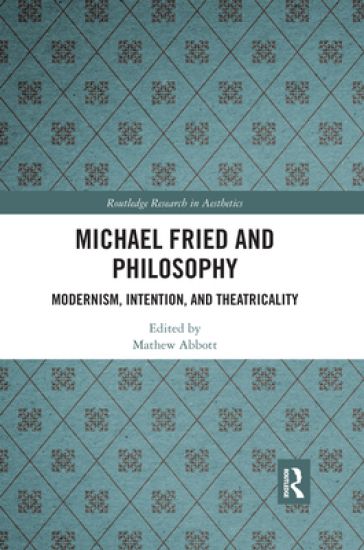
Michael Fried and Philosophy
This volume brings philosophers, art historians, intellectual historians, and literary scholars together to argue for the philosophical significance of Michael Fried’s art history and criticism. It demonstrates that Fried’s work on modernism, artistic intention, the ontology of art, theatricality, and anti-theatricality can throw new light on problems in and beyond philosophical aesthetics. Featuring an essay by Fried and articles from world-leading scholars, this collection engages with philosophical themes from Fried’s texts, and clarifies the relevance to his work of philosophers such as Ludwig Wittgenstein, Stanley Cavell, Morris Weitz, Elizabeth Anscombe, Arthur Danto, George Dickie, Immanuel Kant, Friedrich Schiller, G. W. F. Hegel, Arthur Schopenhauer, Friedrich Nietzsche, Denis Diderot, Maurice Merleau-Ponty, Roland Barthes, Jacques Rancière, and Søren Kierkegaard. As it makes a case for the importance of Fried for philosophy, this volume contributes to current debates in analytic and continental aesthetics, philosophy of action, philosophy of history, political philosophy, modernism studies, literary studies, and art theory.
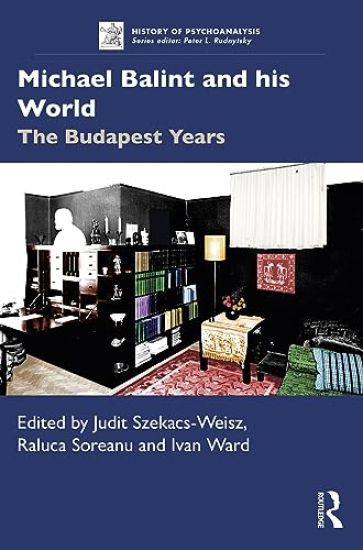
Michael Balint and his World: The Budapest Years
This fascinating collection explores the life of renowned psychoanalyst Michael Balint in his native Budapest. With a Balint revival in mind, Michael Balint and his World: The Budapest Years brings together the work of psychoanalysts, social thinkers, historians, literary scholars, artists and medical doctors who draw on Balint’s work in a variety of ways.The book focuses on Balint’s early years in Budapest, where he worked with Sándor Ferenczi and a circle of colleagues, capturing the transformations of psychoanalytic thinking as it happens in a network of living relationships. Tracing creative disagreements as well as collaborations, and setting these exchanges in the climate of scientific, social and cultural developments of the time, Michael Balint and his World: The Budapest Years follows the development of psychoanalytic thinking during these critical times. The book recalls the story of several “lost children” of the Budapest School and reconstitutes Balint’s important early contributions on primary love. It also examines his little-known relationship with Lacan, including the extended discussion of Balint’s work by Wladimir Granoff in Lacan’s first public seminar in Paris in 1954, published here for the first time.This important book provides a fresh perspective on Balint’s enormous contribution to the field of psychoanalysis and will interest both scholars and clinicians. It will also inspire those interested in clinical practice and the applications of psychoanalysis to the cultural sphere.
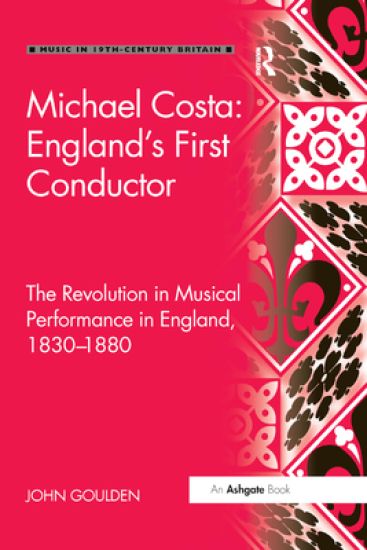
Michael Costa: England's First Conductor
Among the major changes that swept through the music industry during the mid-nineteenth century, one that has received little attention is how musical performances were managed and directed. Yet this was arguably the most radical change of all: from a loose control shared between the violin-leader, musical director and maestro al cembalo to a system of tight and unified control under a professional conductor-manager. This process brought with it not only baton conducting in its modern form, but also higher standards of training and discipline, a new orchestral lay-out and a more focused rehearsal regime. The resulting rise in standards of performance was arguably the greatest achievement of English music in the otherwise rather barren mid-Victorian period. The key figure in this process was Michael Costa, who built for himself unprecedented contractual powers and used his awesome personal authority to impose reform on the three main institutions of mid-Victorian music: the opera houses, the Philharmonic and the Sacred Harmonic Society. He was a central figure in the battles between the two rival opera houses, between the Philharmonic and the New Philharmonic, and between the venerable Ancient Concerts and the mass festival events of the Sacred Harmonic Society. Costa’s uniquely powerful position in the operatic, symphonic and choral world and the rapidity with which he was forgotten after his death provide a fascinating insight into the politics and changing aesthetics of the Victorian musical world.
Michael Collins and the Troubles

Michael Collins and the Troubles

Ulick O'Connor

W. W. Norton Company
1996
nidottu
Michael Collins played a crucial role in rekindling Ireland's aspirations for freedom. A leading figure in the nation's bitter and bloody resistance to British Rule, he played a key part in reshaping Ireland's history as we know it today. Ulick O'Connor includes valuable new information about the secret war against England and provides a fresh and highly dramatic account of Ireland's fight for freedom. Using important material from the archives of General Richard Mulcahy, Collins's chief of staff, as well as personal interviews with Mulcahy, Eamon de Valera, and many other leading figures Michael Collins and the Troubles is a vivid and often horrifying account of a crucial time, the consequences of which are still felt today.
Michael Jordan and the New Global Capitalism
With Michael Jordan and the New Global Capitalism, Walter LaFeber has written a biography, a social history, and a far-ranging economic critique. From basketball prodigy to international phenomenon to seductive commercial ideal, Michael Jordan is the supreme example of how American corporations have used technology in a brave, massively wired new world to sell their products in every corner of the globe. LaFeber's examination of Nike and its particular dominion over the global marketplace is often scathing, while his fascinating mini-biography of Michael Jordan and the commercial history of basketball reveal much about American society. For this new paperback edition, LaFeber has added a chapter on globalization in a changed world, after mass protests and since September 11. "Bold, riveting....Brilliantly illuminates how hyper-US capitalism has spread its financial wings around the globe."—Douglas Brinkley "LaFeber brings an impressive intellect to bear on his subject."—Barbara Rudolph, Chicago Tribune
Michael Taylor

Michael Taylor

Salny Stephen M.

WW Norton Co
2009
sidottu
One of the most innovative, imitated, and internationally respected design icons of the twentieth century, Michael Taylor brought with him a new vision that changed California's, and the profession's, approach to interiors. More than fifty of his commissions and other projects, ranging from classical to "Californian," illustrate the breadth of his talent.
Michael Frayn Collected Columns

Michael Frayn Collected Columns

Michael Frayn

Methuen Publishing Ltd
2007
pokkari
One of the funniest writers of his generation, Michael Frayn has been writing humorous newspaper columns since 1959, principally for the "Guardian" and "Observer", and originally came to prominence as the thrice weekly purveyor of these short, surreal, razor-sharp explorations of human foibles, sex, politics, manners, and the events of the day. This volume brings together 110 of his finest and funniest pieces from over the years, selected and introduced by Michael Frayn himself, and is an unmissable treat for the many fans of his unique comic voice, as well as a revelation for fans of the award-winning literary novels and plays of his later career.
Michael Fordham

Michael Fordham

Astor James

TAYLOR FRANCIS LTD
1995
sidottu
Michael Fordham's immense contribution to analytical psychology has been marked by its combination of practical and theoretical genius. Before retirement he ran a full clinical practice alongside the co-editorship of The Collected Works of Jung, development of the Society of Analytical Psychology and its child and adult trainings, and a fifteen-year editorship of the Journal of Analytical Psychology. In his published work there has emerged a consistent and original contribution to Jungian thought, particularly in relation to the processes of individuation on childhood, and the links between analytical psychology and the work of the Kleinians. James Astor takes a critical and informed look at Fordham's work and ideas. Illustrating theory with examples drawn from clinical practice, the book will provide a useful amplification of Fordham's own work for students of analytical psychology and a sound introduction to it for analysts interested in understanding the connections between post-Jungian and post-Kleinian thought.
Michael Fordham

Michael Fordham

James Astor

Routledge
1995
nidottu
Michael Fordham's immense contribution to analytical psychology has been marked by its combination of practical and theoretical genius. Before retirement he ran a full clinical practice alongside the co-editorship of The Collected Works of Jung, development of the Society of Analytical Psychology and its child and adult trainings, and a fifteen-year editorship of the Journal of Analytical Psychology. In his published work there has emerged a consistent and original contribution to Jungian thought, particularly in relation to the processes of individuation on childhood, and the links between analytical psychology and the work of the Kleinians. James Astor takes a critical and informed look at Fordham's work and ideas. Illustrating theory with examples drawn from clinical practice, the book will provide a useful amplification of Fordham's own work for students of analytical psychology and a sound introduction to it for analysts interested in understanding the connections between post-Jungian and post-Kleinian thought.
Michael Balint

Michael Balint

Andrew Elder; Robert Gosling; Harold Stewart

Routledge
1996
nidottu
Whilst Michael Balint's applied work is widely known, many of his theoretical contributions have been incorporated into everyday analysis without due recognition of their source. In this account of his thinking, Harold Stewart evaluates the extent of Balint's contribution to psychoanalysis and firmly re-establishes his place within the development of Object Relations theory.The first section examines Balint's theories of human psychological development, defining such concepts as primary love, ocnophilia and philobatia, the basic fault and the three areas of the mind. The author places Balint's understanding of the analyst's influence and technique in the context of his relationship with Sandor Ferenczi, his analyst and mentor.The second section of this work looks at how the "Balint Group" has contributed to the assessment and understanding of emotional problems in various areas, including general practice, marital work and psychosexual medicine. A charismatic teacher, Balint's method of work with General Practitioners has become an established worldwide institution. Features of this work, including the use of countertransference and the affective response of the doctor are vividly described here by two General Practitioners, Andrew Elder and Robert Gosling.Michael Balint: Object Relations, Pure and Applied brings alive Balint's teaching and practice and demonstrates the relevance of his theories to many of the problematic issues in current analytic practice.
Michael Porter
Michael Porter (b. 1947) has been described by The Economist as ‘the doyen of living management gurus’. Boldly introducing the language and concepts of economics into management theory, his work has focused on how a firm (or a region) can build a competitive advantage and develop a competitive strategy.Supplemented with the editors’ introduction, which places the gathered work in its historical and intellectual context, this new four-volume collection from Routledge brings together the best and most influential critical writing on Porter.
Michael J. Shapiro
Michael J. Shapiro’s writings have been innovatory with respect to the phenomena he has taken to be political, and the concomitant array of methods that he has brilliantly mastered. This book draws from his vast output of articles, chapters and books to provide a thematic yet integrated account of his boundary-crossing innovations in political theory and masterly contributions to our understanding of methods in the social sciences. The editors have focused on work in three key areas:DiscourseShapiro was one of the first theorists to demonstrate convincingly, and in a manner that has had a long-standing impact on the field, that language is not epiphenomenal to politics. Indeed, he shows that language is constitutive of politics. From his frequently-cited article on metaphor from the early 1980s to recent work on discourse and globalization, Shapiro has shown that politics happens not only with and through the use of language, but within discourse as a material practice.CultureGabriel Almond and Sidney Verba’s (1963) famous work on ‘The Civic Culture’ established a long-held but ultimately counterproductive relationship between culture and politics, one in which culture is an independent variable that has effects on politics. Samuel Huntington’s (1998) (in)famous polemic, ‘The Clash of Civilizations’, only pushes this relationship to its breaking point. Shapiro’s rich and numerous writings on culture provide a powerful and important antidote to this approach, as Shapiro consistently shows (across wide-ranging contexts) that politics is in culture and culture is in politics, and no politically salient approach to culture can afford to turn either term into a causal variable.ViolenceWhile violence is surely not a theme foreign to political studies, no one has done more or better work in contemporary political theory to bring violence into play as a central term of political thought and to expand our understanding of violence. By reconceptualizing and reinterpreting this term, Shapiro’s work has helped us to rethink the very boundaries between political theory and international relations as putatively separate subfields of political science. And it explains why both political theorists interested in International Relations and International Relations scholars concerned with a broader understanding of international politics must both start with Shapiro’s work as required reading.
Michael J. Shapiro
Michael J. Shapiro’s writings have been innovatory with respect to the phenomena he has taken to be political, and the concomitant array of methods that he has brilliantly mastered. This book draws from his vast output of articles, chapters and books to provide a thematic yet integrated account of his boundary-crossing innovations in political theory and masterly contributions to our understanding of methods in the social sciences. The editors have focused on work in three key areas:DiscourseShapiro was one of the first theorists to demonstrate convincingly, and in a manner that has had a long-standing impact on the field, that language is not epiphenomenal to politics. Indeed, he shows that language is constitutive of politics. From his frequently-cited article on metaphor from the early 1980s to recent work on discourse and globalization, Shapiro has shown that politics happens not only with and through the use of language, but within discourse as a material practice.CultureGabriel Almond and Sidney Verba’s (1963) famous work on ‘The Civic Culture’ established a long-held but ultimately counterproductive relationship between culture and politics, one in which culture is an independent variable that has effects on politics. Samuel Huntington’s (1998) (in)famous polemic, ‘The Clash of Civilizations’, only pushes this relationship to its breaking point. Shapiro’s rich and numerous writings on culture provide a powerful and important antidote to this approach, as Shapiro consistently shows (across wide-ranging contexts) that politics is in culture and culture is in politics, and no politically salient approach to culture can afford to turn either term into a causal variable.ViolenceWhile violence is surely not a theme foreign to political studies, no one has done more or better work in contemporary political theory to bring violence into play as a central term of political thought and to expand our understanding of violence. By reconceptualizing and reinterpreting this term, Shapiro’s work has helped us to rethink the very boundaries between political theory and international relations as putatively separate subfields of political science. And it explains why both political theorists interested in International Relations and International Relations scholars concerned with a broader understanding of international politics must both start with Shapiro’s work as required reading.
Michael Harrington

Michael Harrington

Robert Gorman

Routledge
1995
nidottu
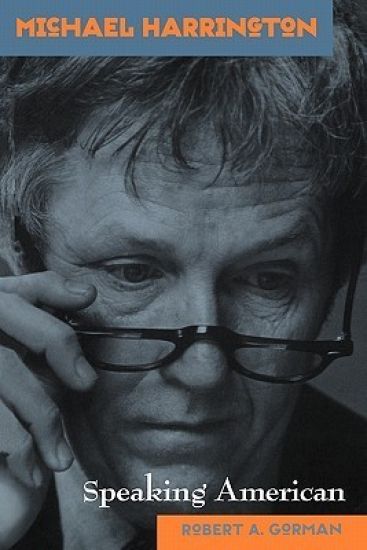
In this provocative biographical portrait, Robert A. Gorman examines the political and intellectual life of this engaging radical thinker while looking ahead to the ways in which the work and example he has left us can affect political life in the twenty-first century. Michael Harrington's major attempt to Americanize socialism plays a big part in Gorman's analysis. He tells readers how it is possible to be both radical and patriotic and how an unjust system can be transformed without being destroyed.