
Kirjahaku
Etsi kirjoja tekijän nimen, kirjan nimen tai ISBN:n perusteella.
876 tulosta hakusanalla Michaelangelo Rodriguez

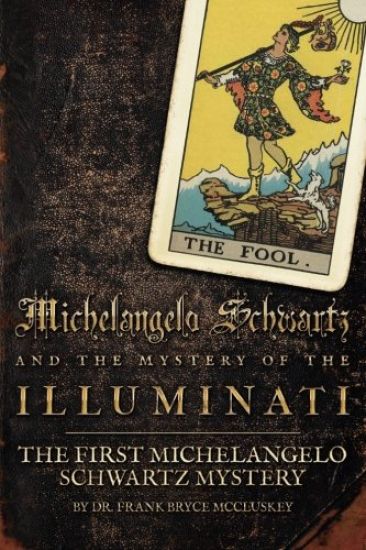
Michelangelo Schwartz and the Mystery of the Illuminati: The First Michelangelo Schwartz Mystery
Frank Bryce McCluskey
Createspace Independent Publishing Platform
2014
nidottu
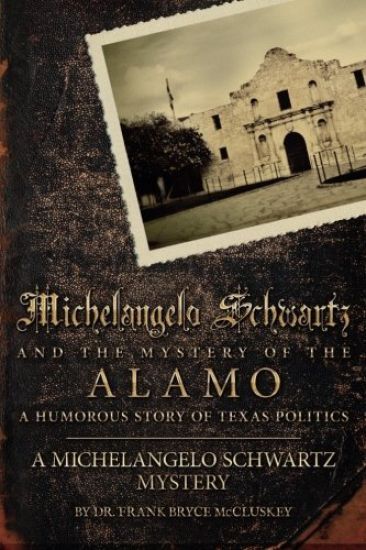
Michelangelo Schwartz and the Mystery of the Alamo: A Humorous Story of Texas Politics
Frank Bryce McCluskey
Createspace Independent Publishing Platform
2015
nidottu
Mix up Texas politics, a presidential race, a murder at the Alamo, an Apache medicine man, and then add a dash of former Rhodes Scholar who now goes by the name "Wildcat Willie" and you have the cast of the hilarious new comic novel Michelangelo Schwartz and the Mystery of the Alamo. Dr. Michelangelo Schwartz is a disheveled and disgraced professor who loves literature, booze and women, but not in that particular order. He finds himself in hot water when he heads to Texas to find out what makes the Lone Star State so unique. Along the way he will ride a mechanical bull, go on a rattlesnake hunt, spend time in an Apache sweat lodge and get a glimpse into the inner workings of the Texas oilmen. Hold on to your ten-gallon hat as we ride that bucking bronco called "Texas politics" and solve a crime that will change the history of our country and determine the next president of the United States. PRAISE FOR Michelangelo Schwartz and Mystery of the Illuminati. "Step aside, Robert Langdon, respected, betweeded, Mickey Mouse Watch bedecked, sinecured Harvard symbologist (a term made up by Dan Brown). Here comes Michelangelo Schwartz, in mustard bespattered tweeds, a drink in either hand, disgraced, disheveled, and unashamed For its energy alone, this novel rates five stars, perhaps six. Dr. McCluskey's scholarship and erudition seed his narrative with unalloyed nuggets of knowledge". Dr. Joel Feimer, author of "Tales of Wonder from Many Lands". "This laugh-a-minute outrageous comedy will keep you enthralled from page one to the end". Bob O'Connor, author of The Amazing Legacy of James E. Hanger, Civil War Soldier "At last, a reader to enjoy paranoia to the full, and without hurting anybody. Five stars" Dr. Boria Sax author of Stealing Fire. "Schwartz is a slapstick intellectual of a high order". Dr. John Briggs author of Seven Life Lessons of Chaos. "For his first novel, he gives us a winning combination of intellectual history, philosophy, imagination, humor, and sincerity". Dr. Michael Brannigan author of Striking A Balance In McCluskey's (Michelangelo Schwartz and the Mystery of the Illuminati, 2014, etc.) comic thriller, the college professor-turned-amateur sleuth returns to expose the truth behind a bit of Texas history some wish to keep hidden...Author McCluskey certainly knows how to dish out the humor: his story is jam packed with characters spewing hilarious conspiracy theories...Schwartz, even if not the greatest detective, makes a surprisingly good TV host and Texas tour guide. Die-hard mystery fans might be let down, but those looking for laughs will enjoy this rollicking, uproarious tale.- Kirkus Review 2015
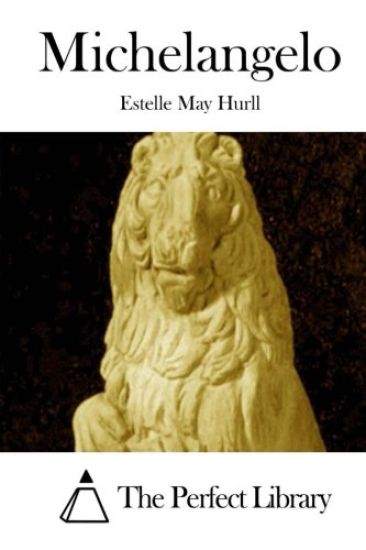
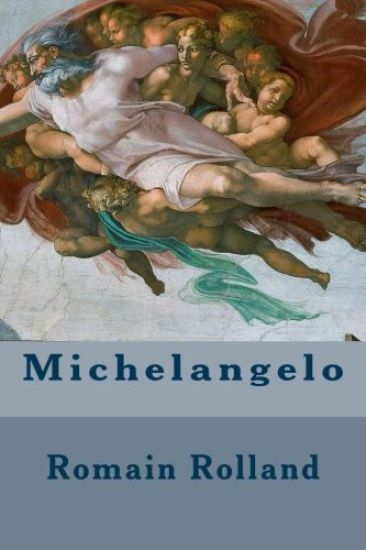
The life of Michelangelo offers one of the most striking examples of the influence that a great man can have on his time. At the moment of his birth in the second half of the fifteenth century the serenity of Ghirlandajo and of Bramante illuminated Italian art. Florentine sculpture seemed about to languish away from an excess of grace in the delicate and meticulous art of Rossellino, Disiderio, Mino da Fiesole, Agostino di Duccio, Benedetto da Maiano and Andrea Sansovino. Michelangelo burst like a thunder-storm into the heavy, overcharged sky of Florence. Michelangelo di Lodovico Buonarroti Simoni or more commonly known by his first name Michelangelo (6 March 1475 - 18 February 1564) was an Italian sculptor, painter, architect and poet of the High Renaissance born in the Republic of Florence, who exerted an unparalleled influence on the development of Western art. 1] Considered by some the greatest living artist during his lifetime, he has since been described as one of the greatest artists of all time. 1] Despite making few forays beyond the arts, his artistic versatility was of such a high order that he is often considered a contender for the title of the archetypal Renaissance man, along with his rival, the fellow Florentine and client of the Medici, Leonardo da Vinci. A number of Michelangelo's works of painting, sculpture and architecture rank among the most famous in existence. 1] His output in these fields was prodigious; given the sheer volume of surviving correspondence, sketches and reminiscences, he is the best-documented artist of the 16th century. He sculpted two of his best-known works, the Piet and David, before the age of thirty. Despite holding a low opinion of painting, he also created two of the most influential frescoes in the history of Western art: the scenes from Genesis on the ceiling of the Sistine Chapel in Rome, and The Last Judgment on its altar wall. His design of the Laurentian Library pioneered Mannerist architecture. 2] At the age of 74, he succeeded Antonio da Sangallo the Younger as the architect of St. Peter's Basilica. He transformed the plan so that the western end was finished to his design, as was the dome, with some modification, after his death. Michelangelo was the first Western artist whose biography was published while he was alive. 1] In fact, two biographies were published during his lifetime. One of them, by Giorgio Vasari, proposed that Michelangelo's work transcended that of any artist living or dead, and was "supreme in not one art alone but in all three". 3] In his lifetime, Michelangelo was often called Il Divino ("the divine one"). 4] His contemporaries often admired his terribilit -his ability to instil a sense of awe. Attempts by subsequent artists to imitate 5] Michelangelo's impassioned, highly personal style resulted in Mannerism, the next major movement in Western art after the High Renaissance. Michelangelo, with Leonardo da Vinci and Raphael, is one of the three giants of the Florentine High Renaissance. Although their names are often cited together, Michelangelo was younger than Leonardo by 23 years, and older than Raphael by eight. Because of his reclusive nature, he had little to do with either artist and outlived both of them by more than forty years. Michelangelo took few sculpture students. He employed Francesco Granacci, who was his fellow pupil at the Medici Academy, and became one of several assistants on the Sistine Chapel ceiling. 40] Michelangelo appears to have used assistants mainly for the more manual tasks of preparing surfaces and grinding colours. Despite this, his works were to have a great influence on painters, sculptors and architects for many generations to come. While Michelangelo's David is the most famous male nude of all time and destined to be reproduced in order to grace cities around the world, some of his other works have had perhaps even greater impact on the course of art.

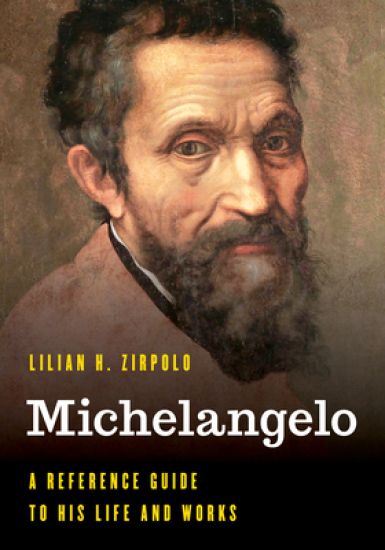
Michelangelo: A Reference Guide to His Life and Works cover the life and works of Michelangelo Buonarroti. Michelangelo is considered to be one of the greatest masters in history and he produced some of the most notable icons of civilization, including the Sistine Ceiling frescoes, the Moses, and the Pietà at St. Peter’s.Includes a detailed chronology of Michelangelo’s life, family, and work.The A to Z section includes the major events, places, and people in Michelangelo’s life and the complete works of his sculptures, paintings, architectural designs, drawings, and poetry.The bibliography includes a list of publications concerning his life and work.The index thoroughly cross-references the chronological and encyclopedic entries.
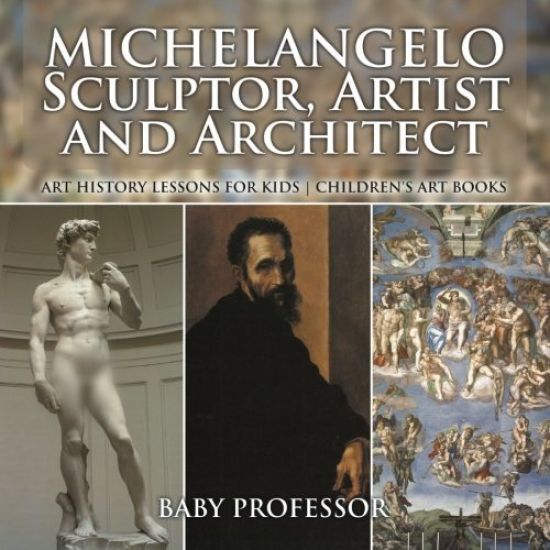
Michelangelo
Baby Professor
2017
pokkari
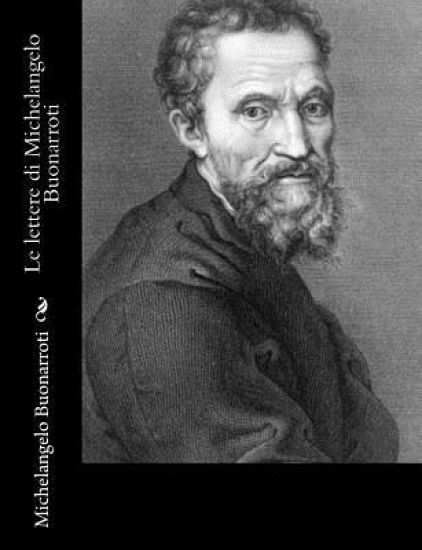
Le lettere di Michelangelo Buonarroti
Michelangelo Buonarroti
Createspace Independent Publishing Platform
2017
nidottu
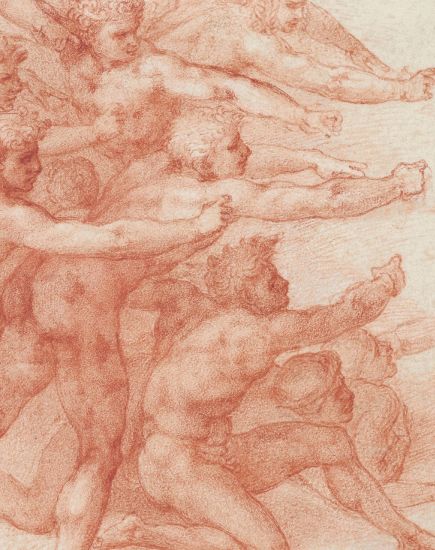
A comprehensive and breathtakingly illustrated presentation of the genius of Michelangelo by the world’s leading expert on the artist The Italian Renaissance master Michelangelo Buonarroti (1475–1564) was especially celebrated for his disegno, a term that embraces both drawing and conceptual design. Featuring more than 200 drawings as well as paintings, sculpture, and architectural plans and views, this authoritative examines Michelangelo as “the divine draftsman and designer” whose work, according to Giorgio Vasari, embodied the unity of the arts. Carmen C. Bambach delivers a thorough and engaging narrative of the artist’s long career, beginning with his training under Ghirlandaio and Bertoldo and ending with his 17-year appointment as chief architect of St. Peter’s Basilica at the Vatican. In each thematic chapter, related drawings and other works are illustrated and discussed together, many for the first time, to provide new insights into Michelangelo’s creative process. In addition to St. Peter’s, other featured projects include the Sistine Chapel ceiling, the Tomb of Pope Julius II, and the architecture of the Campidoglio in Rome. Michelangelo’s theories of art are also explored, and new consideration is given to his personal life and affections and their effect on his creative output. Magnificent in every way, this book will be the foremost publication about this remarkable artist for many years.Published by The Metropolitan Museum of Art/Distributed by Yale University PressExhibition Schedule:The Metropolitan Museum of Art (11/13/17–02/12/18)
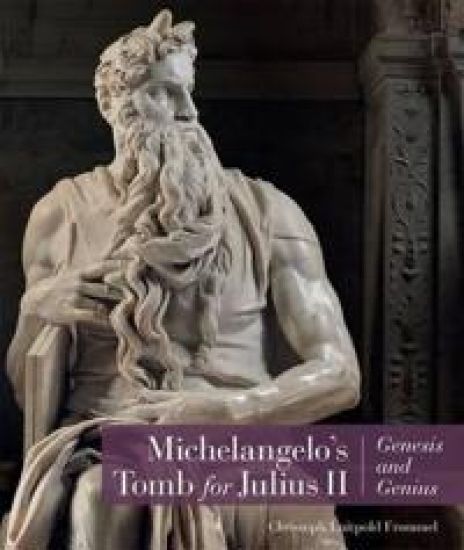
Michelangelo's Tomb for Julius II - Genesis and Genius
Christoph Frommel
Getty Publications
2017
sidottu
In 1505, Michelangelo began planning the magnificent tomb for Pope Julius II, which would dominate the next forty years of his career. Repeated failures to complete the monument were characterized by Condivi, Michelangelo's authorized biographer, as "the tragedy of the tomb." This definitive book thoroughly documents the art of the tomb and each stage of its complicated evolution. Edited by Christoph Luitpold Frommel, who also acted as the lead consultant on tge recent restoration campaign, this volume offers new post-restoration photography that reveal the beauty of the tomb overall, its individual statues, and its myriad details. This book traces Michelangelo's stylistic evolution; documents the dialogue between the artist and his great friend and exacting patron, Pope Julius II (who died long before the work was completed); unravels the complicated relationship between the master and his assistants, who executed large parts of the design; and sheds new light on the importance of Neo-Platonism in Michelangelo's thinking, which gave shape to the tomb's most famous statue, the Moses, and the work as a whole. A rich trove of documents in the original Latin and archaic Italian-many unpublished-relates the story firsthand through letters, contracts, and other records covering Michelangelo's travels, the purchase of the marble, the concerns that arose as work progressed, and numerous disagreements and negotiations. The book also includes catalogues of fifteen sculptures designed for the tomb and more than 80 related drawings, as well as an extensive and up-to-date bibliography.
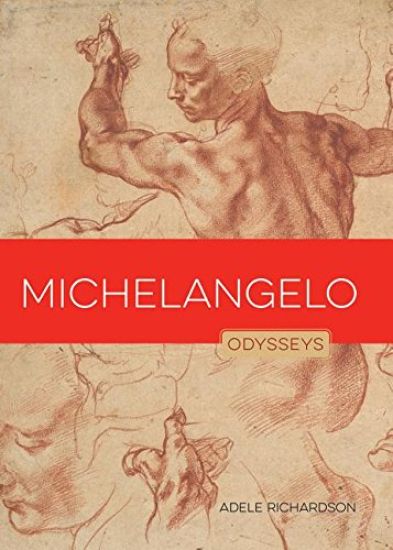
A biography of Italian Renaissance artist Michelangelo, examining his masterful commissions and papal relationships, as well as some of his most enduring works.
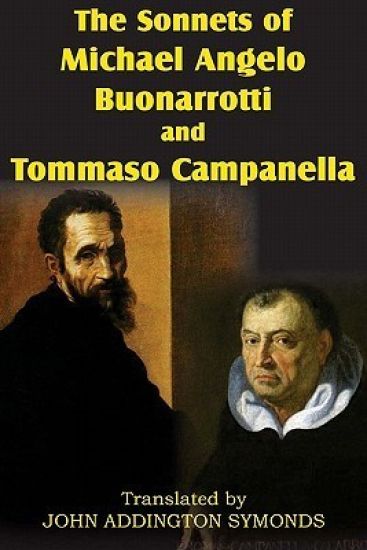
The Sonnets of Michael Angelo Buonarotti and Tommaso Campanella
Michelangelo Buonarroti; Tommaso Campanella; Michael Angelo Buonarotti
Bottom of the Hill Publishing
2011
pokkari
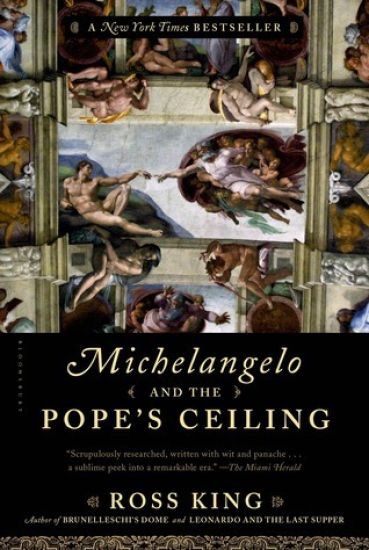
From the acclaimed author of Brunelleschi's Dome and Leonardo and the Last Supper, the riveting story of how Michelangelo, against all odds, created the masterpiece that has ever since adorned the ceiling of the Sistine Chapel. In 1508, despite strong advice to the contrary, the powerful Pope Julius II commissioned Michelangelo Buonarroti to paint the ceiling of the newly restored Sistine Chapel in Rome. Despite having completed his masterful statue David four years earlier, he had little experience as a painter, even less working in the delicate medium of fresco, and none with challenging curved surfaces such as the Sistine ceiling's vaults. The temperamental Michelangelo was himself reluctant: He stormed away from Rome, incurring Julius's wrath, before he was eventually persuaded to begin. Michelangelo and the Pope's Ceiling recounts the fascinating story of the four extraordinary years he spent laboring over the twelve thousand square feet of the vast ceiling, while war and the power politics and personal rivalries that abounded in Rome swirled around him. A panorama of illustrious figures intersected during this time-the brilliant young painter Raphael, with whom Michelangelo formed a rivalry; the fiery preacher Girolamo Savonarola and the great Dutch scholar Desiderius Erasmus; a youthful Martin Luther, who made his only trip to Rome at this time and was disgusted by the corruption all around him. Ross King blends these figures into a magnificent tapestry of day-to-day life on the ingenious Sistine scaffolding and outside in the upheaval of early-sixteenth-century Italy, while also offering uncommon insight into the connection between art and history.
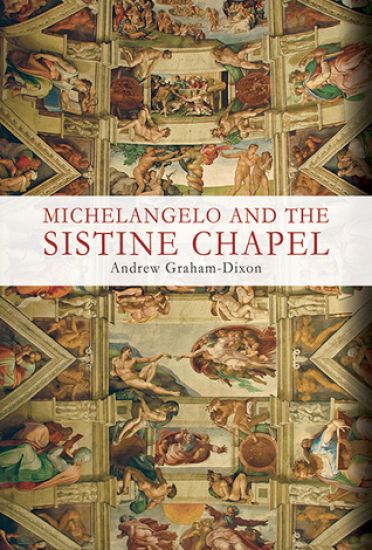
The true story behind one of the greatest masterpieces of all time. You cannot stand underneath the masterwork that is the Sistine Chapel without considering the genius and painstaking work that went into its creation. Michelangelo Buonarroti never wanted to paint the Sistine Chapel, though. Appointed by the temperamental Julius II, Michelangelo believed the suspiciously large-scale project to be a plot for failure conspired by his rivals and the "Warrior Pope." After all, Michelangelo was not a painter--he was a sculptor. The noble artist reluctantly took on the daunting task that would damage his neck, back, and eyes (if you have ever strained to admire the real thing, you know). Andrew Graham-Dixon tells the story behind the famous painted ceiling over which the great artist painfully toiled for four long years. Linking Michelangelo's personal life to his work on the Sistine Chapel, Graham-Dixon describes Michelangelo's unique depiction of the Book of Genesis, tackles ambiguities in the work, and details the painstaking work that went into Michelangelo's magnificent creation. Complete with rich, full-color illustrations and Graham-Dixon's articulate narrative, Michelangelo and the Sistine Chapel is an indispensable and significant piece of art criticism. It humanizes this heavenly masterpiece in a way that every art enthusiast, student, and professional can understand and appreciate.