Kirjojen hintavertailu. Mukana 12 390 323 kirjaa ja 12 kauppaa.

Kirjahaku

Etsi kirjoja tekijän nimen, kirjan nimen tai ISBN:n perusteella.

1000 tulosta hakusanalla Mitchell J Rycus

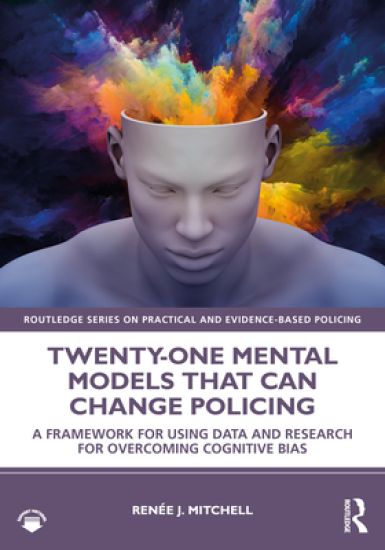
Twenty-one Mental Models That Can Change Policing
This book goes beyond other police leadership books to teach practitioners how to think about policing in a structured way that synthesizes criminological theory, statistics, research design, applied research, and what works and what doesn’t in policing into Mental Models. A Mental Model is a representation of how something works. Using a Mental Model framework to simplify complex concepts, readers will take away an in-depth understanding of how cognitive biases affect our ability to understand and interpret data, what empirical research says about effective police interventions, how statistical data should be structured for management meetings, and how to evaluate interventions for efficiency and effectiveness. While evidence-based practice is critical to advancing the police profession, it is limited in scope, and is only part of what is necessary to support sustainable change in policing. Policing requires a scientifically based framework to understand and interpret data in a way that minimizes cognitive bias to allow for better responses to complex problems. Data and research have advanced so rapidly in the last several decades that it is difficult for even the most ambitious of police leaders to keep pace. The Twenty-one Mental Models were synthesized to create a framework for any police, public, or community leader to better understand how cognitive bias contributes to misunderstanding data and gives the reader the tools to overcome those biases to better serve their communities.The book is intended for a wide range of audiences, including law enforcement and community leaders; scholars and policy experts who specialize in policing; students of criminal justice, organizations, and management; reporters and journalists; individuals who aspire to police careers; and citizen consumers of information about policing. Anyone who is going to make decisions about their communities based on data has a responsibility to be numerate and this book Twenty-one Mental Models That Can Change Policing: A Framework For Using Data and Research For Overcoming Cognitive Bias, will help you become just that.
Twenty-one Mental Models That Can Change Policing
This book goes beyond other police leadership books to teach practitioners how to think about policing in a structured way that synthesizes criminological theory, statistics, research design, applied research, and what works and what doesn’t in policing into Mental Models. A Mental Model is a representation of how something works. Using a Mental Model framework to simplify complex concepts, readers will take away an in-depth understanding of how cognitive biases affect our ability to understand and interpret data, what empirical research says about effective police interventions, how statistical data should be structured for management meetings, and how to evaluate interventions for efficiency and effectiveness. While evidence-based practice is critical to advancing the police profession, it is limited in scope, and is only part of what is necessary to support sustainable change in policing. Policing requires a scientifically based framework to understand and interpret data in a way that minimizes cognitive bias to allow for better responses to complex problems. Data and research have advanced so rapidly in the last several decades that it is difficult for even the most ambitious of police leaders to keep pace. The Twenty-one Mental Models were synthesized to create a framework for any police, public, or community leader to better understand how cognitive bias contributes to misunderstanding data and gives the reader the tools to overcome those biases to better serve their communities.The book is intended for a wide range of audiences, including law enforcement and community leaders; scholars and policy experts who specialize in policing; students of criminal justice, organizations, and management; reporters and journalists; individuals who aspire to police careers; and citizen consumers of information about policing. Anyone who is going to make decisions about their communities based on data has a responsibility to be numerate and this book Twenty-one Mental Models That Can Change Policing: A Framework For Using Data and Research For Overcoming Cognitive Bias, will help you become just that.
The Conspicuous Corporation

The Conspicuous Corporation

Neil J. Mitchell

The University of Michigan Press
1997
sidottu
Why, despite the political advantages of business in the policy process, do business interests still sometimes lose policy fights in the political system? Money, mobility, connections, and incentives load the political system in favor of business interests. Against the odds, when the conspicuous corporation meets the virtuous politician, business often loses in the policy struggle. In answering this question, Neil J. Mitchell reassesses the dimensions of business power in the political system and provides a fresh consideration of how economic power translates into political power. Charles Lindbloom's analysis of business power provides a point of departure for an examination of the evidence on business influence over public preferences, on the importance of business confidence to politicians, and on the financial and lobbying activities of business interests. Mitchell then considers the position of labor unions--the traditional opposition to business--in contemporary policy making. Finally, he discusses the conditions under which business power breaks down. This is accompanied by an analysis of a variety of cases in which business has attempted to influence the policy making process to test his findings. Extensively researched, this book sheds new light on the activities of business in politics, on the strength of interests opposing business, and on business policy failures in the United States and the United Kingdom. The empirical analysis builds on survey data, extensive interviews, and archival research. The relationship between business and government is a core topic for economists, sociologists and political scientists, taking us from heroic struggles over policy to sordid episodes of political corruption. The book will be of interest to scholars in the social sciences and in business schools as well as to the general reader interested in power and influence in representative democracies. Neil Mitchell is Professor of Political Science, University of New Mexico.
Making Peace

Making Peace

George J. Mitchell

University of California Press
2000
pokkari
This title is updated with a new Preface. Fifteen minutes before five o'clock on Good Friday, 1998, Senator George Mitchell was informed that his long and difficult quest for an Irish peace effort had succeeded - the Protestants and Catholics of Northern Ireland, and the governments of the Republic of Northern Ireland and the United Kingdom, would sign the agreement. Now Mitchell, who served as independent chairman of the peace talks for the length of the process, tells us the inside story of the grueling road to this momentous accord and the subsequent developments that may threaten, or strengthen, the chance for a lasting peace in Northern Ireland.
Innate

Innate

Kevin J. Mitchell

PRINCETON UNIVERSITY PRESS
2018
sidottu
A leading neuroscientist explains why your personal traits are more innate than you thinkWhat makes you the way you are—and what makes each of us different from everyone else? In Innate, leading neuroscientist and popular science blogger Kevin Mitchell traces human diversity and individual differences to their deepest level: in the wiring of our brains. Deftly guiding us through important new research, including his own groundbreaking work, he explains how variations in the way our brains develop before birth strongly influence our psychology and behavior throughout our lives, shaping our personality, intelligence, sexuality, and even the way we perceive the world.We all share a genetic program for making a human brain, and the program for making a brain like yours is specifically encoded in your DNA. But, as Mitchell explains, the way that program plays out is affected by random processes of development that manifest uniquely in each person, even identical twins. The key insight of Innate is that the combination of these developmental and genetic variations creates innate differences in how our brains are wired—differences that impact all aspects of our psychology—and this insight promises to transform the way we see the interplay of nature and nurture.Innate also explores the genetic and neural underpinnings of disorders such as autism, schizophrenia, and epilepsy, and how our understanding of these conditions is being revolutionized. In addition, the book examines the social and ethical implications of these ideas and of new technologies that may soon offer the means to predict or manipulate human traits.Compelling and original, Innate will change the way you think about why and how we are who we are.
Innate

Innate

Kevin J. Mitchell

Princeton University Press
2020
pokkari
A leading neuroscientist explains why your personal traits are more innate than you thinkWhat makes you the way you are—and what makes each of us different from everyone else? In Innate, leading neuroscientist and popular science blogger Kevin Mitchell traces human diversity and individual differences to their deepest level: in the wiring of our brains. Deftly guiding us through important new research, including his own groundbreaking work, he explains how variations in the way our brains develop before birth strongly influence our psychology and behavior throughout our lives, shaping our personality, intelligence, sexuality, and even the way we perceive the world. Compelling and original, Innate will change the way you think about why and how we are who we are.
Free Agents

Free Agents

Kevin J. Mitchell

PRINCETON UNIVERSITY PRESS
2025
pokkari
An evolutionary case for the existence of free willScientists are learning more and more about how brain activity controls behavior and how neural circuits weigh alternatives and initiate actions. As we probe ever deeper into the mechanics of decision making, many conclude that agency—or free will—is an illusion. In Free Agents, leading neuroscientist Kevin Mitchell presents a wealth of evidence to the contrary, arguing that we are not mere machines responding to physical forces but agents acting with purpose.Traversing billions of years of evolution, Mitchell tells the remarkable story of how living beings capable of choice arose from lifeless matter. He explains how the emergence of nervous systems provided a means to learn about the world, granting sentient animals the capacity to model, predict, and simulate. Mitchell reveals how these faculties reached their peak in humans with our abilities to imagine and to be introspective, to reason in the moment, and to shape our possible futures through the exercise of our individual agency. Mitchell’s argument has important implications—for how we understand decision making, for how our individual agency can be enhanced or infringed, for how we think about collective agency in the face of global crises, and for how we consider the limitations and future of artificial intelligence.An astonishing journey of discovery, Free Agents offers a new framework for understanding how, across a billion years of Earth history, life evolved the power to choose, and why it matters.
Free Agents

Free Agents

Kevin J. Mitchell

PRINCETON UNIVERSITY PRESS
2023
sidottu
An evolutionary case for the existence of free willScientists are learning more and more about how brain activity controls behavior and how neural circuits weigh alternatives and initiate actions. As we probe ever deeper into the mechanics of decision making, many conclude that agency—or free will—is an illusion. In Free Agents, leading neuroscientist Kevin Mitchell presents a wealth of evidence to the contrary, arguing that we are not mere machines responding to physical forces but agents acting with purpose.Traversing billions of years of evolution, Mitchell tells the remarkable story of how living beings capable of choice arose from lifeless matter. He explains how the emergence of nervous systems provided a means to learn about the world, granting sentient animals the capacity to model, predict, and simulate. Mitchell reveals how these faculties reached their peak in humans with our abilities to imagine and to be introspective, to reason in the moment, and to shape our possible futures through the exercise of our individual agency. Mitchell’s argument has important implications—for how we understand decision making, for how our individual agency can be enhanced or infringed, for how we think about collective agency in the face of global crises, and for how we consider the limitations and future of artificial intelligence.An astonishing journey of discovery, Free Agents offers a new framework for understanding how, across a billion years of Earth history, life evolved the power to choose, and why it matters.
Blake's Composite Art

Blake's Composite Art

W.J.T. Mitchell

Princeton University Press
2019
pokkari
Can poem and picture collaborate successfully in a composite art of text and design? Or does one art inevitably dominate the other? W.J.T. Mitchell maintains that Blake's illuminated poems are an exception to Suzanne Langer's claim that "there are no happy marriages in art—only successful rape." Drawing on over one hundred reproductions of Blake's pictures, this book shows that neither the graphic nor the poetic aspect of his composite art consistently predominates: their relationship is more like an energetic rivalry, a dialogue between vigorously independent modes of expression. W.J.T. Mitchell is Professor of English and Art and Design at the University of Chicago and editor of Critical Inquiry.Originally published in 1978.The Princeton Legacy Library uses the latest print-on-demand technology to again make available previously out-of-print books from the distinguished backlist of Princeton University Press. These editions preserve the original texts of these important books while presenting them in durable paperback and hardcover editions. The goal of the Princeton Legacy Library is to vastly increase access to the rich scholarly heritage found in the thousands of books published by Princeton University Press since its founding in 1905.
Blake's Composite Art

Blake's Composite Art

W.J.T. Mitchell

PRINCETON UNIVERSITY PRESS
2019
sidottu
Can poem and picture collaborate successfully in a composite art of text and design? Or does one art inevitably dominate the other? W.J.T. Mitchell maintains that Blake's illuminated poems are an exception to Suzanne Langer's claim that "there are no happy marriages in art—only successful rape." Drawing on over one hundred reproductions of Blake's pictures, this book shows that neither the graphic nor the poetic aspect of his composite art consistently predominates: their relationship is more like an energetic rivalry, a dialogue between vigorously independent modes of expression. W.J.T. Mitchell is Professor of English and Art and Design at the University of Chicago and editor of Critical Inquiry.Originally published in 1978.The Princeton Legacy Library uses the latest print-on-demand technology to again make available previously out-of-print books from the distinguished backlist of Princeton University Press. These editions preserve the original texts of these important books while presenting them in durable paperback and hardcover editions. The goal of the Princeton Legacy Library is to vastly increase access to the rich scholarly heritage found in the thousands of books published by Princeton University Press since its founding in 1905.
To Win Hearts and Minds: Vietnam to Iraq

To Win Hearts and Minds: Vietnam to Iraq

Terry J. Mitchell

Terry John Mitchell
2018
nidottu
This is a compelling memoir detailing the life and military service of the author who served dual careers with the U.S. Courts and the U.S. Army. It chronicles his journey starting with the disappearance of his father at an early age and eventual closure with him more than 30 years later. Writing primarily about his service in Vietnam, Somalia, Bosnia, and Iraq, he describes the influence of his family and his love of music, and provides a firsthand account of the historical events which shaped his life and military service, dedicated to winning hearts and minds.
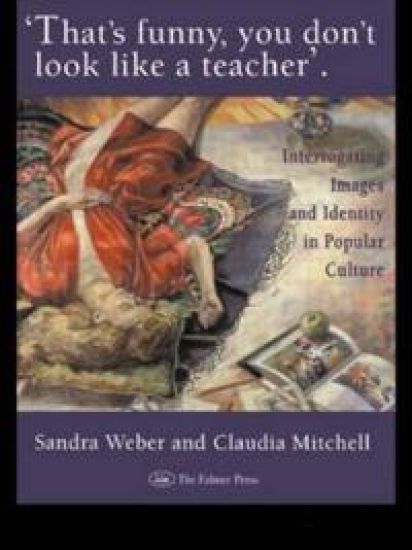
That's Funny You Don't Look Like A Teacher!

That's Funny You Don't Look Like A Teacher!

Sandra J Weber; Claudia Mitchell

Routledge Falmer
1995
sidottu
What do you see when you think of teacher? Where does what you see come from? This is a book about the images of teachers and teaching which permeate the everyday lives of children and adults, shaping in important but unrecognised ways their notions of whom teachers are and what they do. The authors show how, using a creative interdisciplinary approach, it is possible to analyse drawings of teachers, television programmes, films, cartooons, comics and even Barbie dolls. Illustrated with colour reproductions and excerpts from interviews and journals, this book should appeal to teachers, academics and anyone who is interested in the popular culture of childhood, gender issues, professional identity and teacher education.
That's Funny You Don't Look Like A Teacher!

That's Funny You Don't Look Like A Teacher!

Sandra J Weber; Claudia Mitchell

Routledge Falmer
1995
nidottu
What do you see when you think of teacher? Where does what you see come from? This is a book about the images of teachers and teaching which permeate the everyday lives of children and adults, shaping in important but unrecognised ways their notions of whom teachers are and what they do. The authors show how, using a creative interdisciplinary approach, it is possible to analyse drawings of teachers, television programmes, films, cartooons, comics and even Barbie dolls. Illustrated with colour reproductions and excerpts from interviews and journals, this book should appeal to teachers, academics and anyone who is interested in the popular culture of childhood, gender issues, professional identity and teacher education.
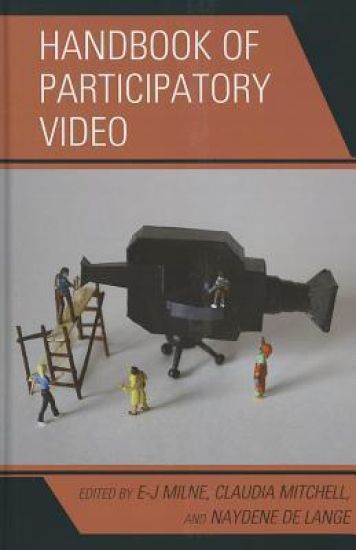
Handbook of Participatory Video

Handbook of Participatory Video

E-J Milne; Claudia Mitchell; Naydene de Lange

AltaMira Press,U.S.
2012
sidottu
Participatory video is a growing area of research and an increasingly popular tool among practitioners, researchers, and NGOs working with communities around the world. The Handbook of Participatory Video advances the field, engaging critically with it as a research methodology and method and interrogating assumptions about its emancipatory nature and potential for social change. In twenty-eight chapters, contributors examine historical, ethical, methodological, and technical aspects of participatory video and discuss power, ownership, and knowledge production. The Handbook is organized into six parts: Locating Participatory Video, Participatory Video as a Critical Research Methodology, Working with Visual Data, Power and Ethics in Participatory Video, Dissemination and Reaching New Audiences, and Communities and Technologies. This benchmark work takes an interdisciplinary and global approach and will be invaluable to researchers, practitioners, and students.
The Fourfold

The Fourfold

Andrew J. Mitchell

Northwestern University Press
2015
nidottu
Heidegger’s later thought is a thinking of things, so argues Andrew J. Mitchell in The Fourfold. Heidegger understands these things in terms of what he names “the fourfold”—a convergence of relationships bringing together the earth, the sky, divinities, and mortals—and Mitchell’s book is the first detailed exegesis of this neglected aspect of Heidegger’s later thought. As such it provides entrée to the full landscape of Heidegger’s postwar thinking, offering striking new interpretations of the atomic bomb, technology, plants, animals, weather, time, language, the holy, mortality, dwelling, and more. What results is a conception of things as ecstatic, relational, singular, and, most provocatively, as intrinsically tied to their own technological commodification. A major new work that resonates beyond the confines of Heidegger scholarship, The Fourfold proposes nothing less than a new phenomenological thinking of relationality and mediation for understanding the things around us.
The Fourfold

The Fourfold

Andrew J. Mitchell

Northwestern University Press
2015
sidottu
Heidegger’s later thought is a thinking of things, so argues Andrew J. Mitchell in The Fourfold. Heidegger understands these things in terms of what he names “the fourfold”—a convergence of relationships bringing together the earth, the sky, divinities, and mortals—and Mitchell’s book is the first detailed exegesis of this neglected aspect of Heidegger’s later thought. As such it provides entrée to the full landscape of Heidegger’s postwar thinking, offering striking new interpretations of the atomic bomb, technology, plants, animals, weather, time, language, the holy, mortality, dwelling, and more. What results is a conception of things as ecstatic, relational, singular, and, most provocatively, as intrinsically tied to their own technological commodification. A major new work that resonates beyond the confines of Heidegger scholarship, The Fourfold proposes nothing less than a new phenomenological thinking of relationality and mediation for understanding the things around us.