Kirjojen hintavertailu. Mukana 11 627 220 kirjaa ja 12 kauppaa.

Kirjahaku

Etsi kirjoja tekijän nimen, kirjan nimen tai ISBN:n perusteella.

1000 tulosta hakusanalla Mohammad Nehal

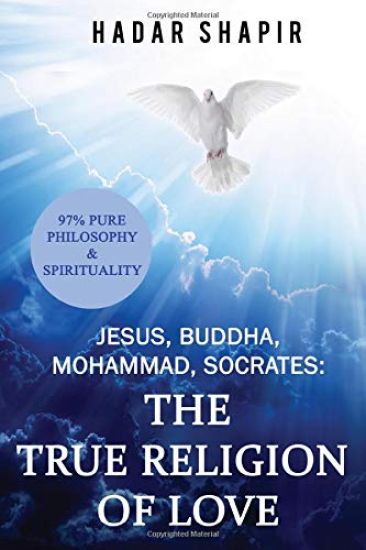
Jesus, Buddha, Mohammad, Socrates

Jesus, Buddha, Mohammad, Socrates

Hadar Shapir

Independently Published
2017
pokkari
What are the similarities of all the world's great religions? This book teaches the great religions' similarities. It teaches a way of life that is taught by the Holy Bible, the Noble Qur'an, and the sacred scriptures of Buddhism and other religions which leads you to happiness, success, peace, love, and joy in life. It teaches the similarities of the Great Religions and their founders showing how to become happy and successful through the Golden Rule, through choosing good deeds instead of bad ones, loving others, being humble instead of arrogant, the secret of happiness, following your passion (your calling / your mission / your life's purpose), how to become healthy through prayer, and other teachings of the great religions' founders - such as Jesus, Buddha, Mohammad, and Socrates. This book teaches the way of life of living with compassion, kindness, and love for all others. Here's a book excerpt: The Golden Rule The Golden Rule is the foundation of the message of the great religions. The Golden Rule is found in every major religion that exists in the world. It is one of the foundations of Judaism, Christianity, Islam, and Zoroastrianism, Buddhism, and Taoism. "Do unto others as you would have others do unto you" - or "Treat others the way you want to be treated". Later in this book, I will explain why this is the formula for human happiness and success. In addition to the Golden Rule, there is also the 'Silver Rule' which states the Golden Rule in the negative: "Do not do unto others what you don't want to have done unto you." Here is the Golden Rule (and the Silver Rule) as they appear in all the world's major religions: Do unto others as you would have them do to you. - Christianity Hurt not others in ways that you yourself would find hurtful. - Buddhism Harm no other beings. They are just your brothers and sisters. - Buddhism Regard your neighbor's gain as your own gain and your neighbor's loss as your own loss. - Taoism What is hateful to you, do not do unto your fellow man. That is the entire law; all the rest is commentary. - Judaism "A man should wander about treating all creatures in the world as he himself would be treated." -- Jainism "Men gifted with intelligence and purified souls should always treat others as they themselves wish to be treated." -- Hindu Mahabharata Surely it is the maxim of loving-kindness: Do not do unto others what you would not want to have done unto you. - Confucianism One should never do wrong in return, nor mistreat any man, no matter how one has been mistreated by him. - Socrates The seven-word expression, "You shall love your neighbor as yourself", appears seven times in the Bible. That nature alone is good which refrains from doing unto another whatsoever is not good for itself. -- Zoroastrianism If your eyes be inclined to justice, choose for your neighbor that which you would choose for yourself. - Baha'i Faith Do good to others as you would like good to be done to you. - Islam - Ali ibn Abi Talib (4th Caliph in Sunni Islam, and 1st Imam in Shia Islam) "Philosophers have been speculating on the rules of human relationships for thousands of years, and out of all that speculation, there has evolved only one important precept. It is not new. It is as old as history. Zoroaster taught it to his followers in Persia twenty-five hundred years ago. Confucius preached it in China twenty-four centuries ago. Lao-Tsu, the founder of Taoism, taught it to his disciples in the Valley of the Han. Buddha preached it on the bank of the Holy Ganges five hundred years before Christ. The sacred books of Hinduism taught it a thousand years before that. Jesus taught it among the stony hills of Judea nineteen centuries ago. He summed it up in one thought- probably the most important rule in the world: "Do unto others as you would have others do unto you.""
Jesus, Buddha, Mohammad, Socrates

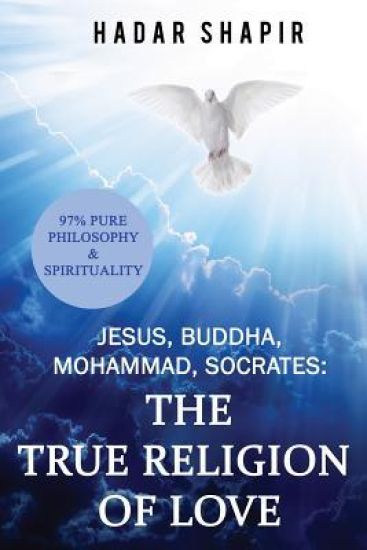
Jesus, Buddha, Mohammad, Socrates

Hadar Shapir

Independently Published
2017
pokkari
This book teaches the similarities of the teachings of Christianity, Islam, Buddhism, and other religions and their founders, such as Jesus, Buddha, Mohammad, and Socrates. Some of the topics of the book include the "Golden Rule" and the "Silver Rule" and how they can bring you happiness, the importance of being humble instead of arrogant and how doing that will make you more successful, the importance of choosing good thoughts, good words, and good actions instead of bad ones, the importance of kindness, compassion, and love for all others and how doing that will bring you happiness and good friendships, the importance of forgiveness and forgiving others for your own peace of mind, why not to worry, the importance of following your passion/calling/mission/life's purpose, why having wealth and lots of money is very overrated, how to become healthy by prayer and by eating the right diet, how to live so that you ensure that you go to heaven and not hell after you pass away, the teachings of the Holy Bible, the Noble Qur'an (Koran), The Book of Mormon, and Buddhist texts and other spiritual & religious texts on how to achieve happiness and success, and, finally, the importance of tithing (giving 10% of your money to the poor) without letting anyone else know about it and how that will greatly improve your financial situation and bring you happiness, and much more Here's a book excerpt: The Golden Rule The Golden Rule is the foundation of the message of the great religions. The Golden Rule is found in every major religion that exists in the world. It is one of the foundations of Judaism, Christianity, Islam, and Zoroastrianism, Buddhism, and Taoism. "Do unto others as you would have others do unto you" - or "Treat others the way you want to be treated". Later in this book, I will explain why this is the formula for human happiness and success. In addition to the Golden Rule, there is also the 'Silver Rule' which states the Golden Rule in the negative: "Do not do unto others what you don't want to have done unto you." Here is the Golden Rule (and the Silver Rule) as they appear in all the world's major religions: Do unto others as you would have them do to you. - Christianity Hurt not others in ways that you yourself would find hurtful. - Buddhism Harm no other beings. They are just your brothers and sisters. - Buddhism Do good to others as you would like good to be done to you. - Islam (4th Caliph and 1st Imam) What is hateful to you, do not do unto your fellow man. That is the entire law; all the rest is commentary. - Judaism "A man should wander about treating all creatures in the world as he himself would be treated." - Jainism "Men gifted with intelligence and purified souls should always treat others as they themselves wish to be treated." - Hindu Mahabharata Surely it is the maxim of loving-kindness: Do not do unto others what you would not want to have done unto you. - Confucianism "Philosophers have been speculating on the rules of human relationships for thousands of years, and out of all that speculation, there has evolved only one important precept. It is not new. It is as old as history. Zoroaster taught it to his followers in Persia twenty-five hundred years ago. Confucius preached it in China twenty-four centuries ago. Lao-Tsu, the founder of Taoism, taught it to his disciples in the Valley of the Han. Buddha preached it on the bank of the Holy Ganges five hundred years before Christ. The sacred books of Hinduism taught it a thousand years before that. Jesus taught it among the stony hills of Judea nineteen centuries ago. He summed it up in one thought- probably the most important rule in the world: "Do unto others as you would have others do unto you.""

A Tale of Three Lawyers: A Comparative Study of Mahatma Mohandas Karamchand Gandhi, Quaid-e-Azam Mohammad Ali Jinnah, and Bharat Ratna Dr. Bhim
A Tale of Three Lawyers is an analytical and objective study of three colossal leaders of an era in which one struggled for the independence of the country, the second struggled for the creation of his new country while the third struggled for the political rehabilitation of the deprived classes.Three different objectives motivated Mahatma Mohandas Karamchand Gandhi, Quaid-e-Azam Mohammad Ali Jinnah and Bharat Ratna Dr. Bhimrao Ramji Ambedkar. They employed three different means and methods and, therefore, it is no surprise that they brought about three distinct achievements, delivering three different legacies to their succeeding generations. The author attempts to present to the readers a dispassionate assessment of these three mass leaders without an intention to compare and contrast any of the three great leaders' advantages or disadvantages.
Shina-Texte Aus Gilgit (Nord-Pakistan): Sprichworter Und Materialien Zum Volksglauben, Gesammelt Von Mohammad Amin Zia
Die indoarische Sprache Shina, die im Norden Pakistans gesprochen wird, ist seit der Grammatik von G. Bailey aus dem Jahr 1924 Gegenstand sprachwissenschaftlicher und indologischer Forschung. Erst seit den 60er Jahren des 20. Jahrhunderts gibt es mehr oder weniger erfolgreiche Ansatze, Shina zu verschriftlichen. Basierend auf Vorarbeiten von M. A. Zia und D. L. R. Lorimer, enthalt der Band uber 500 Sprichworter in der Variante des Shina von Gilgit, jeweils auf Shina und in deutscher Ubersetzung, sowie ca. 200 weitere Kurztexte zum Volksglauben. Die Texte zum Volksglauben enthalten u. a. Materialien zum Brauchtum, zur Deutung von Alltagserscheinungen und zur Volksmedizin. Sie bilden eine Erganzung zum Inhalt der Sprichworter, vermitteln aber auch fur sich ein Bild traditioneller Kultur in Gilgit. Die Texte sind nach Themengruppen angeordnet und werden durch ein Glossar Shina-Deutsch, eine Kurzgrammatik sowie durch ein Stichwortverzeichnis erschlossen. Zu den Sprichwortern werden zahlreiche Parallelen aus den benachbarten Kulturen zitiert. Mit diesem Band liegt in wissenschaftlicher Bearbeitung das umfangreichste Corpus von Shina-Texten vor, das ausserhalb Pakistans erschienen ist.
Connecting with the One Consciousness: Spiritual Awakening, Mystical Sufism, and the Lessons of Mohammad Ali Taheri
In the tradition of Eckhart Tolle and in harmony with the wisdom of mystical Sufism, this spiritual book calls on the lessons of Mohammad Ali Taheri to explore how tapping into the One Consciousness can help answer life's greatest questions. In this guide to spiritual awakening, literacy scholar Sheida White melds the essential teachings of Mohammad Ali Taheri with her own insights and personal experiences to guide readers toward enlightenment.As a native Farsi speaker, White communicates the significance and complexity of her culture's spiritual teachings in a clear, warm, and conversational way.Connecting with the One Consciousness offers a unified theory of consciousness--the origin of the physical universe, the process from which all reality flows. Connection with that process leads to joy and spontaneous acts of compassion.With a welcoming blend of the secular and sacred, discover how to: cultivate a deeper understanding of enlightenment or spiritual perfection, become less reactive to unsettling circumstances, experience greater joy, creativity, gratitude, and inner calm, create a kinder, more peaceful, and unified world, andbecome an opening for positive vibrations to flow through.An ideal fit for book clubs, this book contains fifty-five discussion questions to encourage reflection and integration.Tap into the realm of the One Consciousness, where your real power lies.