Kirjojen hintavertailu. Mukana 12 016 292 kirjaa ja 12 kauppaa.

Kirjahaku

Etsi kirjoja tekijän nimen, kirjan nimen tai ISBN:n perusteella.

1000 tulosta hakusanalla Muhammad Irfan

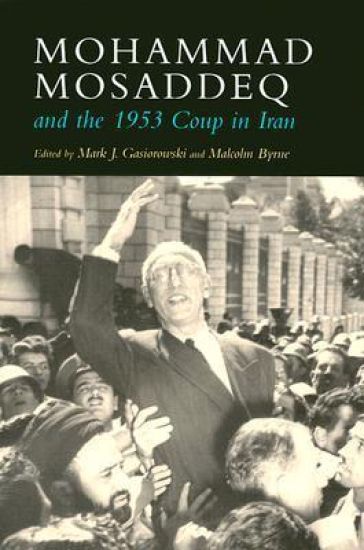
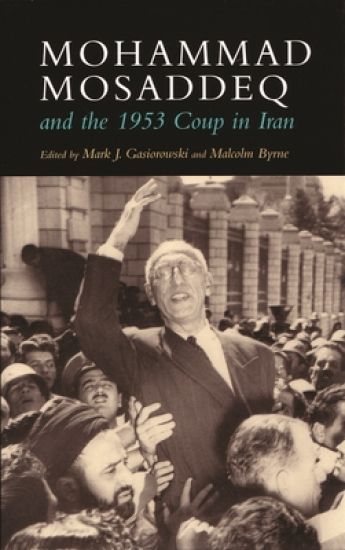
Mohammad Mosaddeq and the 1953 Coup in Iran

Mohammad Mosaddeq and the 1953 Coup in Iran

Mark J Gasiorowski

Syracuse University Press
2004
sidottu
Mohammad Mosaddeq is widely regarded as the leading champion of secular democracy and resistance to foreign domination in Iran's modern history. Mosaddeq became prime minister of Iran in May 1951 and promptly nationalized its British-controlled oil industry, initiating a bitter confrontation between Iraq and Britain that increasingly undermined Mossaddeq's position. He was finally overthrown in August 1953 in a coup that was organized and led by the United States' Central Intelligence Agency. This coup initiated a twenty-five-year period of dictatorship in Iran, leaving many Iranians resentful of the U.S. - legacies that still haunt relations between the two countries today. The book examines the turbulent political climate that prevailed in Iran during Mosaddeq's time the struggle between Iran and Britain for control over oil, the strategic considerations that led U.S. officials to opt for a coup, and the details of the coup itself. Based on exhaustive research by leading academic experts in the field, this is the most authoritative account of the tragic events that led to the overthrow of Mosaddeq. With the recent declassification of CIA documents regarding the 1953 coup that overthrew Mohammad Mossadeq's government in Iran, there is an opportunity for new in-depth analysis into not only the coup itself but the events that led up to it.
Mohammad Mosaddeq and the 1953 Coup in Iran
The book examines the turbulent political climate that prevailed in Iran during Mosaddeq’s tenure, the confrontation between Iran and Britain for control over Iran’s oil, the strategic considerations that led U.S. officials to opt for a coup, and the details of the coup itself. Based on exhaustive research by leading academic experts in the field, this is the most authoritative account of the tragic events that led to the overthrow of Mosaddeq. With the recent declassification of CIA documents regarding the 1953 coup that overthrew Mohammad Mossadeq’s government in Iran, there is an opportunity for new in-depth analysis into not only the coup Coup d’État itself but the events that inevitably led up to it.
Hermeneutik, Glaube Und Freiheit: Mohammad Mojtahed Shabestaris Adaption Europäischer Philosophie Und Theologie Im Postrevolutionären Iran
Mohammad Mojtahed Schabestari, emeritierter Professor f r Vergleichende Theologie in Teheran, z hlt zu den bedeutendsten religi sen Intellektuellen Irans. Seine auf den Ideen von Autonomie und Freiheit basierende Konzeption des Glaubensbegriffs und seine Reflexionen zum Begriff des menschlichen Verstehens haben zum Teil heftige Kontroversen im postrevolution ren Iran ausgel st. Diese Studie untersucht, auf welche Weise Schabestari, im deutschsprachigen Raum als Protagonist des Christlich-Islamischen Dialogs bekannt, ] durch die Auseinandersetzung mit den Schriften einschl giger deutschsprachiger Philosophen (u.a. Schleiermacher, Heidegger und Gadamer) und Theologen (Rahner, Barth, Tillich, Buber) die Begriffe Hermeneutik, Glaube und Freiheit verkn pft, eine offene Deutung der Islamischen Ideengeschichte und muslimischer Religiosit t entwickelt und dadurch den religionsphilosophischen Diskurs in Iran nachhaltig beeinflusst hat.
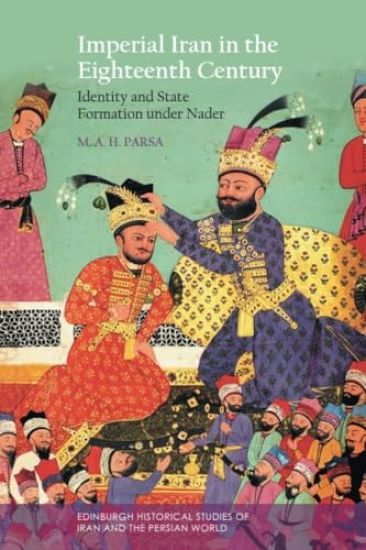
Imperial Iran in the Eighteenth Century

Imperial Iran in the Eighteenth Century

Mohammad Amir Hakimi Parsa

EDINBURGH UNIVERSITY PRESS
2026
sidottu
The 18th-century ‘interregnum’ between the Safavid and Qajar dynasties remains woefully understudied in Iranian history, regarded as a turbulent and inconsequential gap between two major dynastic periods. This book, however, argues that this period saw the emergence of the idea of Iran as the foundation for collective identity and state formation. It traces the development of a sacralised territorial identity that fused an irredentist notion of Iran-realm (Iranzamin) with Shi?ism, culminating in an unprecedented political idea: that of an ‘Iranian state’ (dowlat-e Iran), supposedly formed by the unanimous consensus of the ‘Iranian people’ (ahl-e Iran). The book then covers how this state, under Nader Shah (Nader-e Iran), subjugated non-Iranian realms to form a new universal Islamic empire. This is the first monograph to offer an integrated understanding of state formation in post-Safavid Iran (c.1720 – 1750), demonstrating how politico-cultural, military, administrative and ecclesiastic developments related to one another. Drawing on a wide range of neglected primary sources in Arabic, Turkish (both Ajami and Ottoman) and Kurdish (Hawrami), as well as Persian and European sources, the book sheds light on Iran in its last iteration as a great power.
Iran

Iran

Mohammad Amjad

Praeger Publishers Inc
1989
sidottu
This splendid book offers an insight into why Iran, once assumed to have one of the most stable governments in the Middle East, crumbled so rapidly in 1979. Amjad's study attempts to answer that question by investigating the socioeconomic and political factors that led to the Iranian Revolution and to the transformation of the Iranian state from a royal dictatorship into a theocracy. The author concludes that a combination of factors such as economic mismanagement, failure of agriculture, inflation, decline in oil revenues, and political repression provided favorable conditions for the opposition to organize its forces against the Shah. Thereafter, within a few months after the overthrow of the monarchy, the religious hierarchy with the support of the traditional bourgeoisie and petit bourgeoisie was able to eliminate the liberal bourgeoisie and create a theocracy in Iran. Written in an easy-flowing narrative style, this book is finely produced and makes a valuable contribution for those interested in Iranian studies. Includes a useful glossary, an index, and an up-to-date bibliography. Choice The unforeseen Iranian revolution stunned not only the Shah, but also observers around the globe. This element of the unexpected was based, as Amjad argues, on misconceptions concerning both the Shah's power and the apparent weakness and fragmentation of the opposition. This comprehensive volume provides thorough historical perspectives on the socioeconomic and political factors that precipitated the revolution and transformed the Iranian state from a royal dictatorship into a theocracy. Amjad analyzes the nature of the Iranian state in both pre- and post-revolutionary periods, looks at the kinds of changes in Iran during its transition to capitalism, and explains the rationale behind the important part played by Islam in the revolution. Particular attention is paid to the Shah's role in alienating the populace at all levels of society and to how Shi'ite Islam's militant mullahs were able, in the absence of a nationwide political organization, to lead the revolution organization, to lead the revolution. Iran's populist ideology and its priorities of creating a welfare state to provide social welfare for the poor and forming an alliance between the upper and lower classes is exhaustively detailed here. Discussions of theories of state, class, revolution, economic development, and also the impact of Islam in Iranian society and culture comprise the first three chapters. Socioeconomic development, class formation, and the transformation of the Iranian state from 1941 to 1977 form the basis for chapters four through six. Chapters seven and eight consider the effect of domestic and international social factors on the revolution and describe how a royal dictatorship was transfomred into a theocracy. This distinguished volume will prove invaluable for courses in comparative politics, international relations, the history of the modern Middle East, the history of modern Iran, and Islam and its revolution.
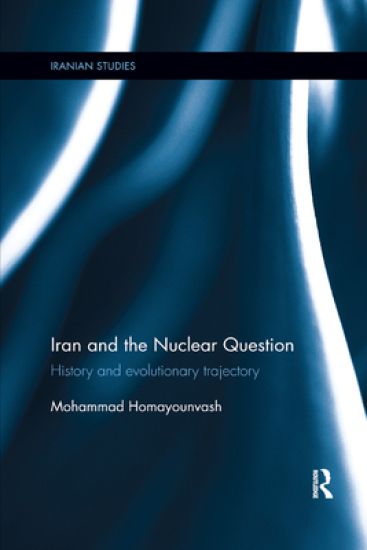
Iran and the Nuclear Question

Iran and the Nuclear Question

Mohammad Homayounvash

Routledge
2019
nidottu
Spanning over a period of more than five decades since its inception, Iran’s nuclear programme is the most protracted civilian nuclear program in the world and one of the most politicized projects in Iran’s history.'Iran and the Nuclear Question' offers a historiographical portrait of Iran’s early nuclear program under Mohammad Reza Shah Pahlavi. Using declassified archival material, the book thematically chronicles the program’s genesis, evolutionary trajectory, and devolution from the 1950s through to the 1970s. It also catalogues the Revolutionary Iran’s early socialization into the atom and the Islamic Republic’s gradual change of heart about nuclear energy that culminated in the incremental resuscitation of the Shah’s nuclear enterprise in the 1980s. As the first archive-based account of one of the most long-lasting and capital-intensive nuclear enterprises during the Cold War, ‘Iran and the Nuclear Question’ is a valuable resource for students and scholars of Iranian, Middle East and Security Studies. Written in a clear and accessible format, it will also appeal to those with a more general interest in Iran and its nuclear journey.
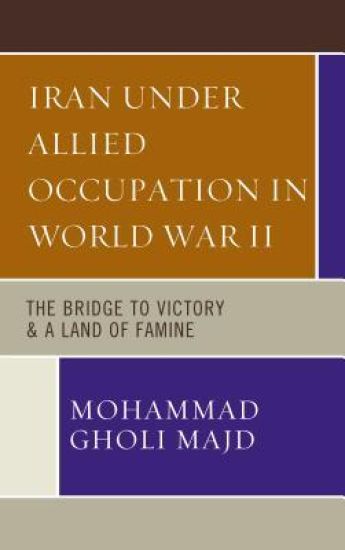
Iran Under Allied Occupation In World War II

Iran Under Allied Occupation In World War II

Mohammad Gholi Majd

University Press of America
2016
sidottu
Occupied Iran in World War II became the most important supply route to Russia and source of fuel to the Allies. Having pledged to meet Iran’s “minimum needs”, the Allies commandeered the means of transport, seized food and fuel, severely restricted imports, forced Iran to print money, brought Polish refugees from Russia, and initially did little to contain the chaos and insecurity. The resulting famine and typhus epidemic of 1942-43 had claimed 4 million lives amounting to a quarter of the population. This was in addition to the 8-10 million lost in the Great Famine of 1917-19. Iran’s 1944 population was the same as 1900, a perfect case of a Malthusian Catastrophe. Having previously described the World War I famine, and using US diplomatic, military, and intelligence records, as well as primary British sources, Majd completes the task by also telling the story of the World War II Iranian famine.
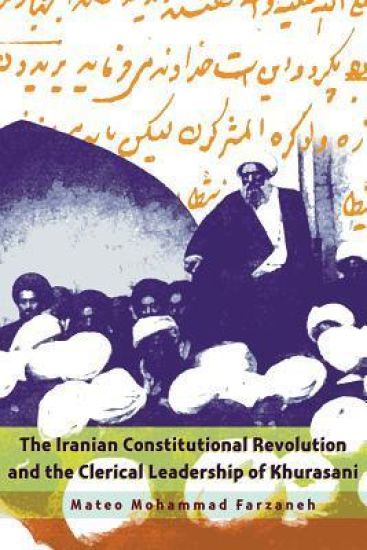
The Iranian Constitutional Revolution and the Clerical Leadership of Khurasani
The Iranian Constitutional Revolution was the twentieth century’s first such political movement in the Middle East. It represented a landmark in Iranian history because of the unlikely support it received from Shi‘ite clerics who historically viewed Western concepts with suspicion, some claiming constitutionalism to be anti-Islamic. Leading the support was Muhammad Kazim Khurasani, the renowned Shi‘ite jurist who conceived of a supporting role for the clergy in a modern Iranian political system.Drawing on extensive analysis of religious texts, fatwas, and articles written by Khurasani an other pro- and anti-constitutionalists, Farzaneh provides a comprehensive and illuminating interpretation of Khurasani’s religious pragmatism. Despite some opposition from his peers, Khurasani used a form of jurisprudential reasoning when creating shari‘a that was based on human intellect to justify his support of not only the Iranian parliament but also the political powers of clerics. He had a reputation across the Shi‘ite community as a masterful religious scholar, a skillful teacher, and a committed humanitarian who heeded the people’s socioeconomic and political grievances and took action to address them. Khurasani’s push for progressive reforms helped to inaugurate a new era of clerical involvement in constitutionalism in the Middle East.
Iran and the Nuclear Question

Iran and the Nuclear Question

Mohammad Homayounvash

Routledge
2016
sidottu
Spanning over a period of more than five decades since its inception, Iran’s nuclear programme is the most protracted civilian nuclear program in the world and one of the most politicized projects in Iran’s history.'Iran and the Nuclear Question' offers a historiographical portrait of Iran’s early nuclear program under Mohammad Reza Shah Pahlavi. Using declassified archival material, the book thematically chronicles the program’s genesis, evolutionary trajectory, and devolution from the 1950s through to the 1970s. It also catalogues the Revolutionary Iran’s early socialization into the atom and the Islamic Republic’s gradual change of heart about nuclear energy that culminated in the incremental resuscitation of the Shah’s nuclear enterprise in the 1980s. As the first archive-based account of one of the most long-lasting and capital-intensive nuclear enterprises during the Cold War, ‘Iran and the Nuclear Question’ is a valuable resource for students and scholars of Iranian, Middle East and Security Studies. Written in a clear and accessible format, it will also appeal to those with a more general interest in Iran and its nuclear journey.