Kirjojen hintavertailu. Mukana 11 244 527 kirjaa ja 12 kauppaa.

Kirjahaku

Etsi kirjoja tekijän nimen, kirjan nimen tai ISBN:n perusteella.

1000 tulosta hakusanalla Muhammad Kamran

Kisah Nabi Muhammad SAW Edisi Bilingual Bahasa Indonesia and Bahasa Inggris (Tales of Prophet Muhammad SAW Bilingual)
Kisah Kehidupan Nabi Muhammad SAW Edisi Bilingual Dalam Bahasa Indonesia & Bahasa Inggris Bersumberkan Dari Al-Quran & Al-Hadist. Tales of Prophet Muhammad SAW Bilingual Edition In English & Indonesia Languange Edition. Based from The Noble Quran & Al-Hadith. Ketika cahaya tauhid padam di muka bumi, maka kegelapan yang tebal hampir saja menyelimuti akal. Di sana tidak tersisa orang-orang yang bertauhid kecuali sedikit dari orang-orang yang masih mempertahankan nilai-nilai ajaran tauhid. Maka Allah SWT berkehendak dengan rahmat-Nya yang mulia untuk mengutus seorang rasul yang membawa ajaran langit untuk mengakhiri penderitaan di tengah-tengah kehidupan. Dan ketika malam mencekam, datanglah matahari para nabi. Kedatangan Nabi tersebut sebagai bukti terkabulnya doa Nabi Ibrahim AS kekasih Allah SWT, dan sebagai bukti kebenaran berita gembira yang disampaikan oleh Nabi Isa AS. Allah SWT menyampaikan salawatnya kepada Nabi itu, sebagai bentuk rahmat dan keberkahan. Para malaikat pun menyampaikan salawat kepadanya sebagai bentuk pujian dan permintaan ampunan, sedangkan orang-orang mukmin bersalawat kepadanya sebagai bentuk penghormatan. Allah SWT berfirman: "Sesungguhnya Allah dan malaikat-malaikat-Nya bersalawat untuk Nabi. Hai orang-orang yang beriman, bersalawatlah kamu untuk Nabi dan ucapkanlah salam penghormatan kepadanya." (QS. al-Azhab: 56) Sebelumnya Allah SWT mengutus para nabi-Nya sebagai rahmat kepada kaum dan zaman mereka saja, namun Allah SWT mengutus beliau saw sebagai rahmat bagi alam semesta. Beliau saw datang dengan membawa rahmat yang mutlak untuk kaum di zamannya dan untuk seluruh zaman. Allah SWT berfirman, "Dan aku tidak mengutusmu kecuali sebagai rahmat bagi alam semesta." Hakikat dakwah para nabi sebelumnya adalah menyebarkan Islam, begitu juga ajaran yang dibawa oleh Nabi yang terakhir adalah Islam. Beliau saw adalah Muhammad bin Abdillah bin Abdul Muthalib, anak seorang wanita Quraisy. Beliau saw adalah pemimpin anak-anak Nabi Adam as.
Tales of Prophet Jesus (Pbuh) and Prophet Muhammad SAW English Languange Edition
The story of Prophet Jesus (Pbuh) and Prophet Muhammad SAW in islam faith based from The Noble Quran & Al-Hadist. In many verses of the Glorious Qur'an Allah SWT (God) the Exalted denied the claim of the Christians that He has a son. A delegation from Nagran came to the Prophet Muhammad SAW. They began to talk about their claim about the Trinity, which is that Allah is three in one, the Father, the Son, and the Holy Spirit, with some disagreement among their sects. That is why Allah affirmed in many verses of the Qur'an that Prophet Jesus or Prophet Isa (Pbuh)is a slave of Allah SWT (God), whom He molded in the womb of his mother like any other of His creatures, and that He created him without a father, as He created Prophet Adam (Pbuh) without a father or a mother. Allah SWT (God) declared that He had elected Prophet Adam (pbuh) and the elite of his offspring who obey Allah. Then He specified the family of Prophet Abraham (pbuh), which includes the sons of Prophet Ishmael (pbuh), and the family of Imran, the father of Mary (Maryam). Prophet Muhammad SAW was born in Mecca (Makkah), Arabia, on Monday, 12 Rabi' Al-Awal (2 August A.D. 570). His mother, Aminah Bint Wahb, was the daughter of Wahb Ibn Abdu Manaf of the Zahrah family. His father, 'Abdullah, was the son of Abdul Muttalib. His genealogy has been traced to the noble house of Ishmael, the son of Prophet Abraham in about the fortieth descend. Muhammad's father died before his birth. Before he was six years old his mother died, and the doubly orphaned Muhammad was put under the charge of his grandfather Abdul Muttalib who took the most tender care of him. But the old chief died two years afterwards. On his deathbed he confided to his son Abu Talib the charge of the little orphan. When Prophet Muhammad SAW was twelve years old, he accompanied his uncle Abu Talib on a mercantile journey to Syria, and they proceeded as far as Busra.
The Complete Biography of Prophet Muhammad SAW Bilingual Edition English and Indonesia
The Complete Biography of Prophet Muhammad SAW The Last Messenger of God In Islam Faith. Biografi Nabi Muhammad SAW Edisi Bilingual. Prophet Muhammad SAW from Mecca, unified Arabia into a single religious polity under Islam faith. Believed by Muslims to be a prophet and messenger of Allah SWT (God), Muhammad is almost universally considered by Muslims as the last prophet sent by God to mankind. While non-Muslims generally regard Muhammad as the founder of Islam, Muslims consider him to have restored the unaltered original monotheistic faith of Prophet Abraham, Prophet Moses, Prophet Jesus and other prophets. Born approximately in 570 CE in the Arabian city of Mecca, Prophet Muhammad SAW was orphaned at an early age; he was raised under the care of his paternal uncle Abu Talib. After his childhood Muhammad primarily worked as a merchant. Occasionally he would retreat to a cave in the mountains for several nights of seclusion and prayer; later, at age 40, he reported at this spot, that he was visited by Angel Gabriel and received his first revelation from Allah SWT (God). Three years after this event Prophet Muhammad SAW started preaching these revelations publicly, proclaiming that "God is One." Prophet Muhammad SAW, may the mercy and blessings of God be upon him, is the man beloved by more than 1.5 billion Muslims. He is the man who taught us patience in the face of adversity, and taught us to live in this world but seek eternal life in the hereafter. It was to Prophet Muhammad SAW that God revealed the Quran. Along with this Book of guidance God sent Prophet Muhammad SAW, whose behavior and high moral standards are an example to us all. Prophet Muhammad's life was the Quran. He understood it, he loved it and he lived his life based on its standards. He taught us to recite the Holy Quran, to live by its principles and to love it. When Muslims declare their faith in One God, they also declare their belief that Muhammad is the slave and final messenger of God.
Muhammad the Prophet and Arabia

Muhammad the Prophet and Arabia

Uri Rubin

Ashgate Publishing Limited
2011
sidottu
This volume comprises articles dealing with qur'anic and post-qur'anic aspects of the Prophet Muhammad's image and religious environment. The pieces in the first section analyse Muhammad's prophecy as reflected in the Qur'an and the post-qur'anic sources of sira (Muhammad's biography), tafsir (Qur'an exegesis), ta'rikh (historiography) and hadith (Muslim tradition). They reveal aspects of the manner in which the post-qur'anic sources have elaborated on the relatively modest qur'anic image of Muhammad for polemical needs as well as due to natural admiration for the prophet of Islam. Articles in the second section study Muhammad's prophetic experience. By concentrating on specific events in Muhammad's life further light can be shed on the post-qur'anic image of Muhammad as developed by the Muslims of the first Islamic era. The articles that comprise the third section look at Muhammad's Arabia, specifically the traditions about Mecca and the Ka`ba as well as at the pre-Islamic Arabian roots of some qur'anic and post-qur'anic ideas and rituals, including the pre-Islamic sacred status of the Ka'ba in relation to that of Jerusalem.
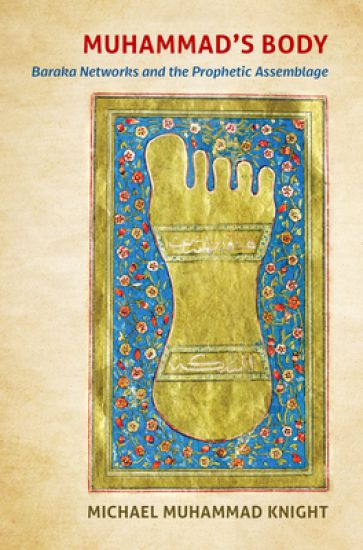
Muhammad's Body

Muhammad's Body

Michael Muhammad Knight

The University of North Carolina Press
2020
sidottu
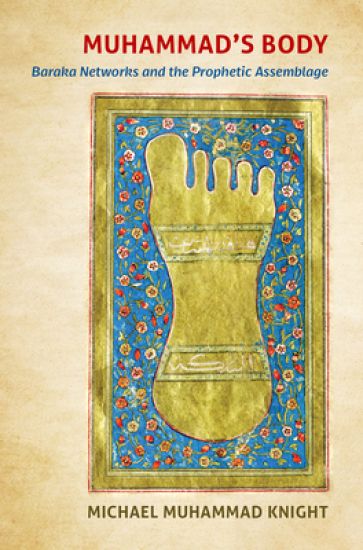
Muhammad's Body introduces questions of embodiment and materiality to the study of the Prophet Muhammad. Analyzing classical Muslim literary representations of Muhammad's body as they emerge in Sunni hadith and sira from the eighth through the eleventh centuries CE, Michael Muhammad Knight argues that early Muslims' theories and imaginings about Mu&7717;ammad's body contributed in significant ways to the construction of prophetic masculinity and authority.Knight approaches hadith and sira as important religiocultural and literary phenomena in their own right. In rich detail, he lays out the variety of ways that early believers imagined Muhammad's relationship to beneficent energy - baraka - and to its boundaries, effects, and limits. Drawing on insights from contemporary theory about the body, Knight shows how changing representations of the Prophet's body helped to legitimatize certain types of people or individuals as religious authorities, while marginalizing or delegitimizing others. For some Sunni Muslims, Knight concludes, claims of religious authority today remain connected to ideas about Muhammad's body.
Muhammad's Body

Muhammad's Body

Michael Muhammad Knight

The University of North Carolina Press
2020
nidottu
Muhammad's Body introduces questions of embodiment and materiality to the study of the Prophet Muhammad. Analyzing classical Muslim literary representations of Muhammad's body as they emerge in Sunni hadith and sira from the eighth through the eleventh centuries CE, Michael Muhammad Knight argues that early Muslims' theories and imaginings about Mu&7717;ammad's body contributed in significant ways to the construction of prophetic masculinity and authority. Knight approaches hadith and sira as important religiocultural and literary phenomena in their own right. In rich detail, he lays out the variety of ways that early believers imagined Muhammad's relationship to beneficent energy - baraka - and to its boundaries, effects, and limits. Drawing on insights from contemporary theory about the body, Knight shows how changing representations of the Prophet's body helped to legitimatize certain types of people or individuals as religious authorities, while marginalizing or delegitimizing others. For some Sunni Muslims, Knight concludes, claims of religious authority today remain connected to ideas about Muhammad's body.
Muhammad Ali: A Memoir

Muhammad Ali: A Memoir

Michael Parkinson

Hodder Paperback
2017
pokkari
'A riveting read about an amazing man' THE SUNLegendary boxer Muhammad Ali visited Michael Parkinson's chat show sofa four times, culminating in an iconic interview in 1971. Muhammad Ali: A Memoir is a fresh, revealing and personal account of the life of the most important and enduring cultural figures of our age. An icon of boxing who has inspired the biggest names in boxing, from Mike Tyson to Anthony Joshua, this is the story of boxing's biggest star. Muhammad Ali was God's Gift to the interviewer. Funny, articulate, outspoken with a fascinating life story, unparalleled talent and controversial views. These 4 interviews charted Ali's life, revealing significant phases at different times, charting the rise and fall of this kaleidoscope of a man.In Muhammad Ali: A Memoir Sir Michael Parkinson will bring his award-winning journalistic talents to bear on this extraordinary man. The book will mix personal recollections of the times they met with selected transcripts of the famous and, in the case of the 1974 meeting, infamous interviews all brought together and contextualised by a sober and honest assessment of the life and times of a figure that, it is certain, we will never see the like of again.
Muhammad and Jesus

Muhammad and Jesus

William E. Phipps

Bloomsbury Academic
2016
sidottu
This carefully researched and provocative treatment of the two most influential persons in world history sets aside the cultural prejudices that often hamper open, honest comparison of Muhammad and Jesus. Phipps begins with a thorough biographical investigation of the early lives of the Meccan and the Nazarene and a thoughtful assessment of their later contributions as statesman and reformer. He then debunks many of the invidious myths about Jesus and Muhammad during the course of a careful exploration of the ways in which they interpreted Hebrew Scriptures, their prescriptions for moral conduct, and their attitudes toward rewards and punishment on earth and in the afterlife.
Muhammad Iqbal

Muhammad Iqbal

Edinburgh University Press
2017
nidottu
Commonly known as the 'spiritual father of Pakistan', the philosophical and political ideas of Muhammad Iqbal shaped the face of Indian Muslim nationalism and the direction of modernist reformist Islam around the world. This volume brings together a range of prominent and emerging voices within American and European Islamic studies to share the latest developments on Iqbal's thought. They re-examine the ideas that lie at the heart of Iqbal's own thought: religion, science, metaphysics, nationalism and religious identity, and bring out many new connections between the 'Sage of the Ummah' and the greatest thinkers and ideas of European and Islamic philosophies.
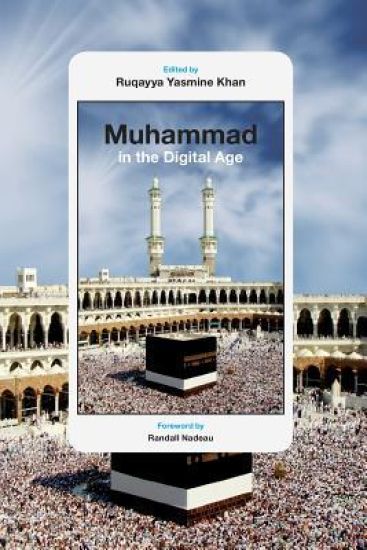
Muhammad in the Digital Age

Muhammad in the Digital Age

Randall Nadeau

University of Texas Press
2015
nidottu
The early twenty-first century has experienced an unrivaled dissemination of information and misinformation about Islam, its prophet Muhammad, and its followers, largely facilitated by the fact that the tragedy of 9/11 roughly coincided with the advent of the digital age. In the first collection of its kind, Ruqayya Khan has compiled essays that treat Muhammad and the core elements of Islam as focal points in an exploration of how the digital era-including social media and other expressions-have both had an effect on and been affected by Islam.Scholars from a variety of fields deal with topics such as the 2005 cartoon controversy in Denmark and the infamous 2012 movie trailer “Innocence of Muslims” that some believe sparked the attacks on the US consulate in Benghazi, as well as how the digitization of ancient texts have allowed the origins of Islam to be studied in new ways. Other essays examine how Muhammad’s wives have been represented in various online sources, including a web comic; the contrasting depictions of Muhammad as both a warrior and peacemaker; and how the widespread distribution of “the look” of Islamic terrorists has led to attacks on Sikhs, whose only point of resemblance to them may be a full beard. These findings illuminate the role of the Internet in forms of representation, advocacy, and engagement concerning Islam and Muslims in our world today.
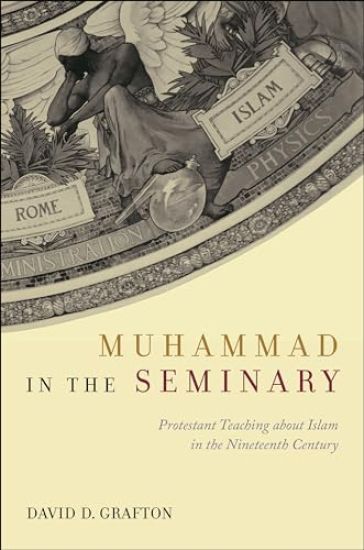
Muhammad in the Seminary

Muhammad in the Seminary

David D. Grafton

NEW YORK UNIVERSITY PRESS
2024
sidottu
Uncovers what Christian seminaries taught about Islam in their formative years Throughout the nineteenth century, Islam appeared regularly in the curricula of American Protestant seminaries. Islam was not only the focus of Christian missions, but was studied as part of the history of the Church as well as in the new field of comparative religions. Moreover, Arabic was taught as a cognate biblical language to help students better understand biblical Hebrew. Passages from the Qur'an were sometimes read as part of language instruction. Christian seminaries were themselves new institutions in the nineteenth century. Though Islam had already been present in the Americas since the beginning of the slave trade, it was only in the nineteenth century that the American public became more aware of Islam and had increasing contact with Muslims. It was during this period that extensive trade with the Ottoman empire emerged and more feasible travel opportunities to the Middle East became available due to the development of the steamship. Providing an in-depth look at the information about Islam that was available in seminaries throughout the nineteenth century, Muhammad in the Seminary examines what Protestant seminaries were teaching about this tradition in the formative years of pastoral education. In charting how American Christian leaders' ideas about Islam were shaped by their seminary experiences, this volume offers new insight into American religious history and the study of Christian-Muslim relations.