Kirjojen hintavertailu. Mukana 12 357 205 kirjaa ja 12 kauppaa.

Kirjahaku

Etsi kirjoja tekijän nimen, kirjan nimen tai ISBN:n perusteella.

1000 tulosta hakusanalla Mukerjee R.

Spatial Imaginings in the Age of Colonial Cartographic Reason
This volume explores how India as a geographical space was constructed by the British colonial regime in visual and material terms. It demonstrates the instrumentalisation of cultural artefacts such as landscape paintings, travel literature and cartography, as spatial practices overtly carrying scientific truth claims, to materially produce artificial spaces that reinforced power relations. It sheds light on the primary dominance of cartographic reason in the age of European Enlightenment which framed aesthetic and scientific modes of representation and imagination. The author cross-examines this imperial gaze as a visual perspective which bore the material inscriptions of a will to assert, possess and control. The distinguishing theme in this study is the production of India as a new geography sourced from Britain's own interaction with its rural outskirts and domination in its fringes.This book: Addresses the concept of "production of space" to study the formulation of a colonial geography which resulted in the birth of a new place, later a nation; Investigates a generative period in the formation of British India c. 1750–1850 as a colonial territory vis-à-vis its representation and reiteration in British maps, landscape paintings and travel writings; Brings Great Britain and British India together on one plane not only in terms of the physical geo-spaces but also in the excavation of critical domains by alluding to critics from both spaces; Seeks to understand the pictorial grammar that legitimised the expansive British imperial cartographic gaze as the dominant narrative which marginalised all other existing local ideas of space and inhabitation. Rethinking colonial constructions of modern India, this volume will be of immense interest to scholars and researchers of modern history, cultural geography, colonial studies, English literature, cultural studies, art, visual studies and area studies.
Spatial Imaginings in the Age of Colonial Cartographic Reason
This volume explores how India as a geographical space was constructed by the British colonial regime in visual and material terms. It demonstrates the instrumentalisation of cultural artefacts such as landscape paintings, travel literature and cartography, as spatial practices overtly carrying scientific truth claims, to materially produce artificial spaces that reinforced power relations. It sheds light on the primary dominance of cartographic reason in the age of European Enlightenment which framed aesthetic and scientific modes of representation and imagination. The author cross-examines this imperial gaze as a visual perspective which bore the material inscriptions of a will to assert, possess and control. The distinguishing theme in this study is the production of India as a new geography sourced from Britain's own interaction with its rural outskirts and domination in its fringes.This book: Addresses the concept of "production of space" to study the formulation of a colonial geography which resulted in the birth of a new place, later a nation; Investigates a generative period in the formation of British India c. 1750–1850 as a colonial territory vis-à-vis its representation and reiteration in British maps, landscape paintings and travel writings; Brings Great Britain and British India together on one plane not only in terms of the physical geo-spaces but also in the excavation of critical domains by alluding to critics from both spaces; Seeks to understand the pictorial grammar that legitimised the expansive British imperial cartographic gaze as the dominant narrative which marginalised all other existing local ideas of space and inhabitation. Rethinking colonial constructions of modern India, this volume will be of immense interest to scholars and researchers of modern history, cultural geography, colonial studies, English literature, cultural studies, art, visual studies and area studies.
Building Wireless Sensor Networks

Building Wireless Sensor Networks

Nandini Mukherjee; Sarmistha Neogy; Sarbani Roy

CRC Press
2020
nidottu
Building Wireless Sensor Networks: Theoretical and Practical Perspectives presents the state of the art of wireless sensor networks (WSNs) from fundamental concepts to cutting-edge technologies.Focusing on WSN topics ideal for undergraduate and postgraduate curricula, this book:Provides essential knowledge of the contemporary theory and practice of wireless sensor networkingDescribes WSN architectures, protocols, and operating systemsDetails the routing and data aggregation algorithmsAddresses WSN security and energy efficiencyIncludes sample programs for experimentationThe book offers overarching coverage of this exciting field, filling a critical gap in the existing literature.
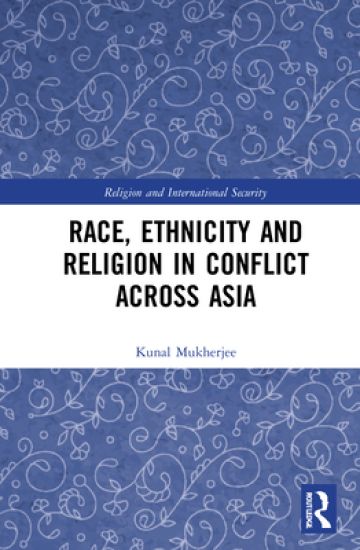
Race, Ethnicity and Religion in Conflict Across Asia
This book looks at conflict zones in the Asia Pacific with a special focus on secessionist groups/movements in the Indian Northeast, Tibet, Chinese Xinjiang, the Burmese borderlands, Kashmir in South Asia, CHT in Bangladesh, South Thailand, and Aceh in Indonesia.These conflict zones are predominantly ethnic minority provinces, which by and large do not share a sense of one-ness with the country that they are currently a part of; most of these insurgencies have had strong linkages with separatist nationalist groups in the region. Methodologically, the author uses extensive fieldwork, interview data, and participant observation from these conflict zones to take a bottom-up approach, giving importance to the voices of ordinary people and/or the residents of these conflict zones whose voices have generally been ignored. Although the book looks at both the historical background and contemporary dimensions of these conflicts, the author focuses on exploring how the role of race, ethnicity and religion in these conflicts can be both direct and indirect.This book will be of great interest to students and scholars of conflict and security in contemporary Asia with a background in politics, history, IR, security studies, religion, and sociology.
Race, Ethnicity and Religion in Conflict Across Asia
This book looks at conflict zones in the Asia Pacific with a special focus on secessionist groups/movements in the Indian Northeast, Tibet, Chinese Xinjiang, the Burmese borderlands, Kashmir in South Asia, CHT in Bangladesh, South Thailand, and Aceh in Indonesia.These conflict zones are predominantly ethnic minority provinces, which by and large do not share a sense of one-ness with the country that they are currently a part of; most of these insurgencies have had strong linkages with separatist nationalist groups in the region. Methodologically, the author uses extensive fieldwork, interview data, and participant observation from these conflict zones to take a bottom-up approach, giving importance to the voices of ordinary people and/or the residents of these conflict zones whose voices have generally been ignored. Although the book looks at both the historical background and contemporary dimensions of these conflicts, the author focuses on exploring how the role of race, ethnicity and religion in these conflicts can be both direct and indirect.This book will be of great interest to students and scholars of conflict and security in contemporary Asia with a background in politics, history, IR, security studies, religion, and sociology.
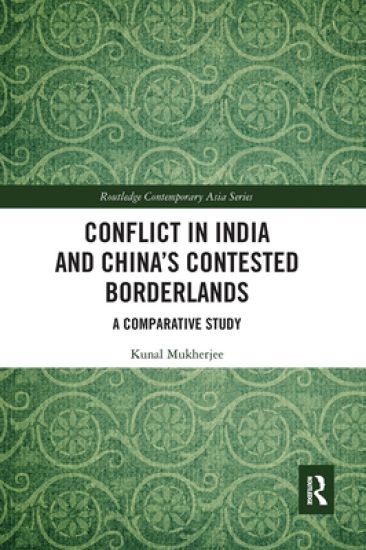
Conflict in India and China's Contested Borderlands
For a long time, India and China have been seen as the rising economic giants on the Asiatic mainland. Studies of the conflicts which have plagued the borderlands of India and China however have tended to only analyse individual case studies without attempting to compare and contrast the situation in these conflicts.This book compares and contrasts the situation in India’s disputed borderlands – Kashmir and the Indian north eastern states – with China’s contested borderlands – Xinjiang and Tibet. The book looks at the root causes of the conflict and how these conflicts have evolved and changed their character with the passage of time. Analysing how the countries have dealt with their territorial disputes from the 50’s till more recent times, the author shows to what extent these state policies have exacerbated the already strained situation. Using primary data collected primarily through interviews, from the people/inhabitants of these conflict zones, the book throws new light on the problem. This bottom up approach allows the people to speak and provides a different understanding of the nature of the conflict, which may very well be the way forward for long lasting peace.A comparative study of the conflicts in the contested borderlands of China and India, the book will be of interest to scholars studying Asian security studies and Asian Politics particularly and Defence and Security Studies more generally.
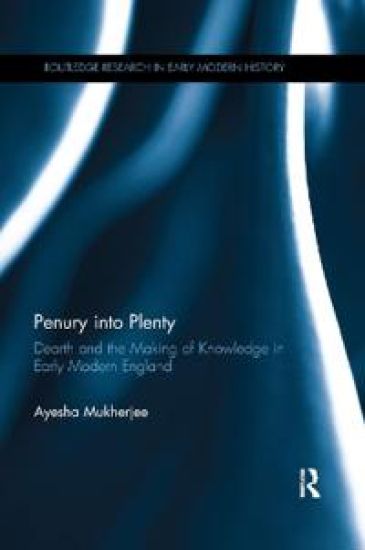
Penury into Plenty

Penury into Plenty

Ayesha Mukherjee

Routledge
2019
nidottu
Penury into Plenty: Dearth and the Making of Knowledge in Early Modern England is an original examination of cultural meanings of dearth and famine in England at the turn of the sixteenth century. It focuses on the socio-economic and ecological crises of the 1590s, investigating the effects of widespread fears of famine on mundane activities and knowledge making by analyzing the remedial measures undertaken by the early modern English to illustrate their commitment to resource management. The activities, theories, and publications of the prolific ‘dearth scientist’ Sir Hugh Platt are considered alongside other forms of literature such as sermons, plays, poetry and prose fiction to explain not only what dearth or famine meant in the period, but how contemporaries understood sustainable resource management. By drawing upon environmental, economic, scientific, and literary history and theory, Penury into Plenty allows modern readers to see that sustainability is not a wholly modern concept and the investigation of cultural forms of ecological consciousness and social consequences of past environmental change is vital for understanding contemporary concerns.
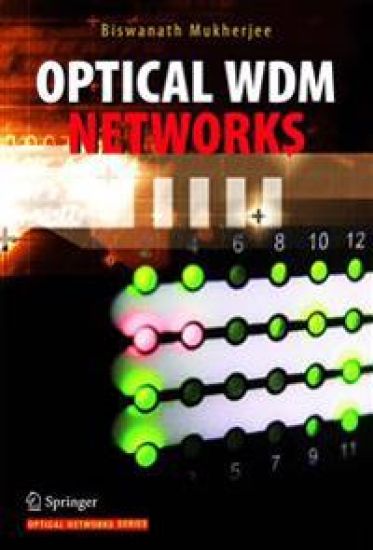
Optical WDM Networks

Optical WDM Networks

Biswanath Mukherjee

Springer-Verlag New York Inc.
2006
sidottu
Research and development on optical wavelength-division multiplexing (WDM) networks have matured considerably. While optics and electronics should be used appropriately for transmission and switching hardware, note that "intelligence'' in any network comes from "software,'' for network control, management, signaling, traffic engineering, network planning, etc.The role of software in creating powerful network architectures for optical WDM networks is emphasized. Optical WDM Networks is a textbook for graduate level courses. Its focus is on the networking aspects of optical networking, but it also includes coverage of physical layers in optical networks. The author introduces WDM and its enabling technologies and discusses WDM local, access, metro, and long-haul network architectures. Each chapter is self-contained, has problems at the end of each chapter, and the material is organized for self study as well as classroom use. The material is the most recent and timely in capturing the state-of-the-art in the fast-moving field of optical WDM networking.
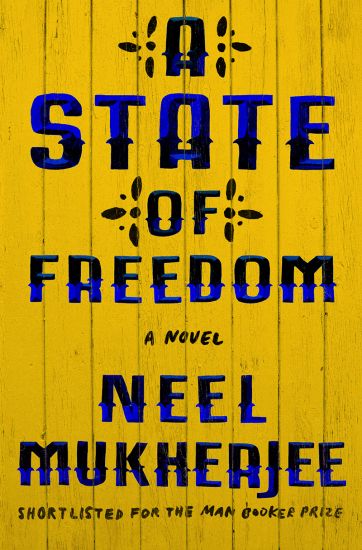
A State of Freedom

A State of Freedom

Neel Mukherjee

WW Norton Co
2018
sidottu
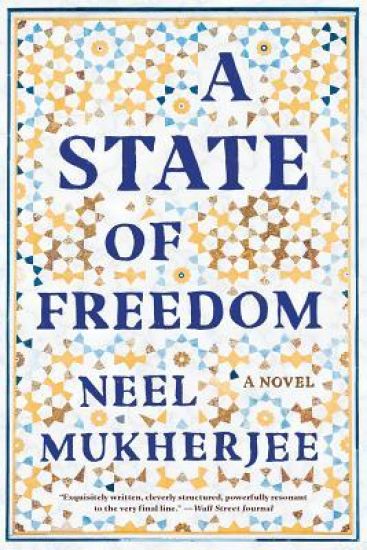
In this stunning novel, prize-winning author Neel Mukherjee wrests open the central, defining events of our century: displacement and migration. Five characters, in very different circumstances--from a domestic cook in Mumbai, to a vagrant and his dancing bear, to a girl who escapes terror in her home village for a new life in the city--find out the meanings of dislocation and the desire for more.Set in contemporary India and moving between the reality of this world and the shadow of another, this novel of multiple narratives--formally daring, fierce, but full of pity--delivers a devastating and haunting exploration of the unquenchable human urge to strive for a different life.
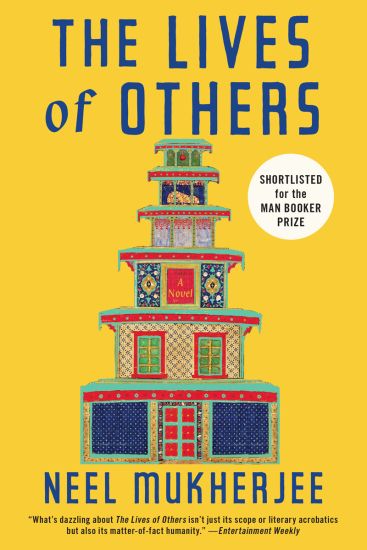
Lives of Others

Lives of Others

Neel Mukherjee

W. W. Norton Company
2015
nidottu
The aging patriarch and matriarch of the Ghosh family preside over their large household, made up of their five adult children and their respective children, unaware that beneath the barely ruffled surface of their lives the sands are shifting. Each set of family members occupies a floor of the home, in accordance to their standing within the family. Poisonous rivalries between sisters-in-law, destructive secrets, and the implosion of the family business threaten to unravel bonds of kinship as social unrest brews in greater Indian society. This is a moment of turbulence, of inevitable and unstoppable change: the chasm between the generations, and between those who have and those who have not, has never been wider. The eldest grandchild, Supratik, compelled by his idealism, becomes dangerously involved in extremist political activism--an action that further catalyzes the decay of the Ghosh home.Ambitious, rich, and compassionate, The Lives of Others anatomizes the soul of a nation as it unfolds a family history, at the same time as it questions the nature of political action and the limits of empathy. It is a novel of unflinching power and emotional force.
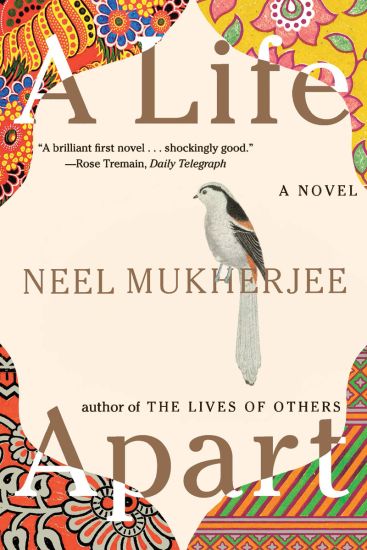
A Life Apart

A Life Apart

Neel Mukherjee

W. W. Norton Company
2016
nidottu
Ritwik Ghosh, twenty-two and recently orphaned, finds the chance to start a new life when he arrives in England from Calcutta. But Oxford holds little of the salvation Ritwik is looking for. Instead, he moves to London, where he drops out of official existence into a shadowy hinterland of illegal immigrants. The story that Ritwik writes to stave off his loneliness begins to find ghostly echoes in his own life. And, as present and past of several lives collide, Ritwik's own goes into free fall.
A State of Freedom

A State of Freedom

Neel Mukherjee

WW Norton Co
2019
nidottu
A State of Freedom wrests open the central, defining events of our century: displacement and migration. Five characters, in very different circumstances--from a domestic cook in Mumbai to a vagrant and his dancing bear--find out the meanings of dislocation and the desire to get more out of life.
Econometrics and Data Analysis for Developing Countries

Econometrics and Data Analysis for Developing Countries

Chandan Mukherjee; Howard White; Marc Wuyts

Routledge
1997
sidottu
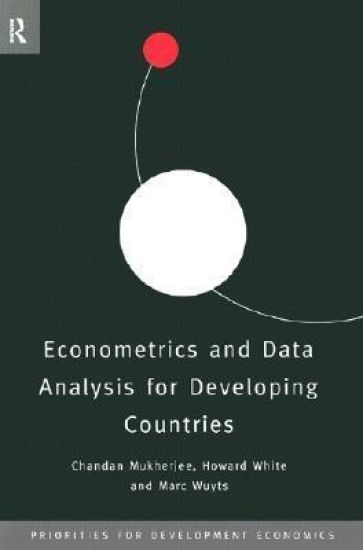
Getting accurate data on less developed countries has created great problems for studying these areas. Yet until recently students of development economics have relied on standard econometrics texts, which assume a Western context. Econometrics and Data Analysis for Developing Countries solves this problem. It will be essential reading for all advanced students of development economics.
Econometrics and Data Analysis for Developing Countries

Econometrics and Data Analysis for Developing Countries

Chandan Mukherjee; Howard White; Marc Wuyts

Routledge
1997
nidottu
Getting accurate data on less developed countries has created great problems for studying these areas. Yet until recently students of development economics have relied on standard econometrics texts, which assume a Western context. Econometrics and Data Analysis for Developing Countries solves this problem. It will be essential reading for all advanced students of development economics.
Human Development and Social Power

Human Development and Social Power

Ananya Mukherjee Reed

Routledge
2008
nidottu
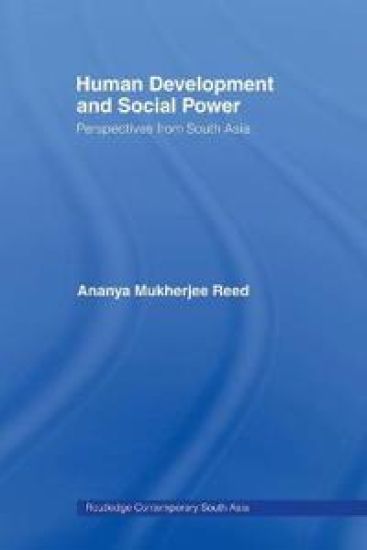
In South Asia and beyond, human development continues to be in a state of crisis. Each successive Human Development Report (HDR) and the pervasive global failure to achieve the Millennium Development Goals are constant reminders of this crisis. An equally, and even more distressing dimension of human development is its great unevenness. Even in countries with high levels of human development it was noted that gender differences were significant. Levels of educational attainment and incomes remain significantly unequal between social groups, constituted along other categories of difference such as race, ethnicity and religion, as do levels of economic and political participation.This book explores the unevenness of human development with respect to the question of difference. The author develops a conceptual framework that focuses on social power, whereby human development is seen as a process/es of reconstruction of the matrices of social power. The approach builds on three main components: a relational rather than an identity-centric view of difference; a transformative notion of social justice - as opposed to a distributive understanding of justice; and the notion of agency. These are applied to the South Asian reality, where important insights into structural aspects of human development can be obtained in terms of religion, gender and caste. Written accessibly and lucidly, this book will be of interest to students and researchers in development studies, political economy, political science, public policy, governance, security studies, human rights, social and religious studies and South Asia.
Nationalism, Education and Migrant Identities
This book examines the role western-education and social standing played in the development of Indian nationalism in the early twentieth century. It highlights the influences that education abroad had on a significant proportion of the Indian population. A large number of Indian students - including key figures such as Mohandas Karamchand Gandhi, Mohammad Ali Jinnah and Jawaharlal Nehru - took up prominent positions in government service, industry or political movements after having spent their student years in Britain before the Second World War. Having reaped the benefits of the British educational system, they spearheaded movements in India that sought to gain independence from British rule. The author analyses the long-term impact of this short-term migration on Britain, South Asia and Empire and deals with issues of migrant identities and the ways in which travel shaped ideas about the 'Self' and 'Home'. Through this study of the England-Returned, attention is drawn to contemporary concerns about the politicisation of foreign students and the antecedents of the growing South Asian student population in the USA and Europe today, as well as of Britain's growing South Asian diaspora.
Aesthetic Hysteria

Aesthetic Hysteria

Ankhi Mukherjee

Routledge
2011
nidottu
Aesthetic Hysteria is a deconstructive psychoanalytic study of hysteria, using literary texts to foreground a telling encounter between two growing discourses within English studies: that of emotion/affect and trauma studies. It brings together several academic foci - the history of medicine, aesthetic theory, speech act theory, feminism, and gender and performance studies. The study uses its theoretical and philosophical questioning of a cultural phenomenon to interrogate the politics and ends of theory, and is timely in addressing similar anxieties dominating contemporary critical and cultural theory.
Nationalism, Education and Migrant Identities
This book examines the role western-education and social standing played in the development of Indian nationalism in the early twentieth century. It highlights the influences that education abroad had on a significant proportion of the Indian population. A large number of Indian students - including key figures such as Mohandas Karamchand Gandhi, Mohammad Ali Jinnah and Jawaharlal Nehru - took up prominent positions in government service, industry or political movements after having spent their student years in Britain before the Second World War. Having reaped the benefits of the British educational system, they spearheaded movements in India that sought to gain independence from British rule. The author analyses the long-term impact of this short-term migration on Britain, South Asia and Empire and deals with issues of migrant identities and the ways in which travel shaped ideas about the 'Self' and 'Home'. Through this study of the England-Returned, attention is drawn to contemporary concerns about the politicisation of foreign students and the antecedents of the growing South Asian student population in the USA and Europe today, as well as of Britain's growing South Asian diaspora.