By George B. Dantzig LINEAR PROGRAMMING The Story About How It Began: Some legends, a little about its historical sign- cance, and comments about where its many mathematical programming extensions may be headed. Industrial production, the ?ow of resources in the economy, the exertion of military e?ort in a war, the management of ?nances—all require the coordination of interrelated activities. What these complex undertakings share in common is the task of constructing a statement of actions to be performed, their timing and quantity(calledaprogramorschedule), that, ifimplemented, wouldmovethesystem from a given initial status as much as possible towards some de?ned goal. While di?erences may exist in the goals to be achieved, the particular processes, and the magnitudes of e?ort involved, when modeled in mathematical terms these seemingly disparate systems often have a remarkably similar mathematical str- ture. The computational task is then to devise for these systems an algorithm for choosing the best schedule of actions from among the possible alternatives. The observation, in particular, that a number of economic, industrial, ?nancial, and military systems can be modeled (or reasonably approximated) by mathem- ical systems of linear inequalities and equations has given rise to the development of the linear programming ?eld.
Linear programming represents one of the major applications of mathematics to business, industry, and economics. It provides a methodology for optimizing an output given that is a linear function of a number of inputs. George Dantzig is widely regarded as the founder of the subject with his invention of the simplex algorithm in the 1940's. This second volume is intended to add to the theory of the items discussed in the first volume. It also includes additional advanced topics such as variants of the simplex method; interior point methods (early and current methods), GUB, decomposition, integer programming, and game theory. Graduate students in the fields of operations research, industrial engineering and applied mathematics will find this volume of particular interest.
Linear programming represents one of the major applications of mathematics to business, industry, and economics. It provides a methodology for optimizing an output given that is a linear function of a number of inputs. George Dantzig is widely regarded as the founder of the subject with his invention of the simplex algorithm in the 1940's. This second volume is intended to add to the theory of the items discussed in the first volume. It also includes additional advanced topics such as variants of the simplex method; interior point methods (early and current methods), GUB, decomposition, integer programming, and game theory. Graduate students in the fields of operations research, industrial engineering and applied mathematics will find this volume of particular interest.
By George B. Dantzig LINEAR PROGRAMMING The Story About How It Began: Some legends, a little about its historical sign- cance, and comments about where its many mathematical programming extensions may be headed. Industrial production, the ?ow of resources in the economy, the exertion of military e?ort in a war, the management of ?nances—all require the coordination of interrelated activities. What these complex undertakings share in common is the task of constructing a statement of actions to be performed, their timing and quantity(calledaprogramorschedule), that, ifimplemented, wouldmovethesystem from a given initial status as much as possible towards some de?ned goal. While di?erences may exist in the goals to be achieved, the particular processes, and the magnitudes of e?ort involved, when modeled in mathematical terms these seemingly disparate systems often have a remarkably similar mathematical str- ture. The computational task is then to devise for these systems an algorithm for choosing the best schedule of actions from among the possible alternatives. The observation, in particular, that a number of economic, industrial, ?nancial, and military systems can be modeled (or reasonably approximated) by mathem- ical systems of linear inequalities and equations has given rise to the development of the linear programming ?eld.
?This textbook on Linear and Nonlinear Optimization is intended for graduate and advanced undergraduate students in operations research and related fields. It is both literate and mathematically strong, yet requires no prior course in optimization. As suggested by its title, the book is divided into two parts covering in their individual chapters LP Models and Applications; Linear Equations and Inequalities; The Simplex Algorithm; Simplex Algorithm Continued; Duality and the Dual Simplex Algorithm; Postoptimality Analyses; Computational Considerations; Nonlinear (NLP) Models and Applications; Unconstrained Optimization; Descent Methods; Optimality Conditions; Problems with Linear Constraints; Problems with Nonlinear Constraints; Interior-Point Methods; and an Appendix covering Mathematical Concepts. Each chapter ends with a set of exercises. The book is based on lecture notes the authors have used in numerous optimization courses the authors have taught at StanfordUniversity. It emphasizes modeling and numerical algorithms for optimization with continuous (not integer) variables. The discussion presents the underlying theory without always focusing on formal mathematical proofs (which can be found in cited references). Another feature of this book is its inclusion of cultural and historical matters, most often appearing among the footnotes."This book is a real gem. The authors do a masterful job of rigorously presenting all of the relevant theory clearly and concisely while managing to avoid unnecessary tedious mathematical details. This is an ideal book for teaching a one or two semester masters-level course in optimization – it broadly covers linear and nonlinear programming effectively balancing modeling, algorithmic theory, computation, implementation, illuminating historical facts, and numerous interesting examples and exercises. Due to the clarity of the exposition, this book also serves as avaluable reference for self-study." Professor Ilan Adler,IEOR Department,UC Berkeley"A carefully crafted introduction to the main elements and applications of mathematical optimization. This volume presents the essential concepts of linear and nonlinear programming in an accessible format filled with anecdotes, examples, and exercises that bring the topic to life. The authors plumb their decades of experience in optimization to provide an enriching layer of historical context. Suitable for advanced undergraduates and masters students in management science, operations research, and related fields."Michael P. Friedlander,IBM Professor of Computer Science,Professor of Mathematics,University of British Columbia
?This textbook on Linear and Nonlinear Optimization is intended for graduate and advanced undergraduate students in operations research and related fields. It is both literate and mathematically strong, yet requires no prior course in optimization. As suggested by its title, the book is divided into two parts covering in their individual chapters LP Models and Applications; Linear Equations and Inequalities; The Simplex Algorithm; Simplex Algorithm Continued; Duality and the Dual Simplex Algorithm; Postoptimality Analyses; Computational Considerations; Nonlinear (NLP) Models and Applications; Unconstrained Optimization; Descent Methods; Optimality Conditions; Problems with Linear Constraints; Problems with Nonlinear Constraints; Interior-Point Methods; and an Appendix covering Mathematical Concepts. Each chapter ends with a set of exercises. The book is based on lecture notes the authors have used in numerous optimization courses the authors have taught at StanfordUniversity. It emphasizes modeling and numerical algorithms for optimization with continuous (not integer) variables. The discussion presents the underlying theory without always focusing on formal mathematical proofs (which can be found in cited references). Another feature of this book is its inclusion of cultural and historical matters, most often appearing among the footnotes."This book is a real gem. The authors do a masterful job of rigorously presenting all of the relevant theory clearly and concisely while managing to avoid unnecessary tedious mathematical details. This is an ideal book for teaching a one or two semester masters-level course in optimization – it broadly covers linear and nonlinear programming effectively balancing modeling, algorithmic theory, computation, implementation, illuminating historical facts, and numerous interesting examples and exercises. Due to the clarity of the exposition, this book also serves as avaluable reference for self-study." Professor Ilan Adler,IEOR Department,UC Berkeley"A carefully crafted introduction to the main elements and applications of mathematical optimization. This volume presents the essential concepts of linear and nonlinear programming in an accessible format filled with anecdotes, examples, and exercises that bring the topic to life. The authors plumb their decades of experience in optimization to provide an enriching layer of historical context. Suitable for advanced undergraduates and masters students in management science, operations research, and related fields."Michael P. Friedlander,IBM Professor of Computer Science,Professor of Mathematics,University of British Columbia
"Above and Beyond is a wonderful creation which describes more than its title. It is a must read for those who are looking further than just leading a business successfully, towards building enduring institutions. The authors through live examples drawn from their vast experience having worked together in building an institution, and later helping many others to do so, have shown that this is possible with care and concern for people while encouraging and supporting them to take on challenges without any fear. Truly insightful and inspirational." M M MurugappanExecutive Chairman, Murugappa group***Above and Beyond: How to Build Impactful Businesses, Where Everybody Wins begins at a point where most management books end-profits, shareholder wealth and success. According to the authors, truly great organisations do not stop there; they leap to the space beyond excellence. This leap itself is powered by a foundation of solid values, a goal towards a common good and the realisation of a larger purpose, which help the organisation make a significant impact on the world outside.
The Royal College of Anaesthetists has introduced Constructed Response Questions (CRQs) as an innovative way of testing trainees, in the fields of anaesthesia and intensive care medicine, in their final FRCA examinations from September 2019. CRQs are a more structured way of assessing knowledge and understanding; they also assess the application of knowledge, evaluation and judgement. This book categorises 134 questions based on the Royal College model, with six mandatory sections of training and two separate sections on general duties and optional units. In the FRCA exam, there will be a total of 12 questions, one each from the six mandatory units of training (neuroanaesthesia; obstetric anaesthesia; paediatric anaesthesia; pain; cardiac anaesthesia; and intensive care), and six from general duties which may include one from optional unit training (perioperative medicine; regional, orthopaedic and trauma anaesthesia; other topics in general medicine; and optional topics). The answers have been extensively researched from recent BJA Education papers, e-learning, CEPD resources and other vital educational materials. To make it easy for the revising candidate, the questions have been split into their respective subspecialty topics, so the reader can assess their knowledge appropriately in a timely manner. It is an ideal companion for candidates who are preparing for their final exams in anaesthesia and will help to assess their preparation and guide appropriate revision. The topics are pertinent for other anaesthetic exams worldwide, including the European exams, Australian and New Zealand fellowships and the Indian DNB exams. The authors have extensive experience in anaesthetic teaching and lead anaesthetic intermediate teaching in the UK, running regular and successfully attended courses. This book will help candidates to adapt to the recent exam changes and revise in an efficient manner. It will not only be an invaluable educational resource for trainee anaesthetists but also for practising anaesthetists. Medical students and junior doctors, who are about to embark on a career in anaesthesia or intensive care medicine, will also find the book to be a useful educational tool.
Chronic pain is a silent epidemic -- it is estimated to affect 20-30% of the population. A good understanding of the disease, diagnosis and management are imperative in providing patient-centred care. A broad range of practitioners will frequently encounter patients with chronic pain. This book covers important topics in chronic pain relevant to many clinicians including, but not limited to, anaesthetists, intensive care professionals, surgical and nursing staff, junior doctors, operating department practitioners, general practitioners and medical students. It makes essential reading for healthcare workers and is also an invaluable first reference for physiotherapists, healthcare managers, psychologists and researchers with a need for an overview of the key aspects of this topic. This book will not only be an invaluable resource for trainee anaesthetists but also for practising anaesthetists with an interest in teaching the basics of chronic pain; it is also a succinct aid for clinical practice. Medical students and junior doctors, who are about to embark on a career in anaesthesia or intensive care medicine, will also find the book to be a useful educational tool. Subjects discussed range from the comprehensive assessment of chronic pain to the multimodal management of chronic pain. It is written in a simple and consistent style that can be easily understood and applied to day-to-day clinical practice. This material will be an important tool for professional exams. It is an ideal companion for candidates who are preparing for their final exams that include the topic of chronic pain and will help to assess their preparation and guide appropriate revision. Questions on chronic pain appear in written and structured oral examinations. This book will be handy for candidates preparing for examinations conducted by the Royal College of Anaesthetists, UK (FRCA), The College of Anaesthesiologists of Ireland (FCAI), the European Society of Anaesthesiology (EDAIC), the European Society of Intensive Care Medicine (EDIC), the Australian and New Zealand College of Anaesthetists (FANZCA), the National Board of Examinations of India (Dip NB), and the American and Canadian board exams, as well as other competitive exams across the globe. Candidates appearing for advanced pain examinations will find this book useful to refresh their knowledge on pain medicine. The authors are consultants in pain medicine with clinical and teaching experience in university hospitals across the UK. They regularly conduct successful pain education courses which consistently attract good feedback. They conduct regular final FRCA and FFPMRCA exam courses attended by candidates from all over the country.
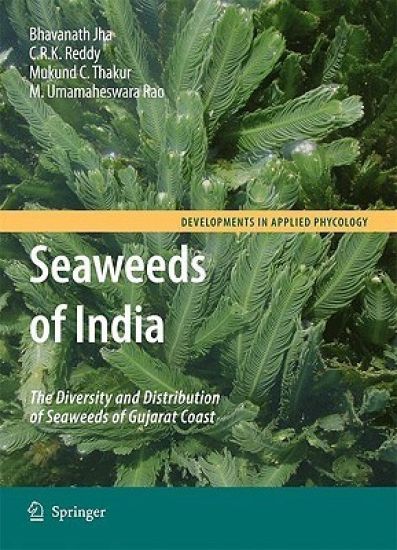
India has 7,500 km of coastline with diverse habitats and rich biota. Coastal ecosystems, unfortunately, are experiencing wide range of pressures due to siltation, eutrophication, coastal development, aquaculture and climate change. Those species that adapt to these pressures will expand their living boundaries while others may fade away. Accordingly, the study of coastal biodiversity is of great concern globally and constitutes an important element of global change research. Gujarat has 1,600 km of coastline, reportedly with rich diversity of seaweeds. Previously published accounts on seaweed biodiversity were mainly in the form of checklists, the earliest among these being the checklist of Krishnamurthy and Joshi prepared in the early 1970s. The more recent checklists are based almost entirely on secondary information. The present book entitled Seaweeds of India – The Diversity and Distribution of Seaweeds of Gujarat Coast is a timely publication based wholly on primary data. Data were collected through extensive and systematic ? eld studies conducted by the authors during different seasons over a three year period. The authors collected nearly 200 species of seaweeds belonging to 100 genera of Chlorophyta, Phaeophyta and Rhodophyta. Twenty-four of the species are new to Gujarat coast and three are new to Indian waters. The book contains high-quality images of the different species in their existing habitats. Brief taxonomical descriptions, together with information on ecology, distribution, seasonality and abundance, are covered for each of the species.
India has 7,500 km of coastline with diverse habitats and rich biota. Coastal ecosystems, unfortunately, are experiencing wide range of pressures due to siltation, eutrophication, coastal development, aquaculture and climate change. Those species that adapt to these pressures will expand their living boundaries while others may fade away. Accordingly, the study of coastal biodiversity is of great concern globally and constitutes an important element of global change research. Gujarat has 1,600 km of coastline, reportedly with rich diversity of seaweeds. Previously published accounts on seaweed biodiversity were mainly in the form of checklists, the earliest among these being the checklist of Krishnamurthy and Joshi prepared in the early 1970s. The more recent checklists are based almost entirely on secondary information. The present book entitled Seaweeds of India – The Diversity and Distribution of Seaweeds of Gujarat Coast is a timely publication based wholly on primary data. Data were collected through extensive and systematic ? eld studies conducted by the authors during different seasons over a three year period. The authors collected nearly 200 species of seaweeds belonging to 100 genera of Chlorophyta, Phaeophyta and Rhodophyta. Twenty-four of the species are new to Gujarat coast and three are new to Indian waters. The book contains high-quality images of the different species in their existing habitats. Brief taxonomical descriptions, together with information on ecology, distribution, seasonality and abundance, are covered for each of the species.
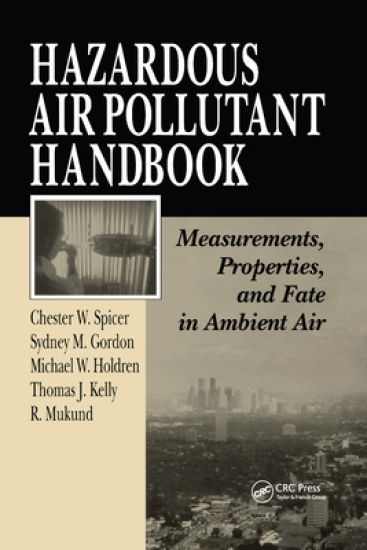
Hazardous Air Pollutant Handbook: Measurements, Properties, and Fate in Ambient Air provides a comprehensive review of the 188 compounds and compound classes designated as Hazardous Air Pollutants (HAPs) by the Clean Air Act Amendments of 1990, with a specific focus on their potential presence in ambient air. The relevant chemical and physical properties of the compounds are discussed and tabulated, and suitable methods for their measurement in ambient air are identified. A survey of measurements of ambient HAP concentrations is provided for use in historical comparisons and for evaluating the current human health risks from these chemicals. Finally, the book reviews the atmospheric reactions that control the lifetime and fate of the HAPs in ambient air, and summarizes the current knowledge about their transformation products.
Hazardous Air Pollutant Handbook: Measurements, Properties, and Fate in Ambient Air provides a comprehensive review of the 188 compounds and compound classes designated as Hazardous Air Pollutants (HAPs) by the Clean Air Act Amendments of 1990, with a specific focus on their potential presence in ambient air. The relevant chemical and physical properties of the compounds are discussed and tabulated, and suitable methods for their measurement in ambient air are identified. A survey of measurements of ambient HAP concentrations is provided for use in historical comparisons and for evaluating the current human health risks from these chemicals. Finally, the book reviews the atmospheric reactions that control the lifetime and fate of the HAPs in ambient air, and summarizes the current knowledge about their transformation products.
Mukunda lowered his gaze for a moment as a burning sensation gripped his chest and a cold sweat ran down his spine. His heart was beating at a pace he was finding difficult to cope with. Darkness soon grappled his vision. The Exile of Mukunda, part two of the Maha Vishnu Trilogy, is set on a planet called Prithvi in a distant universe called 1408. Manavas from both the city of Madhavpur and Ayudhpur have now united. They are living harmoniously in the well-guarded beautiful city of Ksharanpur. Shriram now rules the new Manava society and Radhika looks after the day-to-day administration. Shyam has retired and now enjoys his time with his grandkids. Krishna's legacy is still remembered and celebrated by all except for one, his own young defiant son, Mukunda. He blames Krishna for not only abandoning him but also his mother in their hour of need. Desperate to search for answers, the ever-defiant Mukunda crosses into the enemy line. Trapped in a kingdom governed by the evilest forces on Prithvi, he finds himself helping them make weapons that may very well wipe Manavas out of existence, once and for all. The only one Mukunda can trust in these dire times is a faceless voice emanating from the dark depths of the deep space. Whose voice is that? Surrounded by a soulless enemy and betrayed by the girl he loves, will Mukunda ever be able to escape from the clutches of evil? What happened to Krishna? Will Mukunda ever be able to find him or will he too fade into oblivion, thousands of miles away from home? Enter into the mythical world of part two of the Maha Vishnu series and get swept away in a fast-paced suspenseful narrative.