Kirjojen hintavertailu. Mukana 11 717 486 kirjaa ja 12 kauppaa.

Kirjahaku

Etsi kirjoja tekijän nimen, kirjan nimen tai ISBN:n perusteella.

1000 tulosta hakusanalla Napoleone Colajanni

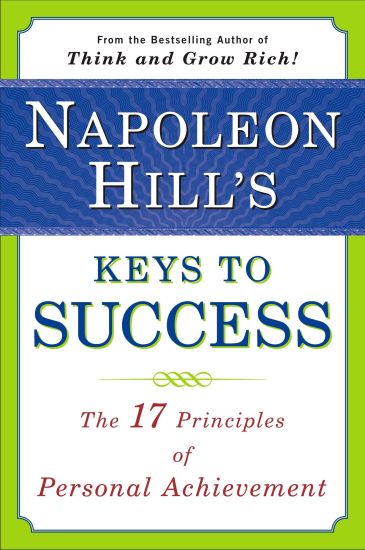
Napoleon Hill's Keys to Success: The 17 Principles of Personal Achievement
Napoleon Hill summed up his philosophy of success in Think and Grow Rich , one of the bestselling inspirational business books ever. A recent USA Today survey of business leaders named it one of the five most influential books in its field, more than 40 years after it was first published. Now, in Napoleon Hill's Keys to Success, his broadly outlined principles are expanded in detail for the first time, with concrete advice on their use and implementation. Compiled from Hill's teaching materials, lectures, and articles, Napoleon Hill's Keys to Success provides mental exercises, self-analysis techniques, powerful encouragement, and straightforward advice to anyone seeking personal and financial improvement. In addition to Hill's many personal true-life examples of the principles in action, there are also contemporary illustrations featuring dynamos like Bill Gates, Peter Lynch, and Donna Karan. No other Napoleon Hill book has addressed these 17 principles so completely and in such precise detail. For the millions of loyal Napoleon Hill fans and for those who discover him each year, Napoleon Hill's Keys to Success promises to be a valuable and important guide on the road to riches.
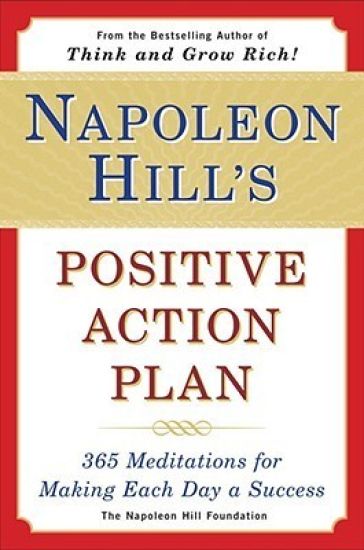
Napoleon Hill's Positive Action Plan
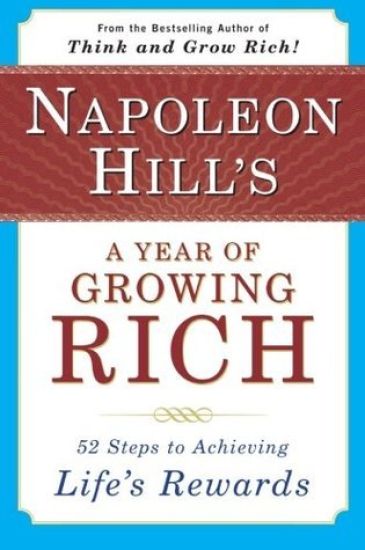
More than 50 years after it was first published, Napoleon Hill's Think and Grow Rich still inspires thousands of people each year to take charge of their lives and pursue success. Now, from The Napoleon Hill Foundation, comes this collection of 365 daily spurs to better and greater achievement.
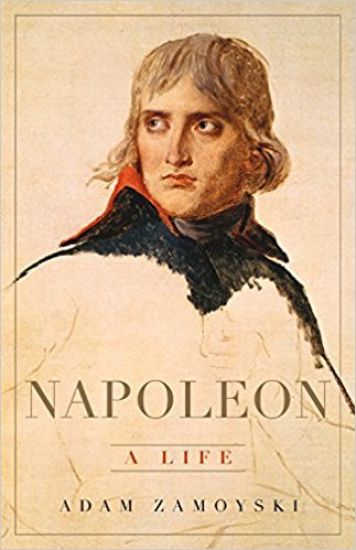
Napoleon: A Life

Napoleon: A Life

Adam Zamoyski

BASIC BOOKS
2018
sidottu
The definitive biography of Napoleon -- hailed as magnificent by The Economist. What a novel my life has been Napoleon once said of himself. Born into a poor family, the callow young man was, by twenty-six, an army general. Seduced by an older woman, his marriage transformed him into a galvanizing military commander. The Pope crowned him as Emperor of the French when he was only thirty-five. Within a few years, he became the effective master of Europe, his power unparalleled in modern history. His downfall was no less dramatic. The story of Napoleon has been written many times. In some versions, he is a military genius, in others a war-obsessed tyrant. Here, historian Adam Zamoyski cuts through the mythology and explains Napoleon against the background of the European Enlightenment, and what he was himself seeking to achieve. This most famous of men is also the most hidden of men, and Zamoyski dives deeper than any previous biographer to find him. Beautifully written, Napoleon brilliantly sets the man in his European context.
Napoleon Hill's Golden Rules

Napoleon Hill's Golden Rules

Napoleon Hill

John Wiley Sons Inc
2009
nidottu
Napoleon Hill's Golden Rules: The Lost Writings consists of a series of magazine articles Napoleon Hill wrote between 1919 and1923 for Success Magazine, of which he eventually become an editor. Hill's obsession with achieving material success had led him from poverty stricken Appalachian Mountains with the desire to study successful people. These articles focus on Hill's philosophy of success, drawing on the thoughts and experience of a multitude of rags-to-riches tycoons, showing readers how these successful people achieved such status. Many of his writings such as the chapter on Law of Attraction, written in the March 1919 issue, have recently basis of several bestselling books. Readers will discover principles that will assure their success if studied and put into action. Chapters include: Lesson #1: Your Social and Physical Heredity--Hills Golden Rule (May 1920)Lesson #2: Auto Suggestion--Napoleon Hill's Magazine (July 1921)Lesson #3: Suggestion (Applied Salesmanship)--Napoleon Hill's Magazine (August 1921)Lesson #4: The Law of Retaliation--Hill's Golden Rule (March 1919)Lesson #5: The Power of Your Mind (Little Odd Visits with Your Editor)--Hill's Golden Rule (October 1919)Lesson #6: How to Build Self-Confidence--Napoleon Hill's Magazine (June 1921)Lesson #7: Environment and Habit--Hill's Golden Rule (April 1919)Lesson #8: How to Remember--Hill's Golden Rule (May-June 1919)Lesson #9: How Marc Antony Used Suggestion in Winning the Roman Mob--Hill's Golden Rule (July 1919)Lesson #10: Persuasion vs. Force--Hill's Golden Rule (September 1919)Lesson #11: The Law of Compensation--Napoleon Hill's Magazine (April 1921)Lesson #12: The Golden Rule as a Pass Key to All Achievement--Napoleon Hill's Magazine (June 1921)
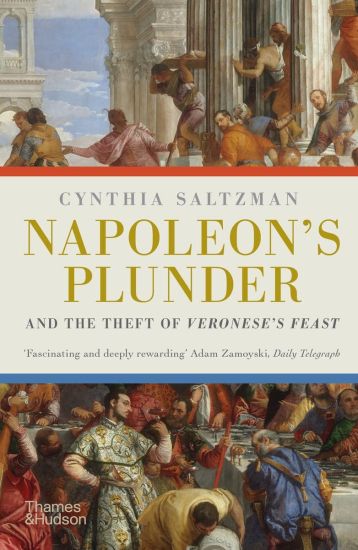
Napoleon's Plunder and the Theft of Veronese's Feast
‘A fascinating and deeply rewarding book’ Adam Zamoyski, Daily Telegraph Napoleon’s Plunder chronicles one of the most spectacular art appropriation campaigns in history and, in doing so, sheds new light on the complex origins of what was once called the Musée Napoléon, now known as the Louvre. It centres on the story of Napoleon’s theft of Paolo Veronese’s Wedding Feast at Cana, a vast, sublime canvas that in 1797 the French army tore from a wall of the monastery of San Giorgio Maggiore in Venice. Feast was just one of Napoleon’s spoils of war, which he claimed for the French nation and displayed in a public museum – the Louvre. He filled the former palace of the French kings with his acquisitions, and Europe flocked to Paris and hailed the Louvre as the greatest museum in the world. Did he take it for himself? Or for France? Or for the world at large? Saltzman interweaves the stories of Napoleon’s military campaigns, uncovering the treaties through which he obtained his loot, with the histories of the plundered works themselves, exploring how these masterpieces came into being. As much as a story of military might, this is an account of one of the most ambitious cultural projects ever conducted.
Napoleon and the Dardanelles

Napoleon and the Dardanelles

Vernon J. Puryear

University of California Press
2022
pokkari
This title is part of UC Press's Voices Revived program, which commemorates University of California Press’s mission to seek out and cultivate the brightest minds and give them voice, reach, and impact. Drawing on a backlist dating to 1893, Voices Revived makes high-quality, peer-reviewed scholarship accessible once again using print-on-demand technology. This title was originally published in 1951.
Napoleon and the Dardanelles

Napoleon and the Dardanelles

Vernon J. Puryear

University of California Press
2022
sidottu
This title is part of UC Press's Voices Revived program, which commemorates University of California Press’s mission to seek out and cultivate the brightest minds and give them voice, reach, and impact. Drawing on a backlist dating to 1893, Voices Revived makes high-quality, peer-reviewed scholarship accessible once again using print-on-demand technology. This title was originally published in 1951.
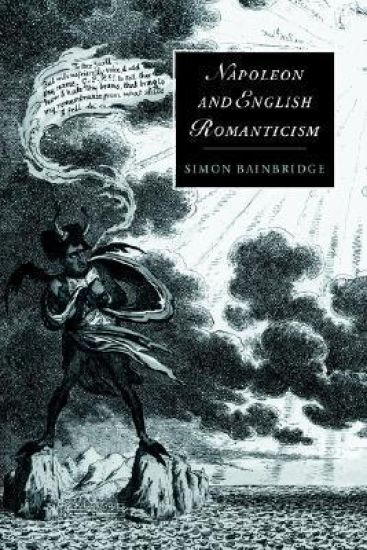
Napoleon and English Romanticism

Napoleon and English Romanticism

Simon Bainbridge

Cambridge University Press
2006
pokkari
Napoleon Bonaparte occupied a central place in the consciousness of many British writers of the Romantic period. He was a profound shaping influence on their thinking and writing, and a powerful symbolic and mythic figure whom they used to legitimize and discredit a wide range of political and aesthetic positions. In this first ever full-length study of Romantic writers' obsession with Napoleon, Simon Bainbridge focuses on the writings of the Lake poets Wordsworth, Coleridge and Southey, and of Byron and Hazlitt. Combining detailed analyses of specific texts with broader historical and theoretical approaches, and illustrating his argument with the visual evidence of contemporary cartoons, Bainbridge shows how Romantic writers constructed, appropriated, and contested different Napoleons as a crucial part of their sustained and partisan engagement in the political and cultural debates of the day.
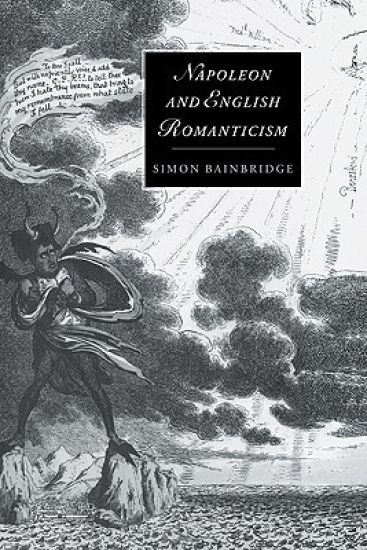
Napoleon and English Romanticism

Napoleon and English Romanticism

Simon Bainbridge

Cambridge University Press
1995
sidottu
Napoleon Bonaparte occupied a central place in the consciousness of many British writers of the Romantic period. He was a profound shaping influence on their thinking and writing, and a powerful symbolic and mythic figure whom they used to legitimise and discredit a wide range of political and aesthetic positions. In this first ever full-length study of Romantic writers’ obsession with Napoleon Simon Bainbridge focuses on the writings of the Lake poets Wordsworth, Coleridge, and Southey, and of Byron and Hazlitt. Combining detailed analyses of specific texts with broader historical and theoretical approaches, and illustrating his argument with the visual evidence of contemporary cartoons, Bainbridge shows how Romantic writers constructed, appropriated, and contested different Napoleons as a crucial part of their sustained and partisan engagement in the political and cultural debates of the day.