Kirjojen hintavertailu. Mukana 11 244 527 kirjaa ja 12 kauppaa.

Kirjahaku

Etsi kirjoja tekijän nimen, kirjan nimen tai ISBN:n perusteella.

1000 tulosta hakusanalla Nicholas Muskovac

An Essay on Draining and Improving Peat Bogs; in Which Their Nature and Properties are Fully Considered. By Mr. Nicholas Turner,
The 18th century was a wealth of knowledge, exploration and rapidly growing technology and expanding record-keeping made possible by advances in the printing press. In its determination to preserve the century of revolution, Gale initiated a revolution of its own: digitization of epic proportions to preserve these invaluable works in the largest archive of its kind. Now for the first time these high-quality digital copies of original 18th century manuscripts are available in print, making them highly accessible to libraries, undergraduate students, and independent scholars.Medical theory and practice of the 1700s developed rapidly, as is evidenced by the extensive collection, which includes descriptions of diseases, their conditions, and treatments. Books on science and technology, agriculture, military technology, natural philosophy, even cookbooks, are all contained here.++++The below data was compiled from various identification fields in the bibliographic record of this title. This data is provided as an additional tool in helping to insure edition identification: ++++British LibraryT136080With a half-title and an errata. This edition is without press figures and is of a different setting of type from the edition with press figures.London: printed for R. Baldwin, and J. Bew. And sold by W. Wilson, Dublin, 1784. 2], x,86, 2]p.; 8
A new Treatise of the Venereal Disease. In Three Parts. ... To Which is Added, a Particular Dissertation Upon the Nature and Properties of Mercury; ... By Nicholas Robinson,
The 18th century was a wealth of knowledge, exploration and rapidly growing technology and expanding record-keeping made possible by advances in the printing press. In its determination to preserve the century of revolution, Gale initiated a revolution of its own: digitization of epic proportions to preserve these invaluable works in the largest archive of its kind. Now for the first time these high-quality digital copies of original 18th century manuscripts are available in print, making them highly accessible to libraries, undergraduate students, and independent scholars.Medical theory and practice of the 1700s developed rapidly, as is evidenced by the extensive collection, which includes descriptions of diseases, their conditions, and treatments. Books on science and technology, agriculture, military technology, natural philosophy, even cookbooks, are all contained here.++++The below data was compiled from various identification fields in the bibliographic record of this title. This data is provided as an additional tool in helping to insure edition identification: ++++British LibraryT139551London: printed for J. J. and P. Knapton, A. Bettesworth and C. Hitch, W. Innys and R. Manby, 1736. x,395, 11]p.; 8
A Scheme, I. To Raise Immediately Fifty or Sixty Thousand men, Without any Expence to the Government, ... II. To Raise, by Easy Methods, a Large sum ... III. To Suppress at Once the Smugglers, ... By Nicholas Machiavelli, Esq
The 18th century was a wealth of knowledge, exploration and rapidly growing technology and expanding record-keeping made possible by advances in the printing press. In its determination to preserve the century of revolution, Gale initiated a revolution of its own: digitization of epic proportions to preserve these invaluable works in the largest archive of its kind. Now for the first time these high-quality digital copies of original 18th century manuscripts are available in print, making them highly accessible to libraries, undergraduate students, and independent scholars.Delve into what it was like to live during the eighteenth century by reading the first-hand accounts of everyday people, including city dwellers and farmers, businessmen and bankers, artisans and merchants, artists and their patrons, politicians and their constituents. Original texts make the American, French, and Industrial revolutions vividly contemporary.]+++The below data was compiled from various identification fields in the bibliographic record of this title. This data is provided as an additional tool in helping to insure edition identification: ++++British LibraryT091188Nicholas Machiavelli is a pseudonym. London]: Printed for C. Corbet at Addison's Head, facing St. Dunstan's Church in Fleet-Street, 1747. 2],29, 1]p.; 8
A Concise & Easy Method of Learning the Figuring Part of Country Dances, by way of Characters. To Which is Prefixed The Figure of the Minuet, by Nicholas Dukes,
The 18th century was a wealth of knowledge, exploration and rapidly growing technology and expanding record-keeping made possible by advances in the printing press. In its determination to preserve the century of revolution, Gale initiated a revolution of its own: digitization of epic proportions to preserve these invaluable works in the largest archive of its kind. Now for the first time these high-quality digital copies of original 18th century manuscripts are available in print, making them highly accessible to libraries, undergraduate students, and independent scholars.Western literary study flows out of eighteenth-century works by Alexander Pope, Daniel Defoe, Henry Fielding, Frances Burney, Denis Diderot, Johann Gottfried Herder, Johann Wolfgang von Goethe, and others. Experience the birth of the modern novel, or compare the development of language using dictionaries and grammar discourses. ++++The below data was compiled from various identification fields in the bibliographic record of this title. This data is provided as an additional tool in helping to insure edition identification: ++++British LibraryT124803Engraved throughout. Each page of the main text dated: "Publish'd. .. April 23. 1752 .. ." London, 1752]. 4], V, 1], II, 2],76,7, 1]p.: ill.; 8
An Essay on the Gout, and all Gouty Affections Incident to Affect Mankind. Comprizing the Various Natures, Symptoms, and Causes, Thro' Every Branch and Stage of the Disease; ... By Nicholas Robinson, M.D. ... The Second Edition
The 18th century was a wealth of knowledge, exploration and rapidly growing technology and expanding record-keeping made possible by advances in the printing press. In its determination to preserve the century of revolution, Gale initiated a revolution of its own: digitization of epic proportions to preserve these invaluable works in the largest archive of its kind. Now for the first time these high-quality digital copies of original 18th century manuscripts are available in print, making them highly accessible to libraries, undergraduate students, and independent scholars.Medical theory and practice of the 1700s developed rapidly, as is evidenced by the extensive collection, which includes descriptions of diseases, their conditions, and treatments. Books on science and technology, agriculture, military technology, natural philosophy, even cookbooks, are all contained here.++++The below data was compiled from various identification fields in the bibliographic record of this title. This data is provided as an additional tool in helping to insure edition identification: ++++British LibraryT055011London: printed for J. Fuller, 1756?]. xii,178p.; 8
The Obligation of an Oath; and Particularly of the Oaths of Allegiance, Supremacy, and Abjuration. A Sermon Preach'd at the Assizes Held at Dorchester, on Friday, March 16. 1715/16. By Nicholas Carter,
The 18th century was a wealth of knowledge, exploration and rapidly growing technology and expanding record-keeping made possible by advances in the printing press. In its determination to preserve the century of revolution, Gale initiated a revolution of its own: digitization of epic proportions to preserve these invaluable works in the largest archive of its kind. Now for the first time these high-quality digital copies of original 18th century manuscripts are available in print, making them highly accessible to libraries, undergraduate students, and independent scholars.The Age of Enlightenment profoundly enriched religious and philosophical understanding and continues to influence present-day thinking. Works collected here include masterpieces by David Hume, Immanuel Kant, and Jean-Jacques Rousseau, as well as religious sermons and moral debates on the issues of the day, such as the slave trade. The Age of Reason saw conflict between Protestantism and Catholicism transformed into one between faith and logic -- a debate that continues in the twenty-first century.++++The below data was compiled from various identification fields in the bibliographic record of this title. This data is provided as an additional tool in helping to insure edition identification: ++++British LibraryT006363With a half-title.London: printed for J. Churchill, 1716. 2],26p.; 8
The Huntsman. Containing the Best Methods of Sport, for Coursing With Greyhounds, and Hunting all Kinds of Chases in England, ... Likewise, the Huntsman's Terms of art; ... By Nicholas Coxe,
The 18th century was a wealth of knowledge, exploration and rapidly growing technology and expanding record-keeping made possible by advances in the printing press. In its determination to preserve the century of revolution, Gale initiated a revolution of its own: digitization of epic proportions to preserve these invaluable works in the largest archive of its kind. Now for the first time these high-quality digital copies of original 18th century manuscripts are available in print, making them highly accessible to libraries, undergraduate students, and independent scholars.Medical theory and practice of the 1700s developed rapidly, as is evidenced by the extensive collection, which includes descriptions of diseases, their conditions, and treatments. Books on science and technology, agriculture, military technology, natural philosophy, even cookbooks, are all contained here.++++The below data was compiled from various identification fields in the bibliographic record of this title. This data is provided as an additional tool in helping to insure edition identification: ++++British LibraryT072107An extract from 'The gentleman's recreation'.London: printed for J. Dixwell, 1780?]. iv, 4],124p.; 8
Rational and Christian Principles the Best Rules of Conduct. With an Appendix Containing a Vindication of the Author From Some Unjust Censures, and Groundless Aspersions, Cast Upon him. By Nicholas Billingsley
The 18th century was a wealth of knowledge, exploration and rapidly growing technology and expanding record-keeping made possible by advances in the printing press. In its determination to preserve the century of revolution, Gale initiated a revolution of its own: digitization of epic proportions to preserve these invaluable works in the largest archive of its kind. Now for the first time these high-quality digital copies of original 18th century manuscripts are available in print, making them highly accessible to libraries, undergraduate students, and independent scholars.The Age of Enlightenment profoundly enriched religious and philosophical understanding and continues to influence present-day thinking. Works collected here include masterpieces by David Hume, Immanuel Kant, and Jean-Jacques Rousseau, as well as religious sermons and moral debates on the issues of the day, such as the slave trade. The Age of Reason saw conflict between Protestantism and Catholicism transformed into one between faith and logic -- a debate that continues in the twenty-first century.++++The below data was compiled from various identification fields in the bibliographic record of this title. This data is provided as an additional tool in helping to insure edition identification: ++++British LibraryT104243With a half-title.London: printed for John Clark, 1721. 2], xx,127, 1]p.; 8
An Essay on Draining and Improving Peat Bogs in Which Their Nature and Properties are Fully Considered. By Mr. Nicholas Turner,
The 18th century was a wealth of knowledge, exploration and rapidly growing technology and expanding record-keeping made possible by advances in the printing press. In its determination to preserve the century of revolution, Gale initiated a revolution of its own: digitization of epic proportions to preserve these invaluable works in the largest archive of its kind. Now for the first time these high-quality digital copies of original 18th century manuscripts are available in print, making them highly accessible to libraries, undergraduate students, and independent scholars.Western literary study flows out of eighteenth-century works by Alexander Pope, Daniel Defoe, Henry Fielding, Frances Burney, Denis Diderot, Johann Gottfried Herder, Johann Wolfgang von Goethe, and others. Experience the birth of the modern novel, or compare the development of language using dictionaries and grammar discourses. ++++The below data was compiled from various identification fields in the bibliographic record of this title. This data is provided as an additional tool in helping to insure edition identification: ++++British LibraryT136079With a half-title and a final errata leaf. This edition has press figures and is of a different setting of type from the edition without press figures.London: printed for R. Baldwin, and J. Bew. And sold by W. Wilson, Dublin, 1784. 4], x,86, 2]p.; 8
Poems on Several Occasions. By Nicholas James

Poems on Several Occasions. By Nicholas James

Nicholas James

Gale Ecco, Print Editions
2018
sidottu
The 18th century was a wealth of knowledge, exploration and rapidly growing technology and expanding record-keeping made possible by advances in the printing press. In its determination to preserve the century of revolution, Gale initiated a revolution of its own: digitization of epic proportions to preserve these invaluable works in the largest archive of its kind. Now for the first time these high-quality digital copies of original 18th century manuscripts are available in print, making them highly accessible to libraries, undergraduate students, and independent scholars.Western literary study flows out of eighteenth-century works by Alexander Pope, Daniel Defoe, Henry Fielding, Frances Burney, Denis Diderot, Johann Gottfried Herder, Johann Wolfgang von Goethe, and others. Experience the birth of the modern novel, or compare the development of language using dictionaries and grammar discourses. ++++The below data was compiled from various identification fields in the bibliographic record of this title. This data is provided as an additional tool in helping to insure edition identification: ++++Harvard University Houghton LibraryN012129With a list of subscribers.Truro: printed by Andrew Brice, 1742. 12],148p.; 8
The English Physician. Or, a Treatise of Practical Physic, on the Diseases of Women. By Nicholas Culpeper,
The 18th century was a wealth of knowledge, exploration and rapidly growing technology and expanding record-keeping made possible by advances in the printing press. In its determination to preserve the century of revolution, Gale initiated a revolution of its own: digitization of epic proportions to preserve these invaluable works in the largest archive of its kind. Now for the first time these high-quality digital copies of original 18th century manuscripts are available in print, making them highly accessible to libraries, undergraduate students, and independent scholars.Medical theory and practice of the 1700s developed rapidly, as is evidenced by the extensive collection, which includes descriptions of diseases, their conditions, and treatments. Books on science and technology, agriculture, military technology, natural philosophy, even cookbooks, are all contained here.++++The below data was compiled from various identification fields in the bibliographic record of this title. This data is provided as an additional tool in helping to insure edition identification: ++++Countway Library of MedicineN017547The second part of 'A directory for midwives'; possibly issued with these same publishers' 1777 edition of 'Directory', which contains only the first part.London: printed for D. Johnston, C. Ware, R. Gray, and G. Hay, 1777. 2],201, 1]p.; 12
An Essay on the Gout, and all Gouty Affections Incident to Affect Mankind. Comprizing the Various Natures, Symptoms, and Causes, Thro' Every Branch and Stage of the Disease; ... By Nicholas Robinson, M.D.
The 18th century was a wealth of knowledge, exploration and rapidly growing technology and expanding record-keeping made possible by advances in the printing press. In its determination to preserve the century of revolution, Gale initiated a revolution of its own: digitization of epic proportions to preserve these invaluable works in the largest archive of its kind. Now for the first time these high-quality digital copies of original 18th century manuscripts are available in print, making them highly accessible to libraries, undergraduate students, and independent scholars.Medical theory and practice of the 1700s developed rapidly, as is evidenced by the extensive collection, which includes descriptions of diseases, their conditions, and treatments. Books on science and technology, agriculture, military technology, natural philosophy, even cookbooks, are all contained here.++++The below data was compiled from various identification fields in the bibliographic record of this title. This data is provided as an additional tool in helping to insure edition identification: ++++National Library of MedicineN002053Advertised in The London magazine, September 1755.London: printed for Edward Robinson, 1755]. xii,178p.; 8
Strictures on Omicron's Ninth Letter; the Subject of Which is Election and Perseverance. By Nicholas Manners
The 18th century was a wealth of knowledge, exploration and rapidly growing technology and expanding record-keeping made possible by advances in the printing press. In its determination to preserve the century of revolution, Gale initiated a revolution of its own: digitization of epic proportions to preserve these invaluable works in the largest archive of its kind. Now for the first time these high-quality digital copies of original 18th century manuscripts are available in print, making them highly accessible to libraries, undergraduate students, and independent scholars.Delve into what it was like to live during the eighteenth century by reading the first-hand accounts of everyday people, including city dwellers and farmers, businessmen and bankers, artisans and merchants, artists and their patrons, politicians and their constituents. Original texts make the American, French, and Industrial revolutions vividly contemporary.++++The below data was compiled from various identification fields in the bibliographic record of this title. This data is provided as an additional tool in helping to insure edition identification: ++++John Rylands University Library of ManchesterT181691Omicron = John Newton.Warrington: printed by William Eyres, 1778. 56p.; 12
A Full Confutation of the Rev. John Fletcher's Appeal, &c. Remarks on the Writings of the Rev. John Wesley. Animadversions on a Discourse of Mr. Joseph Benson. Strictures on Some of the Rev. Joseph Milner's Works. ... By Nicholas Manners
The 18th century was a wealth of knowledge, exploration and rapidly growing technology and expanding record-keeping made possible by advances in the printing press. In its determination to preserve the century of revolution, Gale initiated a revolution of its own: digitization of epic proportions to preserve these invaluable works in the largest archive of its kind. Now for the first time these high-quality digital copies of original 18th century manuscripts are available in print, making them highly accessible to libraries, undergraduate students, and independent scholars.Western literary study flows out of eighteenth-century works by Alexander Pope, Daniel Defoe, Henry Fielding, Frances Burney, Denis Diderot, Johann Gottfried Herder, Johann Wolfgang von Goethe, and others. Experience the birth of the modern novel, or compare the development of language using dictionaries and grammar discourses. ++++The below data was compiled from various identification fields in the bibliographic record of this title. This data is provided as an additional tool in helping to insure edition identification: ++++John Rylands University Library of ManchesterT184052Hull: printed by T. Briggs, 1789. 108p.; 12
Observations on the Charts of the Islands of Guernsey, Alderney, Serk [sic], Herm, and Jethou. Made From an Actual Survey Taken by Nicholas Dobree, Esq; ... and Copied From the Original Draughts by Thomas Carey, Gent
The 18th century was a wealth of knowledge, exploration and rapidly growing technology and expanding record-keeping made possible by advances in the printing press. In its determination to preserve the century of revolution, Gale initiated a revolution of its own: digitization of epic proportions to preserve these invaluable works in the largest archive of its kind. Now for the first time these high-quality digital copies of original 18th century manuscripts are available in print, making them highly accessible to libraries, undergraduate students, and independent scholars.Rich in titles on English life and social history, this collection spans the world as it was known to eighteenth-century historians and explorers. Titles include a wealth of travel accounts and diaries, histories of nations from throughout the world, and maps and charts of a world that was still being discovered. Students of the War of American Independence will find fascinating accounts from the British side of conflict. ++++The below data was compiled from various identification fields in the bibliographic record of this title. This data is provided as an additional tool in helping to insure edition identification: ++++Bodleian Library (Oxford)T197408With a parallel French titlepage. Vertical chain lines.London: printed by J. Nichols, for W. Morgan, 1786. 4],27, 1]p.; 4
Jane Shore. A Tragedy. Written by Nicholas Rowe, Esq. Marked With the Variations in the Manager's Book, at the Theatre-Royal in Drury-Lane
The 18th century was a wealth of knowledge, exploration and rapidly growing technology and expanding record-keeping made possible by advances in the printing press. In its determination to preserve the century of revolution, Gale initiated a revolution of its own: digitization of epic proportions to preserve these invaluable works in the largest archive of its kind. Now for the first time these high-quality digital copies of original 18th century manuscripts are available in print, making them highly accessible to libraries, undergraduate students, and independent scholars.Western literary study flows out of eighteenth-century works by Alexander Pope, Daniel Defoe, Henry Fielding, Frances Burney, Denis Diderot, Johann Gottfried Herder, Johann Wolfgang von Goethe, and others. Experience the birth of the modern novel, or compare the development of language using dictionaries and grammar discourses. ++++The below data was compiled from various identification fields in the bibliographic record of this title. This data is provided as an additional tool in helping to insure edition identification: ++++National Library of ScotlandN001025Frontispiece plate dated: May 29, 1783.London: printed for T. and W. Lowndes; W. Nicoll; and S. Bladon, 1784. 59, 1]p., plate; 12
The Case of Nicholas Nugent, Esq; Late Lieutenant in the First Regiment of Foot Guards. With Copies of the Letters Which Passed Between him and General Craig, Lord Barrington, and the Judge Advocate The Second Edition
The 18th century was a wealth of knowledge, exploration and rapidly growing technology and expanding record-keeping made possible by advances in the printing press. In its determination to preserve the century of revolution, Gale initiated a revolution of its own: digitization of epic proportions to preserve these invaluable works in the largest archive of its kind. Now for the first time these high-quality digital copies of original 18th century manuscripts are available in print, making them highly accessible to libraries, undergraduate students, and independent scholars.Medical theory and practice of the 1700s developed rapidly, as is evidenced by the extensive collection, which includes descriptions of diseases, their conditions, and treatments. Books on science and technology, agriculture, military technology, natural philosophy, even cookbooks, are all contained here.++++The below data was compiled from various identification fields in the bibliographic record of this title. This data is provided as an additional tool in helping to insure edition identification: ++++British LibraryT143392With a half-title.London: printed for J. Almon, 1776. vii, 2],6-106p.; 8
Observations on Affairs in Ireland, From the Settlement in 1691, to the Present Time. By Nicholas, Lord Viscount Taaffe. Third Edition, With Emendations and Additions
The 18th century was a wealth of knowledge, exploration and rapidly growing technology and expanding record-keeping made possible by advances in the printing press. In its determination to preserve the century of revolution, Gale initiated a revolution of its own: digitization of epic proportions to preserve these invaluable works in the largest archive of its kind. Now for the first time these high-quality digital copies of original 18th century manuscripts are available in print, making them highly accessible to libraries, undergraduate students, and independent scholars.Delve into what it was like to live during the eighteenth century by reading the first-hand accounts of everyday people, including city dwellers and farmers, businessmen and bankers, artisans and merchants, artists and their patrons, politicians and their constituents. Original texts make the American, French, and Industrial revolutions vividly contemporary.++++The below data was compiled from various identification fields in the bibliographic record of this title. This data is provided as an additional tool in helping to insure edition identification: ++++Huntington LibraryN010770Includes: 'The civil and military articles of Limerick', pp.43-48.Dublin: printed by James Hoey, Junior, 1767. 48p.; 8
A Sermon Preach'd at the Ordination of Mr. Thomas Morgan, at Frome, ... Sept. 6th, 1716. By Nicholas Billingsley. With Mr. Morgan's Confession of Faith; ... By the Reverend Mr. John Bowden
The 18th century was a wealth of knowledge, exploration and rapidly growing technology and expanding record-keeping made possible by advances in the printing press. In its determination to preserve the century of revolution, Gale initiated a revolution of its own: digitization of epic proportions to preserve these invaluable works in the largest archive of its kind. Now for the first time these high-quality digital copies of original 18th century manuscripts are available in print, making them highly accessible to libraries, undergraduate students, and independent scholars.The Age of Enlightenment profoundly enriched religious and philosophical understanding and continues to influence present-day thinking. Works collected here include masterpieces by David Hume, Immanuel Kant, and Jean-Jacques Rousseau, as well as religious sermons and moral debates on the issues of the day, such as the slave trade. The Age of Reason saw conflict between Protestantism and Catholicism transformed into one between faith and logic -- a debate that continues in the twenty-first century.++++The below data was compiled from various identification fields in the bibliographic record of this title. This data is provided as an additional tool in helping to insure edition identification: ++++British LibraryT099141London: printed for John Clark, 1717. x,87, 1]p.; 8
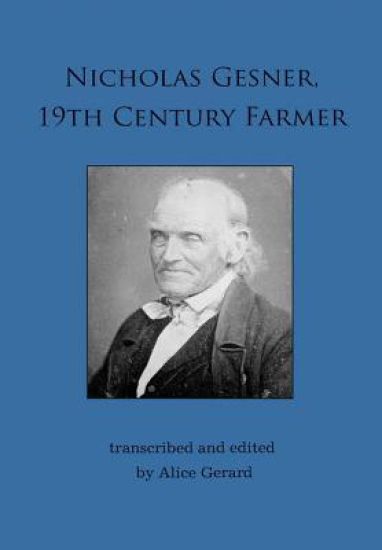
Nicholas Gesner, 19th Century Farmer
Nicholas Gesner, a farmer who lived in Palisades, NY from 1765 to 1868, kept a diary in which he recorded his farming chores, his problems with neighbors, events such as cholera epidemics, meteor showers, shipwrecks and other aspects of his life. This book excerpts the most interesting entries from Nicholas's 1600 page diary. As well as farming, he taught school, built ships, and acted as a lawyer to his neighbors, writing wills and deeds and surveying property. He was a bit of a curmudgeon and sometimes wrote five pages about something when he was upset. Nicholas began the diary to keep track of the comings and goings of his neighbor Polly Concklin, with whom he had a very unusual relationship.