Observera att förlaget som ger ut denna produkt baserar innehållet i sina produkter på fria källor som Wikipedia. Boken är med stor sannolikhet endast ett utdrag ur dessa informationskällor, alltså inte en vanlig bok i den bemärkelsen.
Observera att förlaget som ger ut denna produkt baserar innehållet i sina produkter på fria källor som Wikipedia. Boken är med stor sannolikhet endast ett utdrag ur dessa informationskällor, alltså inte en vanlig bok i den bemärkelsen.
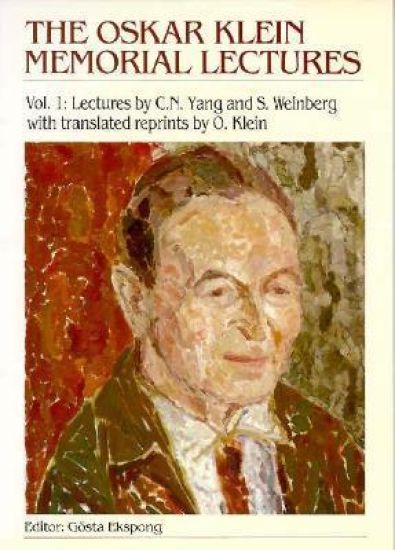
With Translated Reprints by O KleinThe Oskar Klein Memorial Lectures, instituted in 1988 and supported by the Royal Swedish Academy of Sciences through its Nobel Committee for Physics, are given at Stockholm University in Sweden, where Oskar Klein was professor in Theoretical Physics 1930-1962.Volume 1 contains the 1988 lectures on “Symmetry and Physics” and “From the Bethe-Hulthén Hypothesis to the Yang-Baxter Equation,” given by C N Yang, Nobel Prize winner (1957) and professor at the State University of New York at Stony Brook. The 1989 lectures on “Beyond the Standard Models,” referring to models for cosmology and elementary particles, and on “Precision Tests of Quantum Mechanics” were given by Steven Weinberg, Nobel Prize winner (1979) and professor at the University of Texas at Austin. The volume also contains translations of some of Klein's original papers, one on intermediate charged fields (original in French, 1938), another on five-dimensional quantum theory (”Kaluza-Klein theory,” original in German, 1926). A scientific biography of Klein, written by Professors I. Fischer- Hjalmars and B Laurent, who both knew Klein well, is included as well as an autobiography by Klein.
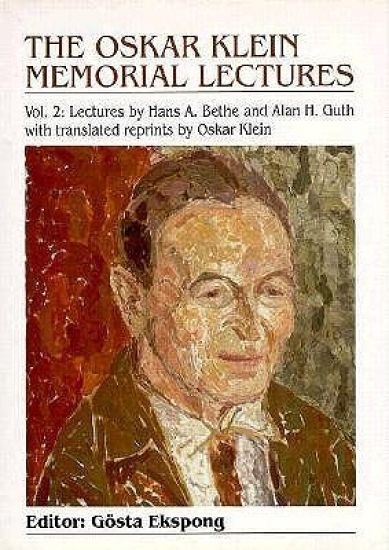
The series of Oskar Klein Memorial Lectures is a must-read for those keenly involved or simply interested in exploring the many fascinating aspects of Physics. This volume presents two landmark lectures given by Hans Bethe in October 1990 and Alan H. Guth in June 1991 under the series of Oskar Klein Memorial Lectures. Hans Bethe's lectures dealt with two themes: the astrophysical importance of neutrinos in supernova outbursts and a theoretical account of neutrinos through observations of the neutrino flux from the centre of the sun. Anyone interested in understanding the processes involved in the collapse and explosion of a large star would certainly find this book enlightening. Alan H. Guth's lecture dealt with the various aspects of the origin of the universe — a topic which never fails to intrigue. The originator of the inflation scenario for the Big Bang theory, Guth has included his latest observations on the COBE satellite and their theoretical interpretation in this lecture. Anyone wishing to grasp the essentials of these ideas, will find in Guth's lecture a wealth of knowledge. This volume also presents for the first time in English the original derivation of the Klein-Nishima formula for Compton scattering and an account of the “Klein Paradox”. A special study reveals interesting facts on the callaboration between Oskar Klein and Yoshio Nishima in 1928 and further, surprising facts on the treatment by the Nobel Committee for Physics of the prize to A H Compton in 1927. Some translated autobiographic texts have also been included to acquaint the reader with Klein's interest in cosmology and his attempts to find the driving force behind the expanding system of galaxies, what Klein termed the Meta-galaxy.
On September 15, 1994, Oskar Klein would have been 100 years old. In honour of his contributions to physics, a three-day symposium was held in Stockholm, Sweden, September 19-21, 1994. The symposium lectures provided a tour of exciting new developments in physics and highlighted the important roots of that development.
Muidugi olid nad reisil. Nad olid hommikul ilusti Tartusse klassiekskursioonile tulnud. Selline kolgas see Tartu ometi ka polnud, et siin levi ei peaks olema. "Ajareisil," täiendas Oskar. Oskaril oli õigus. Klassiekskursioon jätkus samas kohas, kuid linna nimi oli praegu Tarbatu. Aasta oli 1321. Raamat on tõeliselt köitev seiklus ajalooliselt autentses keskkonnas. Kuid detailitäpse keskajaga raamatu võlu ei piirdu. Sisu toetab lapse hinge arengut. Poisid õpivad strateegiaid tunnetega toime tulemiseks ning hea ja halva tõlgendamist laiemas kontekstis. Raamatus on 30 ühepikkust peatükki. Iga peatüki juures on mahukam või väiksem pilt, mis annab olustikku visuaalselt edasi - on igav lugeda, kui sisse lipsab liialt sõnu, mille tähendus on teadmata. Nii on visuaalselt näha tünn, peeker, lodi, linnamüür, kukkur jms. illustraator on läbi töötanud olulise hulga allikaid, et luua koostöös autoriga hurmav hariv tervik.Tänu hoomatava pikkusega peatükkidele, rohkele illustratiivsele materjalile ning spetsiaalselt valitud lugemist hõlbustavale fondile on raamat lihtsalt loetav ka lastele, kelle esmaste eelistuste hulgas kirjandus tavaliselt pole.
Tulevikus on kõik asjad teisiti. Või mitte? Oskari ajareisid minevikku on harinud lapsi ajaloos ja geograafias. Seekordse ajareisi faktid pole professorite poolt kontrollitud. Ent stsenaariumid on võetud tarkade inimeste prognoosidest. Autor pole ajalugu siiski päris kõrvale jätnud, läbi raamatu kogeb Oskar põhjuse ja tagajärje paratamatuid seoseid. Põnev reis nii väiksematele kui suurematele! Selle raamatuga astus Eesti lastekirjandus sammu tulevikku, sest pildid maalis AI.
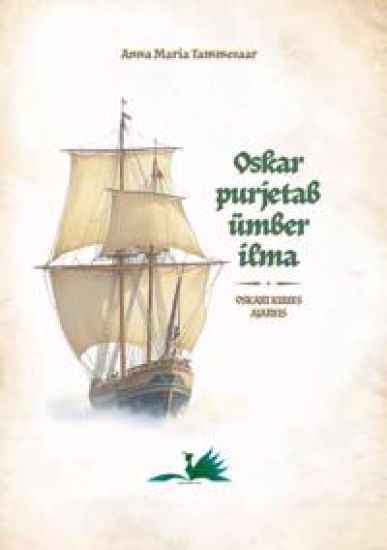
Oskari kuues ajareis toimub koos Otto von Kotzebue'ga 200 aastattagasi.Võimas fregatt viib meeskonna ja poisid kogenud kapteni käe allläbi väinade, üle ookeanide, mööda nappidest pääsemistest ja imelistestkogemustest.Kas tahad näha Rio de Janeirot 200 aastat tagasi? Mida suudab üksosav loots? Kes külastas laeva keset ookeani? Kuidas pääseti vandenõu ohvrikslangemise käest? Kes on merekoer? Valvame vahimadrusega mastikorvis, öögime merehaigetena kajutis, mõõdame albatrossi ja ei mõtle sellele, kuidas või millal me koju tagasi saame.Purjed üles ja teele! Alustame Tallinnast.
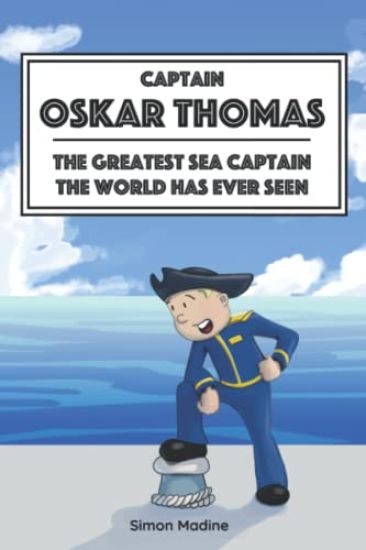
Captain Oskar Thomas is the greatest sea captain the world has ever seen. He is also 10 years old. In his first adventure - The Candleflame Sea - Captain Oskar (the youngest and greatest sea captain in the world) is given his first naval command and the task of delivering a letter to the King of a neighbouring land. To get there quickly, he has to take his crew through a treacherous sea no ship has ever survived. In part 2 - The Terror of the Sea Sword - Captain Oskar's crew are attacked by The Dreaded Pirate Captain Montigus d'Ark. What happens when the greatest captain confronts the most cunning pirate?
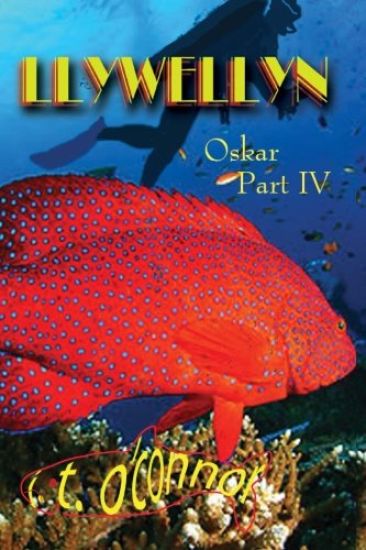
In Krakow, Poland, Rosalie, with her colleague Anton, intercept an arms shipment, conveyed by the arms trading Yanukovych group, that was destined for the Middle East. Rosalie is told that the shipment contains a consignment of radioactive wastes intended for a dirty bomb, but the shipment is split to prevent them from locating the hot part. After uncovering both parts of the shipment, they discover that their handler in Tel Aviv was behind the operation and is now directing his colleagues to hunt them down and kill them. They join up with an independent intelligence agent, Abraham, who has been tracking the radioactive wastes and, together, they map out the identities of the plotters. The threesome flee Krakow in a blizzard on a freight train to Gdansk and escape to Hamburg on a coastal container ship, Stephanie and Anton falling into a hopeless love as they move through the apparently hopeless situation. Stephanie and Anton plan to go public with their information at a press conference in Tel Aviv and make a break for freedom, but their adversaries have other plans. Fleeing Israel, Rosalie joins up with Abraham's intelligence group, White Swan, based in England, to regroup and attack her foes from a different direction. She reverts to her original name, Stephanie, and moves back to her birth country, Guatemala, in order to investigate a small end of the Yanukovych chain. Stephanie becomes ensnared in an unrelated project about natural hazards, directed by her sister's boyfriend, Evan. When the bad guys mistake that couple for their real enemies, they send two assassins, Kravchuk and Dankevych, out to kill them, as described in Favelito (Oskar Pt I). Together, the White Swan agents determine that the small Guatemalan operation is not just about Oskar but, instead, is an enormous money laundering scheme that services arms dealers world-wide. Stephanie photo-IDs members of the cartel and has a series of violent confrontations with their thugs. Using Stephanie's data, her White Swan cyber-wizard colleagues defenestrate the arms dealers' financial system and reveal them to the world. Tel Aviv remains recalcitrant about her status ostensibly to protect its government from falling.. While back in England, writing up reports on the results of their recent effort, Stephanie's boss asks her to help evaluate a ranch in Argentina that could serve as a refuge for beleaguered White Swan agents, such as Stephanie. They meet with Sean, an Aussie ranch manager, and spend a couple of weeks in western Argentina doing the evaluation and discovering an equipment scam centered on the ranch. As the ranch closing nears, Stephanie's colleagues broaden the scope of the arms sales and shift the involvement of different parties. A short assignment to help out an intelligence community associate takes Stephanie, in drag, to Athens. During an uneventful period of surveillance, she goes to a performance by a favored belly dancer, where she has a star-crossed encounter with the chief assassin, Kravchuk, of the Yanukovych group she had frustrated in Krakow. The story ends with a long, fierce, very personal knife fight in an Athens alley from which no more than one, and possibly not even that, could emerge alive.
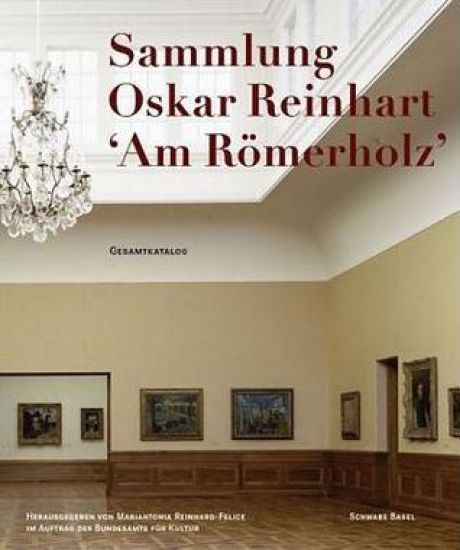
When Oskar Reinhart (1885–1965) bequeathed a significant part of his remarkable art collection – chiefly of French nineteenth-century painting but also containing a number of outstanding Old Masters – to the Swiss nation, he did so on condition that the works of art would never be loaned. As a consequence the many very important works in the collection have not been discussed in major exhibition catalogues and have not received the scholarly attention they deserve. This volume, with full entries on the entire collection of 207 works by 45 leading scholars in their field, both American and European, and superb plates carefully checked against the originals, sets out to rectify this state of affairs. Artists represented by several works in the collection that Reinhart made his monument include: Cézanne (11), Chardin (4), Corot (9), Courbet (10), Daumier (20), Delacroix (9), Géricault (2), Van Gogh (5), Maillol (8), Manet (4), Picasso (4), Pissarro (2), Renoir (15), Sisley (2). A well illustrated introduction explains the ideas and context behind Reinhart’s collecting and affords insights into his character.
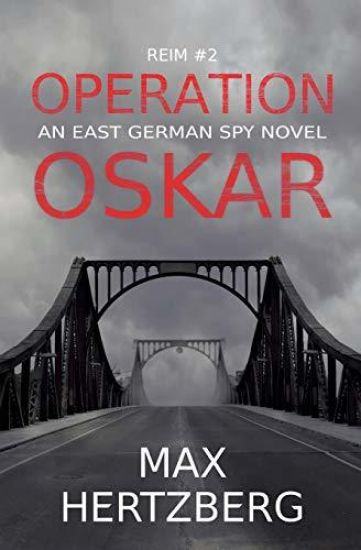
Lieutenant Reim of the Stasi is down in the dumps. Literally. Sent to a landfill site on a punishment assignment, Reim is soon caught up in a case that takes him over the Berlin Wall to the capitalist West. But when the KGB starts to take an interest, Reim questions whether Operation Oskar is worth risking his life for.
Lieutenant Reim of the Stasi is down in the dumps. Literally.Sent to Sch neiche landfill site on a punishment assignment, Reim soon discovers Soviet soldiers searching the tip for porn, Westerners smuggling cigarettes and a truck driver with something to hide.Determined to find out more, Reim is soon caught up in a case that takes him over the Berlin Wall to the capitalist West. But when the KGB and the British occupation forces in Berlin take an interest, Reim begins to question whether Operation Oskar is worth risking his life for.
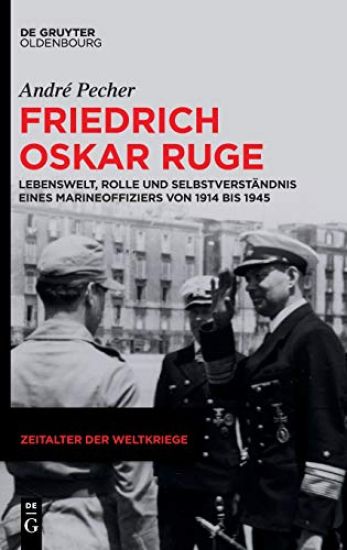
Friedrich Ruge war der erste Inspekteur der 1956 aufgestellten Marine der Bundesrepublik Deutschland. Damit war er einer ihrer Gr ndungsv ter und pr gte sie durch sein Wirken nachhaltig, insbesondere auch deren Geschichtsbild und Traditionsverst ndnis. W hrend seine Rolle an der Spitze dieser Marine von 1956 bis 1961 und sein ffentliches Wirken danach relativ gut erforscht sind, hat eine wissenschaftliche Hinterfragung des Marineoffiziers Ruge vor 1945 bisher nicht stattgefunden. Ruge selbst diente als Seeoffizier der Kaiserlichen Marine sowie der Reichs- und Kriegsmarine. Die vorliegende biografische Studie widmet sich Ruges Lebensphase im Zeitalter der Weltkriege. Anhand seiner berlieferten zeitgen ssischen Selbstzeugnisse und sp teren Erinnerungen werden seine Pr gung in den drei Vorg ngermarinen, sein politisches Denken und sein historisches Bewusstsein in den Blick genommen. Eingehend werden auch Lebenswelt, Rolle und Selbstverst ndnis des Marineoffiziers bis 1945 betrachtet. Vor allem wird untersucht, ob und inwieweit dieser schaffenskr ftige Marineoffizier stellvertretend f r sein soziales Milieu steht, was ihn besonders machte - und worauf sein Traditionsverst ndnis vor allem der Marine wirklich fu te.