Management Practice in Dietetics provides readers with clear, relevant examples of critical management principles and the ways in which they can be applied within foodservice, clinical nutrition, and community nutrition management.The book demonstrates how leadership in dietetics and nutrition fits into the management structure of organizations. Students become familiar with management tools such as decision-making, communication, and marketing. The book addresses specific competencies that are required for accreditation of academic and supervised practice programs in dietetics, and are included in the credentialing examinations for registered dietitian nutritionists (RDN) and nutrition and dietetics technicians, registered (NDTR). Specific topics include developing and motivating employees, employee discipline, material management, workflow and production, budgeting, information management, and sustainability.The fifth edition covers new topics, including how to best support individuals transitioning from staff to management or leadership, active listening, protecting one's image on social media, cultural competency, how to successfully advertise jobs, how to set rate of pay, scientific management, creating a culture of process improvement, biodiversity, and more.Written in an accessible style, Management Practice in Dietetics is designed for accredited dietetics education programs.
Patricia DeSandro and Eric Vernor offer their insight on avoiding the pitfalls of other's mistakes, for the acceleration of the life you deserve. The authors stress the importance of mentors and role models and how to tell the good guys from the bad guys when looking for a teacher or life coach. Each of the instructors of the class has utilized difficulties in order to grow.Having survived severe abuse and bullying as a child, trauma and suicide attempts as an adult, Patricia could not discern good from bad when it came to her life. With help and support from the right people, decent role models, and wise teachers, she finally climbed out of the muck. She has a full and fulfilling life now, as an author, storyteller, public speaker, and spiritual community leader.Eric, as well, has as well, has pushed past limitations in his own life due to having Asperger's Syndrome, ADD, and surviving a shattered family that was shattered in his childhood and homelessness. He turned his life around with the help of many mentors and now has over a decade with Dark Moon Press, a successful publishing company, and receives requests for motivational speaking at schools, bookstores, radio, and for businesses. He is the founder and CEO of the LIMITLESS Potential Group of speakers.
The Scandinavian Home is the first publication to examine the entangled notions of home and homeland that were central to the art and material culture of Denmark, Norway, Sweden, and Finland in the second half of the nineteenth century. “Home” was a central metaphor in the nation-building activities of each country. The arts played a crucial role in reinforcing a shared sense of belonging amongst Nordic countries as they strove to identify and celebrate authentic local and national identities. The linkages among land, landscape, handicraft, and domestic dwellings as dimensions of home are embedded in this survey of the extensive David and Sue Werner Collection of Scandinavian art, presented to the public for the first time. Encompassing an impressive range of almost 150 painting, drawing, furniture, textiles, glass, metalwork, ceramics, and works on paper, highlights include rare tapestries and a wooden cabinet by the Norwegian artist Gerhard Munthe; Finnish ceramics by Willy Finch; landscape paintings by Hilma af Klint, Akseli Gallen-Kallela, Gustav Fjaestad and Pekka Halonen; and anonymous functional objects by outstanding handicraft artists – covering embroideries, metalwork, and wooden implements.
O estudo da an lise da Variabilidade da frequ ncia card aca(VFC) em jovens saud veis submetidos ao m todo Isostretching foi escolhido pelo fato do mesmo provocar curiosidade devido diversidade das posturas que comp em o m todo, o esfor o volunt rio e concentra o do paciente exigida durante o tratamento. Segundo Redondo (2006), as posturas nesta modalidade de atividade f sica com finalidades terap uticas no tratamento dos desequil brios posturais provocam efeitos mec nicos e fisiol gicos nos tecidos, mas a maioria dos estudos se concentra nos efeitos mec nicos, portanto, pretende-se com esta pesquisa analisar efeitos fisiol gicos que essas posturas podem produzir verificando a influ ncia do Isostretching no sistema nervoso aut nomo (SNA) atrav s da an lise da VFC.
Renée R Taylor; Judith Abelenda; Patricia Bowyer; Susan M. Cahill; John Cooper; Nichola Duffy; Elin Ekbladh; Anette Erikson; Mandana Fallah Pour; Chia-Wei Fan; Gail Fisher; Kirsty Forsyth; Sylwia Gorska; Lena Haglund; Michele Harrison; Helena Hemmingsson; Carmen-Gloria de las Heras de Pablo; Roberta P. Holzmueller; Riitta Keponen; Jessica Kramer; Patricia Lavedure; Sun Wook Lee; Donald Maciver; Alice Moody; Jane Melton; Kelly Munger; Lauro Munoz; Hiromi Nakamura-Thomas; Louise Nygård; Jane C. O'Brien; Ay-Woan Pan; Sue Parkinson
I den svenska översättningen av Kielhofner’s Model of Human Occupation (femte amerikanska upplagan, den andra i svensk översättning), presenteras teori, forskning och tillämpning av modellen i boken. Modellen förklarar hur aktivitet motiveras, inordnas i vardagens livsmönster, utförs och påverkas av aktuell miljökontext samt vad som händer när människan ställs inför svårigheter som sjukdom, skador och annat som leder till problem med att utföra aktiviteter. I boken diskuteras hur arbetsterapi med stöd av modellen kan möjliggöra för människor att engagera sig i aktiviteter som ger mening och tillfredsställelse och som gynnar deras fysiska och emotionella välbefinnande. MOHO är den internationellt mest spridda och använda aktivitetsfokuserade modellen inom arbetsterapi. Boken innehåller rikligt med exempel på hur MOHO kan användas vid personcentrerad arbetsterapi. Modellen grundar sig på omfattande forskning och det finns ett starkt evidensbaserat empiriskt stöd för modellen och dess användning, vilket framkommer i bokens rika referensmaterial. I denna femte upplaga av boken har nya kapitel med tillämpning av modellen inom olika områden tillkommit och miljöns betydelse för görande och aktivitet har utvecklats. Boken vänder sig främst till arbetsterapeuter, studenter och forskare inom arbetsterapi men även till andra som vill fördjupa sig kring människans engagemang och delaktighet i aktivitet.Den engelska originalupplagan är publicerad av Wolters Kluwer.
Medical Laboratory Science Review and Davis Edge work together to create an immersive, multimedia experience for students and an invaluable assessment and remediation tool for instructors. The text provides the foundational knowledge while Davis Edge tracks student progress and assesses their knowledge in real time until they’ve mastered must-know concepts and are prepared for classroom and certification exams. It’s the perfect review for both the MLT and MLS! An access code inside new, printed texts unlocks Davis Edge. Davis Edge Davis Edge is the interactive, online Q&A review platform that provides the practice students need to master course content, improve their scores on classroom tests, and pass their board exams. Over 2,000 board-style practice questions written for Medical Laboratory Science Review test students’ knowledge and understanding of what they are learning. For instructors, it provides the real-time information they need to monitor, track, and assess their students’ mastery of the content and their critical-thinking and decision-making skills. Text Practice, practice, and more practice! This comprehensive resource provides the theoretical and practical knowledge students need to be prepared for classroom tests and certification and licensure examinations. They begin with an overview of test-taking skills and techniques. Then, they build their knowledge with 2,150 multiple-choice questions. The bonus quick-reference bookmark, featuring essential normal lab values, lets students cover the answers in the text as they go. See what students are saying about the previous edition… Passed on the 1st try.“Use this book front to back & lab ce questions and you will pass your boards.”—Nikki, Online Reviewer Perfect for remembering everything you need. “Tons of questions with explanations. Color plate section for mycology, hematology, urinalysis, and biochemistry. It has an access code for practice [with] more than 1000 additional questions online! I'm pretty sure that this book is key in your study for the ASCP certification.”—Jay D., Online Reviewer I passed my boards.“This book is a great confidence booster and educational device! I would often take LabCE practice exams, feel bad about my scores, and turn to this book to quiz over fundamentals. A great way to not lose confidence for me!”—Online Reviewer New! New author team brings impressive credentials and wealth of experience. Expanded! Davis Edge questions doubled to 2,150. New & Updated! In-text and online questions updated to support current ASCP BOC outlines. Over 4,000 multiple choice questions in all—2,150 in the text and 2,000 online in Davis Edge—feature detailed rationales at taxonomy levels 1, 2, and 3. The power of Davis Edge online quizzing included FREE with the textbook to provide students with additional practice to master must-know content and better prepare for course and board exams. Quick reference bookmark featuring lab reference values for covering the answers while practicing. Problem-solving sections in each chapter reinforce practical applications of material. 60 full-color photomicrographs bring complex concepts to life while a photomicrograph exam provides practice with clinical identification and interpretation of lab results.
Can a lawman save her from an unstoppable killer? Perfect for fans of: ?? Workplace romance ?? Forced proximity ??? Small-town romance – Stumbling upon a body in a wildlife habitat is far from routine for game warden Tisha Fletcher. The victim is the third local woman found strangled to death. Assigned to lead the manhunt for a serial killer who leaves no evidence behind, Special Agent Glenn McElligott enlists Tisha’s help. As the body count rises, Glenn can’t allow his feelings for the widow to overshadow the emerging truth behind the murders… Who’s the real target? Celebrity chef Maxwell Powell III is on a working holiday at the Coltons’ exclusive resort to write a cookbook. His assistant, Alexis Reed, cannot ignore the powerful attraction sizzling between them…just as Max is drawn to Alexis’s candour and her beauty. But when they become targets in a series of attacks, it’s not clear who the perpetrator is after—Max or the woman he’d guard with his life!
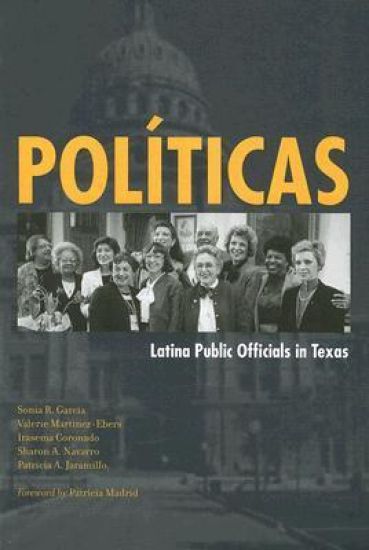
In the decades since Latinas began to hold public office in the United States in the late 1950s, they have blazed new trails in public life, bringing fresh perspectives, leadership styles, and policy agendas to the business of governing cities, counties, states, and the nation. As of 2004, Latinas occupied 27.4 percent of the more than 6,000 elected and appointed local, state, and national positions filled by Hispanic officeholders. The greatest number of these Latina officeholders reside in Texas, where nearly six hundred women occupy posts from municipal offices, school boards, and county offices to seats in the Texas House and Senate. In this book, five Latina political scientists profile the women who have been the first Latinas to hold key elected and appointed positions in Texas government. Through interviews with each woman or her associates, the authors explore and theorize about Latina officeholders' political socialization, decision to run for office and obstacles overcome, leadership style, and representational roles and advocacy. The profiles begin with Irma Rangel, the first Latina elected to the Texas House of Representatives, and Judith Zaffirini and Leticia Van de Putte, the only two Latinas to serve in the Texas Senate. The authors also interview Lena Guerrero, the first and only Latina to serve in a statewide office; judges Linda Yanes, Alma Lopez, Elma Salinas Ender, Mary Roman, and Alicia Chacón; mayors Blanca Sanchez Vela (Brownsville), Betty Flores (Laredo), and Olivia Serna (Crystal City); and Latina city councilwomen from San Antonio, El Paso, Dallas, Houston, and Laredo.
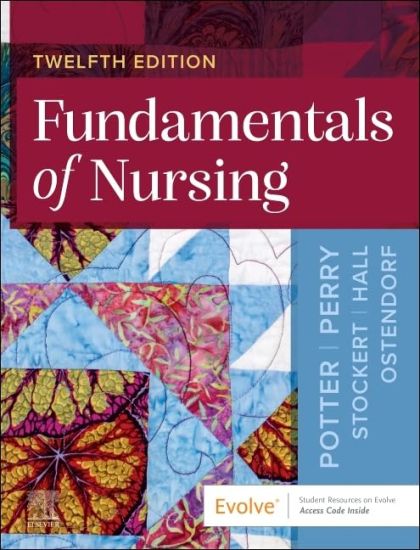
**Selected for 2025 Doody’s Core Titles® with "Essential Purchase" designation in Fundamentals** Learn the concepts and skills and develop the clinical judgment you need to provide excellent nursing care! Fundamentals of Nursing, 12th Edition prepares you to succeed as a nurse by providing a solid foundation in critical thinking, clinical judgment, nursing theory, evidence-based practice, and person-centered care in all settings. With illustrated, step-by-step guidelines, this book makes it easy to learn important skills and procedures. Care plans are presented within a nursing process framework that is coordinated with clinical judgement, and case studies show how to apply concepts to nursing practice. From an expert author team led by Patricia Potter and Anne Perry, this bestselling nursing textbook helps you develop the understanding and clinical judgment you need to succeed in the classroom and in your career. UPDATED! Content reflects the latest evidence-based practice, including the most current information on infection control standards, oxygenation, technology in health care, and more UPDATED! More than 80 new photos and images present updated skills and represent the diversity of nurses and patients throughout UNIQUE! Critical Thinking section incorporates clinical judgment and critical thinking to help you develop these valuable skills. The unique critical thinking/clinical judgment model is visually depicted by a series of progressive images that demonstrate the application of the nursing process, critical thinking, and clinical judgment - and how they all tie together UNIQUE! Reflective Learning questions in every clinical chapter are associated with each of the six clinical judgment skills and coordinate directly with the case study presented in the care plan UNIQUE! Building Competency boxes in every chapter incorporate nursing competencies, e.g., person-centered care, safety, and evidence-based practice. Each box presents a clinical situation followed by several open-ended questions designed to help you understand and apply these core competencies UNIQUE! Caring for Patients with Chronic Illness chapter helps prepare you to address the unique health care needs of patients who have complex, long-term, chronic disease, who face the physical and emotional impacts of the illness, and the therapies used to treat it Evidence-Based Practice boxes reflect current research and include a PICOT question, a summary of the results of a research study, and the impact the study has made in nursing practice. Where applicable, these EBP boxes will focus on “Never Events” (those events that are completely preventable, dangerous to patients, and non-reimbursable) and new related research Case studies in all clinical chapters tie together the care plan, concept map, and reflective learning exercises Clear delegation coverage notes which skills can and cannot be delegated and indicate exactly which tasks to delegate. Many chapters incorporate delegation considerations into the chapter case study and there is also a delegation section in every skill and procedural guideline Planning and Outcomes Identification sections include sections on Outcomes, Setting Priorities, and Teamwork and Collaboration to help you plan and prioritize comprehensive patient care Teamwork and Collaboration headings highlight information to help you work effectively both within the nursing team and within the larger healthcare team, allowing you to make the best use of available healthcare resources to improve patient care Implementation sections include health promotion, acute care, and restorative and continuing care to prepare you for all levels of care in all settings Patient Teaching boxes help you plan effective teaching by first identifying an outcome, then developing strategies on how to teach, and finally implementing measures to evaluate learning Focus on Older Adult boxes highlight key aspects of nursing assessment and care for this population Cultural Care boxes summarize cultural considerations related to the chapter topic and provide practical guidelines for how to meet patients’ cultural needs and preferences Nursing Assessment Questions boxes help you learn to effectively phrase questions for patients More than 50 skills are generously illustrated in a two-column format that includes rationales for each step alongside clear, step-by-step instructions for providing safe nursing care. Rationales cite current evidence-based research Key terms at the beginning of each chapter help you learn the most important terminology for that area of content Five review questions for each chapter include answers both in the book and on the Evolve companion website (with rationales) Unexpected Outcomes and Related Interventions for skills alert you to possible problems and appropriate nursing action. More than 30 procedural guidelines provide streamlined, step-by-step instructions for performing very basic skills A consistent five-step nursing process framework for clinical chapters coordinates completely with the accompanying clinical judgment skills used for each step More than 20 concept maps visually demonstrate planning care for patients with multiple nursing diagnoses NOC outcomes, NIC interventions, and nursing diagnoses in care plans reflect the standard used by institutions nationwide More than 20 care plans demonstrate the application of the five-step nursing process to individual patient problems to help you understand how a plan is developed and how to evaluate care. Patients in the care plan extend to the Reflective Learning activities at the end of each clinical chapter Evidence-Based Practice chapter helps you understand how nursing research serves as the basis for determining best practice, and the critical importance of this continually evolving dynamic Safe Patient Handling Guidelines are included in the Patient Safety and Quality chapter Practical study tools on the Evolve companion website include skills video clips, skills checklists, printable key points, answers to the review questions in the book, a fluid & electrolytes tutorial, a concept map creator, an audio glossary, and more Key points are tied to the chapter objectives and neatly summarize the most important content for each chapter to help you review and evaluate your learning