Kirjahaku
Etsi kirjoja tekijän nimen, kirjan nimen tai ISBN:n perusteella.
1000 tulosta hakusanalla Plutarchus
This volume offers a new translation of Plutarch’s three treatises on animals—On the Cleverness of Animals, Whether Beasts Are Rational, and On Eating Meat—accompanied by introductions and explanatory commentaries. The accompanying commentaries are designed not only to elucidate the meaning of the Greek text, but to call attention to Plutarch’s striking anticipations of arguments central to current philosophical and ethological discourse in defense of the position that non-human animals have intellectual and emotional dimensions that make them worthy of inclusion in the moral universe of human beings. Plutarch’s Three Treatises on Animals will be of interest to students of ancient philosophy and natural science, and to all readers who wish to explore the history of thought on human–non-human animal relations, in which the animal treatises of Plutarch hold a pivotal position.
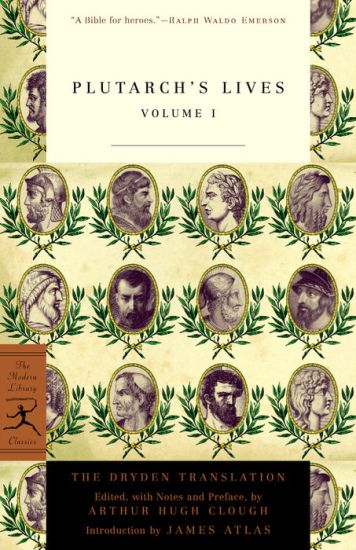
Plutarch's Lives, written at the beginning of the second century A.D., is a brilliant social history of the ancient world by one of the greatest biographers and moralists of all time. In what is by far his most famous and influential work, Plutarch reveals the character and personality of his subjects and how they led ultimately to tragedy or victory. Richly anecdotal and full of detail, Volume I contains profiles and comparisons of Romulus and Theseus, Numa and Lycurgus, Fabius and Pericles, and many more powerful figures of ancient Greece and Rome.The present translation, originally published in 1683 in conjunction with a life of Plutarch by John Dryden, was revised in 1864 by the poet and scholar Arthur Hugh Clough, whose notes and preface are also included in this edition.
Plutarch's Lives, written at the beginning of the second century A.D., is a brilliant social history of the ancient world by one of the greatest biographers and moralists of all time. In what is by far his most famous and influential work, Plutarch reveals the character and personality of his subjects and how they led ultimately to tragedy or victory. Richly anecdotal and full of detail, Volume I contains profiles and comparisons of Romulus and Theseus, Numa and Lycurgus, Fabius and Pericles, and many more powerful figures of ancient Greece and Rome. The present translation, originally published in 1683 in conjunction with a life of Plutarch by John Dryden, was revised in 1864 by the poet and scholar Arthur Hugh Clough, whose notes and preface are also included in this edition.
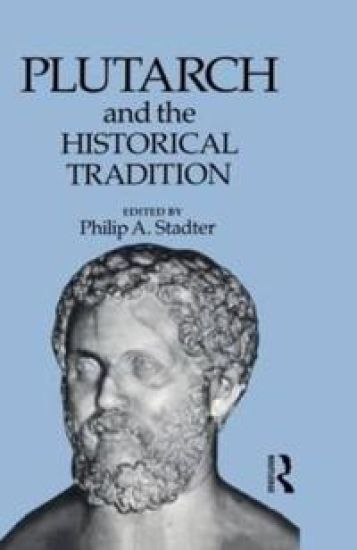
Plutarch and the Historical Tradition
Routledge
1992
sidottu
These essays, by experts in the field from five countries, examine Plutarch's interpretative and artistic reshaping of his historical sources in representative lives. Diverse essays treat literary elements such as the parallelism which renders a pair of lives a unit or the themes which unify the lives. Others consider the selecting, combining, simplifying, and enlarging employed in composition. The construction of a Plutarchian life, the essays demonstrate, required careful selection and creative reworking of the historical material available.
Plutarch and the Historical Tradition
Routledge
2011
nidottu
These essays, by experts in the field from five countries, examine Plutarch's interpretative and artistic reshaping of his historical sources in representative lives. Diverse essays treat literary elements such as the parallelism which renders a pair of lives a unit or the themes which unify the lives. Others consider the selecting, combining, simplifying, and enlarging employed in composition. The construction of a Plutarchian life, the essays demonstrate, required careful selection and creative reworking of the historical material available.
Plutarch: How to Study Poetry (De audiendis poetis)
Cambridge University Press
2011
pokkari
Plutarch's essay 'How to Study Poetry' offers a set of reading practices intended to remove the potential damage that poetry can do to the moral health of young readers. It opens a window on to a world of ancient education and scholarship which can seem rather alien to those brought up in the highly sophisticated world of modern literary theory and criticism. The full Introduction and Commentary, by two of the world's leading scholars in the field, trace the origins and intellectual affiliations of Plutarch's method and fully illustrate the background to each of his examples. As such this book may serve as an introduction to the whole subject of ancient reading practices and literary criticism. The Commentary also pays particular attention to grammar, syntax and style, and sets this essay within the context of Plutarch's thought and writing more generally.
Plutarch's Life of Antony is a work remarkable for its colourful narrative and vivid characterisation of Antony and Cleopatra. This book presents the Greek text of the Life, accompanied by an extensive introduction and a detailed commentary. Dr Pelling is concerned throughout to discuss the work as literature. The introduction sets the life in its historical and literary context and the commentary pays particular attention to discussing the value of Plutarch's narrative as a historical source for the period and to explaining points of linguistic difficulty. An especially interesting and friutful approach used by Dr Pelling is to compare the work with Shakespeare's Antony and Cleopatra (which was almost wholly based to Plutarch's Life), bringing out how much Shakespeare's conception of the character and destiny of his protagonists owes to Plutarch, and tracing its transposition into dramatic form. Intended primarily as a textbook for undergraduate students, this edition will nevertheless be of interest to all Greek scholars, to ancient historians, and also the students of English literature since the relevant discussions require no knowledge of Greek.
Plutarch's Morals
William Watson (EDT) Goodwin; Ralph Waldo (INT) Emerson
Kessinger Pub
2007
sidottu
Plutarch's Morals
William Watson (EDT) Goodwin; Ralph Waldo (INT) Emerson
Kessinger Pub
2007
sidottu
Plutarch's Morals
William Watson (EDT) Goodwin; Ralph Waldo (INT) Emerson
Kessinger Pub
2007
sidottu
Plutarch As a Source of Information on the Greek Theater
Roy Caston Flickinger
Kessinger Pub
2007
pokkari
Plutarch As a Source of Information on the Greek Theater
Roy Caston Flickinger
Kessinger Pub
2007
sidottu
Plutarch's Lives Of Illustrious Men
John (TRN) Dryden; Hamilton Wright (INT) Mabie
Kessinger Pub
2007
pokkari
Plutarch's Lives Of Illustrious Men
John (TRN) Dryden; Arthur Hugh (EDT) Clough; Hamilton Wright (INT) Mabie
Kessinger Pub
2007
pokkari