This book is intended to be a detailed and carefully written account of various versions of the Littlewood-Paley theorem and of some of its applications, together with indications of its general significance in Fourier multiplier theory. We have striven to make the presentation self-contained and unified, and adapted primarily for use by graduate students and established mathematicians who wish to begin studies in these areas: it is certainly not intended for experts in the subject. It has been our experience, and the experience of many of our students and colleagues, that this is an area poorly served by existing books. Their accounts of the subject tend to be either ill-suited to the needs of a beginner, or fragmentary, or, in one or two instances, obscure. We hope that our book will go some way towards filling this gap in the literature. Our presentation of the Littlewood-Paley theorem proceeds along two main lines, the first relating to singular integrals on locally com pact groups, and the second to martingales. Both classical and modern versions of the theorem are dealt with, appropriate to the classical n groups IRn, ?L , Tn and to certain classes of disconnected groups. It is for the disconnected groups of Chapters 4 and 5 that we give two separate accounts of the Littlewood-Paley theorem: the first Fourier analytic, and the second probabilistic.
The fully revised and updated Third Edition of this textbook provides an accessible introduction to accounting for students coming to the subject for the first time. It embraces the basic techniques and underlying theoretical concepts in accounting and shows how these are applied in various circumstances. This New Edition incorporates major changes which improve and update the previous edition. It can be easily used by students working on their own, as well as in a classroom environment. It provides: - Fully illustrated & worked examples - Student Activities - End of chapter questions, many of which have been taken from major accounting examination bodies. -The solutions to all activities are given at the end of each chapter, and answers to the end of chapter questions are also supplied. Introduction to Accounting is an essential textbook for undergraduate accounting students. It is designed to meet the needs of both the non-specialist and those intending to specialise in accounting at undergraduate and also postgraduate levels. The Solutions Manual will be available via the SAGE website.
During the early nineteenth century, schools for the deaf appeared in the United States for the first time. These schools were committed to the use of the sign language to educate deaf students. Manual education made the growth of the deaf community possible, for it gathered deaf people together in sizable numbers for the first time in American history. It also fueled the emergence of Deaf culture, as the schools became agents of cultural transformations. Just as the Deaf community began to be recognized as a minority culture, in the 1850s, a powerful movement arose to undo it, namely oral education. Advocates of oral education, deeply influenced by the writings of public school pioneer Horace Mann, argued that deaf students should stop signing and should start speaking in the hope that the Deaf community would be abandoned, and its language and culture would vanish. In this revisionist history, Words Made Flesh explores the educational battles of the nineteenth century from both hearing and deaf points of view. It places the growth of the Deaf community at the heart of the story of deaf education and explains how the unexpected emergence of Deafness provoked the pedagogical battles that dominated the field of deaf education in the nineteenth century, and still reverberate today.
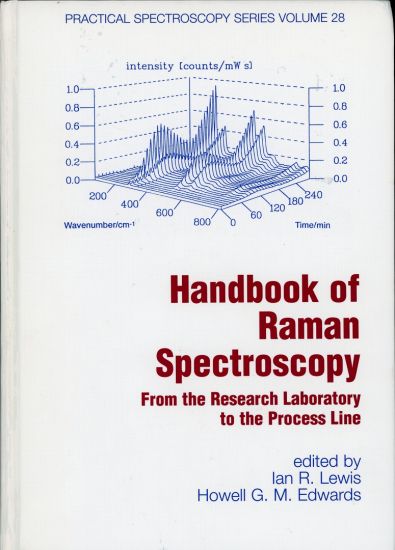
This work covers principles of Raman theory, analysis, instrumentation, and measurement, specifying up-to-the-minute benefits of Raman spectroscopy in a variety of industrial and academic fields, and how to cultivate growth in new disciplines. It contains case studies that illustrate current techniques in data extraction and analysis, as well as over 500 drawings and photographs that clarify and reinforce critical text material. The authors discuss Raman spectra of gases; Raman spectroscopy applied to crystals, applications to gemology, in vivo Raman spectroscopy, applications in forensic science, and collectivity of vibrational modes, among many other topics.
In the 1920s, two young architectural draftsmen, appalled by the continuing disappearance of adobe and Spanish colonial buildings, spent 4 years tracking down, photographing, sketching and measuring those worthwhile ones which still remained. Authentic Spanish colonial houses were built for comfort and convenience. Their construction and ornamentation were of well worn and tried traditions of both New England and Spanish settlers. Architectural historians will value this book (published in 1951 and out of print for 50 years) for many of the buildings no longer exist.
During the early nineteenth century, schools for the deaf appeared in the United States for the first time. These schools were committed to the use of the sign language to educate deaf students. Manual education made the growth of the deaf community possible, for it gathered deaf people together in sizable numbers for the first time in American history. It also fueled the emergence of Deaf culture, as the schools became agents of cultural transformations. Just as the Deaf community began to be recognized as a minority culture, in the 1850s, a powerful movement arose to undo it, namely oral education. Advocates of oral education, deeply influenced by the writings of public school pioneer Horace Mann, argued that deaf students should stop signing and should start speaking in the hope that the Deaf community would be abandoned, and its language and culture would vanish. In this revisionist history, Words Made Flesh explores the educational battles of the nineteenth century from both hearing and deaf points of view. It places the growth of the Deaf community at the heart of the story of deaf education and explains how the unexpected emergence of Deafness provoked the pedagogical battles that dominated the field of deaf education in the nineteenth century, and still reverberate today.
The most populous country in Africa, Nigeria accounts for over half of West Africa's population. Although less than 25% of Nigerians are urban dwellers, at least 24 cities have populations of more than 100,000. The variety of customs, languages, and traditions among Nigeria's 250 ethnic groups gives the country a rich diversity. The dominant ethnic group in the northern two-thirds of the country is the Hausa-Fulani, most of whom are Muslim. Other major ethnic groups of the north are the Nupe, Tiv, and Kanuri. The Yoruba people are predominant in the southwest. About half of the Yorubas are Christian and half Muslim. The predominantly Catholic Igbo are the largest ethnic group in the southeast, with the Efik, Ibibio, and Ijaw comprising a substantial segment of the population in that area. Persons of different language backgrounds most commonly communicate in English, although knowledge of two or more Nigerian languages is widespread. Hausa, Yoruba, Igbo, Fulani, and Kanuri are the most widely used Nigerian languages. Nigeria is the United States' largest trading partner in sub-Saharan Africa, largely due to the high level of petroleum imports from Nigeria, which supply 11% of U.S. oil imports--nearly 46% of Nigeria's daily oil production. Nigeria is the fifth-largest exporter of oil to the United States. Total two-way trade was valued at $35 billion in 2007, a 17% increase over 2006. Led by machinery, wheat, and motor vehicles, U.S. goods exports to Nigeria in 2007 were worth $2.2 billion, up 25% from 2006. U.S. imports from Nigeria were $32.7 billion in 2007, up 17% from 2006. U.S. imports from Nigeria consisted predominantly of oil. However, rubber products, cocoa, gum arabic, cashews, coffee, and ginger constituted over $70 million of U.S. imports from Nigeria in 2007, up 45% from 2006. The U.S. goods trade deficit with Nigeria was $32.8 billion in 2007, a slight increase from 2006 data and representing the seventh-largest deficit for the United States with any country world-wide. Nigeria is currently the 50th-largest export market for U.S. goods and the 14th-largest exporter of goods to the United States. The United States was the largest foreign investor in Nigeria. The stock of U.S. foreign direct investment (FDI) in Nigeria in 2005 was $874 million, down from $2 billion in 2004. U.S. FDI in Nigeria is concentrated largely in the mining and wholesale trade sectors This new book presents a broad selection of research on important economic, political and social issues.
Welcome to this series of lessons designed to teach one how to become a Christian. The most important thing in life is to become a Christian and be faithful until death. This book uses the Bible because it is the only book that truly teaches one how to become a Christian.
Most people have misconceptions about what the church is. The Bible defines and describes the church. Thus, we look tothe Bible to find out about the one true church.
The Psalmist David often found himself in the midst of trouble, it is he who teaches us to have faith in the valley as he expresses in The 23rd Psalm. This is perhaps one of the most encouraging passages of scripture in the Bible, as David reminds himself of exactly who God is and why he MUST hold fast to him in all things - even in the low, down trottened, darkest night, valley experiences of life. "Though I Walk.." is the first book in the trimphant testimomial series "Living the 23rd Psalm". It would seem that one would begin with "The Lord IS my Shepard; however in this age when may people are experiences the valley, it can difficult to see God as Shepard. Recognize the valley and become of aware of the safety that you are experience while in the valley and THEN you come to know Him as Shepard.
In California, authentic Spanish colonial houses were built with local materials, using the traditions of both Spanish and New England settlers. This book gives architects, home builders and historians a chance to view photos, sketches, and 26 full pages of measured drawings of interior and exterior doorways, paneling, balconies, wrought-iron, and mantels-most from houses that are no longer standing.
Many organizations worldwide are currently exploring the potential gains to be made from working with virtual teams. Although many different things are meant by use of 'virtual' (and indeed by 'teams'), usually it denotes groups of people with common purpose and goals working in different locations and often different time zones; they will be interconnected via a variety of telecommunications networks, perhaps including the Internet and intranet, video conferencing, shared white boards, as well as telephone, mail and e-mail. For organizations implementing such virtual teams there is a great need for guidance, in terms of the organizational structure and support which needs to be put in place. This book offers a practical guide to developing virtual teams, providing both an overview of what is involved and also a clear simple framework around which organizations can build their own implementation process. Although the different support technologies are discussed (at a generic level), the thrust of the book is on the organizational and human factors issues which must be addressed to make virtual teams a success. It contains detailed case studies to show how virtual teams work and where they can go wrong.
Religious education in liberal pluralist societies such as the UK, the USA, and Australian underwent radical change in the 1980s and 1990s, with a major shift towards multi-faith, educationally oriented programmes. This has meant significant modifications to both the content and the methodology of religious-education courses and to the way they are conceived of and taught in schools and universities.One important implication of this change for the teaching and study of religion today is the need for a philosophical dimension that deals with issues such as the truth status of religious statements and the moral acceptability of religious claims. This dimension is often insufficiently developed; this lack is made more critical by the multiple competing truth claims of various religions, giving rise to such contentious problems as the growth of fundamentalism, increasing religious intolerance and conflict, and differences of opinion on central moral problems such as birth control, abortion and euthanasia. This text attempts to provide the philosophical underpinning that the study and teaching of religion in modern societies requires.
Perfect for the Bill Murray fan in all of us, this epic collection of "Bill Murray stories"--many reported for the first time here--distills a set of guiding principles out of his extraordinary ability to infuse the everyday with surprise, absurdity, and wonder. No one will ever believe you. New York Times bestselling author Gavin Edwards, like the rest of us, has always been fascinated with Bill Murray--in particular the beloved actor's adventures off-screen, which rival his filmography for sheer entertainment value. Edwards traveled to the places where Murray has lived, worked, and partied, in search of the most outrageous and hilarious Bill Murray stories from the past four decades, many of which have never before been reported. Bill once paid a child five dollars to ride his bike into a swimming pool. The star convinced Harvard's JV women's basketball team to play with him in a private game of hoops. Many of these surreal encounters ended with Bill whispering, "No one will ever believe you" into a stranger's ear. But The Tao of Bill Murray is more than just a collection of wacky anecdotes. A sideways mix of comedy and philosophy, full of photo bombs, late-night party crashes, and movie-set antics, this is the perfect book for anyone who calls themselves a Bill Murray fan--which is to say, everyone. Praise for The Tao of Bill Murray "When confronted by life's challenges and opportunities, we should all be asking ourselves, 'What would Bill Murray do' This book actually has the answers."--Jay Duplass, writer, director, actor, fan of Bill Murray " Gavin Edwards] captures Murray's enigmatic, comic genius."--The Washington Post"Rib-tickling."--Newsday"If you are among the multitudes who have a Bill Murray story (viz: 'I was in the airport bar, and who sat down next to me but Bill Murray'), The Tao of Bill Murray will speak to you."--Elle "Murray is an endless delight, and his knack for bons mots and non sequiturs will keep readers laughing before revealing an unexpectedly poignant vision for happiness. . . . A fun and revealing look behind the charm and mythos of Bill Murray that will only strengthen his legend."--Kirkus Reviews "This book is bursting with anecdotes that underline Murray's unconventional and fun-loving life. . . . Murray's fans are sure to savor it] and walk away with a deeper appreciation of the actor and his work."--Publishers Weekly (starred review) "I just can't fathom how anyone could not like the man. He lives as much as possible by his own rules; this is a guy who doesn't buy round-trip airline tickets because he prefers to make decisions on the fly. That old question of the three people you'd most like to have dinner with? I'd pick Bill Murray and leave the other two chairs empty just to see who he pulls over to join us. . . . You will love The Tao of Bill Murray. Period."--GeekDad "A hilarious read--occasionally heartwarming, sometimes head-scratching. . . . Sure to please Murray fans."--Library Journal
Many organizations worldwide are currently exploring the potential gains to be made from working with virtual teams. Although many different things are meant by use of 'virtual' (and indeed by 'teams'), usually it denotes groups of people with common purpose and goals working in different locations and often different time zones; they will be interconnected via a variety of telecommunications networks, perhaps including the Internet and intranet, video conferencing, shared white boards, as well as telephone, mail and e-mail. For organizations implementing such virtual teams there is a great need for guidance, in terms of the organizational structure and support which needs to be put in place. This book offers a practical guide to developing virtual teams, providing both an overview of what is involved and also a clear simple framework around which organizations can build their own implementation process. Although the different support technologies are discussed (at a generic level), the thrust of the book is on the organizational and human factors issues which must be addressed to make virtual teams a success. It contains detailed case studies to show how virtual teams work and where they can go wrong.
A searing portrait of young Black people's day-to-day lives growing up in marginalized communities—and how to help.In underserved communities across the United States, violence, food insecurity, unstable housing, lead poisoning, and other factors such as racist redlining policies negatively impact young people's everyday experiences—and their futures. What opportunities are available to young Black people living in these neighborhoods? What are their survival expectations? Who can they look to for support? In this searing portrait of today's youth, Lorece V. Edwards offers a thought-provoking and timely account of the day-to-day experience of living in America's neglected neighborhoods. Edwards examines the reality of growing up Black in marginalized communities and provides a nuanced, systems-level perspective of the daily lives of these youths. Many of the practices for which these young people are demonized are simply survival strategies. Structural violence plays a key role in their opportunities to be successful. Using Baltimore as a case study, Edwards examines the historical roots of how these neighborhoods developed, from the detrimental impacts of historical redlining policies during the 1930s to continued disinvestment in Black communities today. The narrative is enriched through the poignant, firsthand accounts of youth who live in these neighborhoods. Incorporating the results of longitudinal research projects focused on sexual health, substance use, communicable diseases, and decision-making among minority youth residing in the inner city, Edwards provides recommendations for how to address systemic issues and change the trajectory of these children's futures.
A key figure during the Great Awakening, Jonathan Edwards wrote this important discourse, The Distinguishing Marks of a Work of the Spirit of God, in 1741, just after the revival had reached its peak. In his thorough exploration of the true and false signs of revival, drawn from 1 John 4, Edwards concludes that while a movement may be accompanied by excesses and questionable actions, these signs do not necessarily disqualify it as authentic. In a refreshing way Edwards embraces a genuine enthusiasm in these manifestations while stressing the need for biblical discernment. His critique is kind and gentle as he points to the true marks of revival: love and humility. In The Spirit of Revival, Parrish makes Edwards's entire work more accessible by modernizing the text and adding explanatory notes. R. C. Sproul's extended introduction compares the great theologian's time to our own, and the preface by Edwards's contemporary William Cooper rings resoundingly to the people of God today. Edwards's message provides more than just insight into the Great Awakening. It is a map to follow for all revivals in all times.