Kirjahaku
Etsi kirjoja tekijän nimen, kirjan nimen tai ISBN:n perusteella.
1000 tulosta hakusanalla R. Resh



R.S.THOMAS
UNIVERSITY OF WALES PRESS
1979
nidottu


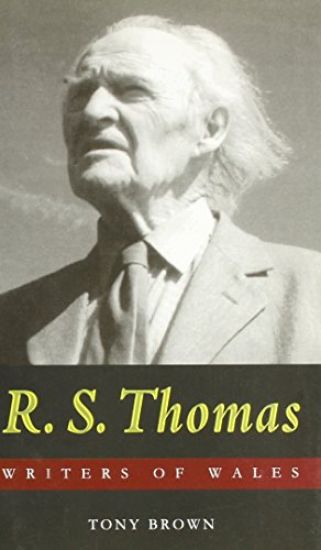
At his death in 2000, R.S. Thomas was widely considered to be one of the major poets of the English-speaking world, having been nominated for the Nobel prize for Literature. With Dylan Thomas, R.S. Thomas is probably Wales' best-known poet internationally. Tony Brown provides an introduction to R.S. Thomas' life and work, as well as new perspectives and insights for those already familiar with the poetry. His approach is broadly chronological, interweaving life and work in order to evaluate Thomas' poetic achievement. In addition to presenting a full discussion of Thomas' poetry, and its movements over time between personal, spiritual and political concerns, Tony Brown also examines Thomas' contribution to the culture of Wales, not just in his writing but also his political interventions and activism on behalf of Welsh language and culture.
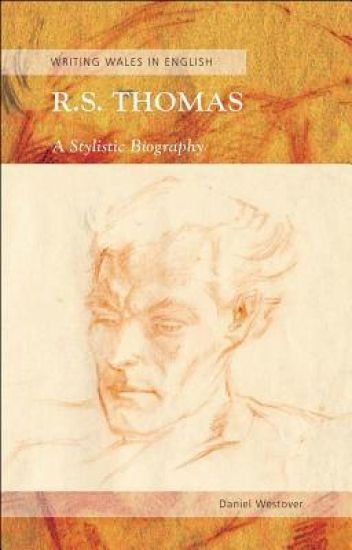
In R.S. Thomas: A Stylistic Biography, Daniel Westover traces Thomas's poetic development over six decades, demonstrating how the complex interior of the poet manifests itself in the continually shifting style of his poems.

An entertaining and readable discussion of some of the most challenging and controversial topics in the current Welsh law.
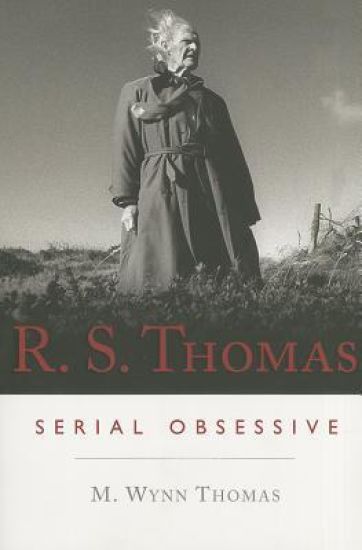
The study places the work of a major religious poet of the late twentieth century in a number of striking new perspectives that allow him to be viewed for the first time as an 'alternative' war poet, a conscience-stricken pacifist, a jealously opportunistic student of art, and an experimental biographer of the modern soul. Published to mark the centenary of the ‘ogre of Wales’, this volume deals with the idées fixes that serially possessed the fiercely intense imagination of R. S. Thomas: Iago Prytherch, Wales, his family and, of course, a vexingly elusive deity. Here, these familiar obsessions are set in several unusual contexts that bring Thomas’s poetry into startling new relief. The war poetry is considered alongside the poet’s early relationship to the English topographical tradition; comparisons with Borges and Levertov underline the international dimensions of the poetry’s concerns; the intriguing ‘secret code’ of some of Thomas’s Welsh-language references is cracked; and his painting-poems (including several hitherto unpublished) are brought centre-stage from the peripheries to which they have been routinely relegated.
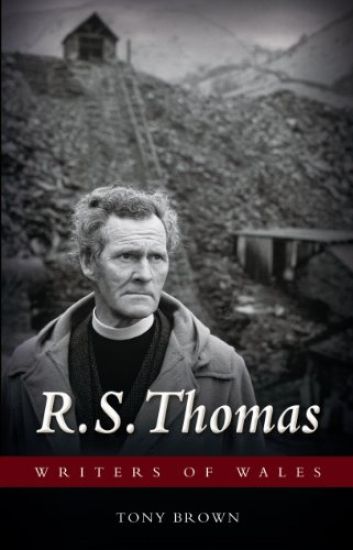
Tony Brown provides an introduction to R.S. Thomas's life and work, as well as new perspectives and insights for those already familiar with the poetry. His approach is broadly chronological, interweaving life and work in order to evaluate Thomas's poetic achievement, in addition to presenting a full discussion of Thomas's poetry, and its development over time. New edition.
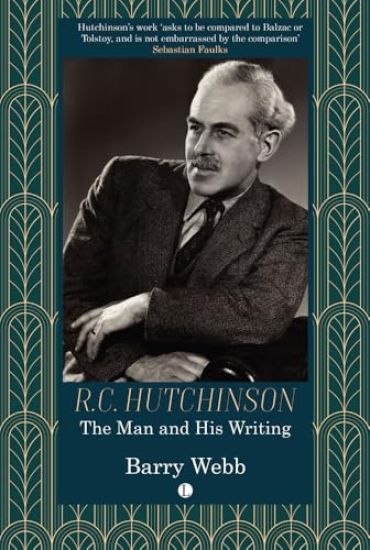
In R.C. Hutchinson, Barry Webb reclaims the legacy of a highly-acclaimed, yet often forgotten writer. Despite having been awarded the Sunday Times Gold medal for fiction, the W.H.Smith award for the best novelist of the year, being short-listed for the Booker Prize, and several of his 17 novels becoming best-sellers in the UK and America, Hutchinson has not withstood the test of time compared to his contemporaries. Combining Hutchinson's own reflections with insightful critical analysis, Webb traces Hutchinson's thoughtful, observational life alongside his extraordinary literary output. He draws out how Hutchinson's firmly held Christian beliefs allowed him to eschew didacticism for nuanced reflections on the nature of human suffering. Part biography, part critical study, R.C. Hutchinson sheds light on this influential and gifted writer, contextualising his work and highlighting his genius. He was described by Sebastian Faulks as a novelist 'on the grand scale' and 'a mid-century master of the genre', and by Cecil Day Lewis as 'one of the very few living novelists who will be read fifty - even a hundred years hence'. Webb offers readers the opportunity to re-discover this exceptional writer.
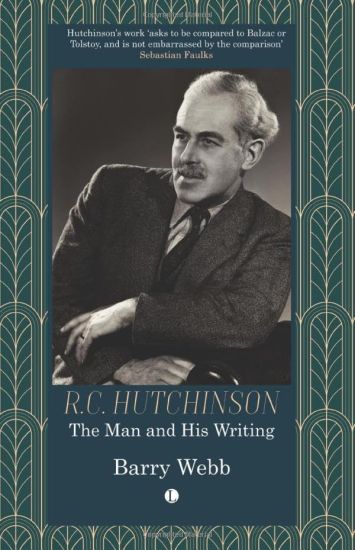
In R.C. Hutchinson, Barry Webb reclaims the legacy of a highly-acclaimed, yet often forgotten writer. Despite having been awarded the Sunday Times Gold medal for fiction, the W.H.Smith award for the best novelist of the year, being short-listed for the Booker Prize, and several of his 17 novels becoming best-sellers in the UK and America, Hutchinson has not withstood the test of time compared to his contemporaries. Combining Hutchinson's own reflections with insightful critical analysis, Webb traces Hutchinson's thoughtful, observational life alongside his extraordinary literary output. He draws out how Hutchinson's firmly held Christian beliefs allowed him to eschew didacticism for nuanced reflections on the nature of human suffering. Part biography, part critical study, R.C. Hutchinson sheds light on this influential and gifted writer, contextualising his work and highlighting his genius. He was described by Sebastian Faulks as a novelist 'on the grand scale' and 'a mid-century master of the genre', and by Cecil Day Lewis as 'one of the very few living novelists who will be read fifty - even a hundred years hence'. Webb offers readers the opportunity to re-discover this exceptional writer.
R.K. Narayan’s reputation as one of the founding figures of Indian writing in English is re-examined in this comprehensive study of his fiction, which offers detailed readings of all his novels. Arguing against views that have seen Narayan as a chronicler of “authentic” Indianness, John Thieme locates his fiction in terms of its specific South Indian contexts and cultural geography and its non-Indian intertexts. The study also considers the effect that Narayan’s writing for overseas publication had on novels such as Swami and Friends, The Guide and The Man-Eater of Malgudi.Narayan’s imaginary small town of Malgudi has often been seen as a metonym for India. Thieme draws on recent thinking about the ways in which place and space are constructed to demonstrate that Malgudi is always a fractured and transitional site, an interface between older conceptions of Indianness and contemporary views that stress the ubiquitousness and inescapability of change in the face of modernity. The study also shows that Malgudi is seen from varying angles of vision and with shifting emphases at different points in Narayan’s career. As well as offering fresh insights into the influences that went into the making of Narayan’s fiction, this is the most wide-ranging and authoritative guide to his novels to have appeared to date. It provides a unique account of his development as a writer.
R.K. Narayan’s reputation as one of the founding figures of Indian writing in English is re-examined in this comprehensive study of his fiction, which offers detailed readings of all his novels. Arguing against views that have seen Narayan as a chronicler of “authentic” Indianness, John Thieme locates his fiction in terms of its specific South Indian contexts and cultural geography and its non-Indian intertexts. The study also considers the effect that Narayan’s writing for overseas publication had on novels such as Swami and Friends, The Guide and The Man-Eater of Malgudi.Narayan’s imaginary small town of Malgudi has often been seen as a metonym for India. Thieme draws on recent thinking about the ways in which place and space are constructed to demonstrate that Malgudi is always a fractured and transitional site, an interface between older conceptions of Indianness and contemporary views that stress the ubiquitousness and inescapability of change in the face of modernity. The study also shows that Malgudi is seen from varying angles of vision and with shifting emphases at different points in Narayan’s career. As well as offering fresh insights into the influences that went into the making of Narayan’s fiction, this is the most wide-ranging and authoritative guide to his novels to have appeared to date. It provides a unique account of his development as a writer.
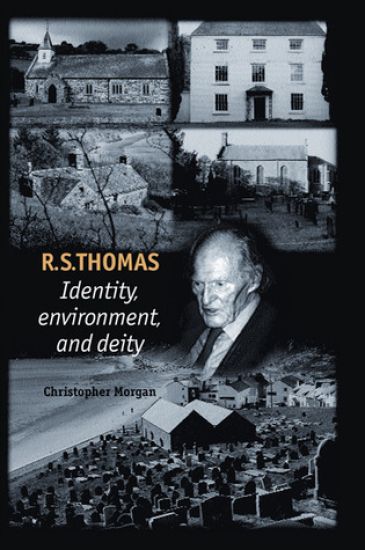
Christopher Morgan writes with keen critical insight on the controversial poet R. S. Thomas, considered to be one of the leading writers of the twentieth century. This is the first book to treat Thomas's entire oeuvre and will prove to be an indispensible guide and companion to the complete poems. The book is divided into three parts, each of which interprets the development of a major theme over Thomas's twenty-seven volumes, probing particular themes and particular poems with a meticulous insight. The book also treats Thomas's work as a complex and interrelated whole, as a body of work that comprises a single artistic achievement, and assesses that achievement within the context of an array of major literary figures from Montaigne to Seamus Heaney and Wallace Stevens. R. S. Thomas: Identity, environment, deity proves invaluable as a beginner's introduction to the Welsh poet, as a student's guide to critical thinking about the poet's work, and as a provocative new step in scholarly studies.An electronic edition of this book is freely available under a Creative Commons (CC BY-NC-ND) licence.
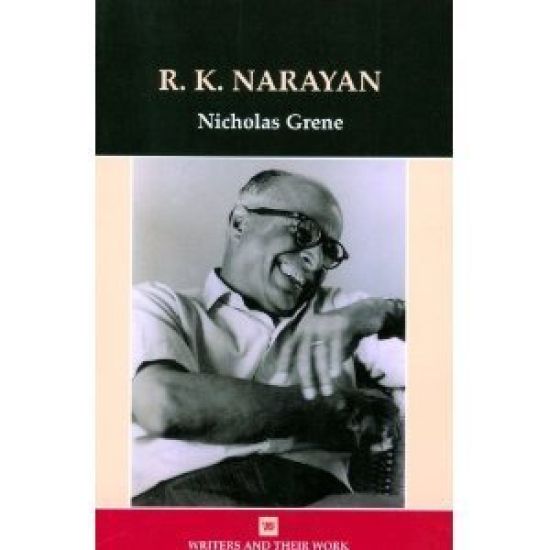
The Indian novelist R.K. Narayan was a key figure in the development of a distinctive postcolonial literature. This detailed critical study covers all of Narayan's work, offering an accessible introduction to his life and fiction with detailed analyses of the major novels. Although the chapters take the reader through the successive phases of his career, they are organised on a thematic rather than a chronological basis to allow a focus on the most significant critical issues his work raises. While the introduction sketches the outline of his life, the first chapter explores how his own background was developed into the fictional South Indian small town of Malgudi, the setting for almost all his work. The second chapter deals with the controversial issue of Narayan's politics, and the common criticism of his writing as insufficiently politically engaged. The central chapter of the book focuses on the submerged fables that animate some of his key novels, including his best known, The Guide. The fourth chapter considers Narayan's attitudes toward modernity as reflected in his essays and his fiction. Finally, there is an analysis of Narayan as storyteller and the special styles he devised to tell his elliptical, subtle and understated tales.
This new Anthology presents a fascinating range of Robert Louis Stevenson's essays on fiction. Better known now for the fiction he wrote himself than for his essays on the subject, this material nevertheless provides an illuminating insight in to the thoughts on the craft of writing from one of Scotland's most famous literary figures. Such writings have hitherto been scattered throughout editions of his collected works; here they are brought together in a new and revealing conjunction. Essays selected include 'A Humble Remonstrance', 'A Gossip on Romance', 'Books which have Influenced Me', 'A Chapter on Dreams' and 'Popular Authors'. They reveal Stevenson's fascination with the process of creativity and the imagination, his interventions in contemporary debates over realism, his exploration of literary hierarchies, his theories of narrative desire, and the pleasures and influences he derived from his own reading. Glenda Norquay introduces this collection with a broad-ranging discussion of Stevenson's essay writing. Each essay is also introduced by a brief preface and the highly specific references within the essays are backed up with explanatory notes, making the Anthology accessible to a wide readership.
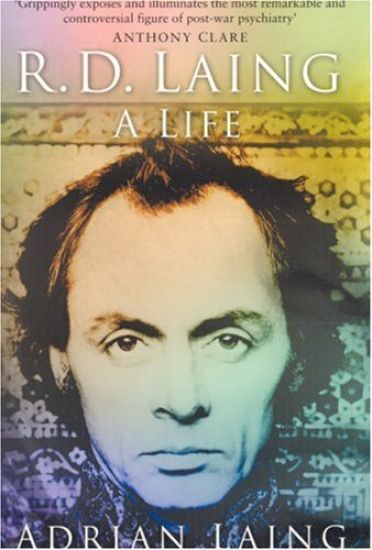
R.D. Laing, author of "The Divided Self and Knots", was the best-known and most influential psychiatrist of modern times. In this remarkable biography, the only one to be written by a close relative, Laing's son tells the story of his father's life and examines the foundations of his pioneering and unorthodox work on madness and the family. R.D. Laing became famous in the mid 1960s when he co-founded the therapeutic community Kingsley Hall and began his experiments with the therapeutic use of LSD. In the 1970s, Laing studied Zen Buddhism, published poetry, recorded an LP and ran rebirthing workshops across the world - activities which turned him into a guru of radical chic. Yet despite his astonishing empathy with the disturbed, Laing failed to address his own family problems and on the professional side, his practices ultimately led to voluntary disassociation from the medical establishment itself. Adrian Laing's biography, fully updated and with a new foreword, is a brutally honest, sensitive and revelatory portrait of his father's life, as well as a balanced, objective portrait of a troubled genius who changed for ever the way in which the insane are viewed by society and the way they are treated.