Kirjojen hintavertailu. Mukana 11 342 296 kirjaa ja 12 kauppaa.

Kirjahaku

Etsi kirjoja tekijän nimen, kirjan nimen tai ISBN:n perusteella.

1000 tulosta hakusanalla Ralph Cutro

Ralph's Italian Restaurant

Ralph's Italian Restaurant

Jimmy Rubino; James Darren

Xlibris
2000
sidottu
Ralph's Italian Restaurant, 100 Years & 100 Recipes is a book that gives you an inside look at how this South Philadelphia temple of fine cuisine came in to being and also, for the first time ever, a chance to enjoy the 100-year-old Dispigno family recipes that have never been written down before. Learn about all the famous guests - from Teddy Roosevelt to Frank Sinatra - who have enjoyed Ralph's food, read about the four generations of this close-knit family and how the restaurant has been their life - and find out the inside secrets of what makes a meal at Ralph's a truly unforgettable dining experience.
Ralph's Italian Restaurant

Ralph's Italian Restaurant

Jimmy Rubino; James Darren

Xlibris Corporation
2001
pokkari
Ralph's Italian Restaurant, 100 Years & 100 Recipes is a book that gives you an inside look at how this South Philadelphia temple of fine cuisine came in to being and also, for the first time ever, a chance to enjoy the 100-year-old Dispigno family recipes that have never been written down before. Learn about all the famous guests - from Teddy Roosevelt to Frank Sinatra - who have enjoyed Ralph's food, read about the four generations of this close-knit family and how the restaurant has been their life - and find out the inside secrets of what makes a meal at Ralph's a truly unforgettable dining experience.
Ralph Ellison and the Politics of the Novel

Ralph Ellison and the Politics of the Novel

William H. Rice

Lexington Books
2003
sidottu
In this engaging study, H. William Rice illuminates the mystery that is Ralph Ellison: the author of one complex, important novel who failed to complete his second; a black intellectual who remained notably reticent on political issues during the desegregation of his native South. Rice reads both Invisible Man and the posthumously published Juneteenth as novels that focus on the political uses of language. He explores Ellison's concept of the novel, promulgated in that author's two collections of essays, as an inherently political form of art. And he carefully considers the political context that undoubtedly impacted Ellison's work and thought: a world and a time rocked to its foundation by such revolutionary actors as Martin Luther King, Jr., and Malcolm X. Rice guides his reader to a greater understanding of Ralph Ellison, his oeuvre, and the American novel.
Ralph Ellison and the Politics of the Novel

Ralph Ellison and the Politics of the Novel

William H. Rice

Lexington Books
2007
nidottu
In this engaging study, H. William Rice illuminates the mystery that is Ralph Ellison: the author of one complex, important novel who failed to complete his second; a black intellectual who remained notably reticent on political issues during the desegregation of his native South. Rice reads both Invisible Man and the posthumously published Juneteenth as novels that focus on the political uses of language. He explores Ellison's concept of the novel, promulgated in that author's two collections of essays, as an inherently political form of art. And he carefully considers the political context that undoubtedly impacted Ellison's work and thought: a world and a time rocked to its foundation by such revolutionary actors as Martin Luther King, Jr., and Malcolm X. Rice guides his reader to a greater understanding of Ralph Ellison, his oeuvre, and the American novel.
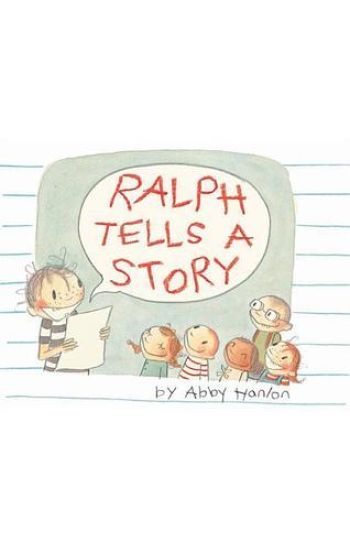
Ralph Tells a Story

Ralph Tells a Story

Abby Hanlon

Two Lions
2012
sidottu
“…A promising debut by Abby Hanlon, a former first-grade teacher who does delightful childlike drawings.” —USA Today Nothing ever happens to Ralph. So every day when it’s time to write stories, Ralph thinks really hard. He stares at his paper. He stares at the ceiling. But he has no stories! With the help of his classmates, Ralph realizes that a great story can be about something very little…and that maybe he really does have some stories to tell. Debut author/illustrator Abby Hanlon’s endearing text and charming watercolor and colored pencil illustrations prove that writing can be fun! This story works nicely with Lucy Calkins’ Writer’s Workshop model of teaching.
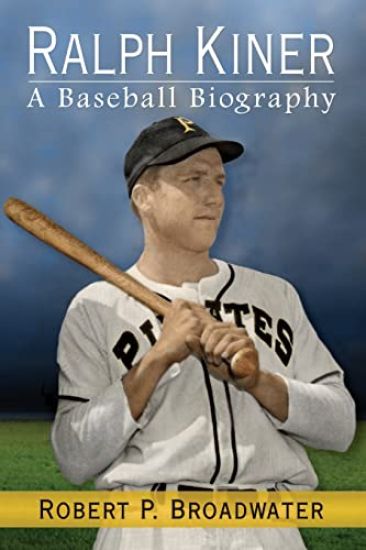
Ralph Kiner

Ralph Kiner

Robert P. Broadwater

McFarland Co Inc
2016
pokkari
Ralph Kiner (1922-2014) was one of the most feared power hitters of his era. Babe Ruth predicted Kiner would be the slugger most likely to break Ruth's single season home run record. While the left fielder from New Mexico missed that mark, he did break one of the Babe's records, leading his league in home runs for seven consecutive seasons--a record unbroken since. Kiner set his records while playing for some of the worst teams ever to take the field. With little support in the Pittsburgh Pirates lineup, pitchers were often able to work around Kiner, walking him dozens of times per season. Despite this, Kiner made them pay for their mistakes, sending towering flies over the fences. After just 10 years in the league, Kiner's career on the field was cut short by chronic back pain. At retirement, his 369 home runs placed him sixth on the all-time list. He didn't leave baseball, however, serving as general manager of a minor league team and later announcing for the newly formed New York Mets in 1962, where he would be the voice of the team for more than fifty years. This is his story.
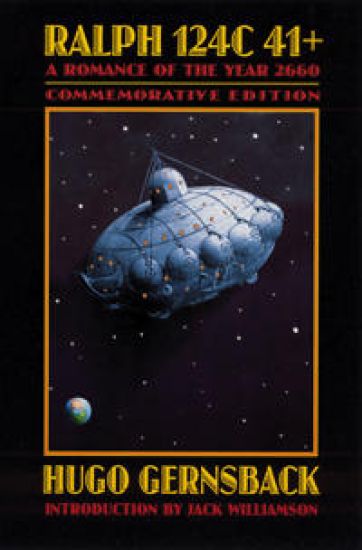
Ralph 124C 41+

Ralph 124C 41+

Hugo Gernsback

Bison Books
2000
pokkari
By the year 2660, science has transformed and conquered the world, rescuing humanity from itself. Spectacular inventions from the farthest reaches of space and deep beneath the earth are available to meet every need, providing antidotes to individual troubles and social ills. Inventors are highly prized and respected, and they are jealously protected and lavishly cared for by world governments. That support and acclaim, however—as the most brilliant of scientists, Ralph 124C 41+, discovers—is not without its price. This visionary novel of the twenty-seventh century was written by Hugo Gernsback (1887–1964), founder of the influential magazine Amazing Stories. Marvelously prophetic and creative, Ralph 124C 41+ celebrates technological advances and entrances readers with an exuberant, unforgettable vision of what our world might become. This commemorative edition makes this landmark tale widely available for the first time in decades and features the prized Frank R. Paul illustrations from the rare first edition, a list of inventions and technological devices, and Hugo Gernsback's prefaces to the first and second editions.
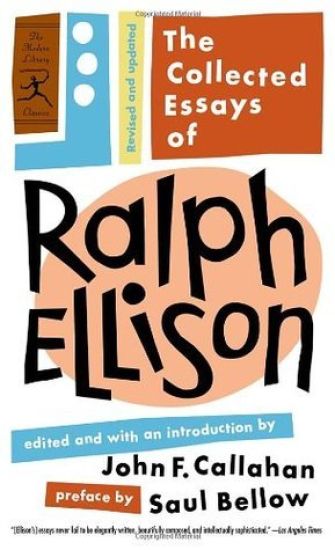
The Collected Essays of Ralph Ellison

The Collected Essays of Ralph Ellison

Ralph Ellison

Modern Library Inc
2003
pokkari
A complete collection of essays, reviews, interviews, and criticism by the acclaimed author of Invisible Man includes the collections Shadow and Act and Going to the Territory, along with newly discovered and previously uncollected works, covering such topics as literature, folklore, jazz, black culture, and the African-American experience. Reprint. 25,000 first printing.
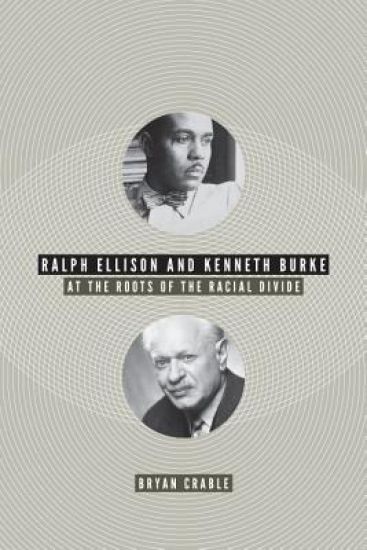
Ralph Ellison and Kenneth Burke

Ralph Ellison and Kenneth Burke

Bryan Crable

University of Virginia Press
2011
sidottu
Ralph Ellison and Kenneth Burke focuses on the little-known but important friendship between two canonical American writers. The story of this fifty-year friendship, however, is more than literary biography; Bryan Crable argues that the Burke-Ellison relationship can be interpreted as a microcosm of the American ""racial divide."" Through examination of published writings and unpublished correspondence, he reconstructs the dialogue between Burke and Ellison about race that shaped some of their most important works, including Burke's A Rhetoric of Motives and Ellison's Invisible Man. In addition, the book connects this dialogue to changes in American discourse about race. Crable shows that these two men were deeply connected, intellectually and personally, but the social division between white and black Americans produced hesitation, embarrassment, mystery, and estrangement where Ellison and Burke might otherwise have found unity. By using Ellison's non fiction and Burke's rhetorical theory to articulate a new vocabulary of race, the author concludes not with a simplistic ""healing"" of the divide but with a challenge to embrace the responsibility inherent to our social order.
Ralph Ellison and Kenneth Burke

Ralph Ellison and Kenneth Burke

Bryan Crable

University of Virginia Press
2011
nidottu
Ralph Ellison and Kenneth Burke focuses on the little-known but important friendship between two canonical American writers. The story of this fifty-year friendship, however, is more than literary biography; Bryan Crable argues that the Burke-Ellison relationship can be interpreted as a microcosm of the American ""racial divide."" Through examination of published writings and unpublished correspondence, he reconstructs the dialogue between Burke and Ellison about race that shaped some of their most important works, including Burke's A Rhetoric of Motives and Ellison's Invisible Man. In addition, the book connects this dialogue to changes in American discourse about race. Crable shows that these two men were deeply connected, intellectually and personally, but the social division between white and black Americans produced hesitation, embarrassment, mystery, and estrangement where Ellison and Burke might otherwise have found unity. By using Ellison's non fiction and Burke's rhetorical theory to articulate a new vocabulary of race, the author concludes not with a simplistic ""healing"" of the divide but with a challenge to embrace the responsibility inherent to our social order.
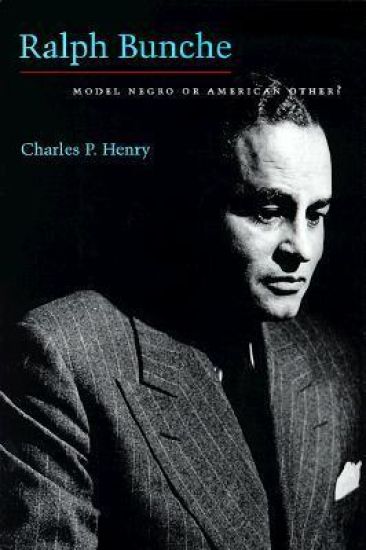
Ralph Bunche

Ralph Bunche

Charles P. Henry

New York University Press
1999
sidottu
Activist, international statesman, reluctant black leader, scholar, icon, father and husband, Ralph Bunche is one of the most complicated and fascinating figures in the history of twentieth- century America. Bunche played a central role in shaping international relations from the 1940s through the 1960s, first as chief of the Africa section of the Office of Strategic Services and then as part of the State Department group working to establish the United Nations. After moving to the U.N. as Director of Trusteeship, he became the first black Nobel Laureate in 1950 and was subsequently named Undersecretary of the U.N. For nearly a decade, he was the most celebrated contemporary African American both domestically and abroad. Today he is virtually forgotten. Charles Henry's penetrating biography counters this historical tragedy, recapturing the essence of Bunche's service to America and the world. Moreover, Henry ably demonstrates how Bunche's rise and fall as a public symbol tells us as much about America as it does about Bunche. His iconic status, like that of other prominent, mainstream black figures like Colin Powell, required a constant struggle over the relative importance of his racial identity and his national identity. Henry's biography shines as both the recovered story of a classic American, and as a case study in the racial politics of public service.
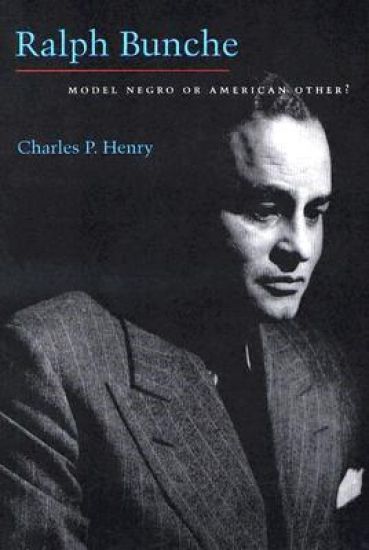
Ralph Bunche

Ralph Bunche

Charles P. Henry

New York University Press
2005
pokkari
Activist, international statesman, reluctant black leader, scholar, icon, father and husband, Ralph Bunche is one of the most complicated and fascinating figures in the history of twentieth- century America. Bunche played a central role in shaping international relations from the 1940s through the 1960s, first as chief of the Africa section of the Office of Strategic Services and then as part of the State Department group working to establish the United Nations. After moving to the U.N. as Director of Trusteeship, he became the first black Nobel Laureate in 1950 and was subsequently named Undersecretary of the U.N. For nearly a decade, he was the most celebrated contemporary African American both domestically and abroad. Today he is virtually forgotten. Charles Henry's penetrating biography counters this historical tragedy, recapturing the essence of Bunche's service to America and the world. Moreover, Henry ably demonstrates how Bunche's rise and fall as a public symbol tells us as much about America as it does about Bunche. His iconic status, like that of other prominent, mainstream black figures like Colin Powell, required a constant struggle over the relative importance of his racial identity and his national identity. Henry's biography shines as both the recovered story of a classic American, and as a case study in the racial politics of public service.
Ralph Waldo Emerson - American Writers 41

Ralph Waldo Emerson - American Writers 41

Miles Josephine

UNIVERSITY OF MINNESOTA PRESS
1964
nidottu
Ralph Waldo Emerson - American Writers 41 was first published in 1964. Minnesota Archive Editions uses digital technology to make long-unavailable books once again accessible, and are published unaltered from the original University of Minnesota Press editions.
The Selected Lectures of Ralph Waldo Emerson

The Selected Lectures of Ralph Waldo Emerson

Ralph Waldo Emerson

University of Georgia Press
2005
pokkari
This is the first and only comprehensive selection of lectures by Ralph Waldo Emerson, his era’s most prominent American man of letters and one of the foremost architects of our intellectual culture. Based on authoritative texts selected and edited by Ronald A. Bosco and Joel Myerson—the most experienced Emerson editors working today—these twenty-five addresses collectively exemplify the lecture style for which Emerson was famed in his day.Best known to his contemporaries as a lecturer, Emerson delivered some 1,500 addresses over the course of his career. Because his most important ideas were worked out in his lectures, they provide the best record we have of his evolving thought—and thus are a key to our understanding of his essays and other printed works. Gathered here are lectures on American culture, literary theory and aesthetics, moral and, as Emerson called it, "intellectual" philosophy, and social and political reform. They are taken from speaking engagements in the United States and the British Isles over the period 1833-1871, during which Emerson often spent four to six months a year on the lecture circuit; lectures from the earliest years of Emerson’s career (1833-1842) have been newly edited for this volume.The volume’s introduction draws on contemporary accounts to describe Emerson’s idiosyncratic but utterly memorable manner of speaking. A headnote provides context to the composition and delivery of each lecture, and footnotes identify Emerson’s allusions to persons, places, occasions, quotations, and books. "By examining his lectures and how they were delivered," say Bosco and Myerson, "we can look into the laboratory of Emerson’s intellectual and compositional process and see his published writings gestating."