Kirjojen hintavertailu. Mukana 12 016 292 kirjaa ja 12 kauppaa.

Kirjahaku

Etsi kirjoja tekijän nimen, kirjan nimen tai ISBN:n perusteella.

1000 tulosta hakusanalla Ralph Yarrow

Journals and Miscellaneous Notebooks of Ralph Waldo Emerson

Journals and Miscellaneous Notebooks of Ralph Waldo Emerson

Ralph Waldo Emerson

Harvard University Press
1973
sidottu
Emerson's journals of 1847-1848 deal primarily with his second visit to Europe, occasioned by a British lecture tour that began at Manchester and Liverpool in November of 1847, took him to Scotland in the following February, and concluded in London during June after he had spent a month as a sightseer in Paris. The journals of these years, along with associated notebooks and letters, recorded the materials for lectures that Emerson composed while abroad, for additional lectures on England and the English that he wrote shortly after his return to Concord, and ultimately, for English Traits, the book growing out of his travels that he was to publish in 1856.Travel abroad provided a needed change for Emerson in 1847 as it had done on previous occasions, though with his usual discounting of the values of mere change of place he was slow in deciding to make the trip. Discouragement with the prevailing political climate at the time of the Mexican War and the old uncertainty about his own proper role in the "Lilliput" of American society were much on his mind as the year began. In March he thought of withdrawing temporarily "from all domestic & accustomed relations"--preferably to enjoy "an absolute leisure with books," though he also recognized the want of some "stated task" to stimulate his flagging vitality; in July he finally agreed to accept a long-standing invitation to visit England as a lecturer. As matters turned out, a full schedule of lectures and travel, unexpectedly heavy social engagements along the way, and proliferating correspondence left Emerson little time for reading but did not prevent him from filling his journals with sharp observations on the passing scene.As Emerson moved about England his acknowledged admiration for the English rose every day, though he was careful to distinguish their less admirable qualities.The Englishman's "stuff or substance seems to be the best of the world," he told Margaret Fuller. "I forgive him all his pride. My respect is the more generous that I have no sympathy with him, only an admiration." He took a wry amusement from the new experience of being lionized by his hosts. In his journals are lively portraits of those who entertained him, such as Richard Monckton Milnes, his particular sponsor in the society of London and Paris, and sketches of literary notables including Rogers, Dc Quincey, Wilson, Tennyson, and Dickens. He renewed acquaintance with Wordsworth and recorded in detail the pronouncements of his old friend Carlyle. Settling in London in March and April of 1848, he divided his time between work at his desk, visits to nearby points of interest, and the mixed pleasures of a busy social life. In May he went to France just as an abortive uprising against the new provisional government was brewing. Four weeks in Paris served to correct his old "prejudice" against the French, who on closer acquaintance rose in his estimation just as the English had done. In June he returned to London to lecture, and in July, after visiting Stonehenge with Carlyle, he sailed home. As the journals reveal, he reached Concord refreshed and renewed by the change of scene, the new acquaintance, and the generous reception that the trip had brought him, and with an enlarged perspective that revealed to him once again the "proper glory" of his own country.
Journals and Miscellaneous Notebooks of Ralph Waldo Emerson

Journals and Miscellaneous Notebooks of Ralph Waldo Emerson

Ralph Waldo Emerson

Harvard University Press
1975
sidottu
Like Goethe, Ralph Waldo Emerson wanted to be the cultural historian and interpreter of his age—its business, politics, discoveries. The journals and notebooks included in this volume and covering in depth the years 1848 to 1851 reflect Emerson’s preoccupations with the events of these often turbulent years in America.On his return to Concord from his successful lecture trip to England and visit to Paris in 1847–1848, Emerson resumed his familiar life of writer, thinker, and lecturer. Impressions of his recent European travels appear in passages in this volume which are used later in English Traits (1856). He writes of technological and scientific discoveries in America and abroad—one of which, the discovery of ether, was to involve his brother-in-law in legal embroilment. He ponders the meaning, for “the age” or “the times,” of reports on the Dew textile mills in Lawrence, Massachusetts, of faster steamers daily breaking records, of new geological and paleontological findings, of theories of race, and many other matters that were coming increasingly to the fore in the mid-nineteenth century. Many passages on these topics, used first in lectures, later appear in his essays “Fate,” “Wealth,” and “Power” in Conduct of Life (1860). He was also adding to his critical biographies for Representative Men (1850), with special attention to Swedenborg, always a source of particular interest for Emerson.Between 1850 and 1853, Emerson traveled farther west to lecture than he had hitherto ventured—to Pittsburgh, Cincinnati, St. Louis, and many other cities in the midwest. One notebook in the present volume records his customary percipient observations of places and people encountered during these western trips.The tragic drowning of Margaret Fuller Ossoli and her family on her return from Italy in 1850 prompted Emerson to consider a collaboration on her life and writings, and another notebook printed here contains her memorabilia, including original entries by Emerson. Memoirs of Margaret Fuller Ossoli by Emerson, William Henry Charming, and James Freeman Clarke, was published in 1852.Passage of the Fugitive Slave Law in 1850 brought to a boil something in Emerson that had long been simmering. Concerned with slavery, freedom, and the future of the black population in America more than his public record had shown, he now delivered himself of an outburst—pained, vitriolic, ironic—a more sustained response to a single issue than appears elsewhere in all his journals. In this latest move in a compounding national tragedy he could see only chicanery and deterioration, the crumbling of America’s moral fiber. He saw the Fugitive Slave Law in a larger context of a sick age; like Tennyson and Arnold in England, he lamented in moods of spite and chagrin the loss of faith and of an old world where political men of honor stood firm for the moral law. Most of his journal outburst went into his addresses “The Fugitive Slave Law,” 1851 and 1854.
Journals and Miscellaneous Notebooks of Ralph Waldo Emerson

Journals and Miscellaneous Notebooks of Ralph Waldo Emerson

Ralph Waldo Emerson

Harvard University Press
1977
sidottu
The journals printed in this volume, covering the years 1852 to 1855, find Emerson increasingly drawn to the issues and realities of the pragmatic, hard-working nineteenth century. His own situation as a middle-aged, property-owning New Englander with a large household to support gave him a strong sense of everyday financial necessity, and his wide reading for his projected book on the English impressed him deeply with the worldly success that had come to that unphilosophical people. The growing crisis over slavery at home, moreover, demanded the attention of every citizen, even one as reluctant to engage in social issues as Emerson.Emerson's extensive reading about the English, which ranged from Camden's Britannia through the diaries of Samuel Pepys and Thomas Moore to the latest issues of the London Times, convinced him that, despite its materialism, England was "the best of actual nations." The robust physical health of the English, their common sense, and their instinct for fair play insured that the future belonged to them and their transatlantic cousins, the Americans.Yet the facts of American political life often led Emerson to wonder whether his country had any future at all. So long as his fellow citizens were willing to countenance the evil of slavery, they could not play their proper role in the world, the pages of his journals indicate, Emerson, like an increasing number of other Americans, was coming to believe that the issue had to he resolved, whatever the cost.
Journals and Miscellaneous Notebooks of Ralph Waldo Emerson

Journals and Miscellaneous Notebooks of Ralph Waldo Emerson

Ralph Waldo Emerson

Harvard University Press
1978
sidottu
The journals from 1854 to 1861 show the ripeness of Ralph Waldo Emerson’s thought overshadowed by the gravest problem of his time—slavery. In addition to completing English Traits (1856) and Conduct of Life (1860), Emerson wrote many of the lectures and articles that made up his next book, Society and Solitude. He also contributed often to The Atlantic Monthly after helping to found that magazine in 1857. Throughout these years he extended his strenuous trips as a lyceum lecturer, crossing and recrossing the frozen Mississippi several times each winter. In Concord, he continued his omnivorous reading, his beloved walks, and his friendships with Alcott, Channing, and Thoreau, but at home or away he saw America’s future darkening daily. In 1856, Emerson wrote to his brother William, “But what times are these, & how they make our studies impertinent, & even ourselves the same! I am looking into the map to see where I shall go with my children when Boston & Massachusetts surrender to the slave-trade.”Influenced by events such as the murder of New England men in bloody Kansas and the assault on Charles Sumner in the U.S. Congress in 1856, by a growing friendship with Theodore Parker, and by John Brown’s visits to Concord in 1857 and 1859, Emerson became one of the most notable speakers against slavery. He armed himself for his emergence from the study by marshalling his thoughts on liberty as he would have ranged his thoughts on any other topic. Notebook WO Liberty, rediscovered in the Library of Congress in 1964, collects his ideas on slavery and human liberty. Probably begun in 1854 it contains drafts or records of seven antislavery speeches, including his major antislavery address, “American Slavery,” first given in January, 1855. These notebooks and journals bring the philosopher of "the infinitude of the private man" to January 1861 and the brink of war.
Journals and Miscellaneous Notebooks of Ralph Waldo Emerson

Journals and Miscellaneous Notebooks of Ralph Waldo Emerson

Ralph Waldo Emerson

Harvard University Press
1982
sidottu
The Civil War is a pervasive presence in the journals in this volume. “The war searches character,” Ralph Waldo Emerson wrote. Both his reading and his writing reflected his concern for the endurance of the nation, whose strength lay in the moral strength of the people. He read military biographies and memoirs, while turning again to Persian, Chinese, and Indian literature. The deaths of Clough, Thoreau, Hawthorne, and his aunt Mary Moody Emerson prompted him to reread their letters and journals, remembering and reappraising.These were stirring, poignant years for Emerson. The times were hard, his lecturing was curtailed, and a new book seemed out of the question. He felt the losses, fears, and frustrations that come to those who believe in a cause they are too old to fight for. But his respected position as a man of letters brought him some unusual experiences, such as a trip to Washington in which he met President Lincoln, Secretaries Seward and Chase, and other key figures in the government. Inspecting West Point as a member of the Board of Visitors, he was deeply impressed by the character and spartan training of the cadets who were soon to see action.At the war’s end, busy again with a heavy lecture schedule and feeling his age a little, he took a long look back at the conflict and concluded that war “heals a deeper wound than any it makes.”
Journals and Miscellaneous Notebooks of Ralph Waldo Emerson

Journals and Miscellaneous Notebooks of Ralph Waldo Emerson

Ralph Waldo Emerson

Harvard University Press
1982
sidottu
The final volume of the Harvard edition presents the journals of Ralph Waldo Emerson’s last years. In them, he reacts to the changing America of the post–Civil War years, commenting on Reconstruction, immigration, protectionism in trade, and the dangers of huge fortunes in few hands—as well as on baseball and the possibilities of air travel. His role as a Harvard Overseer evokes his thoughts on education during crucial years of reform in American universities.His travels take him to Europe for the third time, and for the first time he encounters the new garden of California and the enigma of Egypt. He continues to lecture, and a second volume of poems and two more collections of essays, culled from his manuscripts, are published. Finally, his late journals show Emerson confronting his loss of creative vigor, husbanding his powers, and maintaining his equanimity in the face of decline.This concluding volume thus gives a complex picture of Emerson in his last sixteen years, facing old age but still the advocate of “newness” throughout the world.
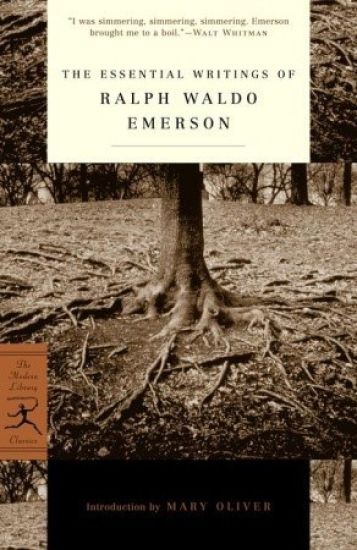
The Essential Writings of Ralph Waldo Emerson

The Essential Writings of Ralph Waldo Emerson

Ralph Waldo Emerson

Modern Library Inc
2000
pokkari
Introduction by Mary Oliver Commentary by Henry James, Robert Frost, Matthew Arnold, Oliver Wendell Holmes, and Henry David Thoreau The definitive collection of Emerson's major speeches, essays, and poetry, The Essential Writings of Ralph Waldo Emerson chronicles the life's work of a true "American Scholar." As one of the architects of the transcendentalist movement, Emerson embraced a philosophy that championed the individual, emphasized independent thought, and prized "the splendid labyrinth of one's own perceptions." More than any writer of his time, he forged a style distinct from his European predecessors and embodied and defined what it meant to be an American. Matthew Arnold called Emerson's essays "the most important work done in prose." INCLUDES A MODERN LIBRARY READING GROUP GUIDE
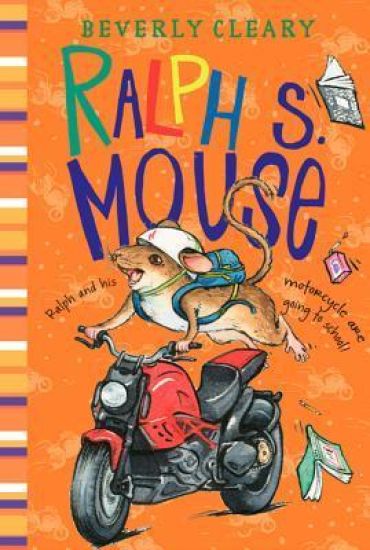
Ralph S. Mouse

Ralph S. Mouse

Beverly Cleary

Harpercollins
2021
sidottu
In this third and final Ralph S. Mouse novel from Newbery Medal-winning author Beverly Cleary, Ralph heads to school to see what humans do all day . . . and to discover what the "S" in Ralph S. Mouse stands for With his rowdy cousins constantly wearing out his motorcycle and the Mountain View Inn manager threatening to take care of the mouse infestation once and for all, Ralph decides it's time to get away for a while. He convinces his human friend Ryan to take him along to school, where Ralph instantly becomes the center of attention.But when Ryan's class decides to see how smart Ralph is by making him run a maze, the usually confident mouse starts to fret. What if he's not as clever as he thought?Ralph S. Mouse is perfect for independent reading or for shared reading at home or in a classroom. This fun story is the third of a trilogy, along with The Mouse and the Motorcycle and Runaway Ralph, all inspired by the author's hope to create appealing books for boys and girls--and by the sight of her son playing with toy cars.
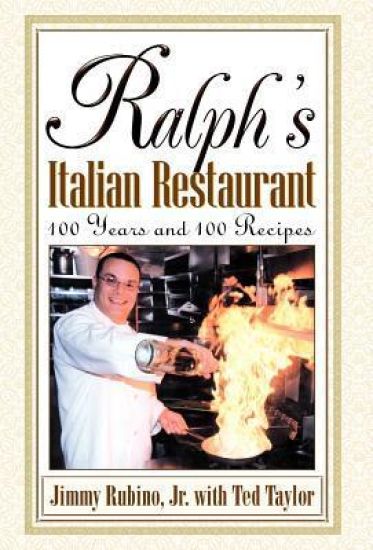
Ralph's Italian Restaurant

Ralph's Italian Restaurant

Jimmy Rubino; James Darren

Xlibris
2000
sidottu
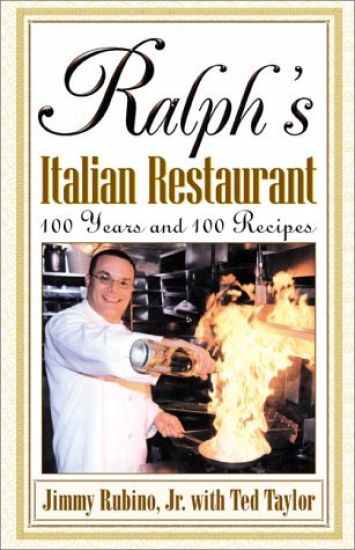
Ralph's Italian Restaurant, 100 Years & 100 Recipes is a book that gives you an inside look at how this South Philadelphia temple of fine cuisine came in to being and also, for the first time ever, a chance to enjoy the 100-year-old Dispigno family recipes that have never been written down before. Learn about all the famous guests - from Teddy Roosevelt to Frank Sinatra - who have enjoyed Ralph's food, read about the four generations of this close-knit family and how the restaurant has been their life - and find out the inside secrets of what makes a meal at Ralph's a truly unforgettable dining experience.
Ralph's Italian Restaurant

Ralph's Italian Restaurant

Jimmy Rubino; James Darren

Xlibris Corporation
2001
pokkari
Ralph's Italian Restaurant, 100 Years & 100 Recipes is a book that gives you an inside look at how this South Philadelphia temple of fine cuisine came in to being and also, for the first time ever, a chance to enjoy the 100-year-old Dispigno family recipes that have never been written down before. Learn about all the famous guests - from Teddy Roosevelt to Frank Sinatra - who have enjoyed Ralph's food, read about the four generations of this close-knit family and how the restaurant has been their life - and find out the inside secrets of what makes a meal at Ralph's a truly unforgettable dining experience.
Ralph Ellison and the Politics of the Novel

Ralph Ellison and the Politics of the Novel

William H. Rice

Lexington Books
2003
sidottu
In this engaging study, H. William Rice illuminates the mystery that is Ralph Ellison: the author of one complex, important novel who failed to complete his second; a black intellectual who remained notably reticent on political issues during the desegregation of his native South. Rice reads both Invisible Man and the posthumously published Juneteenth as novels that focus on the political uses of language. He explores Ellison's concept of the novel, promulgated in that author's two collections of essays, as an inherently political form of art. And he carefully considers the political context that undoubtedly impacted Ellison's work and thought: a world and a time rocked to its foundation by such revolutionary actors as Martin Luther King, Jr., and Malcolm X. Rice guides his reader to a greater understanding of Ralph Ellison, his oeuvre, and the American novel.
Ralph Ellison and the Politics of the Novel

Ralph Ellison and the Politics of the Novel

William H. Rice

Lexington Books
2007
nidottu
In this engaging study, H. William Rice illuminates the mystery that is Ralph Ellison: the author of one complex, important novel who failed to complete his second; a black intellectual who remained notably reticent on political issues during the desegregation of his native South. Rice reads both Invisible Man and the posthumously published Juneteenth as novels that focus on the political uses of language. He explores Ellison's concept of the novel, promulgated in that author's two collections of essays, as an inherently political form of art. And he carefully considers the political context that undoubtedly impacted Ellison's work and thought: a world and a time rocked to its foundation by such revolutionary actors as Martin Luther King, Jr., and Malcolm X. Rice guides his reader to a greater understanding of Ralph Ellison, his oeuvre, and the American novel.
Ralph Tells a Story

Ralph Tells a Story

Abby Hanlon

Two Lions
2012
sidottu
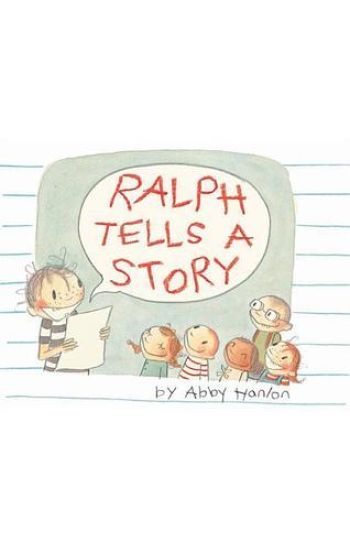
“…A promising debut by Abby Hanlon, a former first-grade teacher who does delightful childlike drawings.” —USA Today Nothing ever happens to Ralph. So every day when it’s time to write stories, Ralph thinks really hard. He stares at his paper. He stares at the ceiling. But he has no stories! With the help of his classmates, Ralph realizes that a great story can be about something very little…and that maybe he really does have some stories to tell. Debut author/illustrator Abby Hanlon’s endearing text and charming watercolor and colored pencil illustrations prove that writing can be fun! This story works nicely with Lucy Calkins’ Writer’s Workshop model of teaching.