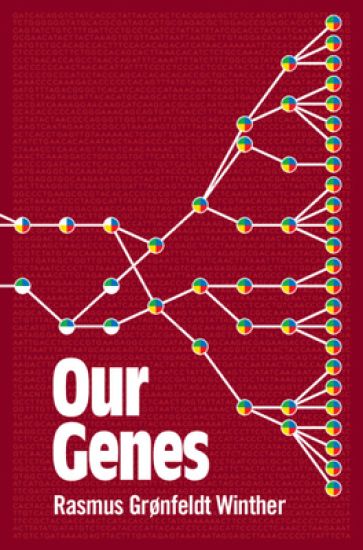
Situated at the intersection of natural science and philosophy, Our Genes explores historical practices, investigates current trends, and imagines future work in genetic research to answer persistent, political questions about human diversity. Readers are guided through fascinating thought experiments, complex measures and metrics, fundamental evolutionary patterns, and in-depth treatment of exciting case studies. The work culminates in a philosophical rationale, based on scientific evidence, for a moderate position about the explanatory power of genes that is often left unarticulated. Simply put, human evolutionary genomics - our genes - can tell us much about who we are as individuals and as collectives. However, while they convey scientific certainty in the popular imagination, genes cannot answer some of our most important questions. Alternating between an up-close and a zoomed-out focus on genes and genomes, individuals and collectives, species and populations, Our Genes argues that the answers we seek point to rich, necessary work ahead.
Rasmus Rask (1787–1832) was a Danish scholar who, having devoted the early part of his career to the Old Norse and Anglo-Saxon languages and literature, embarked upon a journey overland through Russia to India in search of the cradle of the Indo-European languages. He was delighted to rediscover the Avestan Zoroastrian texts preserved by the Parsis which Anquetil du Perron had first reported on sixty years earlier, and further Avestan materials, as well as a lively Zoroastrian community. On his return, he published, first in Danish and then in this German translation (1826), a thorough phonological and morphological analysis which showed that, contrary to the opinion of Anquetil's opponents, the Avestan language and its religious texts were neither a dim folk memory or a deliberate coinage based on Sanskrit, but a very ancient language, originating in Persia, and an important member of the Indo-European language family.
Johann Severin Vater (1771–1826) was professor of theology and Oriental languages at Halle, but his linguistic interests also included Slavonic and Native North American languages. This book, first published in 1822, was a landmark publication of the first generation of Indo-European comparative philology, and was intended as a resource for future comparative study. It includes a substantial contribution by Rasmus Rask, the influential and prolific early Danish linguist, comparing members of the 'Thracian' family of languages, as he called Greek, Latin, Lithuanian, Slavonic and Germanic (including Old Norse), which he had proved to be related. Vater translated this so as to make it available to linguists who could not access the original Danish edition. In addition there are chapters on Albanian, Gaelic, and Georgian (which later research showed to be a Caucasian language), and the book includes numerous comparative tables for easy reference.
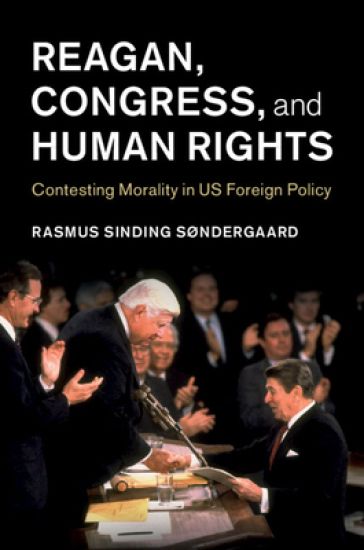
This book traces the role of human rights concerns in US foreign policy during the 1980s, focusing on the struggle among the Reagan administration and members of Congress. It demonstrates how congressional pressure led the administration to reconsider its approach to human rights and craft a conservative human rights policy centered on democracy promotion and anti-communism - a decision which would have profound implications for American attention to human rights. Based on extensive archival research and interviews, Rasmus Sinding Søndergaard combines a comprehensive overview of human rights in American foreign relations with in-depth case studies of how human rights shaped US foreign policy toward Soviet Jewry, South African apartheid, and Nicaragua. Tracing the motivations behind human rights activism, this book demonstrates how liberals, moderates, and conservatives selectively invoked human rights to further their agendas, ultimately contributing to the establishment of human rights as a core moral language in US foreign policy.
This book traces the role of human rights concerns in US foreign policy during the 1980s, focusing on the struggle among the Reagan administration and members of Congress. It demonstrates how congressional pressure led the administration to reconsider its approach to human rights and craft a conservative human rights policy centered on democracy promotion and anti-communism - a decision which would have profound implications for American attention to human rights. Based on extensive archival research and interviews, Rasmus Sinding Søndergaard combines a comprehensive overview of human rights in American foreign relations with in-depth case studies of how human rights shaped US foreign policy toward Soviet Jewry, South African apartheid, and Nicaragua. Tracing the motivations behind human rights activism, this book demonstrates how liberals, moderates, and conservatives selectively invoked human rights to further their agendas, ultimately contributing to the establishment of human rights as a core moral language in US foreign policy.
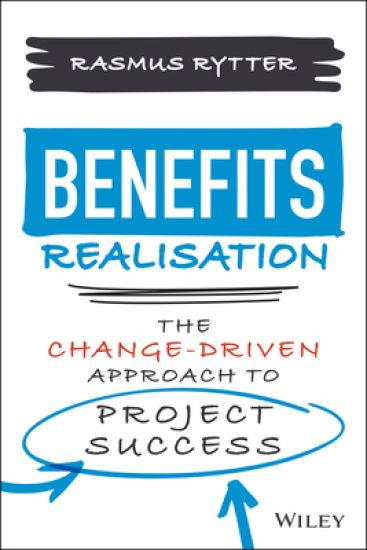
Realise the full benefits potential from your change projects For most managers in steering committees of PMOs (Project Management Office) most projects are costly in both time and money, and they often only reach a fraction of the expected benefits. In Benefits Realisation: The Change-Driven Approach to Project Success, renowned benefits realisation expert, speaker, and consultant Rasmus Rytter introduces a new approach to change projects where benefits realisation defines the design of the project and how it’s led. Once the project’s benefits have been defined, the key question for the project to answer is: ‘How might we help our colleagues change their behaviour? Thus, identifying behavioural change as the key driver of benefit realisation. Step by step, the book guides you on how to approach both benefit realisation and behavioural change, as well as explain how it builds on the project and portfolio practices (or SAFe (Scaled Agile Framework)) you are already using. Benefits Realisation also offers: Elaborate real-life case studies and examples that show the application of the new approach to benefits realisation and change on different projectsEasy to use posters, playbooks, and facilitation guides for the most important activities and workshops Effective strategies for using benefits realisation to minimise project cost Compelling possibilities for executives to make far better strategic prioritization decisions based on credible data for project benefits and the real cost of changePerfect for project managers, change managers, PMO professionals, and managers using agile frameworks, Benefits Realisation will also earn a place in the libraries of executives and other business leaders at all levels of your organisation.
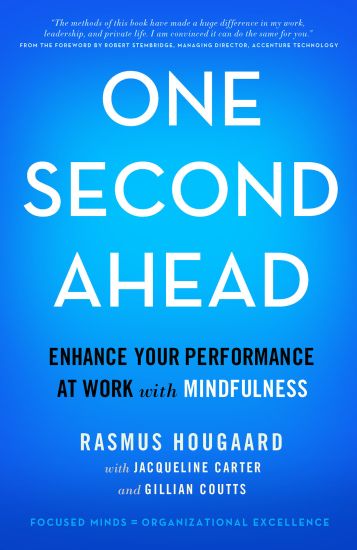
Researchers have found that the accelerated pace of modern office life is taking its toll on productivity, employee engagement, creativity and well-being. Faced with a relentless flood of information and distractions, our brains try to process everything at once increasing our stress, decreasing our effectiveness and negatively impacting our performance. Ironically, we have become too overworked, unfocused, and busy to stop and ask ourselves the most important question: What can we do to break the cycle of being constantly under pressure, always-on, overloaded with information and in environments filled with distractions? Do we need to accept this as the new workplace reality and continue to survive rather than thrive in modern day work environments? Thankfully, the answer is no. In their new book, ONE SECOND AHEAD: Enhance Your Performance at Work with Mindfulness (Palgrave Macmillan; November 2015), Rasmus Hougaard, Jacqueline Carter, and Gillian Coutts demonstrate that it is possible to train the brain to respond differently to today's constant pressures and distraction. All it takes is one second. They propose that we need to learn to work differently so we are more focused, calm and have less clutter in our mind so we can better manage our time and attention. What if we could hit the 'pause' button on our day, step back, and meet challenges with a sense of clarity and purpose? And what if there was a way not just of 'getting things done,' but ensuring that what does get done are the right things to do? Based on a program in corporate mindfulness designed by Hougaard and the partners of The Potential Project, One Second Ahead provides practical tools and techniques as well as real-world examples and lessons from organizations that have implemented mindfulness on a large scale. Thoroughly tested in a diverse range of industries, this program has resulted in measurable increases in productivity, effectiveness, and job satisfaction. With the new mindset proposedin One Second Ahead, readers will be able to put an end to ineffective multitasking, unproductive meetings, poor communication, and other unhealthy workplace behaviors by applying mindfulness to every day work life. All too often, we think that being mindful requires engaging in a special activity like meditation or yoga. Sure, these activities are beneficial and important to train the mind, but there are many simple things we can do to be mindful all day long. One Second Ahead is a handbook for more mindful work that offers: Practical, easy to apply, tools and techniques to enhance performance and effectiveness in day to day work activities such as meetings, emails, communication, planning, creativity and more Real-world stories of how mindfulness changed the workdays of leaders and front line employees Tips for cultivating mental strategies and routines that can reduce clutter, increase focus, and rewire your brain to enhance presence, patience, kindness and other valuable mindstates Simple yet detailed step-by-step instructions for a more systematic approach to mindfulness training to enhance focus and awareness Guidelines for a 10-minute-per-day mindfulness program that can reshape your life both at work and at home; A reproducible planning worksheet and further resources in the Appendix. One Second Ahead can transform daily work life by helping individuals and teams realize more of their potential through greater focus and awareness. The tools and techniques in this book can transform individual and organizational performance one mind at a time.
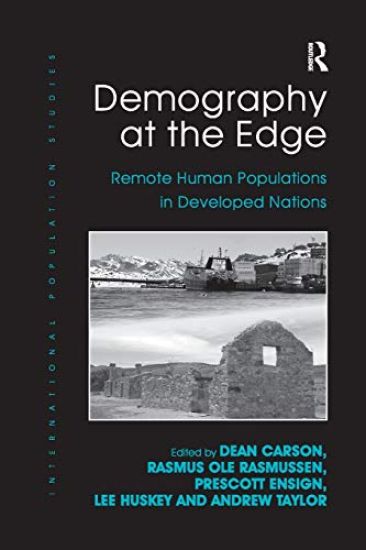
Addressing the methodological and topical challenges facing demographers working in remote regions, this book compares and contrasts the research, methods and models, and policy applications from peripheral regions in developed nations. With the emphasis on human populations as dynamic, adaptive, evolving systems, it explores how populations respond in different ways to changing environmental, cultural and economic conditions and how effectively they manage these change processes. Theoretical understandings and policy issues arising from demographic modelling are tackled including: competition for skilled workers; urbanisation and ruralisation; population ageing; the impacts of climate change; the life outcomes of Indigenous peoples; globalisation and international migration. Based on a strong theoretical framework around issues of heterogeneity, generational change, temporariness and the relative strength of internal and external ties, Demography at the Edge provides a common set of approaches and issues that benefit both researchers and practitioners.
Rasmus Wandall uses quantitative and qualitative methods from studies carried out in Denmark, to address the formal and informal norms and ideologies that are used to generate decisions to imprison. Focusing on the operations of the courtroom participants, his work investigates how court decision-making is organized to allow the sentencing procedure to be open to more than its formal legal framework, while at the same time keeping the sentencing within the boundaries of law and legal validity. The author uses the theory of law's operational closure, developed by Niklas Luhmann. The theory provides an advantageous point of departure to capture the close and subtle interactions between law's need for validity and for contextual openness in every legal operation - including court decision-making.