Raymond F. Betts considers the 'process' of decolonization and the outcomes which have left a legacy of problems, drawing on numerous examples including Ghana, India, Rwanda and Hong Kong. He examines:the effects of the two World Wars on the colonial empirethe expectations and problems created by independencethe major demographic shifts accompanying the end of the empirethe cultural experiences, literary movements, and the search for ideology of the dying empire and the newly independent nations.With an annotated bibliography and a chronology of political decolonization, Decolonization gives a concise, original and multi-disciplinary introduction to this controversial theme and analyzes what the future holds beyond the empire.
Raymond F. Betts considers the 'process' of decolonization and the outcomes which have left a legacy of problems, drawing on numerous examples including Ghana, India, Rwanda and Hong Kong. He examines:the effects of the two World Wars on the colonial empirethe expectations and problems created by independencethe major demographic shifts accompanying the end of the empirethe cultural experiences, literary movements, and the search for ideology of the dying empire and the newly independent nations.With an annotated bibliography and a chronology of political decolonization, Decolonization gives a concise, original and multi-disciplinary introduction to this controversial theme and analyzes what the future holds beyond the empire.
This book brings together for the first time in a single volume a complete survey of the theoretical foundations of economic aid policies and a critical analysis of aid programs and practices. The book focuses on the contributions of familiar economic growth models and other economic and social theories of development to foreign aid practices, and provides a broad and penetrating overview of the economics of foreign aid.At the macroanalytical level, the author investigates the savings constraint and the foreign exchange constraint approaches and the models employed for determining the quantity of external capital required for achieving growth goals under varying economic conditions in the recipient economies. The author examines other approaches to aid requirements (including the capital absorptive approach), analyzes debt service capacity, and reviews various debt cycle models. The nature and significance of indicators of economic performance are investigated, and both theoretical and practical policy issues relating to the employment of aid as a means of influencing domestic policies are analyzed. In his final chapter, the author applies his theoretical conclusions to the formulation of an integrated approach to foreign aid, encompassing the major foreign assistance problems faced today.A clear and comprehensive text for every student of development economics, as well as the most thorough reference of its kind for professional economists, the book, a volume in the Aldine Treatises in Modem Economics series, will be useful to all who are concerned with the analysis, development, and execution of aid programs.
Fighter Aces of the U.S.A. is the most complete, full-spectrum book ever published on American fighter aces, and includes dozens of aces' combat accounts, plus capsule biographies. Evolution of aircraft, tactics and armament is seen through the eyes of the 1400 elite Americans who earned the coveted title "Ace." Comprehensive revisions and updates to this new edition include the most complete statistics of American aces ever published, and is fully current to date of publication. Authoritative and compelling narrative also presents eyebrow-raising facts on enemy aces who fought Americans in all wars and theatres. Lists include names and scores, plus intriguing data on Soviet Air Force aces who battled USAF aces over Korea. Lavishly illustrated with hundreds of photos, this book is a must reference for every historian and "buff's" bookshelf.
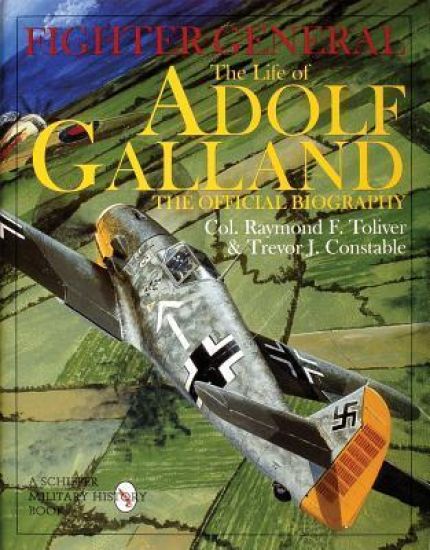
The official biography of Adolf Galland, a German Luftwaffe general and flying ace who served throughout World War II in Europe, in 705 combat missions. Adolf Galland began World War II in Poland, as a lieutenant and squadron commander, flying obsolescent biplanes. He ended the war as a Lieutenant General – and was again a squadron commander – this time flying Me 262 jet fighters. In all of aviation history there is no comparable rise and fall by a fighter pilot. The most famous German ace and fighter leader of his generation, Galland's story is simultaneously that of the Luftwaffe Fighter Arm, in which he served from foundation to finish. Fighter General recounts the career of an outstanding combat leader torn from the fighter cockpit to defend his country – and sometimes his own pilots – in the bizarre bureaucracy of the Luftwaffe High Command. Galland's battles against the Allied air forces, both as a general and in individual combat, hold no less drama than his head-on battles with Goering and Hitler. Galland's triumphs and tragedies, his friends and his flames, his humor and heartaches pulse anew in Fighter General. Here in this official biography is real-life adventure to shame the wildest fiction.
The monograph measures--statistically and graphically-- the attitudes of adolescents, some in school and some employed, toward the family, the law, education, and the Great Depression. An effort is made to determine the factors conditioning their attitudes. One important outcome of the study was the Minnesota Scale for the Survey of Opinions.
This book brings together for the first time in a single volume a complete survey of the theoretical foundations of economic aid policies and a critical analysis of aid programs and practices. The book focuses on the contributions of familiar economic growth models and other economic and social theories of development to foreign aid practices, and provides a broad and penetrating overview of the economics of foreign aid.At the macroanalytical level, the author investigates the savings constraint and the foreign exchange constraint approaches and the models employed for determining the quantity of external capital required for achieving growth goals under varying economic conditions in the recipient economies. The author examines other approaches to aid requirements (including the capital absorptive approach), analyzes debt service capacity, and reviews various debt cycle models. The nature and significance of indicators of economic performance are investigated, and both theoretical and practical policy issues relating to the employment of aid as a means of influencing domestic policies are analyzed. In his final chapter, the author applies his theoretical conclusions to the formulation of an integrated approach to foreign aid, encompassing the major foreign assistance problems faced today.A clear and comprehensive text for every student of development economics, as well as the most thorough reference of its kind for professional economists, the book, a volume in the Aldine Treatises in Modem Economics series, will be useful to all who are concerned with the analysis, development, and execution of aid programs.
The book ""International Bank For Reconstruction And Development, 1944-1949: The International Monetary Fund, 1944-1949"" by Antonin Basch provides a comprehensive account of the establishment and early years of two important international financial institutions, the International Bank for Reconstruction and Development (IBRD) and the International Monetary Fund (IMF). The book covers the period from their creation in 1944 to 1949, a time when the world was recovering from the devastation of World War II and faced major economic challenges.The author, Antonin Basch, was a key figure in the creation of these institutions and provides a unique perspective on their formation and early years. He describes the negotiations and debates that led to the creation of the IBRD and IMF, as well as the challenges they faced in their early years. Basch also provides insights into the personalities and motivations of the key players involved in the establishment of these institutions.The book covers a wide range of topics related to the IBRD and IMF, including their roles in promoting economic development, their lending practices, and their relationships with member countries. It also discusses the debates and controversies that surrounded these institutions in their early years, such as the role of gold in the international monetary system and the question of how to balance the needs of borrowers and lenders.Overall, ""International Bank For Reconstruction And Development, 1944-1949: The International Monetary Fund, 1944-1949"" is a valuable resource for anyone interested in the history of international finance and the creation of these important institutions. It provides a detailed and insightful account of their formation and early years, and sheds light on the challenges and debates that continue to shape the global financial system today.International Conciliation, No. 455, November, 1949.This scarce antiquarian book is a facsimile reprint of the old original and may contain some imperfections such as library marks and notations. Because we believe this work is culturally important, we have made it available as part of our commitment for protecting, preserving, and promoting the world's literature in affordable, high quality, modern editions, that are true to their original work.
Alfred Van Loen is a book written by Paul Mocsanyi. The book is a biography of Alfred Van Loen, a Dutch businessman and entrepreneur who made a significant impact in the business world in the early 20th century. The book covers Van Loen's life and career, from his early days as a clerk to his rise to the top of the business world. It includes details of his business ventures, including his founding of the Van Loen Company, which became one of the most successful businesses in the Netherlands. The book also explores Van Loen's personal life, including his relationships with his family and friends, and his involvement in social and political causes. Overall, Alfred Van Loen is a fascinating look at the life of a successful businessman and entrepreneur, and offers valuable insights into the world of business and entrepreneurship.Photographs By David Robins, Eva Millette, And Lou Millette.This scarce antiquarian book is a facsimile reprint of the old original and may contain some imperfections such as library marks and notations. Because we believe this work is culturally important, we have made it available as part of our commitment for protecting, preserving, and promoting the world's literature in affordable, high quality, modern editions, that are true to their original work.
We all long for peace within ourselves, families, communities, countries, and throughout the world. We wonder what we can do about the multitude of con?icts currently wreaking havoc across the globe and the continuous reports of violence in communities as well as within families. Most of the time, we contemplate solutions beyond our reach, and overlook a powerful tool that is at our disposal: forgiveness. As a genocide survivor, I know something about it. As the genocide unfolded in Rwanda in 1994, I was devastated by what I believed to be the inevitable deaths of my loved ones. The news that my parents and my seven siblings had indeed been killed was simply unbearable. Anger and bitterness became my daily companions. Likewise, I continued to wonder how the Hutus and Tutsis in Rwanda could possibly reconcile after one of the most horrendous genocides of the 20th century. It was not until I came to understand the notion of forgiveness that I was able to see the light at the end of the tunnel. Common wisdom suggests that forgiveness comes after a perpetrator makes a genuine apology. This wisdom informs us that in the aftermath of a wrongdoing, the offender must acknowledge the wrong he or she has done, express remorse, express an apology, commit to never repeating said harm, and make reparations to theextentpossible.Onlythencanthevictimforgiveandagreetoneverseekrevenge.
We all long for peace within ourselves, families, communities, countries, and throughout the world. We wonder what we can do about the multitude of con?icts currently wreaking havoc across the globe and the continuous reports of violence in communities as well as within families. Most of the time, we contemplate solutions beyond our reach, and overlook a powerful tool that is at our disposal: forgiveness. As a genocide survivor, I know something about it. As the genocide unfolded in Rwanda in 1994, I was devastated by what I believed to be the inevitable deaths of my loved ones. The news that my parents and my seven siblings had indeed been killed was simply unbearable. Anger and bitterness became my daily companions. Likewise, I continued to wonder how the Hutus and Tutsis in Rwanda could possibly reconcile after one of the most horrendous genocides of the 20th century. It was not until I came to understand the notion of forgiveness that I was able to see the light at the end of the tunnel. Common wisdom suggests that forgiveness comes after a perpetrator makes a genuine apology. This wisdom informs us that in the aftermath of a wrongdoing, the offender must acknowledge the wrong he or she has done, express remorse, express an apology, commit to never repeating said harm, and make reparations to theextentpossible.Onlythencanthevictimforgiveandagreetoneverseekrevenge.