Kirjojen hintavertailu. Mukana 11 342 296 kirjaa ja 12 kauppaa.

Kirjahaku

Etsi kirjoja tekijän nimen, kirjan nimen tai ISBN:n perusteella.

1000 tulosta hakusanalla Reiff

Born of Conviction

Born of Conviction

Joseph T. Reiff

Oxford University Press Inc
2015
sidottu
The dominant narrative of Mississippi during the Civil Rights Era focuses on white citizens, the white church, and their intense resistance to change. Signed by twenty-eight white pastors of the Methodist Mississippi Annual conference and published in the Mississippi Methodist Advocate on January 2, 1963, the "Born of Conviction" statement offered an alternative witness to the segregationist party line by calling for freedom of the pulpit and reminding readers of the Methodist Discipline's claim that the teachings of Jesus "[permit] no discrimination because of race, color, or creed". The twenty-eight pastors sought to speak to and for a mostly silent yet significant minority of Mississippians, and to lead white Methodists to join the conversation on the need for racial justice. The document additionally expressed support for public schools and opposition to any attempt to close them, and affirmed the signers' opposition to Communism. Though a few lay and clergy persons voiced public affirmation of "Born of Conviction," the overwhelming reaction was negative-by mid-1964, twenty of the original signers had left Mississippi, revealing the challenges faced by whites who offered even mild dissent to massive resistance in the Deep South. Dominant narratives, however, rarely tell the whole story. The statement caused a significant crack in the public unanimity of Mississippi white resistance. Signers and their public supporters had also received private messages of gratitude for their stand, and eight of the signers remained in the Methodist ministry in Mississippi until retirement. Born of Conviction tells the story of "the Twenty-eight," illuminating the impact on the larger culture of this attempt by white clergy to support race relations change. The book explores the theological and ethical understandings of the signers through an account of their experiences before, during, and after the statement's publication. It also offers a detailed portrait of both public and private expressions of the theology and ethics of white Mississippi Methodists as a whole - including laity and other clergy - as revealed by their responses to the "Born of Conviction" controversy, which came at the crisis point of the Civil Rights Era in Mississippi.
Born of Conviction

Born of Conviction

Joseph T. Reiff

OXFORD UNIVERSITY PRESS INC
2025
nidottu
Winner of the Mississippi Institute of Arts and Letters' Nonfiction Award The dominant narrative of the role of white citizens and the white church in Mississippi's civil rights era focuses on their intense resistance to change. The "Born of Conviction" statement, signed by twenty-eight white Methodist pastors and published in the Mississippi Methodist Advocate on January 2, 1963, offered an alternative witness to the segregationist party line. Calling for freedom of the pulpit and reminding readers of the Methodist Discipline's claim that the teachings of Jesus permit "no discrimination because of race, color, or creed," the pastors sought to speak to and for a mostly silent yet significant minority of Mississippians, and to lead white Methodists to join the conversation on the need for racial justice. The document additionally expressed support for public schools and opposition to any attempt to close them, and affirmed the signers' opposition to Communism. Though a few individuals, both laity and clergy, voiced public affirmation of "Born of Conviction," the overwhelming reaction was negative-by mid-1964, eighteen of the signers had left Mississippi, evidence of the challenges faced by whites who offered even mild dissent to massive resistance in the Deep South. Dominant narratives, however, rarely tell the whole story. The statement caused a significant crack in the public unanimity of Mississippi white resistance. Signers and their public supporters also received private messages of gratitude for their stand, and eight of the signers would remain in the Methodist ministry in Mississippi until retirement. Born of Conviction tells the story of "the Twenty-Eight," illuminating the impact on the larger culture. The book explores the theological and ethical understandings of the signers through an account of their experiences before, during, and after the statement's publication. It also offers a detailed portrait of both public and private expressions of the theology and ethics of white Mississippi Methodists in general, as revealed by their responses to the "Born of Conviction" controversy.
Exploitation and Economic Justice in the Liberal Capitalist State
Exploitation and Economic Justice in the Liberal Capitalist State develops the first new, liberal theory of economic justice to appear since John Rawls and Ronald Dworkin proposed their respective theories back in the 1970s and early 1980s. It does this by presenting a new, liberal egalitarian, non-Marxist theory of exploitation that is designed to be a creature of capitalism, not a critique of it. Indeed, the book shows how we can regulate economic inequality using the presuppositions of capitalism and political liberalism that we already accept. In doing this, the book uses two concepts or tools: a re-conceived notion of the ancient doctrine of the just price, and the author's own concept of intolerable unfairness. The resulting theory can then function as either a supplement to or a replacement for the difference principle and luck egalitarianism, the two most popular liberal egalitarian theories of economic justice of today. It provides a new, highly-topical, specific moral justification not only for raising the minimum wage, but also for imposing a maximum wage, for continuing to impose an estate tax on the wealthiest members of society, and for prohibiting certain kinds of speculative trading, including trading in derivatives such as the now infamous credit default swap and other related exotic financial instruments. Finally, it provides a new specific moral justification for dealing with certain aspects of climate change now regardless of what other nations do. Yet it is still designed to be the object of an overlapping consensus -- that is, it is designed to be acceptable to those who embrace a wide range of comprehensive moral and political doctrines, not only liberal egalitarianism, but right and left libertarianism too.
Houses from Books

Houses from Books

Daniel D. Reiff

Pennsylvania State University Press
2000
sidottu
Many homes across America have designs based on plans taken from pattern books or mail-order catalogs. In Houses from Books, Daniel D. Reiff traces the history of published plans and offers the first comprehensive survey of their influence on the structure and the style of American houses from 1738 to 1950.Houses from Books shows that architectural publications, from Palladio’s I Quattro Libri to Aladdin's Readi-Cut Homes, played a decisive role in every aspect of American domestic building. Reiff discusses the people and the firms who produced the books as well as the ways in which builders and architects adapted the designs in communities throughout the country. His book also offers a wide-ranging analysis of the economic and social conditions shaping American building practices.As architectural publication developed and grew more sophisticated, it played an increasingly prominent part in the design and the construction of domestic buildings. In villages and small towns, which often did not have professional architects, the publications became basic resources for carpenters and builders at all levels of expertise. Through the use of published designs, they were able to choose among a variety of plans, styles, and individual motifs and engage in a fruitful dialogue with past and present architects. Houses from Books reconstructs this dialogue by examining the links between the published designs and the houses themselves.Reiff’s book will be indispensable to architectural historians, architects, preservationists, and regional historians. Realtors and homeowners will also find it of great interest. A catalog at the end of the book can function as a guide for those attempting to locate a model and a date for a particular design. Houses from Books contains a wealth of photographs, many by the author, that enhance its importance as a history and guide.
Punishment, Compensation, and Law

Punishment, Compensation, and Law

Mark R. Reiff

Cambridge University Press
2011
pokkari
This book is the first comprehensive study of the meaning and measure of enforceability. While we have long debated what restraints should govern the conduct of our social life, we have paid relatively little attention to the question of what it means to make a restraint enforceable. Focusing on the enforceability of legal rights but also addressing the enforceability of moral rights and social conventions, Mark Reiff explains how we use punishment and compensation to make restraints operative in the world. After describing the various means by which restraints may be enforced, Reiff explains how the sufficiency of enforcement can be measured, and he presents a unified theory of deterrence, retribution, and compensation that shows how these aspects of enforceability are interconnected. Reiff then applies his theory of enforceability to illuminate a variety of real-world problem situations.
Punishment, Compensation, and Law

Punishment, Compensation, and Law

Mark R. Reiff

Cambridge University Press
2005
sidottu
This book is the first comprehensive study of the meaning and measure of enforceability. While we have long debated what restraints should govern the conduct of our social life, we have paid relatively little attention to the question of what it means to make a restraint enforceable. Focusing on the enforceability of legal rights but also addressing the enforceability of moral rights and social conventions, Mark Reiff explains how we use punishment and compensation to make restraints operative in the world. After describing the various means by which restraints may be enforced, Reiff explains how the sufficiency of enforcement can be measured, and he presents a unified theory of deterrence, retribution, and compensation that shows how these aspects of enforceability are interconnected. Reiff then applies his theory of enforceability to illuminate a variety of real-world problem situations.
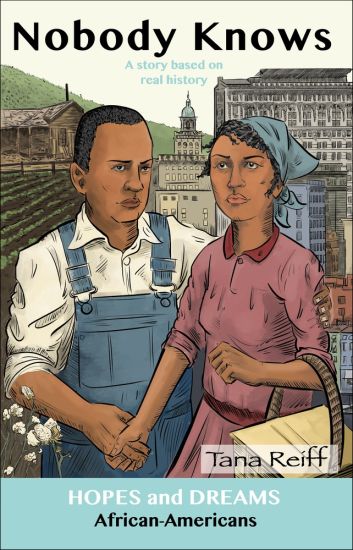
Nobody Knows

Nobody Knows

Tyler Stiene; Tana Reiff

Pro Lingua Learning
2015
nidottu
This 80-page easy-to-understand reader is one of 12 historical novels in the Hopes and Dreams series, whose diverse and fascinating characters, regardless of their ethnicity, face prejudice, danger, hardships, and setbacks, but survive with perseverance, a little bit of luck ,and a generous amount of love in their new home in the US. Downloadable audio recordings of all 12 novels and free supplementary materials for teachers are available (visit ProLinguaLearning.com for more details). Plot Summary for Nobody Knows: Mattie’s family are sharecroppers in the American South. When Mattie is six, Mama takes her to town where she sees two doors marked “White Only” and “Colored Only.” Mattie thinks the shopkeeper doesn’t like them. Her mother tells her at least she’s not a slave, as she was as a child. At 18, Mattie marries Nate Charles. In 1917 their cotton crop is failing, so Nate takes a job in a Chicago meatpacking plant. Mattie is sad to leave home, but she moves with her husband to work for a better life. In the North they find racial prejudice, labor unrest, and violence. They work hard, and with two children they move to a better home. Then there is an accident at the plant. Nate is killed. Alone after Nate dies, Mattie brings Mama north to help her. Through the Great Depression and World War II, she works many jobs to support her family. When Mama dies, Mattie takes her home. She finds the South still segregated. She stands up for change.
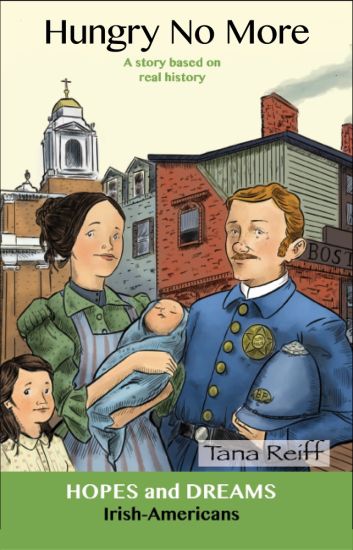
Hungry No More

Hungry No More

Tyler Stiene; Tana Reiff

Pro Lingua Learning
2016
nidottu
This 80-page easy-to-understand reader is one of 12 historical novels in the Hopes and Dreams series, whose diverse and fascinating characters, regardless of their ethnicity, face prejudice, danger, hardships, and setbacks, but survive with perseverance, a little bit of luck ,and a generous amount of love in their new home in the US. Downloadable audio recordings of all 12 novels and free supplementary materials for teachers are available (visit ProLinguaLearning.com for more details). Plot Summary for Hungry No More: It was 1845. The Irish were starving. When their crops turned black and died, Johnny and Mary McGee with their son Little John fled the Irish Potato Famine for Boston. A recruiter found them a room and Johnny a job building a railroad. It was exhausting work, away from home, and dangerous. Mary worked at a wool mill and paid a neighbor woman to care for Little John. Their work was hard and paid little, but they had enough to eat – life was better here than in Ireland. Johnny was good at working with the other men, so he was promoted to supervisor. Then his best friend was blown up. Johnny returned to Boston, got a job as a policeman, worked as a volunteer fireman, and got involved in local politics as a “ward heeler.” He loved helping other people. He and Mary had seven more children. Then, as the Civil War began, Johnny volunteered. Mary worked and waited alone.
Sent Away

Sent Away

Tyler Stiene; Tana Reiff

Pro Lingua Learning
2016
nidottu
This 80-page easy-to-understand reader is one of 12 historical novels in the Hopes and Dreams series, whose diverse and fascinating characters, regardless of their ethnicity, face prejudice, danger, hardships, and setbacks, but survive with perseverance, a little bit of luck ,and a generous amount of love in their new home in the US. Downloadable audio recordings of all 12 novels and free supplementary materials for teachers are available (visit ProLinguaLearning.com for more details). Plot Summary for Sent Away: This is the story of the Higashis, a Japanese-American family. At New Year’s dinner in 1941, the Higashis celebrated their good life in Northern California, living on their successful strawberry farm and running a boarding house for the farmworkers. They were prosperous and proud to be in America. On December 7, the bombing of Pearl Harbor changed everything. Keiko and her brother Tatsu were American citizens, but they and their parents were sent away to Poston, a Relocation Camp in the Arizona desert for the duration of the World War II. It was dusty, hot, and crowded with poor sanitation. Mrs. Higashi died there. Tatsu joined the U.S. army and was killed fighting for America in Europe. Mr. Higashi helped administer the camp’s co-op, while Keiko studied and kept their tiny living space. After the war, Keiko and her father returned home to California to rebuild their lives.
Amala's Hope

Amala's Hope

Tyler Stiene; Tana Reiff

Pro Lingua Learning
2018
nidottu
This 80-page easy-to-understand reader is one of 12 historical novels in the Hopes and Dreams series, whose diverse and fascinating characters, regardless of their ethnicity, face prejudice, danger, hardships, and setbacks, but survive with perseverance, a little bit of luck ,and a generous amount of love in their new home in the US. Downloadable audio recordings of all 12 novels and free supplementary materials for teachers are available (visit ProLinguaLearning.com for more details). Plot Summary for Amala's Hope: In 2011, the Najjar family decides to flee from their home in Aleppo, Syria, as the civil war comes closer and closer. The grandparents stay behind to take care of the family business. The Najjars drive to Jordan to stay with an uncle, but his house is very crowded and uncomfortable. As the war goes on, they go to a refugee camp, where they wait five years to be cleared for resettlement in America. Finally they arrive in Texas, where a church sponsors them. Only the daughter, Amala, speaks some English, but with the help of a neighbor, Marisol, they begin their new life. First, the children need to begin schooling, but with inadequate English they are placed below their normal grade level. Amala is relieved to discover three other Muslim girls wearing head scarves at the high school. Although the community is very supportive, they are harassed by anti-Muslim people, and the local mosque is burned. Meanwhile, back in Syria, the grandparents escape to a refugee camp in Turkey, where the grandmother dies. The grandfather is resettled in Germany as America closes its doors to Muslim immigrants and refugees. Despite their difficulties, the family gives thanks for what they have at their neighbor Marisol’s Thanksgiving dinner.
In the Name of Liberty

In the Name of Liberty

Mark R. Reiff

Cambridge University Press
2020
sidottu
For years now, unionization has been under vigorous attack. Membership has been steadily declining, and with it union bargaining power. As a result, unions may soon lose their ability to protect workers from economic and personal abuse, as well as their significance as a political force. In the Name of Liberty responds to this worrying state of affairs by presenting a new argument for unionization, one that derives an argument for universal unionization in both the private and public sector from concepts of liberty that we already accept. In short, In the Name of Liberty reclaims the argument for liberty from the political right, and shows how liberty not only requires the unionization of every workplace as a matter of background justice, but also supports a wide variety of other progressive policies.
In the Name of Liberty

In the Name of Liberty

Mark R. Reiff

Cambridge University Press
2022
pokkari
For years now, unionization has been under vigorous attack. Membership has been steadily declining, and with it union bargaining power. As a result, unions may soon lose their ability to protect workers from economic and personal abuse, as well as their significance as a political force. In the Name of Liberty responds to this worrying state of affairs by presenting a new argument for unionization, one that derives an argument for universal unionization in both the private and public sector from concepts of liberty that we already accept. In short, In the Name of Liberty reclaims the argument for liberty from the political right, and shows how liberty not only requires the unionization of every workplace as a matter of background justice, but also supports a wide variety of other progressive policies.
On Unemployment

On Unemployment

Mark R. Reiff

Palgrave Macmillan
2015
sidottu
With unemployment at historically high rates that show signs of becoming structural, there is a pressing need for an in-depth exploration of this economic injustice. Unemployment is one of the problems most likely to put critical pressure on our political institutions, disrupt the social fabric of our way of life, and even threaten the continuation of liberalism itself. Despite the obvious importance of the problem of unemployment, however, there has been a curious lack of attention paid to this issue by contemporary non-Marxist political philosophers. On Unemployment explores the moral implications of the problem of unemployment despite the continuing uncertainty involving both its causes and its cures. Reiff takes up a series of questions about the nature of unemployment and what justice has to tell us about what we should do, if anything, to alleviate it. The book comprehensively discusses the related theory and suggests how we might implement these more general observations in the real world. It addresses the politics of unemployment and the extent to which opposition to some or all of the book's various proposals stem not from empirical disagreements about the best solutions, but from more basic moral disagreements about whether the reduction of unemployment is indeed an appropriate moral goal. This exciting new text will be essential for scholars and readers across business, economics, and finance, as well as politics, philosophy, and sociology.
On Unemployment, Volume II

On Unemployment, Volume II

Mark R. Reiff

Palgrave Macmillan
2015
sidottu
With unemployment at historically high rates that show signs of becoming structural, there is a pressing need for an in-depth exploration of this economic injustice. Unemployment is one of the problems most likely to put critical pressure on our political institutions, disrupt the social fabric of our way of life, and even threaten the continuation of liberalism itself. Despite the obvious importance of the problem of unemployment, however, there has been a curious lack of attention paid to this issue by contemporary non-Marxist political philosophers. On Unemployment explores the moral implications of the problem of unemployment despite the continuing uncertainty involving both its causes and its cures. Reiff takes up a series of questions about the nature of unemployment and what justice has to tell us about what we should do, if anything, to alleviate it. The book comprehensively discusses the related theory and suggests how we might implement these more general observations in the real world. It addresses the politics of unemployment and the extent to which opposition to some or all of the book's various proposals stem not from empirical disagreements about the best solutions, but from more basic moral disagreements about whether the reduction of unemployment is indeed an appropriate moral goal. This exciting new text will be essential for scholars and readers across business, economics, and finance, as well as politics, philosophy, and sociology.
Bloom Where You're Planted

Bloom Where You're Planted

Mary Rodman; Kathy Reiff

Legacy Lane Publishing
2019
pokkari
Mary's unique style of writing intertwines daily situations with biblical stories to deepen your relationship with God. She inspires you to look past the chaos and the commonplace routines in your life and experience Christ's presence around you.Through laughter, memories, and even sorrow, Mary helps you see the Bright Morning Star, named Jesus. Discover her humor in the devotional, Bird Poop, as she highlights the biblical example of Abigail and how you might handle unwelcome life circumstances.You will chuckle as you read Mary's exhilarating ride down the mountainside, and grab your "Oh help me Jesus handle" as she relates the twists and turn of her trip to real life situations.Bloom: A flower, especially one cultivated for its beauty. Cultivate your beauty as you grow closer to Christ through Mary's words and her personal testimony. These meditations include both Old Testament and New Testament scriptures. The 99 devotions are easy to read and thought provoking. Each one provides great Bible study and reference materials and a variety of options, such as suggested scripture readings and soar with Jesus tips.The devotions in Bloom Where You're Planted range from laughter to tears and can be used like a reference handbook full of encouragement. Life is so hectic that we often feel more like an object than a person. In the devotion, Object or Person, you are reminded how important you are to God. So important that He knows you by name.While visiting the temporary memorial in Shanksville, PA, Mary was reminded that Jesus loves everyone. She shares her devotional, Flight 93 about the 911 tragedy, on her blog post. Please join the conversation with your thoughts, prayers and concerns for those who sacrificed their lives for our freedom. Mary's Christian quotations are popular on Social Media and especially on Pinterest. Follow her on Social Media as MrsMaryRodman.A few words about Bloom Where You're Planted from Mary's readers.The book is very up-lifting; there are real life experiences that I really appreciated. I couldn't help but think about my own life and agreed with the title BLOOM. What an excellent title. I thank you for your love, endurance, faith and patience in sharing your life. This book, I will read again...EXCELLENT. beverops, Barnes and Noble CustomerThe daily devotions in Mary's book are absolutely wonderful. Each devotional applies to life and is an encouragement to read every day. Mary has definitely written these devotions from the heart. Thanks Mary for taking us along with you on your journey with the Lord. Kim Retterer, Barnes & Noble CustomerFor someone who much prefers paper or hardbound books, I feel it shows just how wonderful this book is, that I was able to enjoy it as an eBook.And, while I personally much prefer KJV Bible verses, I like the versions the author used, and the way she mixed them up in the text. The chosen verses work very well in each usage.All in all, an exceptional devotional. I would definitely recommend it to anyone with a love of flowers or just an interest in blooming as a follower of Christ. JC Morrows, Barnes & Noble Customer