Dr. Richard Barohn and Dr. Mazen Dimachkie lead this publication on Motor Neuron Disease. Focus is on ALS, with inclusion of primary lateral sclerosis, primary muscular atrophy, leg amyotrophic diplegia, brachial amyotropic diplegia, and isolate bulbar ALS. Among the topics presented are. Patterns of weakness, classification of motor neuron disease & clinical diagnosis of sporadic ALS; Potential environmental factors in ALS; Neuropathology; Spinal muscular atrophy; Complementary and alternative therapies in ALS frontotemporal dysfunction and dementia in ALS; Symptoms management and end of life care; Research approaches to slowing progression of ALS; Familial ALS; Kennedy disease and more. Information in this issue presents: Description of the problem (Incidence, Prevalence, Severity, Natural history); 2. Review of pertinent data; Controversial areas discussing aspects such as areas of practice for which there are disagreements and why? What are the arguments and counter arguments and what data support them?; Conclusions using levels of clinical evidence that support or refute an intervention. Procedural steps are provided for diagnostic and treatment discussions along with clinical cases.

This issue of Endocrinology and Metabolism Clinics, guest edited by Drs. Richard Auchus, Adina Turcu, Alan D. Waxman, and Barry D. Pressman, is devoted to Biochemical and Imaging Diagnostics in Endocrinology. Articles in this issue include Mass spectrometry applicability in endocrine testing; Point-of-care endocrine testing; Thyroid, Bone; NET; Predictors of fertility; Thyroid ultrasound imaging and needle biopsy; Pituitary imaging; Adrenal imaging; Pancreatic imaging; Diagnosis and management of thyroid disorders; Neuroendocrine Tumors, and Parathyroid Imaging.
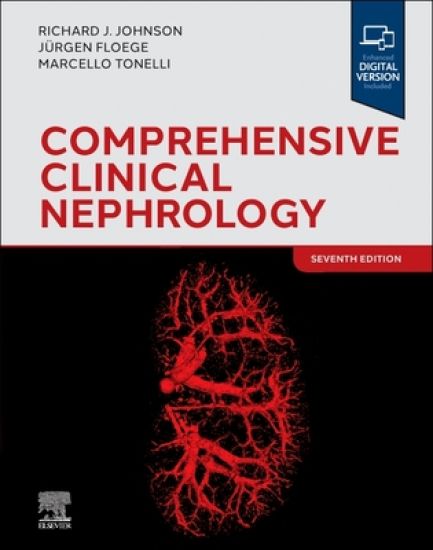
Written for fellows, practicing nephrologists, and internists who treat patients with disorders affecting the renal system, Comprehensive Clinical Nephrology, 7th Edition, offers a practical approach to this complex field, supported by underlying scientific facts and pathophysiology. World leaders in nephrology provide current information on clinical procedures and conditions, covering everything from fluid and electrolyte disorders to hypertension, diabetes, dialysis, transplantation, and more-all in a single, convenient volume. Provides a "just right" amount of basic science and practical clinical guidance to help you make efficient and informed decisions. Contains new chapters on Blood Pressure Management in the Dialysis Patient, Kidney Diseases Associated with Corona Viruses, Ultrasound Imaging in Nephrology, and Radiologic and Nuclear Imaging in Nephrology. Includes more than 1,500 full-color illustrations that highlight key topics and detail pathogenesis for a full range of kidney conditions and clinical management. Covers key topics such as COVID-19, chronic kidney disease, end stage kidney disease, kidney transplantation, glomerular disease, onco-nephrology, dialysis, and much more. Features popular, color-coded algorithms that provide easy access to important content: yellow boxes for general information, green boxes for therapeutic intervention, and blue boxes for necessary investigations. Includes quick-reference boxes with links to clinical guidelines in all relevant chapters, plus self-assessment questions online. An eBook version is included with purchase. The eBook allows you to access all of the text, figures and references, with the ability to search, customize your content, make notes and highlights, and have content read aloud.
Molecular simulation allows researchers unique insight into the structures and interactions at play in fluids. Since publication of the first edition of Molecular Simulation of Fluids, novel developments in theory, algorithms and computer hardware have generated enormous growth in simulation capabilities. This 2nd edition has been fully updated and expanded to highlight this recent progress, encompassing both Monte Carlo and molecular dynamic techniques, and providing details of theory, algorithms and both serial and parallel implementations. Beginning with a clear introduction and review of theoretical foundations, the book goes on to explore intermolecular potentials before discussing the calculation of molecular interactions in more detail. Monte Carlo simulation and integrators for molecular dynamics are then discussed further, followed by non-equilibrium molecular dynamics and molecular simulation of ensembles and phase equilibria. The use of object-orientation is examined in detail, with working examples coded in C++. Finally, practical parallel simulation algorithms are discussed using both MPI and GPUs, with the latter coded in CUDA. Drawing on the extensive experience of its expert author, Molecular Simulation of Fluids: Theory, Algorithms, Object-Orientation, and Parallel Computing 2nd Edition is a practical, accessible guide to this complex topic for all those currently using, or interested in using, molecular simulation to study fluids.
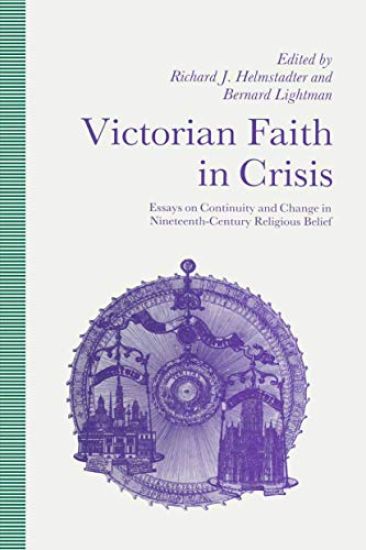
This is a collection of essays which discuss the directions taken by different faiths during the 19th century. The book discusses the alternatives to faith, different perspectives on faith, agnosticism and the topic of social Christianity. It examines and compares faith in the UK, Germany, Italy and India and the changes and loss of faith in these countries during the Victorian era. As well as discussing agnosticism, the book considers alternatives to faith, such as scientific discourse and the influence of society on Christianity and the influence of Christianity on society.
This study is a companion to the revised edition of W.B.Yeats, The Poems: A New Edition. Professor Finneran outlines the complex problems facing an editor of Yeats's poetry and explains the solutions adopted in the new text. Manuscript materials are drawn on extensively, including some which have recently come to light in the Scribner Archives at the University of Texas and at Princeton University. Compared with the first edition of this volume (Editing Yeats's Poems, 1983), there is an additional chapter - on the order of the poems - as well as new information on the Scribner Edition and other revisions throughout.
What was Italian Fascism? Was it the ideology and experience of the trenches brought to political authority? Or did it express the hopes and ideals of an emerging middle class which had done well out of the First World War? To what extent was fascism a boys' ideology? And to what degree did Mussolini lead - and to what extent follow - public opinion? 'The Italian Dictatorship' offers a skilful probing of the central debates in the area and a detailed critique of the ways in which the history of fascism has been given meaning in Italy and in the wider world since 1919. Beginning in the 1990s, with the political, cultural and historiographical crisis of the collapse of the 'First Republic' in Italy, the account then returns to the inter-war period to review fascist, conservative, liberal and Marxist understandings of fascism, examining not only the more traditional sources but also film, 'memory', music and other arenas in which history is crafted.
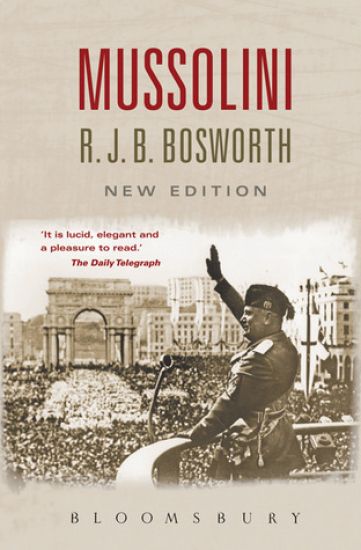
In 1945, disguised in German greatcoat and helmet, Mussolini attempted to escape from the advancing Allied armies. Unfortunately for him, the convoy of which he was part was stopped by partisans and his features, made so familiar by Fascist propaganda, gave him away. Within 24 hours he was executed by his captors, joining those he sent early to their graves as an outcome of his tyranny, at least one million people. He was one of the tyrant-killers who so scarred interwar Europe, but we cannot properly understand him or his regime by any simple equation with Hitler or Stalin. Like them, his life began modestly in the provinces; unlike them, he maintained a traditonal male family life, including both wife and mistresses, and sought in his way to be an intellectual. He was cruel (though not the cruellest); his racism existed, but never without the consistency and vigor that would have made him a good recruit for the SS. He sought an empire; but, in the most part, his was of the old-fashioned, costly, nineteenth century variety, not a racial or ideological imperium. And, self-evidently Italian society was not German or Russian: the particular patterns of that society shaped his dictatorship. Bosworth's Mussolini allows us to come closer than ever before to an appreciation of the life and actions of the man and of the political world and society within which he operated. With extraordinary skill and vividness, drawing on a huge range of sources, this biography paints a picture of brutality and failure, yet one tempered with an understanding of Mussolini as a human being, not so different from many of his contemporaries. 'The definitive study of the Italian dictator.' - Library Journal
At the time of his death at the age of 95, Eric Hobsbawm (1917-2012) was the most famous historian in the world. His books were translated into more than fifty languages and he was as well known in Brazil and Italy as he was in Britain and the United States. His writings have had a huge and lasting effect on the practice of history. More than half a century after it appeared, his books remain a staple of university reading lists.He had an extraordinarily long life, with interests covering many countries and many cultures, ranging from poetry to jazz, literature to politics. He experienced life not only as a university teacher but also as a young Communist in the Weimar Republic, a radical student at Cambridge, a political activist, an army conscript, a Soho 'man about town', a Hampstead intellectual, a Cambridge don, an influential journalist, a world traveller, and finally a Grand Old Man of Letters.In A Life in History, Richard Evans tells the story of Hobsbawm as an academic, but also as witness to history itself, and of the twentieth century's major political and intellectual currents. Eric not only wrote and spoke about many of the great issues of his time, but participated in many of them too, from Communist resistance to Hitler to revolution in Cuba, where he acted as an interpreter for Che Guevara. He was a prominent part of the Jazz scene in Soho in the late 1950s and his writings played a pivotal role in the emergence of New Labour in the late 1980s and early 1990s.This, the first biography of Eric Hobsbawm, is far more than a study of a professional historian. It is a study of an era.
This book analyzes the use of strategic embargoes and economic sanctions in the postwar period, tracing their changing applications in the context of developments in the global distribution of power. Dr. Ellings uses two approaches: a case study of the ongoing strategic Western embargo against selected communist countries and a comparative study of
With the loss of Soviet control in Central and Eastern Europe, as well as the move toward economic liberalization in many developing countries, a huge increase in the number of convertible currencies in the world has occurred. A key aspect of the management of these currencies involves their relationships with the world economy, which is determined
Providing an analysis of Chinese divination as a means of organizing and interpreting reality, Richard Smith examines a wide variety of mantic techniques - from the use of the hallowed Yjing to such popular practices as siting (geomancy), astrology, numerology, physiognomy, the analysis of written characters, meteorological divination, the use of mediums (including spirit-writing), and dream interpretation. As he explains the pervasiveness and tenacity of divination in China, the author explores not only the connections between various mantic techniques but also the relationship between divination and other facets of Chinese culture, including philosophy, science and medicine. He discusses the symbolism of divination, its aesthetics, its ritual aspects, and its psychological and social significance, pointing out that in traditional China divination helped to order the future, just as history helped to order the past, and rituals the present.
In this engaging volume, the editors present the influential work of economist Gottfried Haberler, whom Paul Samuelson judges qualified for about two-and-a-half Nobel prizes in economics. Throughout the book, Haberlers essays reveal the clarity of his analyses and his ability to identify crucial policy choices, whether grappling with issues of inflation, unemployment, trade, or development. Presenting Haberler as the eclectic economist he is, the editors show that far from being an ideologue, Haberler is an economist who uses whatever approaches and theories are appropriate for the problems he considers. Paul Samuelson judges that Gottfried Haberlers work should qualify him for about two-and-a-half Nobel Prizes in economicsone for his quantum improvement in trade theory beyond Ricardos paradigm of labors comparative advantage, one for his definitive synthesis of business cycle theory, and beyond these his policy wisdom over a period of six decades. It is Haberlers policy wisdom that serves as the basis for this comprehensive collection of the eminent economists work.Throughout the book, Haberlers contributions demonstrate the clarity of his analyses for exploring the complex economics of policy issues and for identifying key governmental responses to problems of unemployment, trade, and development. Presenting Haberler as the eclectic economist he is, the editors show that far from being an ideologue, Haberler is an economist who uses whatever approaches and theories are appropriate for the problems he considers. The portrait that emerges is one of a multifaceted thinker, able to choose freely among competing theories and to effectively apply them to complex and demanding policy issues.
This book analyzes the use of strategic embargoes and economic sanctions in the postwar period of World War II, tracing their changing applications in the context of developments in the global distribution of power.
This book offers a brief perspective on some of the key issues of dispute concerning exchange rate policy. It discusses specific characteristics of transition economies that could influence the objectives for exchange rate regime choice and the conflicts among such objectives.
Providing an analysis of Chinese divination as a means of organizing and interpreting reality, Richard Smith examines a wide variety of mantic techniques - from the use of the hallowed Yjing to such popular practices as siting (geomancy), astrology, numerology, physiognomy, the analysis of written characters, meteorological divination, the use of mediums (including spirit-writing), and dream interpretation. As he explains the pervasiveness and tenacity of divination in China, the author explores not only the connections between various mantic techniques but also the relationship between divination and other facets of Chinese culture, including philosophy, science and medicine. He discusses the symbolism of divination, its aesthetics, its ritual aspects, and its psychological and social significance, pointing out that in traditional China divination helped to order the future, just as history helped to order the past, and rituals the present.
In this engaging volume, the editors present the influential work of economist Gottfried Haberler, whom Paul Samuelson judges qualified for about two-and-a-half Nobel prizes in economics. Throughout the book, Haberlers essays reveal the clarity of his analyses and his ability to identify crucial policy choices, whether grappling with issues of inflation, unemployment, trade, or development. Presenting Haberler as the eclectic economist he is, the editors show that far from being an ideologue, Haberler is an economist who uses whatever approaches and theories are appropriate for the problems he considers. Paul Samuelson judges that Gottfried Haberlers work should qualify him for about two-and-a-half Nobel Prizes in economicsone for his quantum improvement in trade theory beyond Ricardos paradigm of labors comparative advantage, one for his definitive synthesis of business cycle theory, and beyond these his policy wisdom over a period of six decades. It is Haberlers policy wisdom that serves as the basis for this comprehensive collection of the eminent economists work.Throughout the book, Haberlers contributions demonstrate the clarity of his analyses for exploring the complex economics of policy issues and for identifying key governmental responses to problems of unemployment, trade, and development. Presenting Haberler as the eclectic economist he is, the editors show that far from being an ideologue, Haberler is an economist who uses whatever approaches and theories are appropriate for the problems he considers. The portrait that emerges is one of a multifaceted thinker, able to choose freely among competing theories and to effectively apply them to complex and demanding policy issues.
Originally published in 1984. This major text covers the whole discipline of geomorphology, presenting a clear and comprehensive overview of the field, drawing on the full range of modern research. Landforms and their formative processes are treated on a broad spectrum of spatial scales, and examples are drawn from the major geological, climatic and biotic environments. The book is divided conveniently into some 170 clearly defined sections to allow readers to make the most efficient use of those parts of the text relevant to their particular needs. After introducing the basic concepts such as systems analysis, morphologic and cascading systems, the historical-evolutionary approach and process-response geomorphology, the book moves on to the geological background to geomorphology and then the extensive third part deals with the geomorphic processes and responding landforms. Part four examines climatic geomorphology and the appendix touches on applied geomorphology, especially fluvial processes.
The Routledge Concise History of Canadian Literature introduces the fiction, poetry and drama of Canada in its historical, political and cultural contexts.