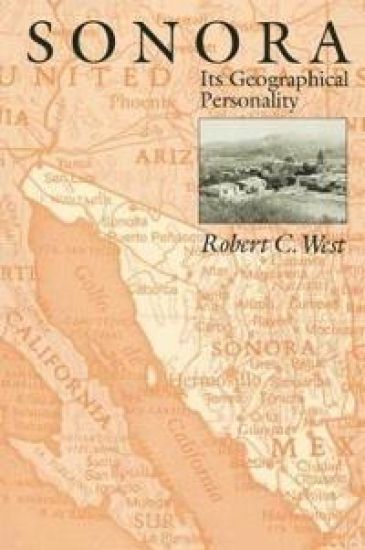
A land where some streams ran with gold. A landscape nearly empty of inhabitants in the wake of Apache raids from the north. And a former desert transformed by irrigation into vast fields of wheat and cotton. This was and is the state of Sonora in northwest Mexico.In this cultural historical geography, Robert C. West explores the dual geographic "personality" of this part of Mexico's northern frontier. Utilizing the idea of "old" and "new" landscapes, he describes two Sonoras-to the east, a semiarid to subhumid mountainous region that reached its peak of development in the colonial era and still lives largely in its colonial past; and, to the west, a desert region that in the twentieth century has become a major agricultural producer and the modern center of economic and cultural activity.After a description of the physical and biotic aspects of Sonora, West describes the aboriginal farming cultures that inhabited eastern Sonora before the Spanish conquest. Following the conquest, he traces the spread of Jesuit missions and Spanish mining and ranching communities into this land where gold, silver, and copper ores were easily extracted by surface mining. He charts the decline of eastern Sonora with the coming of Apache and Seri raids during the eighteenth and nineteenth centuries. And he shows how western Sonora has become one of Mexico's most powerful political and economic entities in the twentieth century.For geographers, historians, anthropologists, and economists, as well as travelers to Sonora and its coastal resorts, this lively and interesting book will be important reading.
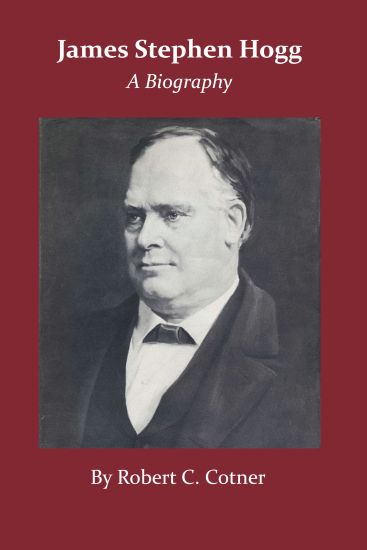
No other governor has become so completely identified with Texas and its citizens as Jim Hogg, the first native Texan to hold the state's highest office. His fame was not, however, easily earned. Orphaned at twelve, he worked as farmhand, typesetter, and country editor to finance his study of law, an endeavor that eventually led him into public life. Even before his admission to the bar in 1875 he served as justice of the peace in Wood County. Later, in two terms as district attorney (1881–1885), he proved himself a fearless prosecutor. His growing reputation, with his magnetic personality, brought him the attorney generalship in 1887, and in that office he fulfilled his campaign promises to enforce all laws. During Hogg's tenure, suits brought by his department resulted in the restoration of more than a million acres of state lands held by the railroads. In 1890 Hogg was elected governor. Early the next year he began urging his reform program, the keystone of which was establishment of the Railroad Commission. He also brought about the passage of laws preventing the watering of railroad securities, the indiscriminate issuance of municipal securities, and the establishment of landholding companies. Land ownership by aliens was likewise restricted. Throughout Hogg's public life, from iustice of the peace to governor, he was motivated by his concern for the welfare of the people. Invariably his criterion for evaluation of an issue was the effect of a decision upon the common welfare. In this democratic progressivism he was the Texas version of Thomas Jefferson or Theodore Roosevelt. Molded by his varied experiences, Jim Hogg was a man of many professions-printer, lawyer, politician, statesman, oil magnate. In these relationships he was still a warmly human person, a loving son, brother, husband, father, friend. His ambition to provide abundantly for his family was expansive enough to include all Texans; so his love for "the people" was reiterated in his public benefactions, through which Texans are even today still sharing his wealth. Jim Hogg's varied public life and his heart-warming personal life are dramatically presented in this absorbing biography. In it, the far-sweeping panorama of Texas development in the late nineteenth and early twentieth centuries is shown in relation to his dreams and achievements.
In April 1956, Portland Oregonian investigative reporters Wallace Turner and William Lambert exposed organized crime rackets and rampant corruption within Portland's law enforcement institutions. The biggest scandal involved Teamsters officials and the city's lucrative prostitution, gambling, and bootlegging operations. Turner and Lambert blew the cover on the Teamsters' scheme to take over alcohol sales and distribution and profit from these fringe enterprises. The Rose City was seething with vice and intrigue.The exposé and other reports of racketeering from around the country incited a national investigation into crime networks and union officials headed by the McClellan Committee, or officially, the U.S. Senate Select Committee on Improper Activities in the Labor or Management Field. The commission discovered evidence in Portland that helped prove Teamsters president Dave Beck's embezzlement of union funds and union vice president Jimmy Hoffa's connection to the mob.Dark Rose reveals the fascinating and sordid details of an important period in the history of what by the end of the century had become a great American city. It is a story of Portland's repeated and often failed efforts to flush out organized crime and municipal corruption - a familiar story for many mid-twentieth-century American cities that were attempting to clean up their police departments and municipal governments. Dark Rose also helps explain the heritage of Portland's reform politics and the creation of what is today one of the country's most progressive cities.Watch the book trailer: https://www.youtube.com/watch?v=Zkf6_dbIE8A
In April 1956, Portland Oregonian investigative reporters Wallace Turner and William Lambert exposed organized crime rackets and rampant corruption within Portland's law enforcement institutions. The biggest scandal involved Teamsters officials and the city's lucrative prostitution, gambling, and bootlegging operations. Turner and Lambert blew the cover on the Teamsters' scheme to take over alcohol sales and distribution and profit from these fringe enterprises. The Rose City was seething with vice and intrigue.The exposé and other reports of racketeering from around the country incited a national investigation into crime networks and union officials headed by the McClellan Committee, or officially, the U.S. Senate Select Committee on Improper Activities in the Labor or Management Field. The commission discovered evidence in Portland that helped prove Teamsters president Dave Beck's embezzlement of union funds and union vice president Jimmy Hoffa's connection to the mob.Dark Rose reveals the fascinating and sordid details of an important period in the history of what by the end of the century had become a great American city. It is a story of Portland's repeated and often failed efforts to flush out organized crime and municipal corruption - a familiar story for many mid-twentieth-century American cities that were attempting to clean up their police departments and municipal governments. Dark Rose also helps explain the heritage of Portland's reform politics and the creation of what is today one of the country's most progressive cities.Watch the book trailer: https://www.youtube.com/watch?v=Zkf6_dbIE8A
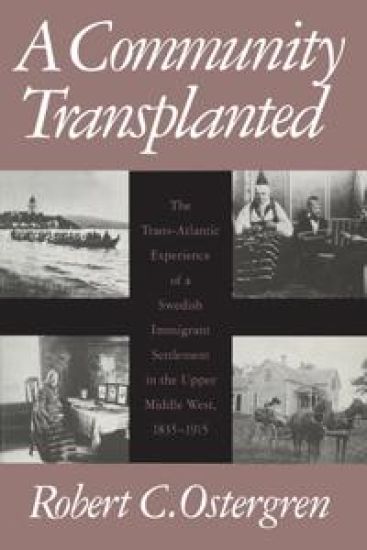
The book follows the people from the Swedish farming community of Rättvik to Isanti County, Minnesota and explores the link of people and places between Sweden and America.
In the past fifteen years there has been considerable interest in neural circuits that initiate behavior patterns. For many types of behaviors, this involves decision-making circuits whose primary elements are neither purely sensory nor motor, but represent a higher order of neural pro cessing. Of the large number of studies on such systems, analyses of startle circuits compose a major portion, and have been carried out on systems found throughout the animal kingdom. Startle has been an im portant model because of the reliability of the behavioral act for laboratory study and the accessibility of the underlying neural circuitry. However, probably because of the breadth of the subject, this material has never been reviewed in a comprehensive way that presents the elements com mon to startle circuits in the different animal systems in which they occur. This book presents a diversity of approaches based on a broad back ground of animal groups ranging from the earliest nervous systems in cnidarians to the most recently evolved and advanced in mammals. The behaviors themselves are all short latency, fast motor acts, when consid ered on the time scale of the organism, and involve avoidance or evasion, although in some cases we do not yet completely understand their natural role. These behaviors occur in response to stimuli that have sudden or unexpected onset.
This book examines closely the structure of various lipids through specific examples of mass spectral data obtained by different ionization techniques-including electron ionization, chemical ionization, and fast atom bombardment. Including over 80 complete mass spectra of lipids as well as over 120 detailed mechanistic schemes of their ion chemistry, this work will provide the advanced student and experienced mass spectroscopist with a fundamental base of information on fatty acyl-type lipids.
An unusually understandable survey of the forces or perception and feeling that determine the purchases we make; the roles played by fashion, fads, and status; and the psychological needs that they fulfill. The book discusses how children become consumers and how they change as they age. Research based throughout, it shows how ads use classical conditioning, harnessing psychological motivation to create image and sell products.
See how the rich tapestry of nearly 2,000 years of church history unfolded.Packed with teaching and learning tools, from charts and timelines, to maps and visual guides, Chronological and Background Charts of Church History will help you quickly grasp the historic foundation on which contemporary Christianity rests.This revised and expanded edition contains 126 charts (43 of which are new) that cover:The history of the ancient churchThe medieval churchThe ReformationThe modern European churchThe American churchand moreThe accessible visual presentation is perfect for enhancing every type of teaching and learning situation and style, including homeschooling curricula and tutoring, church classes and Sunday school.ZondervanCharts are ready references for those who need the essential information at their fingertips. Accessible and highly useful, the books in this library offer clear organization and thorough summaries of issues, subjects, and topics that are key for Christian students and learners. The visuals and captions will cater to any teaching methodology, style, or program.
Why is the city a battleground of hostile principalities and powers? What is the mission of the church in the city? How can the church be supported in accomplishing that mission? These are the questions that Robert Linthicum treats in his comprehensive and probing biblical theology of the city. In the Bible the city is depicted both as a dwelling place of God and his people and as a center of power for Satan and his minions. The city is one primary stage on which the drama of salvation is played out. And that is no less the case at the end of this pivotal century as megacities become the focal point of most human activity and aspirations around the world. This is a timely theology of the city that weaves the theological images of the Bible and the social realities of the contemporary world into a revealing tapestry of truths about the urban experience. Its purpose is to define clearly the mission of the church in the midst of the urban realities and to support well the work of the church in the urban world.
Taking it to the Next Level Whether you've lost weight doing Atkins and want to make your success permanent or you're new to Atkins and are concerned about your health and weight control, Atkins for Life is for you. Filled with advice and tips on navigating the everyday challenges that come with eating low carb in a high carb world, the book provides a simple and straightforward lifetime program that anyone can follow. With Atkins for Life, finding your ideal weight and staying there has never been so easy or so good Dig In And Discover: -200 menu plans-that adds up to over six months of menus With controlled carbohydrate counts of 45, 60, 80, and 100 grams, anyone can succeed on the plan. -125 recipes, including tasty breakfasts, fabulous lunches, delicious dinners, and smart snacks. - How to create special holiday meals and fantastic ethnic cuisines ... the low carb way - Before and after photos and success stories -with time-tested tips from those who've been there and won their battle with weight. - Self-tests and quizzes to help you meet and stay with your goals.
The book includes a short history of medical licensure and the surveys of law governing medical practice in the U.S. The later chapters deal with legal background for disciplinary actions taken by the licensing boards.
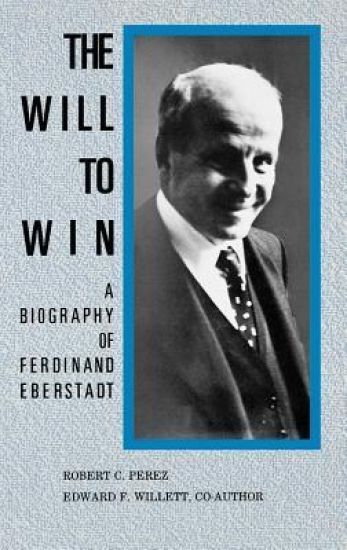
Ferdinand Eberstadt, the man whose war production strategy was credited with shortening World War II by one full year, was America's financier extraordinaire. His contributions over a period of nearly fifty years helped to shape the world of business and finance as we know it today. In this lively analytical biography, Perez and Willett chronicle Eberstadt's career in the public and private sectors and explore the motives, methods, and personal style that were responsible for his successes as well as his failures. This balanced, clearly written account is packed with information and insight on both Eberstadt's career and the radical changes we have witnessed since the 1920s. Perez once worked for Eberstadt and knew at first-hand what a tyrant he was. Nevertheless, he conceived this biography as an exercise in hero worship. Despite this, it has turned out to be an objective study, and an invaluable mine of reference material. All Wall Streeters motivated to survive the next crunch will do well to arm themselves with this digest of the Eberstadt saga. Its scenario casts Eberstadt in twin roles: as the shrewdest proprietor of a Wall Street profit center during the market's ups and downs between the 1920s and 1960s; and as the most effective troubleshooter brought to Washington during the war years. Again and again, his genius for diagnosing the cause of a crisis enabled him to turn it into an opportunity--for himself, then for the country. Eliot Janeway, in Barrons, June 4, 1990 Ferdinand Eberstadt, the man whose war production strategy was credited with shortening World War II by one full year, was America's financier extraordinaire. His contributions over a period of nearly fifty years helped to shape the world of business and finance as we know it today. In this lively analytical biography, Perez and Willett chronicle Eberstadt's career in the public and private sectors and explore the motives, methods, and personal style that were responsible for his successes as well as his failures. The foremost American expert on German finance during the 1920s, Eberstadt achieved recognition as a financial negotiator at the Paris Reparations Conference in 1929. As an investment banker, he was instrumental in helping to restore confidence in the business community following the stock market crash, through his support of small, depressed blue chip firms. The performance of Eberstadt's trendsetting Chemical Fund, founded in 1938, led to the popularization of mutual fund investing in the 1950s and 1960s. Through a series of private capital deals involving chemical and pharmaceutical companies, Eberstadt and his partner strengthened those industries and in the process developed the leveraged buyout technique--a bold innovation that has achieved major importance in modern corporate financial strategy. This balanced, clearly written account is packed with information and insight on both Eberstadt's career and the radical changes we have witnessed since the 1920s. It will be of interest to a broad readership in business, finance, investment, government, and twentieth-century American history.
Discusses American popular culture of the 1940s, addressing such topics as politics, the middle class, the development of youth culture, advertising, architecture, fashion, food, leisure pursuits, literature, travel, and the arts.
As the narrowest stretch of land in the Central American isthmus, Panama's geographical location has for millenia made it the crossroads for traders, travelers, European pirates, and world superpowers. Panamanian history is replete with explicit or tacit domination by others. In the post-Columbus period, Panama was first a Spanich colony, then a province of Colombia, and then finally a quasi-territory of the United States during the 20th century. Suffering invasion by the United States in 1989 to oust dictator Manuel Noriega and then receiving full ownership of the Panama Canal at the end of 1999, Panama has rebuilt itself into a strong, if contentious democracy. This work chronicles and highlights the key events and figures in the country's past 500 years of history, from Columbus to current day. It begins with Panama's colonial period, demonstrating how even in its early day, the isthmus was seen by the Spanish as merely a transshipment point. It then examines the post-Spanish period when the Colombian province of Panama became a forgotten backwater until European powers began vying for canal rights, leading to an ill-fated French effort. The main portion of the book details the events, figures, and intricacies of the Panama-U.S. relationship, which dominated Panama's history for the entire 20th century. It closes with an examination of the gains and challenges the country has faced in the post-U.S. invasion years.
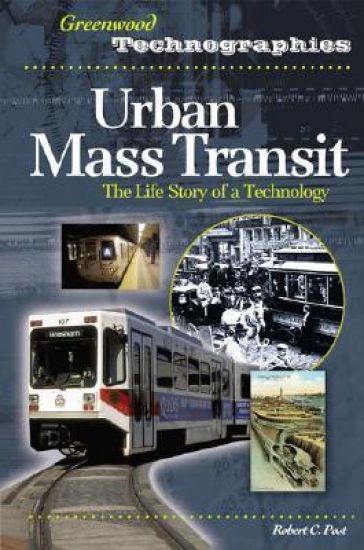
This volume in the Greenwood Technographies series covers urban mass transit - that is, the technologies that allow cities to move large numbers of people around. Just a few hundred years ago, the size of cities was limited by the time it took people to move from one part of the city to another. The development of successive technologies has forever altered the urban landscape. From horse-drawn omnibuses to subways to current light-rail, this volume highlights the technological and social struggles that have accompanied urbanization and the need for an efficient and cost-effective means of transportation in cities.The volume includes a timeline, a glossary, and a bibliography of resources useful for further research.
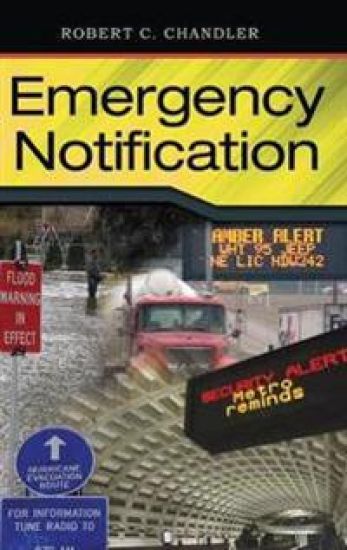
This text provides critical information to help organizations improve their emergency communications, including the tools, automation technology, and processes of crisis notification. To grasp the importance of emergency notification, imagine this scenario: A shooter is on the loose at a college campus. Chaos reigns. To contain the situation, campus personnel need to communicate immediately and efficiently, not only with the students, faculty, and staff, but also the local police, federal law enforcement, and media. Effective emergency notification makes things "right," it allows the right message to reach the right people at the right time—facilitating the right response. Emergency Notification explains how. This book offers must-know information for business security, senior management, human resources staff, government policymakers, and emergency planners, examining what, when, how, why, and with whom to communicate during crises. This text also covers risk communication, message mapping, information loading, audience comprehension, and practical issues like testing emergency notification systems.
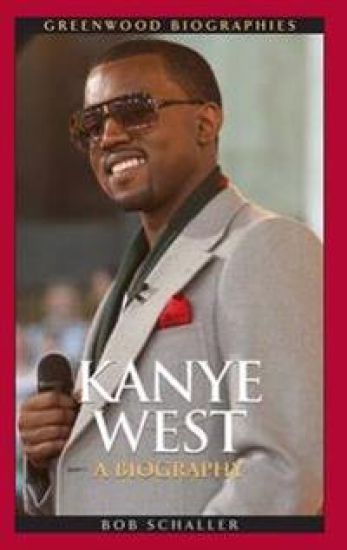
A revealing biography of Kanye West explores the artist—and the man. Kanye West is a star. His music has jumped from sensation to staple in the rap industry, while his personality, his philosophies, and his willingness to speak out for what he believes in regularly place him at the center of controversy. Kanye West: A Biography traces the star's life from his birth through the present day to paint a detailed picture of the artist and the man. Raised by a single mother who was an English professor in Chicago, West admits he came from "the wrong side of the mall" rather than the wrong side of the tracks. His name, his style, and the way he conducts his business are unique. His thoughtful reflections in interviews reveal a complex man few have taken the time to understand. This biography looks at that multifaceted star, exploring his career as singer and producer, but also looking at the forces that prepared him to chase his dreams—and chase off anyone who stood in his way.
Using a proven, practical, algorithmic approach, Surgical Decision Making summarizes evidence-based guidelines and practice protocols in an easy-to-follow format. Designed to sharpen the decision-making skills of both trainees and practicing surgeons, the 6th Edition directs your focus to the critical decision points in a wide range of clinical scenarios, helping you determine optimal evaluation and management to secure the best possible patient outcomes. Algorithms are accompanied by annotations that explain all critical factors affecting decisions in a concise, readable manner. Reflects the scope of practice of today's general surgeon, with fresh, expert perspectives from new editor Dr. Richard Schulick and numerous new contributors. Contains 58 new chapters and thoroughly revised content throughout. Includes new coverage of Preoperative Evaluation of the Geriatric Patient, Pancreatic Cystic Neoplasm, Familial Breast Cancer, Resuscitative Endovascular Balloon Occlusion of the Aorta, Blunt Cerebrovascular Injury, and much more. Uses an easy-to-follow, consistent format, with an algorithm on one page and short descriptions explaining the various steps in the decision-making process on the opposite page. Includes explanatory notes that summarize presenting signs and symptoms, laboratory investigation, diagnostic modalities, surgical therapies, and adjuvant therapies for each condition. Encompasses both general surgery and surgical subspecialties?helping you directly manage a broad range of problems. Emphasizes information that frequently appears on board exams. Enhanced eBook version included with purchase. Your enhanced eBook allows you to access all of the text, figures, and references from the book on a variety of devices.
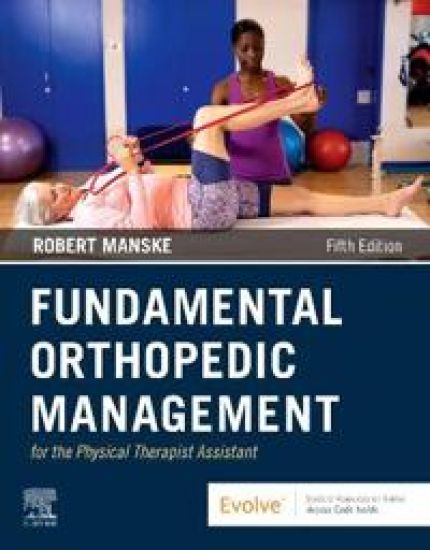
Master the PTA's role in orthopedic care - from the examination to treatment planning and interventions! Fundamental Orthopedic Management for the Physical Therapist Assistant, 5th Edition helps you understand and apply the principles of orthopedic science to clinical practice. First you will learn the basics of assessing flexibility, strength, endurance, and balance, and then you'll become a more valuable PTA by learning the essentials of tissue healing, gait and movement, kinesiology, and the management of orthopedic patients by region and condition. This edition reflects the latest, evidence-based practice and adds updates to the Evolve website. Written by clinician and educator Robert Manske, along with a team of expert contributors, this book describes how to work effectively with a supervising physical therapist! Comprehensive coverage addresses not only core concepts related to orthopedic care, but also includes biomechanics, pharmacology, imaging, in-depth reviews of the types of tissue healing, and the PTA's role in physical assessment and interventions. More than 600 illustrations and 75 summary tables reinforce orthopedic concepts and procedures. A focus on critical thinking and application prepares you for the treatment room and for the clinical practicum portions of your PTA program. Important Concepts highlight useful tips to remember in patient practice. Key terms and learning objectives begin each chapter, serving as checkpoints for understanding and helping you study effectively for examinations. Review questions at the end of each chapter prepare you for the kind of critical thinking you will be required to do in practice. Glossaries in each chapter make it easy to find definitions of key terminology. Useful appendices provide a quick reference to information such as commonly used medications, fracture eponyms, and reference ranges for lab tests. NEW! Updated content and references are added throughout the book to reflect changes in practice patterns. NEW! Expanded full-color illustrations?add clarity to anatomy and procedural drawings and make it easier to learn important concepts NEW! Updated chapter summaries highlight essential, need-to-know information. NEW! Updated educator and student resources on the Evolve website provide tools to make teaching and learning easier.