Kirjojen hintavertailu. Mukana 12 418 234 kirjaa ja 12 kauppaa.

Kirjahaku

Etsi kirjoja tekijän nimen, kirjan nimen tai ISBN:n perusteella.

1000 tulosta hakusanalla Robert M. Fowler

Foundations of Developmental Education

Foundations of Developmental Education

Robert M. Hashway

Praeger Publishers Inc
1988
sidottu
Foundations of Developmental Education provides a conclusive alternative to the traditional oversimplification of the pervasive education problem in the United States. Hashway chronicles the decline of education in the U.S. over the past fifty years and studies the factors that have supposedly affected the quality of education. Analyzing the educational system, Hashway provides sound recommendations and alternatives for the delivery of instructional services.The book begins with a thorough analysis of the developmental learning system followed by a case study. An overview of psychocybernetic models of thinking is then presented. Finally, the author examines educational applications of the developmental learning system.
Handbook of Developmental Education

Handbook of Developmental Education

Robert M. Hashway

Praeger Publishers Inc
1990
sidottu
This comprehensive handbook has brought together the leading practitioners and researchers in the field of developmental education to focus on the developmental learning agenda. This work advocates a process approach to education where learners were characterized in terms of specific behavioral areas. Learning style differences are recognized, along with the premise that learning occurs at different rates. Alternative learning settings like industrial education centers and alternative learning centers provide a focus, for which lifelong learning is viewed as a matter of survival for American employees and employers.Handbook of Developmental Education begins with a description of the developmental process as a holistic approach to the development of the whole person. The emotional state of the individual is of critical importance. Curriculum theory is addressed, followed by information on learning centers and human factors research. Educators and educational researchers will find a wealth of material in this volume.
Assessment and Evaluation of Developmental Learning

Assessment and Evaluation of Developmental Learning

Robert M. Hashway

Praeger Publishers Inc
1998
sidottu
As the technological demands of a rapidly changing society impact the training needs of the industrial sector, mechanisms for identifying learner strengths as well as weaknesses are needed to optimize the training process. In addition, there is a need for processes for evaluating the effectiveness of programs focused on the developmental needs of learners. Traditional measures, such as norm-referenced paradigms, do not meet the criteria established for developmental assessment. This book will provide the technical details needed to construct instruments as well as evaluate programs using a recently developed technique called item response theory, which meets the criteria for developmental assessment.
The Electoral College and the Constitution

The Electoral College and the Constitution

Robert M. Hardaway

Praeger Publishers Inc
1994
sidottu
This study examines how the Electoral College actually works, how it is supposed to work, and how it might be reformed. Robert Hardaway first looks at the Constitutional Convention, the Twelfth Amendment, and historical elections where the Electoral College has come into play, providing the historical background to the present-day College. Next he examines the electors themselves--how they are chosen in the states and the laws relating to the obligations of electors in casting their votes. The election of the president and vice president by the House of Representatives is also examined. Finally, Hardaway discusses and analyzes the proposed reforms to the Electoral College, including those before the Congress at present. Professor Hardaway's book makes a strong case for the preservation of the federalist principles incorporated into the constitutional framers' plan for election of the president of the United States. The book richly documents its case with examples from past elections, while at the same time providing the reader with all information needed to make an independent judgment.
Population, Law and the Environment

Population, Law and the Environment

Robert M. Hardaway

Praeger Publishers Inc
1994
sidottu
A point-counterpoint challenge of the views expressed by Vice President Al Gore in Earth in the Balance, this important study questions current assumptions about the cost and effectiveness of environmental laws and policies, revealing the crucial link between programs of population control and long-term environmental goals. Governmental policy on the environment, as well as private environmental action, has typically been curative and reactive in nature--directed towards cleaning up past disasters and limiting the types and amounts of pollutants emitted. But what is the cost-effectiveness of such policies at a time when the population of the world continues to expand at an exponential rate? And what should be the role of population control in environmental policy? Robert Hardaway explores these issues and questions, refocusing attention on the importance of population growth to environmental quality. Synthesizing contemporary population theories in the context of environmental policy, Hardaway relates population, law, and the environment to abortion, immigration, education, and economic regulation.
America Goes to School

America Goes to School

Robert M. Hardaway

Praeger Publishers Inc
1995
sidottu
This book documents the shocking state of public education in the United States, including the high rates of school violence, the decline in student achievement, and the politicization of the educational process. By comparing the performance of public schools with private schools (which spend less than half per capita than public counterparts), the book reveals areas in which public education might reduce administrative overhead, eliminate internal segregation of students, and provide a safe and disciplined learning environment. Also suggested are ways in which public schools might learn from the experience and traditions of the past, including the essential elements of learning in the one-room schoolhouse and the integration of students of different ages. The role of the judiciary is critically reviewed, as well as Supreme Court decisions in the areas of racial discrimination, school discipline, bilingual education, special education, and school financing.
No Price Too High

No Price Too High

Robert M. Hardaway

Praeger Publishers Inc
2003
sidottu
Hardaway argues the criminalization of victimless crimes violates the Ninth Amendment to the U.S. Constitution and creates enormous public policy problems in the society. He contends that the Ninth Amendment adjudication model and the concepts of self-determination and the harm principle are the standards to which privacy issues should be litigated.Hardaway contends that privacy issues should be litigated under the standards of the Ninth Amendment to the U.S. Constitution adjudication model, concepts of self-determination, and the harm principle. The Ninth Amendment follows the true beliefs of the founding fathers and their adherence to Natural Law, autonomy, liberty, and the right to privacy. This model needs to replace the substantive due process analysis in the realm of personal autonomy issues used by the courts.The recognition of self-determination and the harm principle will provide individuals with the constitutional protection of rights the founding fathers thought to be imperative to an ordered liberty. By seeking to explain American policy on victimless crimes of which drug use is one, Hardaway seeks to stir a vigorous constitutional debate. As he shows, prostitution and gambling raise similar issues, and he questions whether criminalization serves the interests of society. In examining drug use, prostitution, and gambling, Hardaway compares the policy rationales for each of these societal problems with a view towards creating a general theory of decriminalization. An important analysis for scholars, students, researchers, and public policy makers involved with constitutional law and contemporary criminal law concerns.
Ratting

Ratting

Robert M. Bloom

Praeger Publishers Inc
2002
sidottu
Showing informants in a variety of contexts provides a broader picture of them, and highlights the potential pitfalls associated with their use within our criminal justice system. Police depend on insiders to prosecute the perpetrators of many of the so-called victimless crimes like drug dealing, money laundering and political corruption. As victimless crimes have grown, so has the use of informants. Providing insights into law enforcement techniques as well as the Court's response to them, Bloom illuminates the pernicious legal ramifications that can result from the justice system's relationship to and use of informers. Law professors, criminologists, and law enforcement scholars will find Bloom's account of this much used and abused but under-reported aspect of America's law enforcement efforts both edifying and sobering.There are different kinds of informants. Some are used to infiltrate and destroy organized crime operations, and others, such as Linda Tripp, are used to investigate government officials. Informants are motivated by a variety of reasons, including financial gain, political power, elimination of competition, and avoiding criminal punishment. Some are even imaginary, fabricated by police to justify their activity. Bloom discusses each type of informer, grounding his commentary in real cases, some well known, others obscure. He then concludes by suggesting how potential and real abuses of the informant system can be curbed.
Power, the Presidency, and the Preamble

Power, the Presidency, and the Preamble

Robert M. Saunders

Praeger Publishers Inc
2001
sidottu
How can Americans develop a coherent overview of the presidency? The Preamble of the Constitution provides a historical foundation to assess the major patterns, events, and policies of seven important presidents: George Washington, Thomas Jefferson, Andrew Jackson, Abraham Lincoln, Woodrow Wilson, Franklin D. Roosevelt, and Harry S. Truman. From the 1790s to the 1950s, presidents have faced challenges to the meaning and existence of the Union, the definition and implementation of justice, the necessity of domestic tranquility, the formulation of defense policy to enhance national security, the advancement of general welfare, and the protection and promotion of liberty within the context of their times. This conceptual framework allows readers to study long-term continuity and change in the presidency and in America.In an age of specialization, when most historical studies of individual presidents are hundreds, even thousands of pages long, Saunders gives readers a brief, interpretive overview of select presidents. The elegant, flexible, and understandable framework of the Preamble provides the historical foundation for the assessment of the presidency and the individuals occupying this important office. Readers will be able to use this assessable framework to study other presidents, bringing the discussion of the presidency as an evolving institution up to the present day.
Power, the Presidency, and the Preamble

Power, the Presidency, and the Preamble

Robert M. Saunders

Praeger Publishers Inc
2001
nidottu
How can Americans develop a coherent overview of the presidency? The Preamble of the Constitution provides a historical foundation to assess the major patterns, events, and policies of seven important presidents: George Washington, Thomas Jefferson, Andrew Jackson, Abraham Lincoln, Woodrow Wilson, Franklin D. Roosevelt, and Harry S. Truman. From the 1790s to the 1950s, presidents have faced challenges to the meaning and existence of the Union, the definition and implementation of justice, the necessity of domestic tranquility, the formulation of defense policy to enhance national security, the advancement of general welfare, and the protection and promotion of liberty within the context of their times. This conceptual framework allows readers to study long-term continuity and change in the presidency and in America.In an age of specialization, when most historical studies of individual presidents are hundreds, even thousands of pages long, Saunders gives readers a brief, interpretive overview of select presidents. The elegant, flexible, and understandable framework of the Preamble provides the historical foundation for the assessment of the presidency and the individuals occupying this important office. Readers will be able to use this assessable framework to study other presidents, bringing the discussion of the presidency as an evolving institution up to the present day.
Rolling the Dice with State Initiatives

Rolling the Dice with State Initiatives

Robert M. Alexander

Praeger Publishers Inc
2001
sidottu
Alexander examines interest group involvement in direct democracy. The tools of direct democracy--initiative, referendum, and recall--were initially created to delimit the power of economic interest groups and curb the power of political machines. Today, however, many believe that direct democracy has become a tool dominated by economic interests and that ballot contests have emboldened moneyed interests, rather than stemming their power. This unanticipated consequence of direct democracy has been coined the Populist Paradox.Through two case studies, Alexander examines how debilitating the Populist Paradox truly is. The issue of gambling was selected due to the large number of affected interests and the degree of conflict enveloping the issue. Current research suggests that economic interest groups are best able to mobilize monetary resoures, while citizen groups are best able to mobilize personnel resources. The question then turns to whether the differential ability to mobilize resources translates to success or failure for groups with different bases of support. Populist and Progressive reformers obviously did not foresee the advent of campaign consultants, focus groups, direct mail, and paid petitioners. These changes in political campaigning have made the ability to mobilize personnel resources much less important. Alexander provides a valuable extension to current knowledge of group involvement in ballot campaigns that will be of particular interest to scholars, students, and other researchers involved with state and local public policy.
Peacekeeping in the Abyss

Peacekeeping in the Abyss

Robert M. Cassidy

Praeger Publishers Inc
2004
sidottu
Military organizations are cultures, and such cultures have ingrained preferences and predilections for how and when to employ force. This is the first study to use a comparative framework to understand what happened with the U.S. military endeavor in Somalia and the British effort in Bosnia up to 1995. Both regions were potential quagmires, and no doctrine for armed humanitarian operations during ongoing conflicts existed at the outset of these efforts. After detailing the impact of military culture on operations, Cassidy draws conclusions about which military cultural traits and force structures are more suitable and adaptable for peace operations and asymmetric conflicts. He also offers some military cultural implications for the U.S. Army's ongoing transformation.The first part of the study offers an in-depth assessment of the military cultural preferences and characteristics of the British and American militaries. It shows that Britain's geography, its regimental system, and a long history of imperial policing have helped embed a small-war predilection in British military culture. This distinguishes it from American military culture, which has exhibited a preference for the big-war paradigm since the second half of the 19th century. The second part of the book examines how cultural preferences influenced the conduct of operations and the development of the first post-Cold War doctrine for peace operations.
Counterinsurgency and the Global War on Terror

Counterinsurgency and the Global War on Terror

Robert M. Cassidy

Praeger Publishers Inc
2006
sidottu
Since September 2001, the United States has waged what the government initially called the global war on terrorism (GWOT). Beginning in late 2005 and early 2006, the term Long War began to appear in U.S. security documents such as the National Security Council's National Strategy for Victory in Iraq and in statements by the U.S. Secretary of Defense and the Chairman of the JCS. The description Long War—unlimited in time and space and continuing for decades—is closer to reality and more useful than GWOT.Colonel Robert Cassidy argues that this protracted struggle is more correctly viewed as a global insurgency and counterinsurgency. Al Qaeda and its affiliates, he maintains, comprise a novel and evolving form of networked insurgents who operate globally, harnessing the advantages of globalization and the information age. They employ terrorism as a tactic, subsuming terror within their overarching aim of undermining the Western-dominated system of states. Placing the war against al Qaeda and its allied groups and organizations in the context of a global insurgency has vital implications for doctrine, interagency coordination, and military cultural change-all reviewed in this important work.Cassidy combines the foremost maxims of the most prominent Western philosopher of war and the most renowned Eastern philosopher of war to arrive at a threefold theme: know the enemy, know yourself, and know what kind of war you are embarking upon. To help readers arrive at that understanding, he first offers a distilled analysis of al Qaeda and its associated networks, with a particular focus on ideology and culture. In subsequent chapters, he elucidates the challenges big powers face when they prosecute counterinsurgencies, using historical examples from Russian, American, British, and French counterinsurgent wars before 2001. The book concludes with recommendations for the integration and command and control of indigenous forces and other agencies.
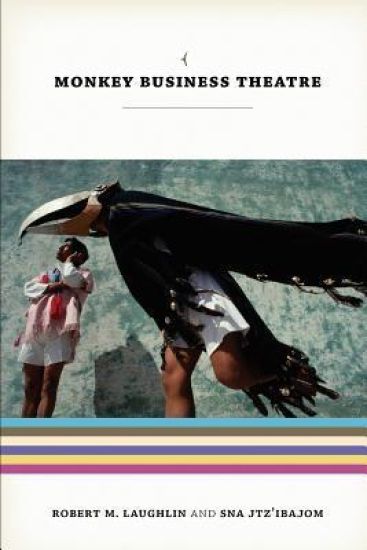
Monkey Business Theatre

Monkey Business Theatre

Robert M. Laughlin

University of Texas Press
2008
pokkari
In 1983, a group of citizens in San CristÓbal de las Casas, Chiapas, formed Sna Jtz'ibajom, the Tzotzil-Tzeltal Maya writers' cooperative. In the two decades since, this group has evolved from writing and publishing bilingual booklets to writing and performing plays that have earned them national and international renown.Anthropologist Robert M. Laughlin has been a part of the group since its beginnings, and he offers a unique perspective on its development as a Mayan cultural force. The Monkey Business Theatre, or Teatro Lo'il Maxil, as this branch of Sna Jtz'ibajom calls itself, has presented plays in virtually every corner of the state of Chiapas, as well as in Mexico City, Guatemala, Honduras, Canada, and in many museums and universities in the United States. It has presented to the world, for the first time in drama, a view of the culture of the Mayas of Chiapas.In this work, Laughlin presents a translation of twelve of the plays created by Sna Jtz'ibajom, along with an introduction for each. Half of the plays are based on myths and half on the social, political, and economic problems that have confronted-and continue to confront-the Mayas of Chiapas.
Seeking Refuge

Seeking Refuge

Robert M Wilson; William Cronon

University of Washington Press
2010
sidottu
Each fall and spring, millions of birds travel the Pacific Flyway, the westernmost of the four major North American bird migration routes. The landscapes they cross vary from wetlands to farmland to concrete, inhabited not only by wildlife but also by farmers, suburban families, and major cities. In the twentieth century, farmers used the wetlands to irrigate their crops, transforming the landscape and putting migratory birds at risk. The U.S. Fish and Wildlife Service responded by establishing a series of refuges that stretched from northern Washington to southern California.What emerged from these efforts was a hybrid environment, where the distinctions between irrigated farms and wildlife refuges blurred. Management of the refuges was fraught with conflicting priorities and practices. Farmers and refuge managers harassed birds with shotguns and flares to keep them off private lands, and government pilots took to the air, dropping hand grenades among flocks of geese and herding the startled birds into nearby refuges. Such actions masked the growing connections between refuges and the land around them.Seeking Refuge examines the development and management of refuges in the wintering range of migratory birds along the Pacific Flyway. Although this is a history of efforts to conserve migratory birds, the story Robert Wilson tells has considerable salience today. Many of the key places migratory birds use — the Klamath Basin, California’s Central Valley, the Salton Sea — are sites of recent contentious debates over water use. Migratory birds connect and depend on these landscapes, and farmers face pressure as water is reallocated from irrigation to other purposes. In a time when global warming promises to compound the stresses on water and migratory species, Seeking Refuge demonstrates the need to foster landscapes where both wildlife and people can thrive.
Seeking Refuge

Seeking Refuge

Robert M Wilson; William Cronon

University of Washington Press
2012
pokkari
Each fall and spring, millions of birds travel the Pacific Flyway, the westernmost of the four major North American bird migration routes. The landscapes they cross vary from wetlands to farmland to concrete, inhabited not only by wildlife but also by farmers, suburban families, and major cities. In the twentieth century, farmers used the wetlands to irrigate their crops, transforming the landscape and putting migratory birds at risk. The U.S. Fish and Wildlife Service responded by establishing a series of refuges that stretched from northern Washington to southern California.What emerged from these efforts was a hybrid environment, where the distinctions between irrigated farms and wildlife refuges blurred. Management of the refuges was fraught with conflicting priorities and practices. Farmers and refuge managers harassed birds with shotguns and flares to keep them off private lands, and government pilots took to the air, dropping hand grenades among flocks of geese and herding the startled birds into nearby refuges. Such actions masked the growing connections between refuges and the land around them.Seeking Refuge examines the development and management of refuges in the wintering range of migratory birds along the Pacific Flyway. Although this is a history of efforts to conserve migratory birds, the story Robert Wilson tells has considerable salience today. Many of the key places migratory birds use — the Klamath Basin, California's Central Valley, the Salton Sea — are sites of recent contentious debates over water use. Migratory birds connect and depend on these landscapes, and farmers face pressure as water is reallocated from irrigation to other purposes. In a time when global warming promises to compound the stresses on water and migratory species, Seeking Refuge demonstrates the need to foster landscapes where both wildlife and people can thrive.
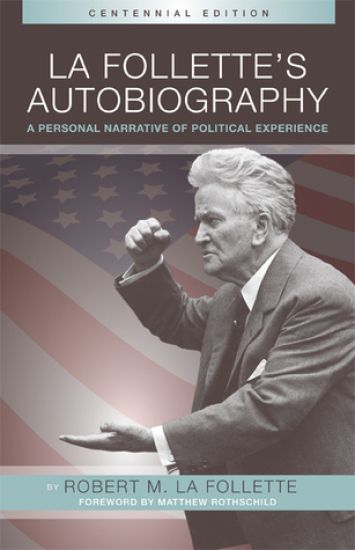
La Follette’s Autobiography

La Follette’s Autobiography

Robert M. La Follette

University of Wisconsin Press
2013
nidottu
Written in lucid, vigorous prose, La Follette's Autobiography is the famous Wisconsin senator's own account of his political life and philosophy. Both memoir and a history of the Progressive cause in the United States, it charts La Follette's formative years in politics, his attempts to abolish entrenched, ruthless state and corporate influences, and his embattled efforts to advance Progressive policies as Wisconsin governor and U.S. senator. With a new foreword by Matthew Rothschild, editor of The Progressive—the magazine that La Follette himself founded—the Autobiography remains a powerful reminder of the legacies of Progressivism and reform and the enduring voice of the man who fought for them.
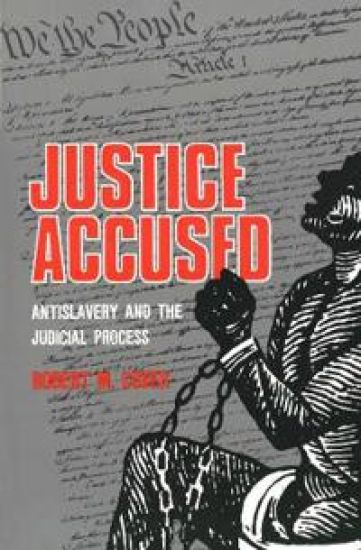
Justice Accused

Justice Accused

Robert M. Cover

Yale University Press
1984
pokkari
What should a judge do when he must hand down a ruling based on a law that he considers unjust or oppressive? This question is examined through a series of problems concerning unjust law that arose with respect to slavery in nineteenth-century America.“Cover’s book is splendid in many ways. His legal history and legal philosophy are both first class. . . . This is, for a change, an interdisciplinary work that is a credit to both disciplines.”—Ronald Dworkin, Times Literary Supplement“Scholars should be grateful to Cover for his often brilliant illumination of tensions created in judges by changing eighteenth- and nineteenth-century jurisprudential attitudes and legal standards. . . An exciting adventure in interdisciplinary history.”—Harold M. Hyman, American Historical Review“A most articulate, sophisticated, and learned defense of legal formalism. . . Deserves and needs to be widely read.”—Don Roper, Journal of American History“An excellent illustration of the way in which a burning moral issue relates to the American judicial process. The book thus has both historical value and a very immediate importance.”—Edwards A. Stettner, Annals of the American Academy of Political and Social Science “A really fine book, an important contribution to law and to history.”—Louis H. Pollak
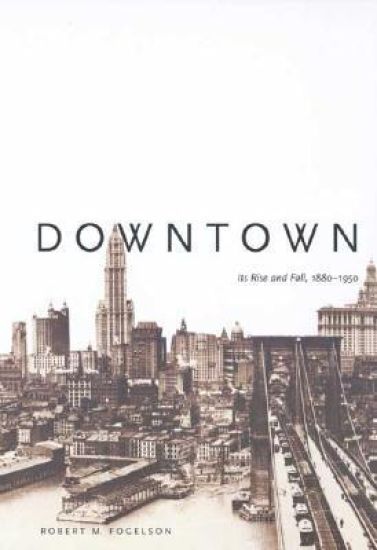
Downtown

Downtown

Robert M. Fogelson

Yale University Press
2003
pokkari
Written by one of this country’s foremost urban historians, Downtown is the first history of what was once viewed as the heart of the American city. It tells the fascinating story of how downtown—and the way Americans thought about downtown—changed over time. By showing how businessmen and property owners worked to promote the well-being of downtown, even at the expense of other parts of the city, it also gives a riveting account of spatial politics in urban America.Drawing on a wide array of contemporary sources, Robert M. Fogelson brings downtown to life, first as the business district, then as the central business district, and finally as just another business district. His book vividly recreates the long-forgotten battles over subways and skyscrapers in the late nineteenth and early twentieth centuries. And it provides a fresh, often startling perspective on elevated highways, parking bans, urban redevelopment, and other controversial issues. This groundbreaking book will be a revelation to scholars, city planners, policymakers, and general readers interested in American cities and American history.
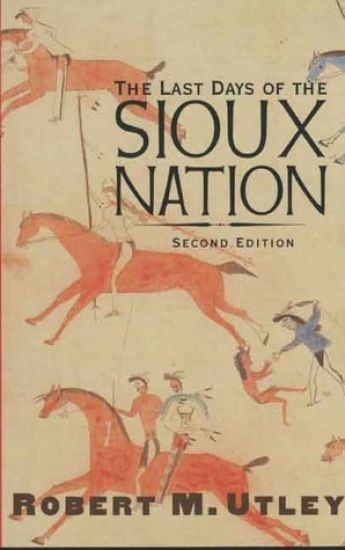
The Last Days of the Sioux Nation

The Last Days of the Sioux Nation

Robert M. Utley

Yale University Press
2004
pokkari
“One of the finest books on the Indian wars of the West.”--Montana (on the original edition) This fascinating account tells what the Sioux were like when they first came to their reservation and how their reaction to the new system eventually led to the last confrontation between the Army and the Sioux at the Battle of Wounded Knee Creek. The Second Edition of this classic work features a new preface by the author that discusses his current thoughts about this tragic episode in American history. Praise for the earlier edition: "History as lively and gripping as good fiction.”—Christian Science Monitor “A well-told, easily read account that will be the standard reference for this phase of the Indian ‘problem.’”--American Historical Review “A major job . . . magnificently researched.”--San Francisco Chronicle “By far the best treatment of the complex and controversial relationship between the Sioux and their conquerors yet presented and should be must reading for serious students of Western Americana.”--St. Louis Dispatch (on the earlier edition) Winner of the Buffalo Award