Kirjahaku
Etsi kirjoja tekijän nimen, kirjan nimen tai ISBN:n perusteella.
1000 tulosta hakusanalla Rodney Scharboneau
Diary Of Captain Thomas Rodney, 1776-1777 (1888)
Thomas Rodney; Caesar A. Rodney
KESSINGER PUBLISHING, LLC
2009
nidottu
Letters to and from Caesar Rodney, 1756-1784
Caesar Rodney; George Herbert Ryden
Literary Licensing, LLC
2011
sidottu
""Letters To And From Caesar Rodney, 1756-1784"" is a collection of personal correspondence between Caesar Rodney, a prominent American lawyer and politician during the colonial and revolutionary periods, and his family, friends, and political colleagues. The book offers a unique glimpse into the life and times of Rodney, who played a key role in the founding of the United States and the early years of its government.The letters cover a wide range of topics, from family matters and personal relationships to political events and issues of national importance. They provide insight into Rodney's personal and political beliefs, as well as his relationships with other notable figures of the time, such as Benjamin Franklin, John Adams, and George Washington.The book is edited by Rodney's descendant, H. Clay Reed, who provides historical context and commentary on the letters, as well as biographical information on Rodney and his family. The collection is a valuable resource for historians, scholars, and anyone interested in the history of the United States and the lives of its founding fathers.This scarce antiquarian book is a facsimile reprint of the old original and may contain some imperfections such as library marks and notations. Because we believe this work is culturally important, we have made it available as part of our commitment for protecting, preserving, and promoting the world's literature in affordable, high quality, modern editions, that are true to their original work.
Letters to and from Caesar Rodney, 1756-1784
Caesar Rodney; George Herbert Ryden
Literary Licensing, LLC
2011
nidottu
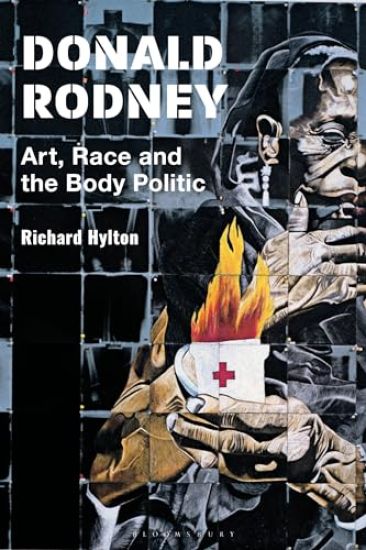
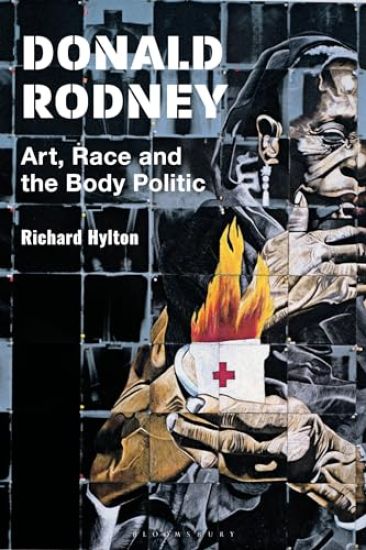
Donald Rodney (1961-1998) was one of the most gifted, perceptive, and innovative contemporary British artists of his time. A protagonist from the first generation of Black British-born art students in the early 1980s, Rodney and his peers brought a new dynamic to British art – a hitherto unseen interplay between aesthetics, politics, humour and Black consciousness. Donald Rodney: Art, Race and the Body Politic is the first book-length study of a protean practice which spanned the early 1980s to the late 1990s and included a prodigious output of work across painting, photography, collage, assemblage, sculpture, installation, and new technologies.Across eight meticulously researched chapters, the book examines the social and cultural events which inspired Rodney's artwork and the responses it elicited. From his formative years in the West Midlands as a leading exponent of ‘Black Art’, to a subsequent decade of unbridled visual innovation and social critique, the book ventures new detailed analyses of key works, exhibitions, artistic influences and collaborations. Deploying recurring metaphors of the ‘diseased’, traumatised and ‘raced’ body, Rodney addressed racial and social inequality, legacies of slavery, police brutality, sport, and Black male identity in novel and powerful ways. Attending to the artist’s material dexterity and visual acuity, the book considers how and why Rodney’s innovative practice uniquely challenged delineations between the political and non-political, personal and public, representation and visibility. Over a generation has passed since Rodney’s premature death from the effects of the hereditary blood disorder sickle cell anaemia at aged thirty-six. Despite this, Rodney's work continues to speak to our contemporary moment in a multiplicity of ways. As such, the book provides a much-needed critical perspective and insight to the work and legacy of a nonpareil British artist.

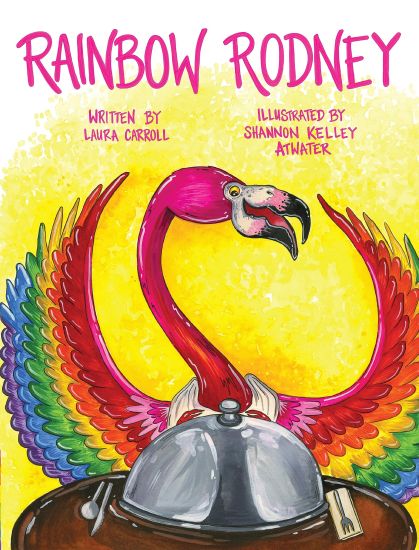
Way down at the Audubon Zoo in New Orleans, a very special flamingo stood out among his krewe. For he was not just pink but red, yellow, purple, green, and even orange. Could it be from all the delicious foods that New Orleans has to offer? Young readers will eat their way through the city with Rainbow Rodney in this celebration of classic Crescent City dishes.
Willis Rodney Whitney: Pioneer of Industrial Research
John T. Broderick; Karl T. Compton
Literary Licensing, LLC
2013
nidottu
Some Rodney Dangerfield Jokes and Other Jokes
Carrie Soulliere
Createspace Independent Publishing Platform
2015
nidottu
Sidesplitting jokes in the style of the late, great comedian Rodney Dangerfield. Book is dedicated to him and to the recently passed-on legendar superstar Leonard Nimoy. BTW if you enjoyed this book why not check out Carrie Soulliere's new joke book "Celebrity Jokes and Other Jokes". It is also available at amazon and it is as hilarious as this book was.
The life of the great Guyanese scholar and revolutionary Walter Rodney burned with a rare intensity. The son of working class parents, Rodney showed great academic promise and was awarded scholarships to the University of the West Indies in Jamaica and the School of African and Oriental Studies in London. He received his PhD from the latter at the age of twenty-four, and his thesis was published as A History of the Upper Guinea Coast, now a classic of African history. His most famous work, How Europe Underdeveloped Africa, is a mainstay of radical literature and anticipated the influential world systems theory of Immanuel Wallerstein. Not content merely to study the world, Rodney turned to revolutionary politics in Jamaica, Tanzania, and in Guyana. In his homeland, he helped form the Working People's Alliance (WPA) and was a consistent voice for the oppressed and exploited. As Rodney became more popular, the threat of his revolutionary message stirred fears among the powerful in Guyana and throughout the Caribbean, and he was assassinated in 1980. This book presents a moving and insightful portrait of Rodney through by the words of academics, writers, artists, and political activists who knew him intimately or felt his influence. These informal recollections and reflections demonstrate why Rodney is such a widely admired figure throughout the world, especially in poor countries and among oppressed peoples everywhere.
The Rodney Affair and Its Aftermath: A 50th Anniversary Commemoration of the Protests in Jamaica on October 16, 1968
Ralph E. Gonsalves
Independently Published
2018
nidottu
Fifty years ago, on October 16, 1968, the students at the University of the West Indies at the Mona Campus, Jamaica, led a massive protest in Kingston, Jamaica, against the Jamaica Labour Party government's decision to debar Dr. Walter Rodney, a Guyanese Lecturer at UWI, from re-entering Jamaica. This protest became known as the "Rodney Affair." This book commemorates that protest movement.
Hudson, a Golden Retriever, and Rodney, a Berger Picard, long for adventure. The thought of staring out their living room window, watching squirrels collect nuts day after day, has lost its appeal. Could a passport be the cure for their boredom? A spur-of-the-moment visit to the Statue of Liberty convinces them that it's time to expand their horizons. Join them in their exciting quest to experience foreign cultures and exotic locales.From award-winning author Christina Potter comes an engaging new travel series. Hudson and Rodney's escapades are sure to thrill readers and leave them eagerly anticipating their next adventure.
Official Rodney Matthews Colouring Book
Rock N' Roll Colouring
2022
pokkari
An illustrated examination of Donald Rodney's seminal digital media work Autoicon (1997-2000). Donald Rodney's Autoicon, a work originally produced as both a website and CD-ROM, was conceived by the artist in the mid-1990s but not completed until two years after his death in 1998. Referencing Jeremy Bentham's infamous nineteenth-century Auto-Icon, the work proposes an extension of the personhood and presence of Rodney, while critically challenging dominant conceptions of the self, the body, and historicity. Grounded in a partial collection of medical documents that constitute biomedicine's attempts to comprehensively know and maintain Rodney's body during his lifelong experience of sickle-cell aneamia, Autoicon pursues the artist's address, from the mid-1980s onward, of the British social and institutional body's cellular composition through racialized, biopolitical power. Autoicon consists of a Java-based AI and neural network that engages the user in text-based chat, and provides responses by drawing from a dense body of data points related to Rodney and his work, including documentation of artworks, medical records, interviews, images, notes, and video. Pulling both from this internal archive and the external archive of the Internet, a montage machine composes constantly mutating images according to a rule-based system established around Rodney's working process. In this One Work edition, curator Richard Birkett traces the distinct contemporary presence of Autoicon, and the ideas and relations that emerged around its conception before and after Rodney's death, particularly linking the work to the artist's seminal 1997 exhibition 9 Night in Eldorado. Birkett addresses Autoicon as both an index of entangled social and material relations around Rodney--a form of dispersed memory--and a vector of critical creative production that continues to resonate with contemporary artistic practices and radical thought. While attuned to late twentieth century discourse around the body's dissolution into the virtual and the technological potential for extending consciousness, in its content and structure Autoicon locates these discourses of the human and posthuman in relation to the durable productive forces of post-Enlightenment racialization and ableism. The workings of the mind that Autoicon presents are intrinsically tied to Rodney's wider use in his work of bodily matter, and genealogically bound to a Black history of displacement, dispossession, and resistance experienced physiologically, socially, and familially by the artist. Autoicon offers up a counter-manifestation of the subject as formed and multiplied through temporal disjuncture, affectability and acts of preservation, care, and collectivity.
The Royal Navy battleship HMS Rodney was one of the most famous warships of the Second World War and remains a legend in the pantheon of naval history. In May 1941 Rodney turned Bismarck, the pride of Hitler's navy, into twisted metal, then participated in hard-fought Malta convoys and later supported the D-Day landings. Rodney's vital role, via formidable naval gunfire support, in breaking the morale of German troops during the battle for Normandy, is outlined here. Through the eyewitness accounts of her sailors and marines we discover what it was like to live and fight in a battleship at war. We learn of the many famous fighting admirals who served in, or commanded, Rodney, including Admiral Sir Andrew Cunningham and Admiral Sir John Tovey. The stories of previous British warships to carry the name Rodney, dating back to the 1750s, are covered too, including the vessel that took on the batteries at Sevastopol during the Crimean War. In addition to a fresh perspective on Bismarck's destruction, the author seeks to present new insights into the inter-war mutiny that saw Rodney dubbed 'the Red Ship' and a bomb hit in 1940 that nearly destroyed her.There is even an account of how a group of HMS Rodney's sailors took part in a trailblazing British commando raid. It all makes for a thrilling, epic account of naval warfare.