Kirjojen hintavertailu. Mukana 11 342 296 kirjaa ja 12 kauppaa.

Kirjahaku

Etsi kirjoja tekijän nimen, kirjan nimen tai ISBN:n perusteella.

1000 tulosta hakusanalla Rudolf

Rudolf Steiner

Rudolf Steiner

Roy Wilkinson

Temple Lodge Publishing
2005
nidottu
In many ways, Rudolf Steiner is the forgotten genius of recent times. A powerful thinker, who developed an intricate spiritual philosophy based on his ability to research and perceive spiritual dimensions, Steiner is perhaps best known today for his legacy to education, medicine and agriculture. But behind these practical manifestations of his ideas lies a profound teaching, which he called a 'science of the spirit' or 'anthroposophy'. In these wonderfully succinct summaries of Steiner's thought, Roy Wilkinson introduces us to aspects of this spiritual philosophy. The twelve chapters are on the following themes: Rudolf Steiner, herald of a new age; reincarnation and karma; the spiritual nature of the human being; the development of human consciousness; evolution of the world and humanity; relationships between the living and the dead; forces of evil; the modern path of initiation; life between death and rebirth; the spiritual hierarchies; the philosophical approach to the spirit; the mission of Christ.
Rudolf Steiner

Rudolf Steiner

Colin Wilson

Aeon Books Ltd
2005
nidottu
Describes Rudolf Steiner's development from shy scholar to the international figurehead of Anthroposophy, his break with Madam Blavatsky's Theosophy, his struggles to find a voice, and the essence of his insights into the supersensible world. Of all the important thinkers of the twentieth century, Rudolph Steiner (1861-1925) is perhaps the most difficult to come to grips with. For the unprepared reader, his work presents a series of formidable obstacles, from the dauntingly abstract style to the often bizarre pronouncements on the nature of man and his cosmic destiny. And yet, Steiner was perhaps the most influential and charismatic occult philosopher of his generation and the movement he launched, Anthroposophy, with its educational, agricultural, and artistic applications, still has many thousands of followers worldwide. No one interested in esoteric thought can ignore Steiner, but until now there has been no genuinely accessible introduction to his ideas. This lucid and sympathetic account describes Steiner's development from shy scholar to the international figurehead of Anthroposophy, his break with Madam Blavatsky's Theosophy, his struggles to find a voice, and the essence of his insights into the supersensible world.
Rudolf Steiner in Britain

Rudolf Steiner in Britain

Crispian Villeneuve

Temple Lodge Publishing
2009
pokkari
Rudolf Steiner, the founder of Anthroposophy, spent some five months of his life in Britain, visiting it ten times between the years 1902 and 1924. With the exception of German-speaking countries, the longest time Steiner spent abroad was in Britain, a place he clearly considered as central to his work. In this extraordinarily thorough study of over 1,200 pages and dozens of illustrations, Crispian Villeneuve documents these important visits, reproducing letters, articles, records and other archival material - much of it published for the first time. He also studies the interconnected theme of the life and work of D.N. Dunlop, Rudolf Steiner's closest British colleague. Rudolf Steiner in Britain has special significance for English-speaking peoples around the world, as well as for those seeking to understand how and why Steiner disseminated his spiritual world-view. Villeneuve's two-volume opus, the fruit of a decade of research, is finally available in a paperback edition.
Rudolf Steiner's Core Mission

Rudolf Steiner's Core Mission

T. H. Meyer

Temple Lodge
2010
pokkari
Rudolf Steiner's core mission, repeatedly delayed due to the incapacity of colleagues, was to pursue contemporary spiritual-scientific research into the phenomena of reincarnation and karma. This stimulating book describes the winding biographical path this mission took, and in particular focuses on the mystery of Rudolf Steiner's connection with the influential medieval philosopher and theologian, Thomas Aquinas. Utilizing numerous archival sources and publications, Thomas Meyer reveals many facts relating to Steiner's core mission, and shows the critical roles played by Wilhelm Anton Neumann and Karl Julius Schroer in its genesis and development. Meyer examines how Steiner's pupils responded to his insights into karma, and places this 'most intrinsic mission' into the context of current divisions within the anthroposophic movement. In particular, he highlights the place of spiritual science within culture and history, showing how Steiner developed the great scientific ideas of evolution propounded by Darwin by raising them to the plane of each individual's soul and spiritual development.As Steiner stated in 1903: 'Scientific researchers explain the skull forms of higher animals as a transformation of a lower type of skull. In the same way one should explain a soul's biography through the soul biography which the former evolved from.'
Rudolf Steiner's Research into Karma

Rudolf Steiner's Research into Karma

Sergei O. Prokofieff

Temple Lodge Publishing
2010
pokkari
In this inspiring lecture, addressed primarily to the anthroposophic movement, Prokofieff gives an overview of how the spiritual hierarchies and Christ, the Lord of Karma, work in the ordering of human karma. We are led to the karma and mission of the Anthroposophical Society, with indications as to what needs to happen before that karmic mission can be fulfilled. Prokofieff explains why true modern Christian research into karma does not arise out of intellectual speculation, curiosity or nebulous mystical experiences. The process of karmic research based on spiritual science should lead to a fundamental transformation of human nature, leading to a full experience of the cosmos.
Rudolf Steiner: The British Connection

Rudolf Steiner: The British Connection

Crispian Villeneuve

Temple Lodge Publishing
2011
nidottu
Following his major work on Rudolf Steiner's ten visits to Britain, Crispian Villeneuve studies Steiner's relationship to the British Isles in the 40 or so years before those visits took place. The theme of Steiner's early connection to British culture leads inevitably to the broader topic of his relationship to modern science. This in turn highlights the polarity and tension between the Goethean philosophic view that arises from Middle Europe, and the 'Baconian' perspective emanating from Western Europe. Interweaving these contrasting Baconian and Goethean world-views, Villeneuve presents numerous primary texts - often culled from obscure sources, and many previously unavailable in English translation - with commentary relating to Rudolf Steiner and the nineteenth century. We learn about Steiner's teachers, Karl Julius Schroer and Edmund Reitlinger, as well as English polymath William Whewell. The latter figure was perhaps the greatest admirer of Francis Bacon in recorded history, but maintained manifold connections to Middle Europe. Rudolf Steiner: The British Connection offers genuinely new and valuable research into the early life and thought of one of the greatest cultural innovators of our time.
Rudolf Steiner's Endowment

Rudolf Steiner's Endowment

Virginia Sease

Temple Lodge Publishing
2012
nidottu
Among Rudolf Steiner's many initiatives that evoked visible, sustained impulses, there was one that did not develop as planned - his so-called 'endowment' of 1911. This was his attempt to create a 'Society for a Theosophical Art and Way of Life', that would work 'under the protectorate of Christian Rosenkreutz'. Rudolf Steiner envisaged a grouping of individuals who were '...deeply moved by a spiritual power like the one that lived earlier in Christianity'. Through the forming of such a Society, he sought to enable a true spiritual culture to arise on earth - a culture that would 'engender artists in every domain of life'. Virginia Sease's reflections - a century after Rudolf Steiner's attempt - place a special emphasis on three considerations. Firstly, that the Endowment impulse allows us to experience the art of 'interpreting' in the Rosicrucian way. Secondly, that the best initiative, even one undertaken by a great individuality, is doomed to failure if the participants are unable to overcome their personal ambitions. And finally, that we may live with the fact that, despite the passing of time, the seeds dormant in Rudolf Steiner's attempt still have the possibility to come to fruition in the future.
Rudolf Steiner's Foundation Stone Meditation

Rudolf Steiner's Foundation Stone Meditation

Peter Selg

Temple Lodge Publishing
2012
nidottu
Rudolf Steiner spoke the Foundation Stone meditation at the Christmas Conference of the General Anthroposophical Society in 1923, giving it to the Society's members for the strengthening of their forces. The meditation's words contain, to quote Sergei O. Prokofieff, 'the quintessence of the whole of anthroposophy'. Thus, Steiner was bestowing on the members the potential to deal resolutely with the specific tasks awaiting them. In this short but potent volume, Peter Selg suggests further that the Foundation Stone meditation represents the concerns of every individual of the modern age, allowing each of us to maintain our humanity in the face of the challenges and catastrophes of the present and future. Rudolf Steiner said that one could hear the words of the meditation 'sounding' in one's heart. This process of 'hearing' will acquire even more significance and reality in future, and can be of enormous help to anyone who opens themselves to it. It is against this background that Selg has written this introductory book: to promote awareness of the meditation, understanding of its historic place in the catastrophic twentieth century, and its critical but latent contribution to the future.
Rudolf Steiner's Sculptural Group

Rudolf Steiner's Sculptural Group

Sergei O. Prokofieff

Temple Lodge Publishing
2013
nidottu
Saved by good fortune from the flames that engulfed the first Goetheanum, Rudolf Steiner's wooden sculpture of the Christ - 'the Representative of Humanity' - standing between the adversary forces of Lucifer and Ahriman, remains intact and on display, although unfinished, to this day. Unique in the history of art, the Sculptural Group was deeply connected to Rudolf Steiner's inner being. The great Christian initiate even died by its side, having made efforts to work on the sculpture just days before he crossed the threshold. The essential source from which this work was created, says Sergei Prokofieff, '...lay in Rudolf Steiner's ego, in his spirit...It was only out of this intuitive connection of his own ego with the Christ Being that he was able to create this work of art.' Beginning with the Sculptural Group's early history, and Steiner's collaboration on its creation with Edith Maryon, Prokofieff enters into deeply esoteric perspectives, studying the artwork's relationship with the mysteries of the Holy Grail, the etherization of the blood, the Seventh Apocalyptic Seal, the Legend of the New Isis, as well as the being Anthroposophia.
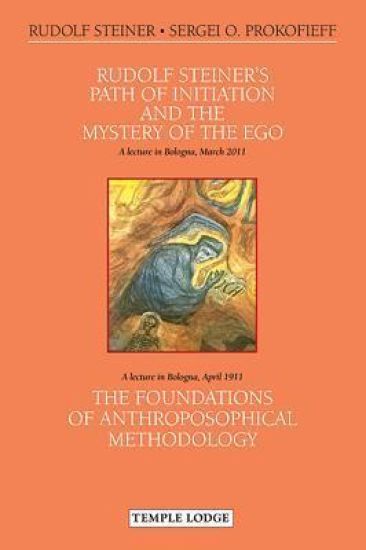
Rudolf Steiner's Path of Initiation and the Mystery of the EGO

Rudolf Steiner's Path of Initiation and the Mystery of the EGO

Rudolf Steiner; Sergei O. Prokofieff

Temple Lodge Publishing
2013
nidottu
Two lectures in Bologna: on 31 March 2011 at the International Conference to Mark the Centenary of Rudolf Steiner's Lecture in Bologna, and on 8 April 1911 at the Fourth International Philosophy Congress A special conference took place in Bologna in Spring 2011, marking the hundredth anniversary of a unique lecture Rudolf Steiner delivered to a philosophically-trained audience in the same city. In his key exposition, Steiner had given a concise description of the spiritual-scientific theory of knowledge as well as a brief outline of the anthroposophical path of schooling. In his contribution to the 2011 congress, Sergei O. Prokofieff tackles two principal aspects. On the one hand, he describes how Steiner's Bologna lecture contained the essential foundations for a new 'science of the human ego'. On the other hand, Prokofieff states that Rudolf Steiner was the first person to transform this same theory into a practical path of knowledge, following it to its very conclusion. Thus, the words of Rudolf Steiner's lecture were based entirely on personal experience. Together with a transcript of Rudolf Steiner's full Bologna lecture, Sergei O. Prokofieff's own lecture is reproduced here in an expanded version. In addition, this volume features Rudolf Steiner's important 'summaries of essential points', in which he develops and connects some of his key thoughts with further aspects of anthroposophy, especially in relation to their Christological foundations.
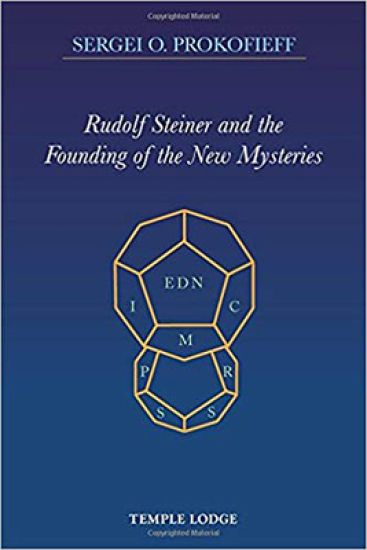
Rudolf Steiner and the Founding of the New Mysteries

Rudolf Steiner and the Founding of the New Mysteries

Sergei O. Prokofieff

Temple Lodge Publishing
2017
nidottu
In this revised and expanded edition of his classic debut, Sergei O. Prokofieff investigates the deepest mysteries of Rudolf Steiner's life and individuality, from 'the years of apprenticeship' and 'the great Sun period' to 'the path of the Teacher of Humanity' and 'the birth of the New Mysteries'. He discusses the earthly and supersensible aspects of the first Goetheanum, the implications of the Christmas Conference of 1923-24, and the Foundation Stone meditation that Steiner left as a legacy to members of the Anthroposophical Society.In his very personal Introduction, Prokofieff describes, in moving detail, the events in his life which led to his discovery of anthroposophy whilst living in Communist Russia, and how eventually he came to write this extraordinary study of Rudolf Steiner. The resulting volume - a work of secondary anthroposophical literature unprecedented in its depth and significance - was first published in Germany in 1982, meeting with equal amounts of acclaim, astonishment and controversy. It is published in this paperback edition to mark the 35th anniversary of the original publication.
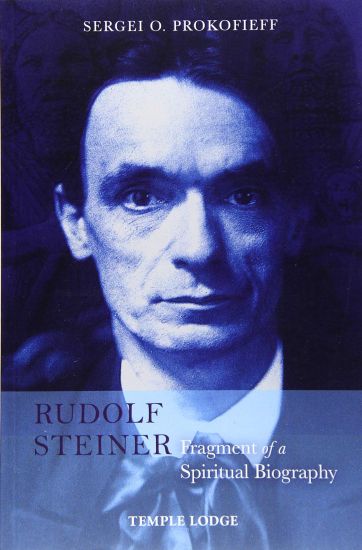
Rudolf Steiner, Fragment of a Spiritual Biography

Rudolf Steiner, Fragment of a Spiritual Biography

Sergei O. Prokofieff

Temple Lodge Publishing
2020
nidottu
Underlying Sergei O. Prokofieff's life's work was a fundamental research-theme to which he returned to repeatedly: the individuality of Rudolf Steiner as manifested through his past incarnations on Earth. Beginning in 1982, inspired by a visit to an exhibition on The Epic of Gilgamesh, Prokofieff planned a full-scale spiritual biography with the intention of finding an answer to the question: Who is Rudolf Steiner? In a sequence of five past incarnations - as indicated by Steiner himself - and culminating in the life of Rudolf Steiner, Prokofieff searched for the inner thread between the six stages of this great, all-encompassing life. His intention was to find not only the outer connections in this sequence but also the deeper, more esoteric stream that offers the key to the unique significance of this individuality. In 1984, Prokofieff began to write the first chapter about Rudolf Steiner's incarnation as Enkidu in Sumer. Sadly, many obstacles in his path were to prevent him finalising the project. However, the author returned to the book in his final months, preparing a Preface that outlines its conception together with a summary chapter on Rudolf Steiner's evolutionary journey. This precious 'fragment' of a biography features valuable additional material, including: a full introduction to the relationship of the anthroposophical movement to other occult streams of esoteric Christianity and their Masters; a detailed spiritual-scientific interpretation of the Epic of Gilgamesh that establishes Rudolf Steiner's connection with the being of Jesus of Nazareth, and an exploration of Steiner's relationship to the Nathan soul, the Luke Jesus child. Serious students of anthroposophy will welcome these final writings from the pen of one of Rudolf Steiner's most faithful and insightful disciples.
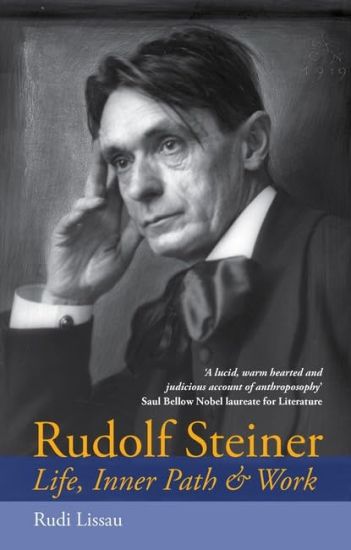
Rudolf Steiner

Rudolf Steiner

Rudi Lissau

HAWTHORN PRESS
2025
pokkari
"A very lucid, warm hearted and judicious account of anthroposophy, which I read with pleasure and gratitude." -- Saul Bellow, winner of the Nobel Prize for Literature Rudi Lissau offers a fascinating overview of Rudolf Steiner's life, philosophy, meditative path, and work. He summarizes Steiner's revolutionary thinking on Waldorf education, biodynamic farming, medicine, the arts, and the sciences, offering an inspiring alternative to bleak materialism. Unique among spiritual teachers, Steiner was also an activist who campaigned against totalitarianism, nationalism, imperialism, and free-market capitalism, and advocated for a threefold commonwealth based on freedom, equality, and fraternity. Central to his teaching are profound insights into Christ and the destiny of humanity. Andrew Welburn's Introduction contextualizes Steiner and spiritual modernity.Contents include chapters on Rudolf Steiner and spiritual modernity; an overview of Steiner's life; Christ and the destiny of humanity; the inner path; building alternative social and cultural initiatives; social renewal and activism; paths and obstacles; Steiner's philosophy of freedom; and more, plus an afterword.
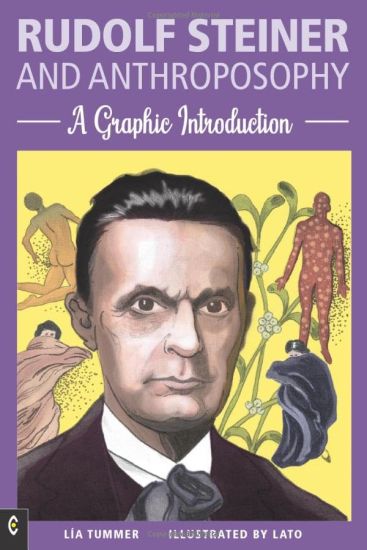
Rudolf Steiner and Anthroposophy

Rudolf Steiner and Anthroposophy

Lia Tummer

Clairview Books
2024
nidottu
Combining Lia Tummer's lucid text and Lato's creative and playful illustrations, Rudolf Steiner and Anthroposophy is a highly-engaging and unique 'graphic' introduction that is suitable for both the curious beginner and the dedicated student. At the dawn of the twentieth century, Rudolf Steiner presented anthroposophy as a 'spiritual science' that expanded upon the restricted, scientific-materialist ideology of his time. Based on a profound knowledge of human beings and our relationship with nature and the universe, anthroposophy not only provides rejuvenating impulses for the most diverse spheres of human activity - such as medicine, education, agriculture, art and science - but also provides answers to the eternal questions posed by humankind, and on which contemporary science remains indifferent: What is life? Where do we come from when we are born? Where do we go when we die? What is the meaning of pain and illness? Why do people experience such differing challenges in their lives? This charming book depicts the development of a universal genius, from his childhood in the untamed beauty of the Austrian Alps to the sublimities of human wisdom; from his work as a Goethe scholar to the building of the extraordinary Goetheanum in Dornach, Switzerland.
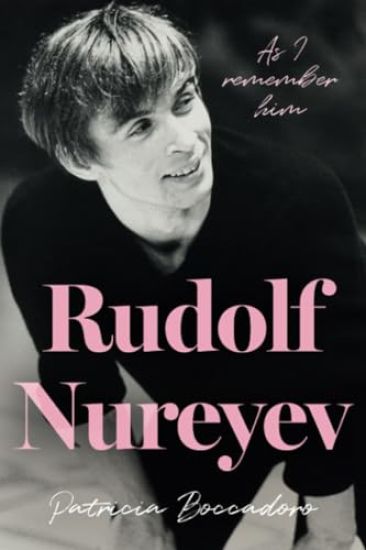
Rudolf Nureyev

Rudolf Nureyev

Patricia Boccadoro

THE BOOK GUILD LTD
2023
nidottu
Following an unorthodox first meeting in London in 1964, Patricia Boccadoro got to know Rudolf Nureyev on a personal basis after she moved to live in Paris in the 1970s. In this amusing, informative book, she recounts how exciting it was to see him dance in those heady London years, during his legendary partnership with Margot Fonteyn, before giving a lucid account of his directorship of the Paris Opera Ballet, making it into one of the finest companies in the world. The book culminates with his legacy, demonstrating how, with his extreme intelligence, glamour and passion, he changed the image of the male dancer, making them the equal of the ballerina. Above all, the lively reminiscences of those closest to him, along with a selection of photographs, many rarely seen or unpublished, bring Rudolf to life, casting off the image of a temperamental superstar, and painting a true picture of the immensely kind, fun-loving man behind one of the greatest artists of the twentieth century.
Rudolf de Crignis

Rudolf de Crignis

Larry Rinder

Radius Books
2013
sidottu
Swiss artist Rudolf de Crignis (1948-2006) began his career in video, photography and performance art. In 1985, a studio fellowship in New York introduced the artist to the work of American minimalist painters such as Robert Ryman, Ad Reinhardt, Agnes Martin and Barnett Newman, precipitating his shift to painting. De Crignis began by making paintings that at first appear to be a single hue, but which were actually begun as a finely worked, layered, white gesso surface. This substantial volume is the first to present a thorough overview of Crignis' austere and meditative work.
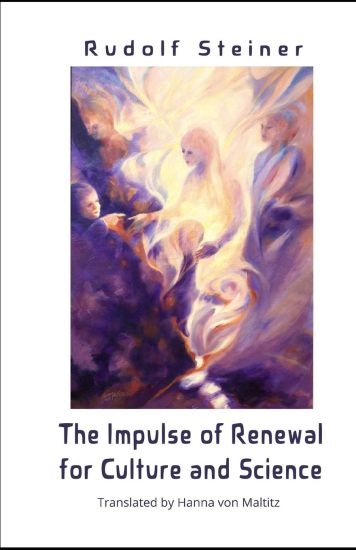
The Impulse of Renewal for Culture and Science: A Lecture Series by Rudolf Steiner
This is a First Edition English translation of a series of seven lectures, entitled The Impulse for Renewal in Culture and Science, and published in German as, Erneuerungs-Impuls fuer Kultur und Wissenschaft. This course was organized by the Federation of Anthroposophical University Work and the Berlin Branch of the Anthroposophical Society. It was the aim of the organizers, through lectures by various speakers, to "give an impression of what suggestions in various fields can be given by anthroposophy." For each course day, Rudolf Steiner gave the introductory lecture. In these lectures, Steiner explains the relationships between Anthroposophy and the natural sciences, philosophy, pedagogy, theology, the social sciences, and linguistics. He also brings to light the biological differences between humans and animals from an anthroposophical perspective.