Kirjojen hintavertailu. Mukana 11 342 296 kirjaa ja 12 kauppaa.

Kirjahaku

Etsi kirjoja tekijän nimen, kirjan nimen tai ISBN:n perusteella.

1000 tulosta hakusanalla Rudolf Ehwald

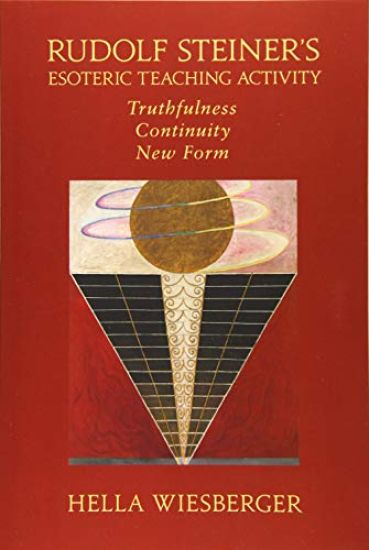
Rudolf Steiner's Esoteric Teaching Activity

Rudolf Steiner's Esoteric Teaching Activity

Hella Wiesberger

SteinerBooks, Inc
2019
pokkari
These accounts by Hella Wiesberger (1920-2014) offer an overview of the nature, background, and history of Rudolf Steiner's esoteric teaching activity. This book is the result of her lifelong study of this aspect of Steiner's work, including documents she oversaw as an editor of Rudolf Steiner's Collected Works. Wiesberger's collegial relationships with certain esoteric students also helped her shine a light on some of Steiner's less accessible documents. Hella Wiesberger's writings were published over two decades as introductions and commentaries in relevant volumes of Rudolf Steiner's Collected Works, placing them in biographical and historical context. The essays were edited in various degrees for this volume in consideration of more recent context, insights, and knowledge. Also included are commentaries and contributions related to the Esoteric School from Rudolf Steiner, Marie Steiner, and Adolf Arenson, as well as several letters to and from Rudolf Steiner. We are fortunate to have these records from a devoted and diligent student of Rudolf Steiner and Anthroposophy. They provide valuable insights into the story and substance of Spiritual Science and its esoteric school and teaching.
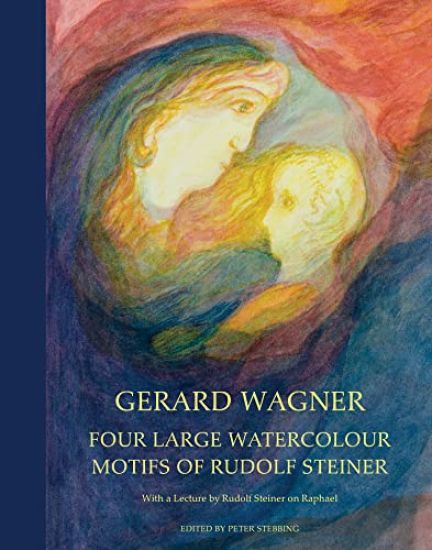
Four Large Watercolour Motifs of Rudolf Steiner

Four Large Watercolour Motifs of Rudolf Steiner

Rudolf Steiner; Virginia Sease

STEINERBOOKS, INC
2023
sidottu
"The art of the future will be an art of inner maturity. What leads to artistic activity will be sensed only at a relatively advanced age in life. It will no longer be assumed that one cannot have the necessary youth forces for artistic creation in later years--as is still often asserted today. It will be found that only by way of inner deepening augmented by spiritual scientific insight are the forces released that lead to artistic creation." --Rudolf Steiner, Dornach, February 7, 1915The painter Henni Geck convinced Rudolf Steiner to paint five watercolors featured in this book: - The Moon Rider (The Dream Song of Olaf steson), January 1924- New Life (Mother and Child), February 1924- Easter (Three Crosses), April 1924- The Archetypal Plant, May 1924- Archetypal Human Being (or Archetypal Animal) July/August 1924The paintings reproduced in this book--also including a small selection from the work of the painter Gerard Wagner--are images that arise from direct color experience and "imagination" as Rudolf Steiner's describes this inner capacity. The purpose of this volume is to focus on the unique possibilities that can open up for the future of art in the world and become a means and path for spiritual-scientific inquiry."We are at a point in the fifth post-Atlantean age when current views must be directed to spiritual forms in art." --Rudolf Steiner, Dornach, August 31, 1918
Rudolf Zwirner: Give Me the Now

Rudolf Zwirner: Give Me the Now

Rudolf Zwirner; Nicola Kihn; Gerard Goodrow

David Zwirner
2021
sidottu
Rudolf Zwirner, “the man who invented the art market,” as coined in Der Spiegel, reflects on more than sixty years in the art business in his authoritative autobiography. An art dealer of the ages, Rudolf Zwirner, father of the esteemed gallerist David Zwirner, reached many milestones in his career. From co-founding Art Cologne, the first fair for contemporary art, in 1967, to showing works by Georg Baselitz, Gerhard Richter, and Andy Warhol, Zwirner transformed the contemporary art scene in Cologne. Born in 1933, he presented more than three hundred exhibitions from the early 1960s to 1991. In his autobiography, Zwirner reveals stories of artists, his gallery, and his most important collector, Peter Ludwig, whose collection forms the cornerstone of the Ludwig Museum in Cologne. First published in 2019 in German, and translated and adapted here for the first time in English, the book explores the most significant moments of Zwirner’s career and the fast-changing postwar art world of. Also included in this edition is a new introduction by Lucas Zwirner, Rudolf’s grandson, who reflects on his grandfather’s role in bringing us to the global art landscape we find ourselves in now.
Rudolf Dreikurs, M.D.-Adlerian Psychology

Rudolf Dreikurs, M.D.-Adlerian Psychology

William L Camp Facapp

Christian Faith
2022
pokkari
Rudolf Dreikurs, MD, was an Australian-born American psychiatrist and educator, who lived from 1897 to 1972. He originally helped to develop the Australian psychologist Alfred Adler's ideas called individual psychology into a pragmatic method for understanding the purposes of inappropriate childhood behavior without punishment or reward. He worked with Dr. Adler both in Europe and in the United States and later organized and refined Dr. Adler's and his own ideas into an effective treatment system. These insights and treatment methods were then further refined by Dr. Dreikurs during the remainder of his life to become a highly usable theory of personality and psychological treatment, not only for use with children but also with families, counselors, teachers, and others, including groups. The content of this book summarizes the results of his commitment and mission in doing this work as he created, tested, refined, and applied these concepts in creation of methods for understanding and treatment of a wide variety of behavior problems and disorders common in families worldwide. He also trained people to use these methods in various countries throughout the world. In doing so, he adapted and applied his knowledge in work with business, industry and government, including the military. The ideas and methods contained in this volume are easily understood and may be applied immediately by parents and their families, by teachers in classrooms, and by others -- now, today -- with valuable positive results. The chapters in this book provide a distillation of logical techniques and procedures, for productive application of his original insights including those originated by Dr. Adler and others. Dr. Camp had the honor to meet Dr. Dreikurs in 1970, two years before his death. At that time Dr. Dreikurs told him and a few others that if he had their youth, he would write another book or books to further update and share his insights with new/upcoming generations. This volume is part of an attempt to do exactly that.
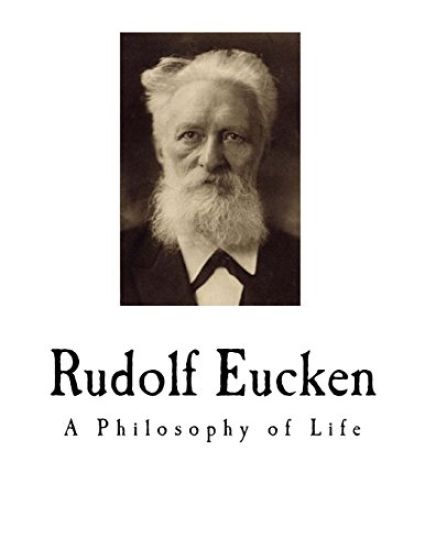
Rudolf Eucken: A Philosophy of Life

Rudolf Eucken: A Philosophy of Life

Abel J. Jones

Createspace Independent Publishing Platform
2018
nidottu
Rudolf Eucken: A Philosophy of Life by Abel J. Jones. Rudolf Christoph Eucken; 5 January 1846 - 15 September 1926) was a German philosopher. He received the 1908 Nobel Prize for Literature "in recognition of his earnest search for truth, his penetrating power of thought, his wide range of vision, and the warmth and strength in presentation with which in his numerous works he has vindicated and developed an idealistic philosophy of life", after he had been nominated by a member of the Swedish Academy. Before we proceed to outline Eucken's philosophical position, it will be well if we can first be clear as to the special problem with which he concerns himself. Philosophers have at some time or other considered all the problems of heaven and earth to be within their province, especially the difficult problems for which a simple solution is impossible. Hence it is, perhaps, that philosophy has been in disrepute, especially in English-speaking countries, the study of the subject has been very largely limited to a small class of students, and the philosopher has been regarded as a dreamy, theorising, and unpractical individual. Many people, when they hear of Eucken, will put him out of mind as an ordinary member of a body of cranks. From Eucken's point of view this is the most unfortunate thing that can happen, for his message is not directed to a limited number of advanced students of philosophy, but is meant for all thinking members of the human race. The problem he endeavours to solve is far from being one of mere theoretical interest; on the contrary it has to do with matters of immediate practical concern to the life of the individual and of the community. To ignore him will be to fail to take account of one of the most rousing philosophies of modern times.
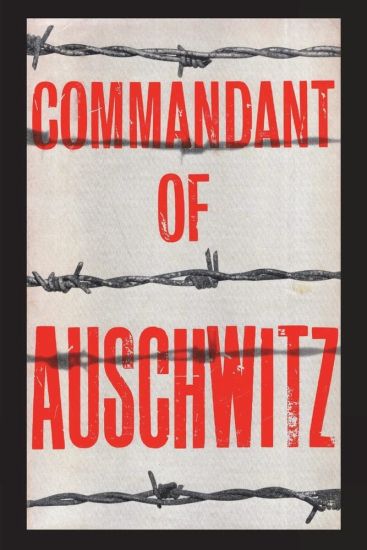
Commandant of Auschwitz: The Autobiography of Rudolf Hoess
Rudolf Hoess was a German SS officer during the Nazi era who, after the defeat of Nazi Germany, was convicted for war crimes. He was the longest-serving commandant of the Auschwitz concentration and extermination camp (from 4 May 1940 to November 1943, and again from 8 May 1944 to 18 January 1945). He tested and implemented means to accelerate Hitler's order to systematically exterminate the Jewish population of Nazi-occupied Europe, known as the Final Solution. On the initiative of one of his subordinates Hoess introduced the pesticide Zyklon B to be used in gas chambers, where more than a million people were killed. Hoess was hanged in 1947 following a trial before the Polish Supreme National Tribunal. During his imprisonment, at the request of the Polish authorities, he wrote his memoirs, released in English under the title Commandant of Auschwitz: The Autobiography of Rudolf Hoess. Like most things in his life, Hoess undertook the autobiography with great diligence. A careful checking by researchers showed he took great pains to tell the truth. The result: a vivid and unforgettable picture of the 20th century's defining and most horrific event.
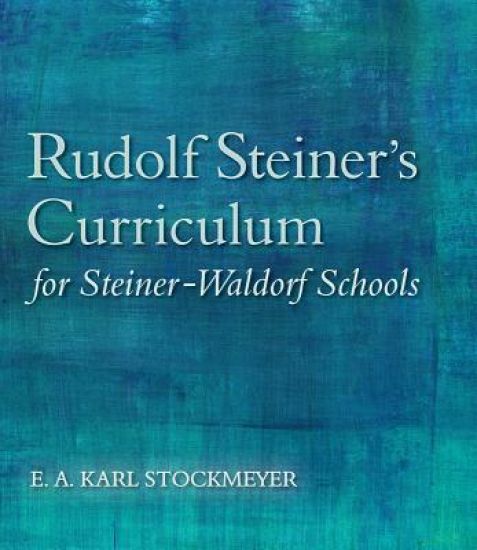
Rudolf Steiner's Curriculum for Steiner-Waldorf Schools
This book is an in-depth exploration of the curriculum of the first Waldorf school, expanding on the original 'Lehrplan'.Divided into sections, the book outlines Steiner's comments on schools and lessons in general, as well as many details on his thinking on specific issues ranging from different age groups to classroom decoration and arrangement.This important book for all Steiner-Waldorf teachers gets to the heart of Steiner's ideas on education and child development.
Rudolf Steiner and The Christian Community
The relationship between The Christian Community and the Anthroposophical Society is complex and often misunderstood. Christian Community priests work out of an understanding of anthroposophy, and it was undoubtedly Steiner's theological lecture courses which led to the formation of the movement. Nonetheless questions remain, which Peter Selg examines closely in this unique book.-- Steiner's work emphasises the importance of finding the spiritual in everyday life. So why did he help found a 'Sunday church'?-- In his lectures, Steiner spoke about a 'spiritual communion' without physical matter. So why is there any need for a sacramental communion with real bread and wine, as practiced in The Christian Community?-- In a much-quoted lecture after the founding of The Christian Community, Steiner said that anthroposophists should have no need of the new religious movement. But on another occasion he said he wished greatly that the movement should succeed. How can these be understood and reconciled?This long-overdue book is a significant exploration of Steiner's legacy which should have far-reaching implications for mutual understanding and cooperation between The Christian Community and the wider anthroposophical world.
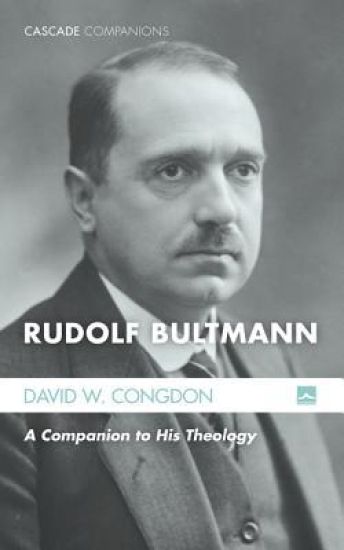
Rudolf Bultmann: Seine Theologie unter der Lupe

Rudolf Bultmann: Seine Theologie unter der Lupe

Lothar Gassmann

Independently Published
1998
nidottu
Rudolf Bultmann (1884-1976), evangelischer Theologe, Neutestamentler, sah sich zeitweilig der Dialektischen Theologie zugeh rig, gilt aber eher als Hauptvertreter der Liberalen Theologie im 20. Jahrhundert. Sein Name steht f r das Programm der Entmythologisierung und Existentialen Interpretation der Bibel, das vielf ltigen Widerstand hervorgerufen hat, etwa in Gestalt der Gr ndung der Bekenntnisbewegung "Kein anderes Evangelium" im Jahre 1966.Bultmanns Theologie (besser gesagt: Anthropologie) ist nach wie vor u erst einflussreich. Dr. Lothar Gassmann unternimmt in diesem Buch eine kritische Analyse aus evangelikal-bibeltreuer Sicht.
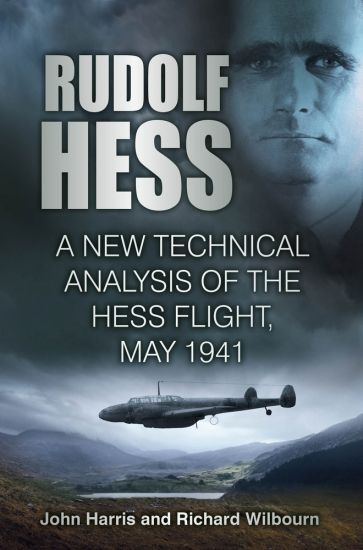
Rudolf Hess

Rudolf Hess

John Harris; Richard Wilbourn

THE HISTORY PRESS LTD
2022
nidottu
On 10 May 1941, on a whim, Hitler’s deputy Rudolf Hess flew a Messerschmitt Bf 110 to Scotland in a bizarre effort to make peace with Britain; Göring sent fighters to stop him but he was long gone. Imprisoned and tried at Nuremberg, he would die by his own hand in 1987, aged 93.That’s the accepted explanation. Ever since, conspiracy theories have swirled around the famous mission. How strong were Hess’s connections with the British establishment, including royalty? Was the death of the king’s brother, the Duke of Kent, associated with the Hess overture for peace? In the many books written about Hess, one obvious line of enquiry has been overlooked, until now: an analysis of the flight itself – the flight plan, equipment, data sheets, navigation system.Through their long investigation, authors John Harris and Richard Wilbourn have come to a startling conclusion: whilst the flight itself has been well recorded, the target destination has remained hidden. The implications are far reaching and lend credence to the theory that the British establishment has hidden the truth of the full extent of British/Nazi communications, in part to spare the reputations of senior members of the Royal Family. Using original photography, documentation and diagrams, Rudolf Hess sheds light on one of the most intriguing stories of the Second World War.
Rudolf II

Rudolf II

Thomas DaCosta Kaufmann

REAKTION BOOKS
2025
sidottu
Rudolf II: The Life and Legend of the Mad Emperor offers a fresh perspective on the Habsburg ruler, shedding new light on a reign often coloured by myths of madness. Contrary to popular belief, Rudolf was not a passive recluse but an engaged monarch, navigating the complexities of state affairs with a moderate hand amid turbulent times. By contextualizing his interests in astrology, alchemy and magic, Thomas DaCosta Kaufmann offers new insights into Rudolf’s support for scientific endeavours and his quest for power. It also demonstrates that Rudolf’s assembling of the greatest Kunstkammer and painting collection of his time and his patronage of artists were essential elements of Renaissance rulership. This book will appeal to a diverse audience, including enthusiasts of the occult, as well as those fascinated by Renaissance history, the Habsburg dynasty and art history.
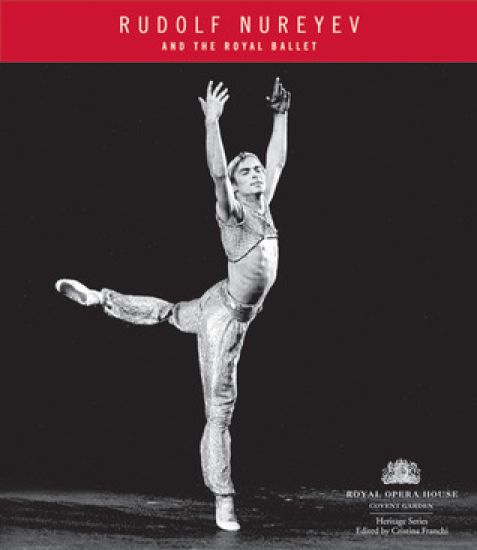
Rudolf Nureyev And The Royal Ballet

Rudolf Nureyev And The Royal Ballet

Cristina (EDT) Franchi

Oberon Books Ltd
2007
pokkari
The first international ballet superstar, Nureyev defected from Russia in 1961 and first appeared with The Royal Ballet in 1962. His phenomenal technique, his appetite for new dance experiences and his flamboyant lifestyle brought ballet to the attention of a wider audience and raised the status of male dancing.
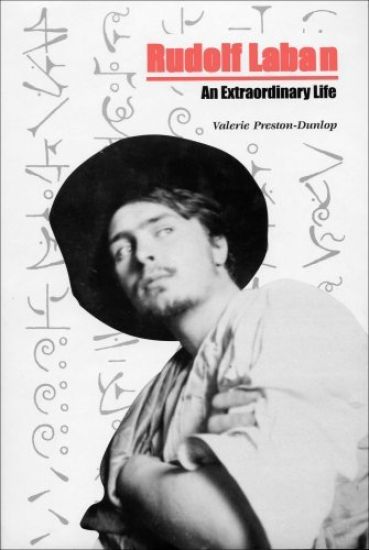
Rudolf Laban

Rudolf Laban

Valerie Preston-Dunlop

Dance Books Ltd
2008
pokkari
A visionary, a mystic, a lover, a leader, a dancer, an artist, a teacher, a theorist.Rudolf Laban (1879 - 1958) was all these things. Born in fin-de-siecle Austro-Hungary, Laban lived in Austria, France, and Germany. Though he began as a painter, architect and illustrator, it is in movement and dance that Laban made a lasting impact. He was a performer, a choreographer, and a mentor, but his ideas were always part of a broader vision of of movement - as theatre art, as community celebration, and as self-discovery. Through his research into movement he uncovered the interconnections of the body and the psyche, the individual and the group, and he devised a revolutionary system of movement notation that is till in use today.
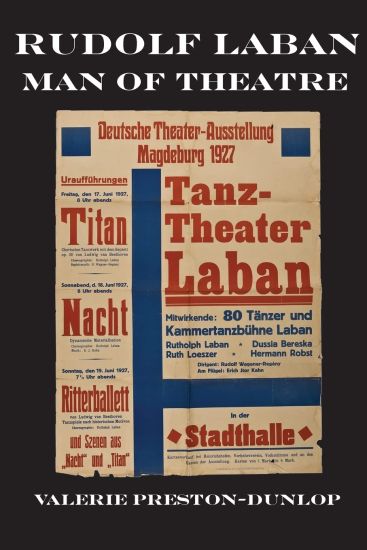
Rudolf Laban

Rudolf Laban

Valerie Preston-Dunlop

DANCE BOOKS LTD
2013
nidottu
Rudolf Laban's provocative, experimental, explosive dance theatre works have lain hidden since the Third Reich deliberately annihilated his name. This book exposes Laban's audacity and his significance for dance theatre today, giving access to his creative practices as he provided dance audiences with shock, amusement, awe, curiosity, beauty and meaning. Dr. Valerie Preston-Dunlop, with collaborating artists and dancers, has researched and recreated for today's audiences four groundbreaking works: The visionary Swinging Temple of 1922, his diverse Suite of 1924, his critique of Weimar Republic's decadence Nacht 1927, and his tragic-comic satire Green Clowns. The book follows the making of these works starting with his dynamic revitalisation of dance, freeing dance from music and from ballet, introducing improvisation to find movements never danced before. His struggles in Paris, Munich, Zurich, Hamburg and Berlin, cities vibrant with political controversy and dramatic cultural change, are presented as central to the content and rehearsal methods of his dance theatre works. The re-creations discussed are no resuscitation of dead dances but the result of a radical new look at how to engage today with dances made in the 1920s. Preston-Dunlop, her collaborators rehearsal directors Alison Curtis-Jones and Melanie Clarke, and composers Oli Newman and Robert Coleridge, write with a frank freshness of what actually goes on in the re-making of an expressionist work where dancers may speak, shout, gasp and spit as well as dance in unfamiliar and demanding ways. The impact of these works on the collaborating dancers, in 1920 and today was profound.
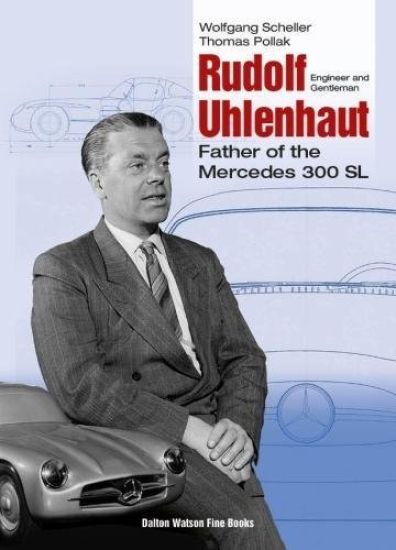
Rudolf Uhlenhaut

Rudolf Uhlenhaut

Wolfgang Scheller; Thomas Pollak

Dalton Watson Fine Books
2017
sidottu
This first comprehensive biography of Rudolf Uhlenhaut, illustrated with many previously unpublished photographs, depicts his life and technical accomplishments, including a complete compilation of his patents which puts them into a technical and historical context. An engineer and designer for Daimler-Benz, he became famous for his achievements regarding the Silver Arrows, the 300 SL with the famous gull wing doors, the legendary Mercedes-Benz 300 SLR, and the various record-breaking experimental C 111 versions.Based on numerous interviews with Uhlenhaut himself, contemporary witnesses, colleagues and family members, the book paints a vivid picture of the person behind the technical innovations and explores his character and motivation. Born in 1906 in London, the son of an English mother and a German father, Rudolf Uhlenhaut joined Daimler-Benz in 1931 after finishing his mechanical engineering studies in Munich. In 1936 he took over as head of the racing department and conducted the Silver Arrows and Rudolf Caracciola to their 1937 European championship.After World War II, he created the road versions W 198 and the smaller open-topped W 121 of the 300 SL "Gullwing," both launched at the International Motor Sports Show in New York 1954. Uhlenhaut's official company car, a 300 SLR with a top speed of 290 km/h was the Uhlenhaut Coupe - the fastest car of its day authorized for road use.
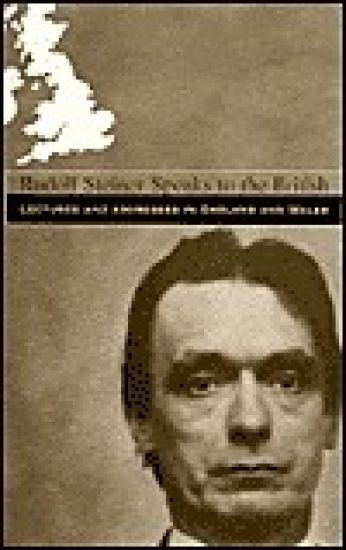
Rudolf Steiner Speaks to the British

Rudolf Steiner Speaks to the British

Rudolf Steiner

Rudolf Steiner Press
1998
pokkari
As demonstrated in this book, Rudolf Steiner had the ability to speak to the British in a very lively an d direct way. This volume provides readers with a fuller pic ture of Steiner''s work in Britain and his approach to esoter ic ideas whilst here. '
Rudolf Steiner's Vision of Love

Rudolf Steiner's Vision of Love

Bernard Nesfield-Cookson

Rudolf Steiner Press
2011
nidottu
Rudolf Steiner, the founder of Anthroposophy, is a pivotal figure in contemporary esoteric thought. Through his books and lectures he provided an impetus for the spiritual renewal of many human activities, including education (Steiner Waldorf schools), agriculture, medicine, economics, the arts and religion. Steiner showed how mankind has been evolving and explained the role of the great spiritual world leaders in the process. Above all he showed how the impulse to evolution given by Christ's death and resurrection - what he referred to as the Mystery of Golgotha - is of unique importance in the human being's struggle to reach the summit of evolution: union with the higher self. Bernard Nesfield-Cookson here shows how Rudolf Steiner's vision of love, the transformative power brought by Christ, unites the forces of the head and heart towards a spiritual awakening among mankind. Gathering together references to the 'logic of the heart' from throughout Steiner's work, the author encapsulates the great teacher's revelations on the meaning of love, and indicates the supreme importance of the greatest of all deeds of love: the Mystery of Golgotha.
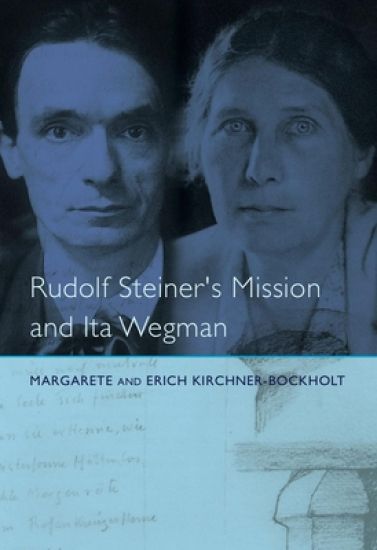
Rudolf Steiner's Mission and Ita Wegman

Rudolf Steiner's Mission and Ita Wegman

Margarete Kirchner-Bockholt

Rudolf Steiner Press
2016
nidottu
'Because I felt that he knew how things were, I said simply:"I will stay with you." Then he said significant things to me that I was not to repeat. A very ancient karma existing between him and myself was renewed. It was not until many years later that I first realised the significance of that meeting.' - Ita Wegman Ita Wegman was one of Rudolf Steiner's most important co-workers, collaborating with him principally in the field of Medicine - co-authoring the key book Extending Practical Medicine and heading the Medical Section of the School of Spiritual Science. In the background to that external work, however, was an esoteric connection. In this seminal work of karma research, the authors attempt, sensitively and with responsibility, to shed light on that spiritual and karmic history. Written for members of the Anthroposophical Society, this book is a profound study of a series of different incarnations linked to the figures of Ita Wegman and Rudolf Steiner. Spread over six disparate lifetimes, they range from Gilgamesh and Eabani (Enkidu) in Uruk, ancient Chaldea, to the Goetheanum in Dornach, Switzerland, the twentieth-century setting of the world centre of anthroposophy. Based on copious historical research, verbal statements and not a little spiritual insight, this rare and valuable work, reprinted here for the first time, features many illustrations and facsimiles of documents and personal letters.
Rudolf Steiner and Social Reform

Rudolf Steiner and Social Reform

Richard Masters

RUDOLF STEINER PRESS
2022
nidottu
How might we improve the way we organize society, so that human beings can live in greater peace, dignity and justice? Against a background of chronic discontent and social conflict around the globe, Richard Masters presents a comprehensive survey of Rudolf Steiner's work on societal reform, sifting through and summarizing the content of dozens of books, lectures and discussions. Rudolf Steiner (1861-1925) is not known today for his social thinking, but he wrote and spoke at length on such issues during and after WWI, engaging with audiences ranging from royalty, politicians and business owners to illiterate, dispossessed factory workers. Central to his ideas was his 'threefold' approach to politics, economics and culture, arguing that their roles should be clarified and the three spheres allowed to thrive independently. Drawing on the full range of source material - including much not yet available in English - the author reveals the continuing relevance of Steiner's work to our contemporary situation. With an emphasis on accessibility, he builds up the subject methodically, studying the main ideas from differing perspectives. He also provides candid reflections on the degree to which Steiner's proposals are still applicable to current policy and practice. Authoritative and yet jargon-free, Rudolf Steiner and Social Reform offers innovative and stimulating ideas for anyone concerned with the state of our world.