Kirjojen hintavertailu. Mukana 11 699 587 kirjaa ja 12 kauppaa.

Kirjahaku

Etsi kirjoja tekijän nimen, kirjan nimen tai ISBN:n perusteella.

1000 tulosta hakusanalla Russ Wheeler

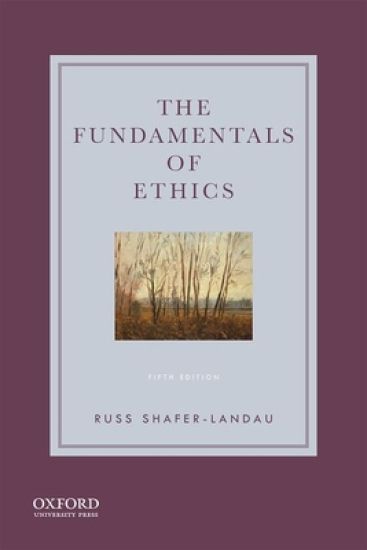
The Fundamentals of Ethics

The Fundamentals of Ethics

Russ Shafer-Landau

Oxford University Press Inc
2021
nidottu
In The Fundamentals of Ethics, Fifth Edition, author Russ Shafer-Landau employs a uniquely engaging writing style to introduce students to the essential ideas of moral philosophy. Offering more comprehensive coverage of the good life, normative ethics, and metaethics than any other text of its kind, this book also addresses issues that are often omitted from other texts, such as the doctrine of doing and allowing, the doctrine of double effect, ethical particularism, the desire-satisfaction theory of well-being, moral error theory, and Ross's theory of prima facie duties. Shafer-Landau carefully reconstructs and analyzes dozens of arguments in depth, at a level that is understandable to students with no prior philosophical background.
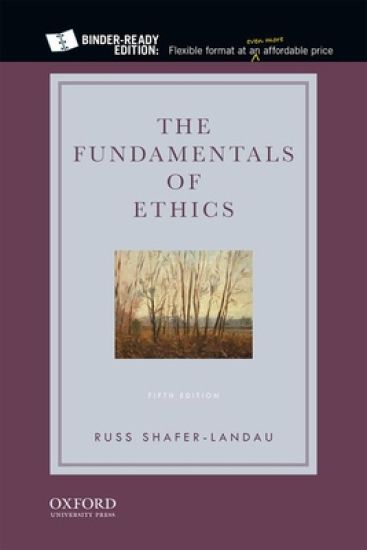
The Fundamentals of Ethics

The Fundamentals of Ethics

Russ Shafer-Landau

Oxford University Press
2020
irtolehti
In The Fundamentals of Ethics, Fifth Edition, author Russ Shafer-Landau employs a uniquely engaging writing style to introduce students to the essential ideas of moral philosophy. Offering more comprehensive coverage of the good life, normative ethics, and metaethics than any other text of its kind, this book also addresses issues that are often omitted from other texts, such as the doctrine of doing and allowing, the doctrine of double effect, ethical particularism, the desire-satisfaction theory of well-being, moral error theory, and Ross's theory of prima facie duties. Shafer-Landau carefully reconstructs and analyzes dozens of arguments in depth, at a level that is understandable to students with no prior philosophical background.
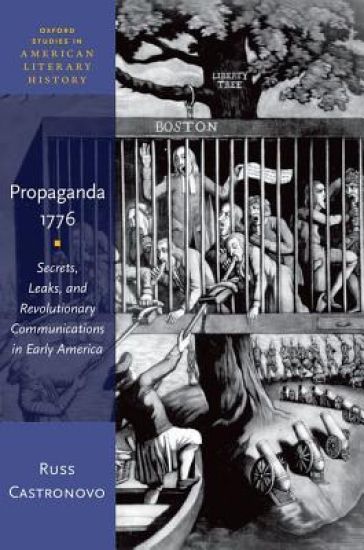
Propaganda 1776

Propaganda 1776

Russ Castronovo

Oxford University Press Inc
2019
nidottu
1776 symbolizes a moment, both historical and mythic, of democracy in action. That year witnessed the release of a document, which Edward Bernays, the so-called father of public relations and spin, would later label as a masterstroke of propaganda. Although the Declaration of Independence relies heavily on the empiricism of self-evident truths, Bernays, who had authored the influential manifesto Propaganda in 1928, suggested that what made this iconic document so effective was not its sober rationalism but its inspiring message that ensured its dissemination throughout the American colonies. Propaganda 1776 reframes the culture of the U.S. Revolution and early Republic, revealing it to be rooted in a vast network of propaganda. Drawing on a wide-range of resources, Russ Castronovo considers how the dispersal and circulation--indeed, the propagation--of information and opinion across the various media of the eighteenth century helped speed the flow of revolution. This book challenges conventional wisdom about propaganda as manipulation or lies by examining how popular consent and public opinion in early America relied on the spirited dissemination of rumor, forgery, and invective. While declarations about self-evident truths were important to liberty, the path toward American independence required above all else the spread of unreliable intelligence that travelled at such a pace that it could be neither confirmed nor refuted. By tracking the movements of stolen documents and leaked confidential letters, this book argues that media dissemination created a vital but seldom acknowledged connection between propaganda and democracy. The spread of revolutionary material in the form of newspapers, pamphlets, broadsides, letters, songs, and poems across British North America created multiple networks that spawned new and often radical ideas about political communication. Communication itself became revolutionary in ways that revealed circulation to be propaganda's most vital content. By examining the kinetic aspects of print culture, Propaganda 1776 shows how the mobility of letters, pamphlets, and other texts amounts to political activity par excellence. With original examinations of Ben Franklin, Mercy Otis Warren, Tom Paine, and Philip Freneau, among a crowd of other notorious propagandists, this book examines how colonial men and women popularized and spread the patriot cause across America.
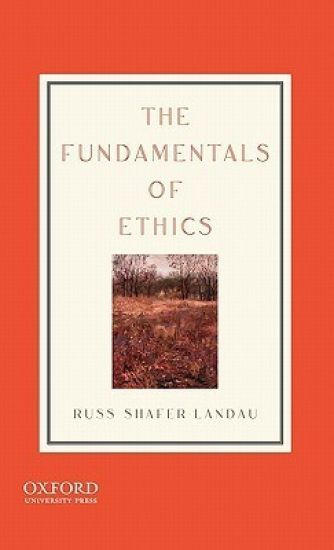
The Fundamentals of Ethics

The Fundamentals of Ethics

Russ Shafer-Landau

Oxford University Press Inc
2009
sidottu
In The Fundamentals of Ethics, author Russ Shafer-Landau employs a uniquely engaging writing style to introduce students to the essential ideas of moral philosophy. Offering more comprehensive coverage of the good life, normative ethics, and metaethics than any other text of its kind, this book also addresses issues that are often omitted from other texts, such as the doctrine of doing and allowing, the doctrine of double effect, ethical particularism, the desire-satisfaction theory of well-being, and moral error theory. Shafer-Landau carefully reconstructs and analyzes dozens of arguments in depth, at a level that is understandable to students with no prior philosophical background. Ideal for courses in introductory ethics and contemporary moral problems, this book can be used as a stand-alone text or with the author's companion reader, The Ethical Life: Fundamental Readings in Ethics and Moral Problems, which offers original readings exploring the topics covered in The Fundamentals of Ethics.
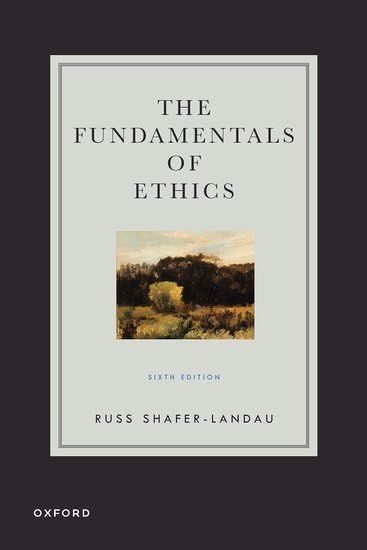
The Fundamentals of Ethics

The Fundamentals of Ethics

Russ Shafer-Landau

OXFORD UNIVERSITY PRESS INC
2024
nidottu
In The Fundamentals of Ethics, Sixth Edition, author Russ Shafer-Landau employs a uniquely engaging writing style to introduce students to the essential ideas of moral philosophy. Offering more comprehensive coverage of the good life, normative ethics, and metaethics than any other text of its kind, this book also addresses issues that are often omitted from other texts, such as the doctrine of doing and allowing, the doctrine of double effect, ethical particularism, the desire-satisfaction theory of well-being, moral error theory, and Ross' theory of prima facie duties. Shafer-Landau carefully reconstructs and analyzes dozens of arguments in depth, at a level that is understandable to students with no prior philosophical background.
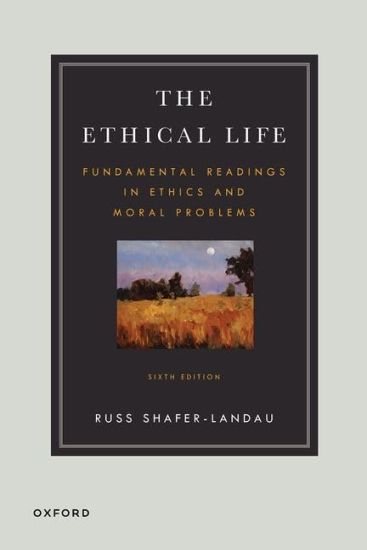
The Ethical Life

The Ethical Life

Russ Shafer-Landau

OXFORD UNIVERSITY PRESS INC
2023
nidottu
Brief yet thorough and affordably priced, The Ethical Life: Fundamental Readings in Ethics and Moral Problems, Sixth Edition, is ideal for courses in introductory ethics and contemporary moral problems. Featuring forty-eight readings divided into four parts, it introduces students to ethical theory and a wide range of moral issues. The essays include selections from such historically influential philosophers as Aristotle, Hume, Kant, and Mill alongside work by contemporary philosophers like Philippa Foot, Robert Nozick, Peter Singer, and Judith Jarvis Thomson. Detailed reading introductions provide helpful contextual information.
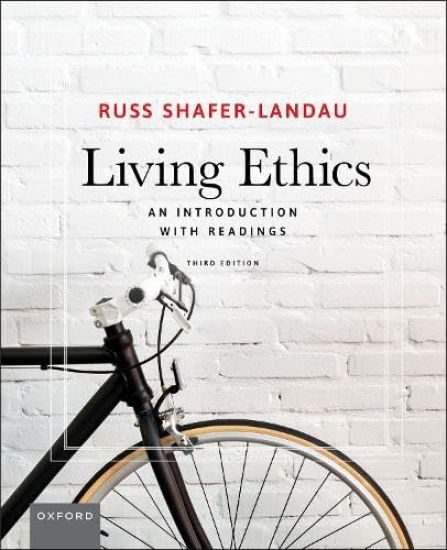
Living Ethics

Living Ethics

Russ Shafer-Landau

OXFORD UNIVERSITY PRESS INC
2024
nidottu
Living Ethics: An Introduction with Readings is an ideal all-in-one resource for courses in introduction to ethics and contemporary moral problems. In this hybrid textbook/reader, Russ Shafer-Landau brings moral theory and contemporary moral issues to life with a comprehensive and balanced set of readings, uniquely engaging explanations, and clear analysis of arguments. The book balances coverage of moral reasoning (in Part 1) with highly relevant contemporary moral problems (in Part 2).
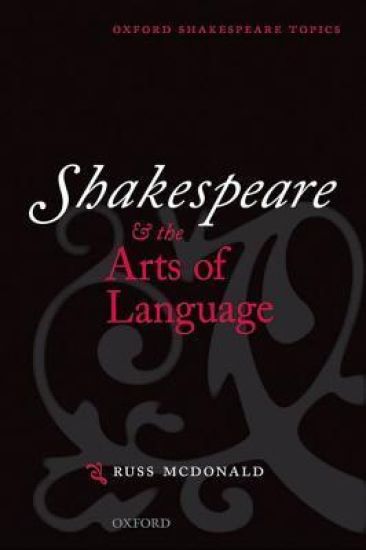
Shakespeare and the Arts of Language

Shakespeare and the Arts of Language

Russ McDonald

Oxford University Press
2001
nidottu
Oxford Shakespeare Topics provide students and teachers with short books on important aspects of Shakespeare criticism and scholarship. Each book is written by an authority in its field, and combines accessible style with original discussion of its subject. Notes and a critical guide to further reading equip the interested reader with the means to broaden research. For the modern reader or playgoer, English as Shakespeare used it can seem alien and puzzling: vocabulary and grammar are in transition, pronouns and verb-forms can seem unfamiliar. Moreover, the conventions of poetic drama may also pose an impediment. Shakespeare and the Arts of Language provides a clear and helpful guide to the linguistic and rhetorical dimensions of the plays and poems. Written in a lucid, non-technical style, the book starts with the story of how the English language changed throughout the sixteenth century. Subsequent chapters define Shakespeare's main artistic tools and illustrate their poetic and theatrical contributions: Renaissance rhetoric, imagery and metaphor, blank verse, prose speech, and wordplay. The conclusion surveys Shakespeare's multiple and often conflicting ideas about language, encompassing both his enthusiasm at what words can do for us and his suspicion of what words can do to us. Throughout, Russ McDonald helps his readers to appreciate a play's concerns and theatrical effects by thinking about its language in relation to other writings of the period. He also emphasizes pleasure in the physical properties of Shakespeare's words: their colour, weight, and texture, the appeal of verbal patterns, and the irresistible power of intensified language.
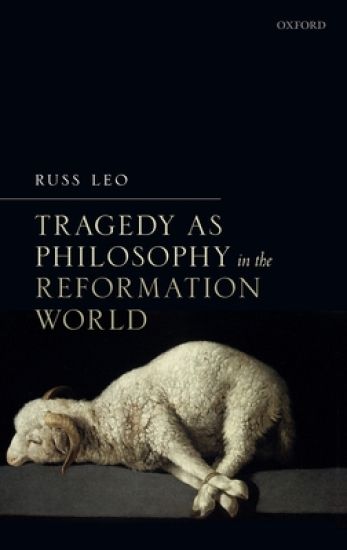
Tragedy as Philosophy in the Reformation World

Tragedy as Philosophy in the Reformation World

Russ Leo

Oxford University Press
2019
sidottu
Tragedy as Philosophy in the Reformation World examines how sixteenth- and seventeenth-century poets, theologians, and humanist critics turned to tragedy to understand providence and agencies human and divine in the crucible of the Reformation. Rejecting familiar assumptions about tragedy, vital figures like Philipp Melanchthon, David Pareus, Lodovico Castelvetro, John Rainolds, and Daniel Heinsius developed distinctly philosophical ideas of tragedy, irreducible to drama or performance, inextricable from rhetoric, dialectic, and metaphysics. In its proximity to philosophy, tragedy afforded careful readers crucial insight into causality, probability, necessity, and the terms of human affect and action. With these resources at hand, poets and critics produced a series of daring and influential theses on tragedy between the 1550s and the 1630s, all directly related to pressing Reformation debates concerning providence, predestination, faith, and devotional practice. Under the influence of Aristotle's Poetics, they presented tragedy as an exacting forensic tool, enabling attentive readers to apprehend totality. And while some poets employed tragedy to render sacred history palpable with new energy and urgency, others marshalled a precise philosophical notion of tragedy directly against spectacle and stage-playing, endorsing anti-theatrical theses on tragedy inflected by the antique Poetics. In other words, this work illustrates the degree to which some of the influential poets and critics in the period, emphasized philosophical precision at the expense of--even to the exclusion of--dramatic presentation. In turn, the work also explores the impact of scholarly debates on more familiar works of vernacular tragedy, illustrating how William Shakespeare's Hamlet and John Milton's 1671 poems take shape in conversation with philosophical and philological investigations of tragedy. Tragedy as Philosophy in the Reformation World demonstrates how Reformation took shape in poetic as well as theological and political terms while simultaneously exposing the importance of tragedy to the history of philosophy.
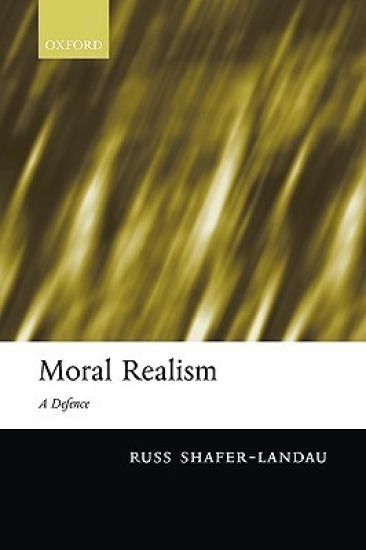
Moral Realism

Moral Realism

Russ Shafer-Landau

Clarendon Press
2003
sidottu
Moral Realism is a systematic defence of the idea that there are objective moral standards. In the tradition of Plato and G. E. Moore, Russ Shafer-Landau argues that there are moral principles that are true independently of what anyone, anywhere, happens to think of them. These principles are a fundamental aspect of reality, just as much as those that govern mathematics or the natural world. They may be true regardless of our ability to grasp them, and their truth is not a matter of their being ratified from any ideal standpoint, nor of being the object of actual or hypothetical consensus, nor of being an expression of our rational nature. Shafer-Landau accepts Plato's and Moore's contention that moral truths are sui generis. He rejects the currently popular efforts to conceive of ethics as a kind of science, and insists that moral truths and properties occupy a distinctive area in our ontology. Unlike scientific truths, the fundamental moral principles are knowable a priori. And unlike mathematical truths, they are essentially normative: intrinsically action-guiding, and supplying a justification for all who follow their counsel. Moral Realism is the first comprehensive treatise defending non-naturalistic moral realism in over a generation. It ranges over all of the central issues in contemporary metaethics, and will be an important source of discussion for philosophers and their students interested in issues concerning the foundations of ethics.
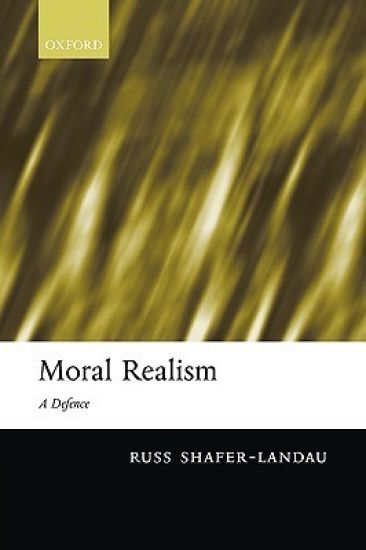
Moral Realism

Moral Realism

Russ Shafer-Landau

Clarendon Press
2005
nidottu
Moral Realism is a systematic defence of the idea that there are objective moral standards. In the tradition of Plato and G. E. Moore, Russ Shafer-Landau argues that there are moral principles that are true independently of what anyone, anywhere, happens to think of them. These principles are a fundamental aspect of reality, just as much as those that govern mathematics or the natural world. They may be true regardless of our ability to grasp them, and their truth is not a matter of their being ratified from any ideal standpoint, nor of being the object of actual or hypothetical consensus, nor of being an expression of our rational nature. Shafer-Landau accepts Plato's and Moore's contention that moral truths are sui generis. He rejects the currently popular efforts to conceive of ethics as a kind of science, and insists that moral truths and properties occupy a distinctive area in our ontology. Unlike scientific truths, the fundamental moral principles are knowable a priori. And unlike mathematical truths, they are essentially normative: intrinsically action-guiding, and supplying a justification for all who follow their counsel. Moral Realism is the first comprehensive treatise defending non-naturalistic moral realism in over a generation. It ranges over all of the central issues in contemporary metaethics, and will be an important source of discussion for philosophers and their students interested in issues concerning the foundations of ethics.
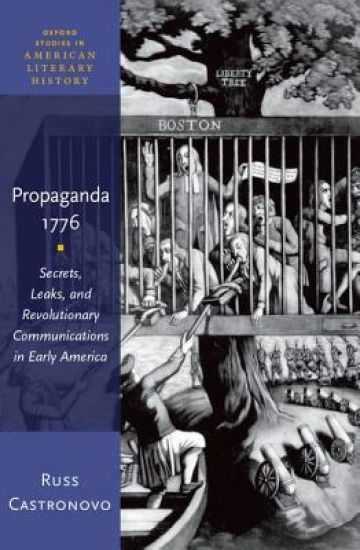
Propaganda 1776

Propaganda 1776

Russ Castronovo

Oxford University Press Inc
2014
sidottu
Propaganda 1776 reframes the culture of the U.S. Revolution and early Republic, revealing it to be rooted in a vast network of propaganda. Truth, clarity, and honesty were declared virtues of the period-but rumors, falsehoods, forgeries, and unauthorized publication were no less the life's blood of liberty. Looking at famous patriots like George Washington, Benjamin Franklin, Thomas Paine; the playwright Mary Otis Warren; and the poet Philip Freneau, Castronovo provides various anecdotes that demonstrate the ways propaganda was - contrary to our instinctual understanding - fundamental to democracy rather than antithetical to it. By focusing on the persons and methods involved in Revolutionary communications, Propaganda 1776 both reconsiders the role that print culture plays in historical transformation and reexamines the widely relevant issue of how information circulates in a democracy.
Beautiful Democracy

Beautiful Democracy

Russ Castronovo

University of Chicago Press
2007
sidottu
The photographer and reformer Jacob Riis once wrote, "I have seen an armful of daisies keep the peace of a block better than a policeman and his club." Riis was not alone in his belief that beauty could tame urban chaos, but are aesthetic experiences always a social good? Could aesthetics also inspire violent crime, working-class unrest, and racial murder? To answer these questions, Russ Castronovo turns to those who debated claims that art could democratize culture - civic reformers, anarchists, novelists, civil rights activists, and college professors - to reveal that beauty provides unexpected occasions for radical, even revolutionary, political thinking. "Beautiful Democracy" explores the intersection of beauty and violence by examining university lectures and course materials on aesthetics from a century ago along with riots, acts of domestic terrorism, magic lantern exhibitions, and other public spectacles. Philosophical aesthetics, realist novels, urban photography, and black periodicals, Castronovo argues, inspired and instigated all sorts of collective social endeavors, from the progressive nature of tenement reform to the horrors of lynching. Discussing Jane Addams, W. E. B. Du Bois, Charlie Chaplin, William Dean Howells, and Riis as aesthetic theorists in the company of Kant and Schiller, "Beautiful Democracy" ultimately suggests that the distance separating academic thinking and popular wisdom about social transformation is narrower than we generally suppose.
Beautiful Democracy

Beautiful Democracy

Russ Castronovo

University of Chicago Press
2007
nidottu
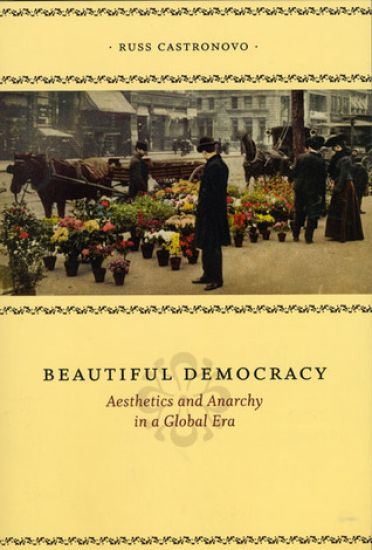
The photographer and reformer Jacob Riis once wrote, "I have seen an armful of daisies keep the peace of a block better than a policeman and his club." Riis was not alone in his belief that beauty could tame urban chaos, but are aesthetic experiences always a social good? Could aesthetics also inspire violent crime, working-class unrest, and racial murder? To answer these questions, Russ Castronovo turns to those who debated claims that art could democratize culture - civic reformers, anarchists, novelists, civil rights activists, and college professors - to reveal that beauty provides unexpected occasions for radical, even revolutionary, political thinking. "Beautiful Democracy" explores the intersection of beauty and violence by examining university lectures and course materials on aesthetics from a century ago along with riots, acts of domestic terrorism, magic lantern exhibitions, and other public spectacles. Philosophical aesthetics, realist novels, urban photography, and black periodicals, Castronovo argues, inspired and instigated all sorts of collective social endeavors, from the progressive nature of tenement reform to the horrors of lynching. Discussing Jane Addams, W. E. B. Du Bois, Charlie Chaplin, William Dean Howells, and Riis as aesthetic theorists in the company of Kant and Schiller, "Beautiful Democracy" ultimately suggests that the distance separating academic thinking and popular wisdom about social transformation is narrower than we generally suppose.
Z Town

Z Town

Russ Ferrier

Tellwell Talent
2021
pokkari
IT STARTED WITH A NOTEWhen a friend finds an ancient letter in a duffel bag, the hunt begins.A THEFT AND A MURDERTwo small-time thieves escalate a series of events, creating serious repercussions.A KIDNAPPING AT SEAUncovering a clandestine operation leads to more troubles and more intrigue.
What is Music Production?

What is Music Production?

Russ Hepworth-Sawyer; Craig Golding

Focal Press
2010
nidottu
To complete an album, a producer needs to know what goes into capturing great music and teasing out inspirational performances from artists. As a producer, you are guiding not only the music, but also the business and the technical aspects of an album. What Is Music Production? is a "guide to this guidance."Formed from a blend of solid information extracted from detailed interviews, the book focuses on the process of music production, providing insight into how the producer guides this process and molds the final product.Whether you are a student or just starting your professional career, What is Music Production? explains what you need to know-from working with artists, songs, pre-production, mixing, and mastering to the finance and budgeting-to glean a professional result. Combining the "how to" with online assets and interviews, this book arms you with vital insight into the business of being a music producer.
How Adam Smith Can Change Your Life

How Adam Smith Can Change Your Life

Russ Roberts

Penguin Books Ltd
2015
pokkari
'A fun, fascinating, and original book that will challenge you to become a better version of yourself'Daniel H. Pink, author of DriveWhat does it take to be truly happy? Should we pursue fame and fortune or the respect of our friends and family? How can we make the world a better place? Two hundred and fifty years ago, Adam Smith addressed these fundamental questions in his life-long project, The Theory of Modern Sentiments.Dwarfed by the success of Smith's masterpiece The Wealth of Nations, The Theory of Modern Sentiments has been virtually forgotten. But when Russ Roberts finally picked up the epic tome, he realized he'd stumbled upon the greatest self-help book that almost no one has read.In How Adam Smith Can Change Your Life, Rob­erts reinvigorates the neglected classic to unearth a treasure trove of timeless, practical wisdom that cuts to the core of what it means to be human. It will challenge you to think about the way you treat others, the decisions you make in pursuit of happiness, and your place in the world.
The Wild Spirit

The Wild Spirit

Russ Parker

Triangle
1997
nidottu
An invitation to step into the open spaces where the wind of God's Spirit is blowing. It demonstrates that renewal is not a hobby for Christians to enjoy in privacy, but means being driven out on the Cavalry road, public rejection, private struggles, and an encounter with the wonder of God.
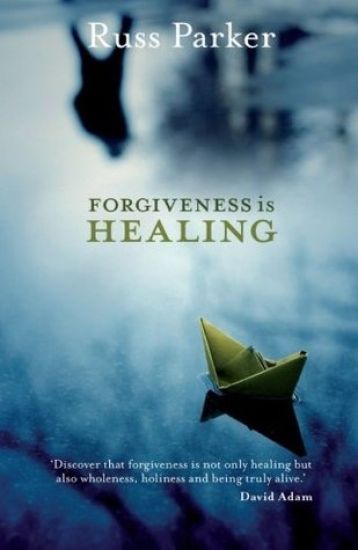
Forgiveness is Healing

Forgiveness is Healing

Russ Parker

SPCK Publishing
2011
nidottu
In Forgiveness is Healing, Russ Parker offers a challenging and deeply encouraging examination of the whole area of forgiveness and healing. While always aware of the costly nature of true forgiveness, he demonstrates that our lives will be greatly diminished if we do not reach out to offer and receive the love and healing displayed so abundantly in the person of Jesus Christ.
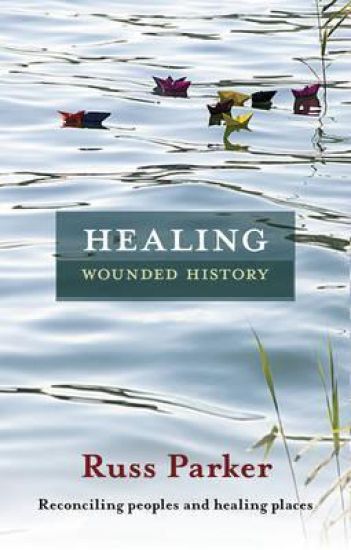
Healing Wounded History

Healing Wounded History

Russ Parker

SPCK Publishing
2012
pokkari
An exciting presentation of a fresh approach to healing by one of the UK's leading exponents of pastoral care and Christian healing. Russ Parker explores the power of wounded group stories and reveals how they affect the people and places where they first occurred. He shows how history repeats itself until we find ways to listen to it, locate where it is happening, and find healing for its consequences. Healing Wounded History introduces the role of strategic prayer known as 'representional confession' and demonstrates how it makes reconciliation and renewal possible for families, churches, communities, tribes and nations. This book is groundbreaking in its ideas, consistent in its theology, and gentle in its approach.