Kirjahaku
Etsi kirjoja tekijän nimen, kirjan nimen tai ISBN:n perusteella.
1000 tulosta hakusanalla S. Field

Eleven-year-old Peter Lee has one goal in life: to become a paleontologist. But in one summer, that all falls apart. Told in short, accessible journal entries and combining the humor of Timmy Failure with the poignant family dynamics of Lynda Mullaly Hunt, Peter Lee will win readers' hearts. Eleven year-old Peter Lee has one goal in life: to become a paleontologist. Okay, maybe two: to get his genius kid-sister, L.B., to leave him alone. But his summer falls apart when his real-life dinosaur expedition turns out to be a bust, and he watches his dreams go up in a cloud of asthma-inducing dust. Even worse, his grandmother, Hammy, is sick, and no one will talk to Peter or L.B. about it. Perhaps his days as a scientist aren't quite behind him yet. Armed with notebooks and pens, Peter puts his observation and experimental skills to the test to see what he can do for Hammy. If only he can get his sister to be quiet for once -- he needs time to sketch out a plan.
Featuring a WSP Reading Group Guide Purvis, Mississippi, 1974: Willem Fremont has just returned to his childhood hometown to come to grips with his past. He has spent his adult life held tight inside the clenched fist of panic disorder -- the stagnation produced by making too many wrong decisions was more paralyzing than a whole case of Jim Beam. Determined that a trip back to the family farm will help him confront his unhappy upbringing, Willem is stunned to find his father's beloved acreage -- so much land, such a great big house -- in the hands of Eilene Till and her two grown sons. There's the plump and perennially unemployed Sonny, building a shrimp boat in the Tills' landlocked backyard, and Bruno, a disabled Vietnam vet, who escapes into his stash of old "National Geographics" while his wife, Leah, seeks a small measure of comfort in the day-to-day tending of their farm. How Willem navigates through these unsettled lives to find love and reconciliation in his own is at the heart of this compassionate portrait of small-town America that celebrates the unusual, embraces the unwanted, and opens its arms to all lost souls in search of a home.

In his seventeenth chronicle Brother Cadfael is asked to help identify a corpse found on Abbey land and discovers that it is the least baffling facet of a mysterious murder.
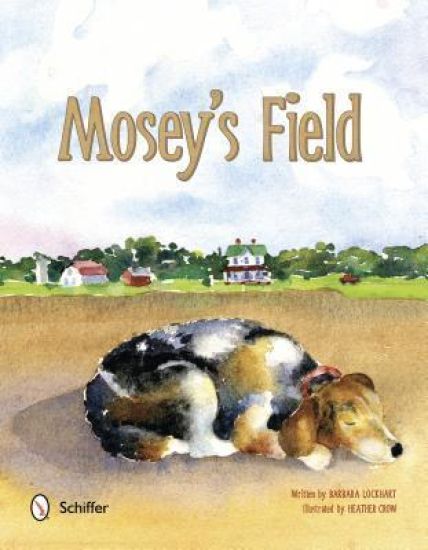
Mosey, a long-legged, lumbering kind of dog, has a napping place in the middle of a corn field, but when the plow comes through, followed later by the planter, Mosey can no longer find his spot. As the corn grows, Mosey's adventures in the field include exploring tunnels in the corn rows, chasing rabbits, finding relief from the summer’s heat, and, at the end of the season, experiencing the terrifying (to him) appearance of a combine. Mosey's Field illuminates the beauty of the rural landscape, the change in seasons, and the progression of agricultural methods. While Mosey continues the search for his special place, children are not only connected to the environment, but the important concept of where food comes from. Early reader–ages 5-8.

In 1895 the Vassar College Athletic Association ignored the constraints placed on women athletes of that era and held its first-ever women's field day, featuring competition in five track and field events. Soon colleges across the country were offering women the opportunity to compete, and in 1922 the United States selected 22 women to compete in the Women's World Games in Paris. Upon their return, female physical educators severely criticized their efforts, decrying "the evils of competition." Wilma Rudolph's triumphant Olympics in 1960 sparked renewed support for women's track and field in the United States. From 1922 to 1960, thousands of women competed, and won many gold medals, with little encouragement or recognition. This work is a history, based on many interviews and meticulous research in primary source documents, of women's track and field, from its beginnings on the lawns of Vassar College in 1895, through 1980, when Title IX began to create a truly level playing field for men and women. The results of Amateur Athletic Union Women's Indoor and Outdoor Track and Field Championships since 1923 are given, as well as full coverage of female Olympians.

God's Field Hospital offers treatment by the greatest physician of all, God the healer, for those hurt, wounded or ill, and all those who find themselves in the dark, nursing a cold heart, or holding on to a failing life. And, as with any field hospital, the church should be open on all sides, to all who feel excluded. Endorsements "A creative, comprehensive, practical expression of Pope Francis's metaphor of the "church as a field hospital." Michael Hansen's new book makes this powerful metaphor real. The church does not describe or interpret a field hospital—it is a field hospital." —James Martin, SJ, author of Learning to Pray "God's Field Hospital makes Pope Francis's metaphor of the "church as a field hospital" real. The sixty Ignatian spiritual exercises offer retreatants and directors an effective relationship with God, the healer." —Sr. Anne Arabome, SSS, Faber Center for Ignatian Spirituality, Marquette University, and author of Why Do You Trouble This Woman? "I personally witness to the practicality and power of the spiritual exercises in God's Field Hospital. These exercises invite us to access the riches of Ignatian spiritualty so that we can listen more carefully and experience God's healing, and so be renewed for Christ's mission in the world. Warning! This book could change your life." —Richard Leonard, SJ, author of Where the Hell Is God? and Why God? Michael Hansen, SJ, is a Jesuit of the Australian Province. He is the national director of the First Spiritual Exercises ministry (FSE), a retreat director, speaker, and spiritual formator. With his extensive pastoral experience and degrees in the arts, theology, and Ignatian spirituality, he has developed creative uses of the Ignatian spiritual exercises, seeking to make them more accessible. He lives in Sydney, Australia. †
In this comprehensive volume Donald D. Cox gathers substantial data on simple field plants in Eastern North America and with great clarity he studies their profound impact on regional ecosystems and the ecology of the earth. This includes origins and types of soils and how these soils relate to vegetation; climate and human culture; plants and fungi growth in fields; adaptations for survival; field plant reproduction and seed dispersal; and toxic, medicinal, and edible plants that flourish in fields. Cox provides complete and accurate details for readers interested in collecting and/or preserving field plants. He focuses on field conservation and habitat preservation throughout the book. A final chapter offers special projects and investigations for those who wish to go a step beyond collecting and identifying plants. This book is an indispensable reference for professional and amateur naturalists as well as students and the general public.

This is the first ever field guide from best selling author Bryan Peterson, featuring material from previous titles plus new examples. It covers a broad list of topics & features Peterson's breathtaking imagery that never fails to inspire. Best-selling author Bryan Peterson revises the best material from his previous books, with the addition of exciting new photographic examples, in his first ever field guide. For the beginning photographer to the serious amateur, including students, aspiring professionals and the multitude of existing Peterson fans, this is the perfect pocket guide to take along while shooting for on-location reference. It covers a broad list of topics useful to photographers, from composition and lighting to shutter speed and much more. It is the perfect size for taking on-location and as always, Peterson keeps his readers inspired with his breathtaking imagery.
A modern-day tale of living close to the land describes how the author returned to his native Appalachians to live alone deep in the North Carolina woods in a primitive cabin without electricity, plumbing, modern-day transportation, or regular income and his observations on the rhythms of the natural world around him, the nature of self-sufficiency, wilderness, and more. Reprint.
The daily administration of an academic library often leaves you needing quick advice on the topic at hand. Nelson, an experienced administrator writing from first-hand knowledge, delivers such advice in 30 topical chapters. Each chapter begins with an Assertion, a one-sentence summary allowing you to rapidly scan the book and find what you need. When you re on the job you can dip into this guide for ready-to-use guidance on the full range of administrator responsibilities, such asHow to think and act politicallyPreparing staff for safety and security proceduresInfluencing student and faculty's perception of the library as a basic component of educationFostering librarians' professional identity as teachersCommunicating effectively, from email messages to meetingsAssessment and systematic collection of dataCommentary sections in each chapter offer observations and interpretation, with abundant examples of useful advice. If you want to dig further into a topic, a Readings section points you to resources. Packed with insight about the day-to-day operations of the academic library, Nelson's guide will be invaluable to new and experienced administrators alike.
Many excellent hardware and software products exist to protect our data communications sytems, but security threats dictate that they must be further enhanced. Many laws implemented during the past 15 years have provided law enforcement with more teeth to take a bite out of cyber crime, but there is still a need for individuals who know how to investigate computer network security incidents. Organizations demand experts with both investigative talents and a technical knowledge of how cyberspace really works. Cyber Crime Investigator's Field Guide, Second Edition provides the investigative framework that needs to be followed, along with information about how cyberspace works and the tools that reveal the who, what, when, where, why, and how in the investigation of cyber crime.This volume offers a valuable Q&A by subject area, an extensive overview of recommended reference materials, and a detailed case study. Appendices highlight attack signatures, UNIX/Linux commands, Cisco PIX commands, port numbers targeted by trojan horses, and more.
The Pocho Research Society's Field Guide to Erased and Invisible Histories
Sandra de la Loza
UCLA Chicano Studies Research Center Press
2011
pokkari
Visual and performance artist Sandra de la Loza presents a wry commentary on the Chicano history of Los Angeles in this field guide to Downtown and East Los Angeles. Using the format of the photographic essay, she documents the exploits of the Pocho Research Society, an organization dedicated to commemorating sites in Los Angeles that are of importance to the Chicano community but that have been erased by urban development or neglect. Through the unauthorized acts of commemoration, the Pocho Research Society calls our attention to their absence from official narratives.The field guide also offers playful tours of the murals at Estrada Courts and the Fort No Moore Secret Museum, founded by the Pocho Research Society to preserve the history of the Fort Moore Pioneer Memorial (a history that includes accounts of the Lizard People, who lived in catacombs far beneath the monument).By drawing attention to these invisible monuments and lost histories, de la Loza asks her readers to consider the broader question of what constitutes a community's history.

* Durable, inexpensive, fun to use nature identification guide * Great for the beach and coastal hikes * Created by a high-school science teacher This field guide for Northeast coastal birds is a fun, easy way to identify those birds playing in the ocean breezes. Bring it along to the beach, or on a coastal hike. This tough, lightweight laminated card can take abuse and is waterproof. Mac's Field Guides are the perfect wildlife identification tool for the amateur naturalist, covering a wide variety of subjects and regions in North America. More than 1 million Mac's Guides have been sold

* Durable, inexpensive, fun to use nature identification guide * Great for taking on fishing outings * Created by a high-school science teacher This field guide for freshwater fish is a fun, easy way to identify your catch. Bring it along in the boat or to the beach. This tough, lightweight laminated card can take abuse and is waterproof. Mac's Field Guides are the perfect wildlife identification tool for the amateur naturalist, covering a wide variety of subjects and regions in North America. More than 1 million Mac's Guides have been sold

* Durable, inexpensive, fun to use nature identification guide * Great for taking on fishing outings * Created by a high-school science teacher This field guide for Northeast coastal fish is a fun, easy way to identify your catch. Bring it along in the boat or to the beach. The tough, lightweight laminated card can take abuse and is waterproof. Mac's Field Guides are the perfect wildlife identification tool for the amateur naturalist, covering a wide variety of subjects and regions in North America. More than 1 million Mac's Guides have been sold

* Durable, inexpensive, fun to use nature identification guide * Great for families, hikers, and park visitors * Created by a high-school science teacher This field guide for Acadia National Park includes both common and scientific names, plus information on size and habitat. You can tape it onto the deck of your kayak. Slip it into your pack or keep it in your car. No matter the weather or terrain, Mac's Field Guides are the perfect wildlife identification tool for the amateur naturalist, covering a wide variety of subjects and regions in North America. More than 1 million Mac's Guides have been sold

* Great for gardeners and amateur naturalists * Waterproof, rugged, and washable * Created by a high-school science teacher More than 1 million Mac's Field Guides have been sold -- in part because they're so easy to carry and use. Take this one out into your yard or garden to identify the "good bugs" from the "bad bugs". Mac's Field Guides are the perfect wildlife identification tool for the amateur naturalist, covering a wide variety of subjects and regions in North America.