Kirjahaku
Etsi kirjoja tekijän nimen, kirjan nimen tai ISBN:n perusteella.
1000 tulosta hakusanalla Saul Alinsky
Saül ou l'Ombre de Samüel, tragédie, tirée de l'Ecriture Sainte. Collège d'Harcour, 12 août 1715
François Bouvard
Hachette Livre Bnf
2021
pokkari

Saül, oratorio mis en action
Étienne Morel de Chédeville; Jacques-Marie DesChamps; Jean-Baptiste-Denis Desprès
Hachette Livre Bnf
2021
pokkari

Saül et David, tragédie en cinq actes
Hachette Livre Bnf
2022
pokkari
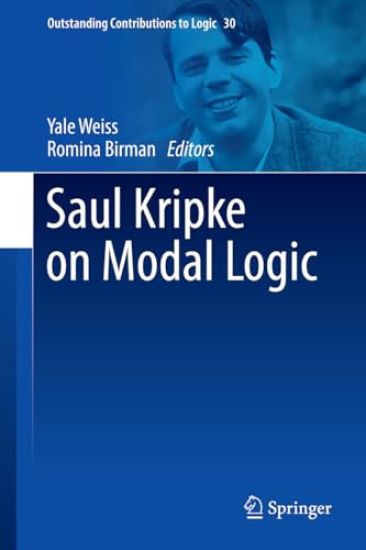
Saul Kripke on Modal Logic
Springer International Publishing AG
2024
sidottu
This edited volume brings together papers by both eminent and rising scholars to celebrate Saul Kripke’s singular contributions to modal logic. Kripke’s work on modal logic helped usher in a new semantic epoch for the field and made facility with modal logic indispensable not only to technically oriented philosophers but to theoretical computer scientists and others as well. This volume features previously unpublished work of Kripke’s as well as a brief intellectual biography recounting the story of how Kripke became interested in, and made his first contributions to, modal logic. However, the majority of the volume’s contributions are forward-looking, and produce new philosophical and technical insights by engaging with ideas tracing back to Kripke.

Saul in Story and Tradition
Mohr Siebeck
2006
sidottu
The character of Saul and his place within the history, theology, and ideology of ancient Israel have fascinated interpreters for centuries. This book surveys the field of Saul studies. It includes in the first instance essays detailing Saul's place within the biblical narrative and its constituent parts (such as the Deuteronomistic History and the Chronicler's work). The possibility of identifying a Saulide period in the archaeological record is also discussed. A number of essays look at more specific themes and passages within the Saul cycle, such as his heroic nature, kingship, war, and literary balance. The final section of the book looks at the place of Saul within the post-biblical interpretative traditions, with essays devoted to Saul in the works of Josephus, in midrashic literature, in the Qur'an, in selected European literary texts, in the western artistic tradition, and in Handel's oratorio Saul. Contents: Carl S. Ehrlich: Introduction Avraham Faust: Settlement Patterns and State Formation in Southern Samaria and the Archaeology of (a) Saul Siegfried Kreuzer: Saul - not always - at War. A New Perspective on the Rise of Kingship in Israel Steven L. McKenzie: Saul in the Deuteronomistic History Yairah Amit: The Delicate Balance in the Image of Saul and Its Place in the Deuteronomistic History Gregory Mobley: Glimpses of the Heroic Saul Christophe Nihan: Saul among the Prophets (1 Sam 10:10-12 and 19:18-24). The Reworking of Saul's Figure in the Context of the Debate on "Charismatic Prophecy" in the Persian Era Mark W. Hamilton: The Creation of Saul's Royal Body. Reflections on 1 Samuel 8-10 Marsha C. White: Saul and Jonathan in 1 Samuel 1 and 14 Samuel A. Meier: The Sword. From Saul to David C. Mark McCormick: From Box to Throne. The Development of the Ark in DtrH and P Gary N. Knoppers: Israel's First King and "the Kingdom of YHWH in the hands of the sons of David." The Place of the Saulide Monarchy in the Chronicler's Historiography Louis H. Feldman: Josephus' View of Saul Hanna Liss: The Innocent King. Saul in Rabbinic Exegesis Walid A. Saleh: "What if you refuse, when ordered to fight?" King Saul (Talut) in the Qur'an and Post-Quranic Literature Rüdiger Bartelmus: Handel and Jennens' Oratorio "Saul." A Late Musical and Dramatic Rehabilitation of the Figure of Saul, Misrepresented in theOld Testament as the Diametrical Opposite of David Sarah Nicholson: Catching the Poetic Eye. Saul Reconceived in Modern Literature Marc Michael Epstein: Seeing Saul

In den Erzählungen der Samuelbücher stehen Saul und David einander nicht nur als Einzelfiguren gegenüber, sondern repräsentieren auch ihre jeweiligen Reiche Israel und Juda. Das durchgängige Kompositionsmerkmal des Figurenkontrastes spiegelt deshalb auch den israelitisch-judäischen Gegensatz. Klaus-Peter Adam widmet sich der Figurenkonstellation und Handlungsabfolge der Erzählungen und ordnet Motive und Themen in die Geschichtsschreibung der Samuel- und der Königebücher ein. Ihre Bezüge zur übrigen Überlieferung von den Königen Judas und Israels liegen besonders in der judäischen Perspektive begründet, die sich bereits in den Quellen der Königebücher nachweisen lässt. Wie in diesen Quellen der israelitisch-judäischen Königsgeschichte erweisen sich Bündnisse und Aufstände auch als entscheidende geschichtliche Ereignisse der narrativen Entfaltungen um die Figuren Saul und David. Die Eigenarten dieser Erzählungen, ihre Konzeption als paradigmatische Vorgeschichte zur späteren Königsabfolge und ihr Überlieferungswachstum werden im Vergleich mit anderen Werken antiker Geschichtsschreibung bestimmt.


Saul, a Mystery
Outlook Verlag
2024
sidottu

Saul; Murhen?ytelm?n Mukainen Runoelma viidess? N?yt?ksess?
Antti T?rneroos
Megali Verlag
2023
pokkari
Alkuper isen j ljenn s. Kustannusyhti Megali on erikoistunut historiallisten teosten painamiseen suurikokoisina, jotta n k vammaisten olisi helpompi lukea niit .

Saul; Murhen?ytelm?n Mukainen Runoelma viidess? N?yt?ksess?
Antti T?rneroos
Megali Verlag
2023
sidottu
Alkuper isen j ljenn s. Kustannusyhti Megali on erikoistunut historiallisten teosten painamiseen suurikokoisina, jotta n k vammaisten olisi helpompi lukea niit .

Saul, J: Autumn, 1876 John Saul's descriptive catalogue of D
John Saul
Antigonos Verlag
2024
nidottu

Saul, J: Autumn, 1876 John Saul's descriptive catalogue of D
Antigonos Verlag
2024
sidottu

Saul II. - Der dicke K nig von Kanonenland ist ein unver nderter, hochwertiger Nachdruck der Originalausgabe aus dem Jahr 1798. Hansebooks ist Herausgeber von Literatur zu unterschiedlichen Themengebieten wie Forschung und Wissenschaft, Reisen und Expeditionen, Kochen und Ern hrung, Medizin und weiteren Genres. Der Schwerpunkt des Verlages liegt auf dem Erhalt historischer Literatur. Viele Werke historischer Schriftsteller und Wissenschaftler sind heute nur noch als Antiquit ten erh ltlich. Hansebooks verlegt diese B cher neu und tr gt damit zum Erhalt selten gewordener Literatur und historischem Wissen auch f r die Zukunft bei.
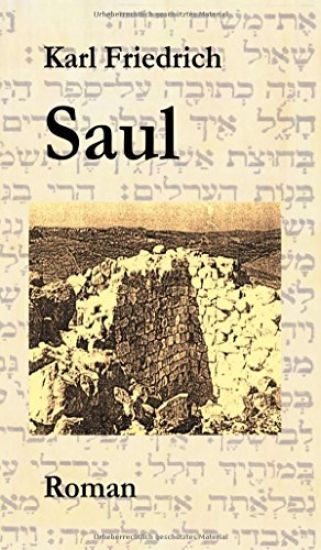
Saul, der erste K nig in Israel, geh rt zu den tragischen biblischen Gestalten. Er scheitert an den Anspr chen, die an ihn gestellt werden, aber auch an den eigenen ehrgeizigen Zielen. "Vollbringen war ihm keines geschenkt. Unter der Hand zerbrach ihm, was er eben voller Hoffnung angefasst hatte, und diese Erkenntnis zerriss ihn selbst, weil er immer wieder den Kampf dagegen aufnahm. Er gab sich nicht mit halben Dingen zufrieden, er wollte das Ganze, das ihm vor Augen stand, mit aller Macht. Aber kann man ein Ideal in einer unvollkommenen, bruchst ckhaften Welt erzwingen? Der Versuch muss scheitern, er f hrt nicht ans Ziel, sondern unweigerlich zu Gewalt und Unmenschlichkeit. Saul nahm es wahr und wollte es doch nicht wahrhaben. Das war sein Verh ngnis, daran litt er." Das schreibt r ckblickend Sauls letzter Nachkomme. Neben ihm berichten drei weitere Erz hler jeweils aus ihrer pers nlichen Perspektive von verschiedenen Lebensabschnitten des K nigs, wobei die biblische Tradition zwar den Rahmen der Erz hlungen vorgibt, aber frei ausgestaltet und mit fiktiven Teilen verwoben wird, so dass sich auch der heutige Leser mit seinen eigenen Fragen zum Sinn des Lebens und der Geschichte in den Ereignissen aus ferner Zeit wiederfindet.
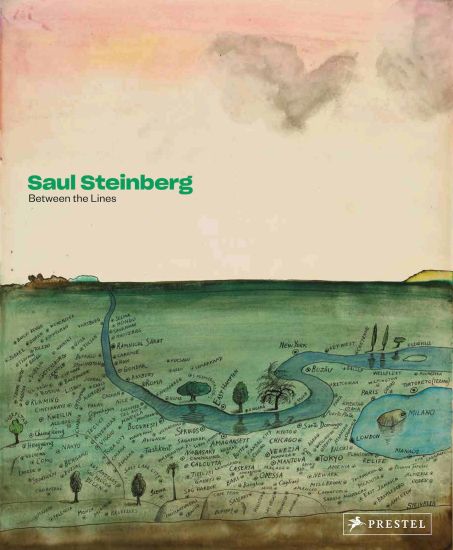
Romanian-born Saul Steinberg (1914-1999) had one of the most remarkable careers in American art. While renowned for the covers and drawings that appeared in The New Yorker for nearly six decades, he was equally acclaimed for the drawings, paintings, prints, collages, and sculptures he exhibited internationally in galleries and museums. Through these parallel yet integrated careers, he crafted a rich, playful and constantly evolving visual language. Known to the larger public as the creator of the iconic View of the World from 9th Avenue, Steinberg lamented being most famous as “the man who drew that poster.” This beautiful volume goes a long way toward correcting that limited perception. It brings together more than eighty works in a variety of media: collage, drawings, objects, and photographs. It also features Steinberg’s astonishing mural, Art Viewers, a gigantic assemblage that was shown on a single occasion in 1966. This book is structured around three essays that explore the artist’s use of symbols, his fascination with fakery and imitation, his musings on identity through the theme of the mask, and the autobiographical nature of his work.
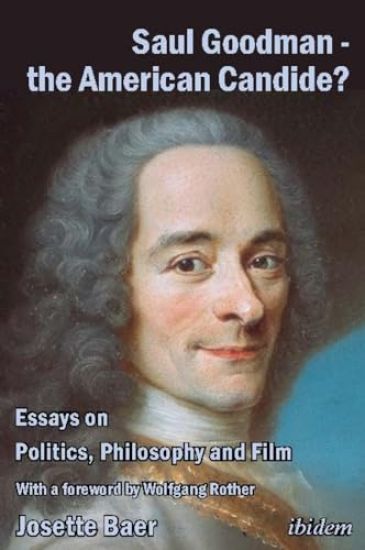
Saul Goodman - the American Candide?
Josette Baer; Wolfgang Rother
ibidem-Verlag, Jessica Haunschild u Christian Schon
2024
nidottu
This book offers a fascinating insight into how film as a medium can portray political thought. Josette Baer’s collection of seven essays is the first publication of this kind; her analysis covers films such as The Best of Enemies and The Lost Daughter, and the TV series Breaking Bad and Better Call Saul in an interdisciplinary approach to politics, philosophy, and film.