Kirjojen hintavertailu. Mukana 12 595 353 kirjaa ja 12 kauppaa.

Kirjahaku

Etsi kirjoja tekijän nimen, kirjan nimen tai ISBN:n perusteella.

1000 tulosta hakusanalla Schelling Hans

Remapping Biology with Goethe, Schelling, and Herder
Remapping Biology with Goethe, Schelling, and Herder recruits a Romantic philosophy of biology into contemporary debates to both integrate the theoretical implications of ecology, evolution, and development, and to contextualize the successes of the Modern Evolutionary Synthesis’s gene’s-eye-view of biology.The dominant philosophy of biology in the twentieth century was one developed within and for the Modern Evolutionary Synthesis. As biologists like those developing an Extended Evolutionary Synthesis have pushed the limits of this paradigm, fresh philosophical approaches have become necessary. This book makes the case that an organicism developed by the 19th century figures Goethe, Schelling, and Herder offers surprising resources to navigate the contemporary biological and evolutionary terrain. This “metamorphic organicism” resonates with present trends in biological theory that emphasize process, organismal dynamics, ecology, and agency. It also proposes strategies for reintegrating reductive and mechanistic maps of biology, like those of the Modern Evolutionary Synthesis, into richer theoretical representations of life.Drawing from cutting-edge biology, Romantic history, and perspectival pluralist literatures, this integrated history-and-philosophy-of-biology will be of interest to students and scholars interested in the genesis of current theoretical tensions in evolutionary biology, and to those seeking constructive ways to resolve those tensions, including practicing biologists and educators.
Remapping Biology with Goethe, Schelling, and Herder
Remapping Biology with Goethe, Schelling, and Herder recruits a Romantic philosophy of biology into contemporary debates to both integrate the theoretical implications of ecology, evolution, and development, and to contextualize the successes of the Modern Evolutionary Synthesis’s gene’s-eye-view of biology.The dominant philosophy of biology in the twentieth century was one developed within and for the Modern Evolutionary Synthesis. As biologists like those developing an Extended Evolutionary Synthesis have pushed the limits of this paradigm, fresh philosophical approaches have become necessary. This book makes the case that an organicism developed by the 19th century figures Goethe, Schelling, and Herder offers surprising resources to navigate the contemporary biological and evolutionary terrain. This “metamorphic organicism” resonates with present trends in biological theory that emphasize process, organismal dynamics, ecology, and agency. It also proposes strategies for reintegrating reductive and mechanistic maps of biology, like those of the Modern Evolutionary Synthesis, into richer theoretical representations of life.Drawing from cutting-edge biology, Romantic history, and perspectival pluralist literatures, this integrated history-and-philosophy-of-biology will be of interest to students and scholars interested in the genesis of current theoretical tensions in evolutionary biology, and to those seeking constructive ways to resolve those tensions, including practicing biologists and educators.

Hölderlin, Hegel und Schelling in ihren schwäbischen Jugendjahren
H lderlin, Hegel und Schelling in ihren schw bischen Jugendjahren - Eine Festschrift zur Jubelfeier der Universit t T bingen ist ein unver nderter, hochwertiger Nachdruck der Originalausgabe aus dem Jahr 1877. Hansebooks ist Herausgeber von Literatur zu unterschiedlichen Themengebieten wie Forschung und Wissenschaft, Reisen und Expeditionen, Kochen und Ern hrung, Medizin und weiteren Genres. Der Schwerpunkt des Verlages liegt auf dem Erhalt historischer Literatur. Viele Werke historischer Schriftsteller und Wissenschaftler sind heute nur noch als Antiquit ten erh ltlich. Hansebooks verlegt diese B cher neu und tr gt damit zum Erhalt selten gewordener Literatur und historischem Wissen auch f r die Zukunft bei.
Friedrich W.J. Schelling

Friedrich W.J. Schelling

Jochen Kirchhoff

BoD - Books on Demand
2024
pokkari
Friedrich W. J. Schelling Monografie Autor: Jochen Kirchhoff Der ausgewiesene Schelling-Kenner, Naturwissenschaftskritiker und Philosoph Jochen Kirchhoff unternimmt in dieser Monografie den Versuch, dem Leser den gro en deutschen Philosophen der romantischen Naturphilosophie Friedrich Wilhelm Schelling vielf ltig n herzubringen. Dabei werden die wichtigsten philosophischen Leistungen Schellings herausgehoben und im Lichte der Bewusstseinskrise der Neuzeit diskutiert. Schelling ist und bleibt aktuell und hat mit seinem Bestehen auf einem organischen Weltzusammenhang, seiner Diskussion der Freiheitsfrage und seinem naturgeschichtsphilosophischen Denken einer m glichen Erl sung der Natur durch den Menschen und im Menschen neben vielen anderen Impulsen Anregungen zu einer L sung des R tsels des Menschseins eingebracht.
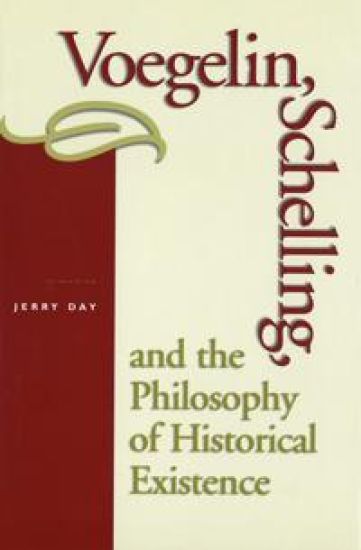
Voegelin, Schelling and the Philosophy of Historical Existence
In this important new work, Jerry Day brings to light the need for an extensive reinterpretation of the mature philosophy of Eric Voegelin, based on Voegelin's published and unpublished appreciation for nineteenth-century German philosopher F. W. J. Schelling. Schelling, whom Day maintains was one of the most important guides to Voegelin's mature philosophy of consciousness and historiography, has been described as the father of several disparate movements and schools of continental philosophy - chief among them being ""Hegelian"" idealism and existentialism. This characterization implies that Schelling was a scattered thinker with little or no appreciation for philosophy as a disciplined inquiry into the nature of human affairs. Voegelin was critical of this portrayal of Schelling. He argued that it lacked proper sensitivity for the impressive extent to which this giant of continental thought was able to rise above the ""creed communities"" of his time and recover the abiding concern of mature philosophers everywhere: the philosophia perennis. Those who claim that Schelling was scattered have failed, according to Voegelin, to appreciate the nonideological breadth of this great philosopher, misled by the splinter movements and schools that arose from mere fragments of his thought. In truth, Schelling founded no school and launched no movement. Instead, he reasoned with the disciplined integrity and wonder of a ""spiritual realist."" Day argues that Voegelin was a fine interpreter of Schelling, particularly during the decisive years when the central orientation of Voegelin's mature thought was beginning to take hold - between the writing of his History of Political Ideas and its eventual transformation into Order and History. Day gathers an impressive array of evidence to interpret Voegelin's little-known support for Schelling's achievements, while offering detailed analyses and helpful summaries of a vast body of literature that has yet to be translated into English. Day's partial agreement with Voegelin's uncommon assessment of Schelling provides him with the point of departure that leads to one of this book's most distinctive contributions to contemporary thought. It has the rare ability to help clear the way for philosophical realists to make peace with many of their contemporaries, giving them further grounds for accepting the strongest anthropological and psychological insights of recent continental philosophy, while helping them to avoid its tendencies toward nihilistic despair or fideisitic historicism. By reading each of the philosophers through the eyes of the other, Day provides an analysis that will be illuminating for Voegelin scholars and Schelling scholars alike. The book will also appeal to readers with more general interests in the history and development of continental philosophy, political theory, and comparative religion over the past century.