Kirjojen hintavertailu. Mukana 11 244 527 kirjaa ja 12 kauppaa.

Kirjahaku

Etsi kirjoja tekijän nimen, kirjan nimen tai ISBN:n perusteella.

1000 tulosta hakusanalla Sheldon Friedman

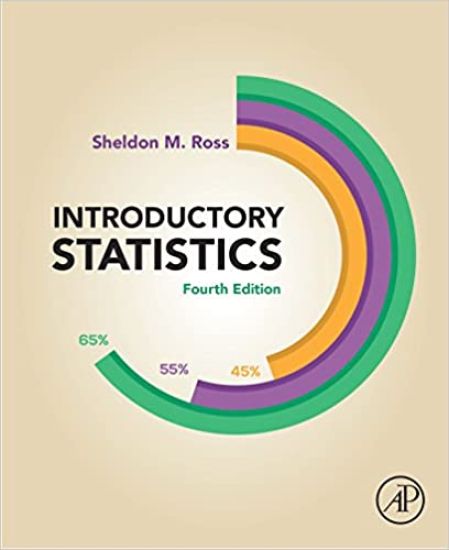
Introductory Statistics

Introductory Statistics

Sheldon M. Ross

Academic Press Inc
2017
sidottu
Introductory Statistics, Fourth Edition, reviews statistical concepts and techniques in a manner that will teach students not only how and when to utilize the statistical procedures developed, but also how to understand why these procedures should be used. The text's main merits are the clarity of presentation, contemporary examples and applications from diverse areas, an explanation of intuition, and the ideas behind the statistical methods. Concepts are motivated, illustrated, and explained in a way that attempts to increase one's intuition. To quote from the preface, it is only when a student develops a feel or intuition for statistics that she or he is really on the path toward making sense of data. Ross achieves this goal through a coherent mix of mathematical analysis, intuitive discussions, and examples. Applications and examples refer to real-world issues, such as gun control, stock price models, health issues, driving age limits, school admission ages, use of helmets, sports, scientific fraud, and many others. Examples relating to data mining techniques using the number of Google queries or Twitter tweets are also considered. For this fourth edition, new topical coverage includes sections on Pareto distribution and the 80-20 rule, Benford's law, added material on odds and joint distributions and correlation, logistic regression, A-B testing, and more modern (big data) examples and exercises.

Introduction to Probability and Statistics for Engineers and Scientists
Introduction to Probability and Statistics for Engineers and Scientists, Sixth Edition, uniquely emphasizes how probability informs statistical problems, thus helping readers develop an intuitive understanding of the statistical procedures commonly used by practicing engineers and scientists. Utilizing real data from actual studies across life science, engineering, computing and business, this useful introduction supports reader comprehension through a wide variety of exercises and examples. End-of-chapter reviews of materials highlight key ideas, also discussing the risks associated with the practical application of each material. In the new edition, coverage includes information on Big Data and the use of R. This book is intended for upper level undergraduate and graduate students taking a probability and statistics course in engineering programs as well as those across the biological, physical and computer science departments. It is also appropriate for scientists, engineers and other professionals seeking a reference of foundational content and application to these fields.
The Worm at the Core

The Worm at the Core

Sheldon Solomon; Jeff Greenberg; Tom Pyszczynski

Penguin Books Ltd
2016
pokkari
Proof of a ground-breaking psychological theory: that the fear of death is the hidden motive behind almost everything we do.'A joy ... The Worm at the Core asks how humans can learn to live happily while being intelligently aware of our impending doom, how knowledge of death affects the decisions we make every day, and how we can stop fear and anxiety overwhelming us' Charlotte Runcie, Daily Telegraph'Provocative, lucid and fascinating' Financial Times'An important, superbly readable and potentially life-changing book . . . suggests one should confront mortality in order to live an authentic life' Tim Lott, Guardian 'Deep, important, and beautifully written ... utterly original' Daniel Gilbert
The Oxford Handbook of U.S. Environmental Policy

The Oxford Handbook of U.S. Environmental Policy

Sheldon Kamieniecki; Michael Kraft

Oxford University Press Inc
2016
nidottu
Prior to the Nixon administration, environmental policy in the United States was rudimentary at best. Since then, it has evolved into one of the primary concerns of governmental policy from the federal to the local level. As scientific expertise on the environment rapidly developed, Americans became more aware of the growing environmental crisis that surrounded them. Practical solutions for mitigating various aspects of the crisis - air pollution, water pollution, chemical waste dumping, strip mining, and later global warming - became politically popular, and the government responded by gradually erecting a vast regulatory apparatus to address the issue. Today, politicians regard environmental policy as one of the most pressing issues they face. The Obama administration has identified the renewable energy sector as a key driver of economic growth, and Congress is in the process of passing a bill to reduce global warming that will be one of the most important environmental policy acts in decades. The Oxford Handbook of U.S. Environmental Policy is a state-of-the-art work on all aspects of environmental policy in America. Over the past half century, America has been the world's leading emitter of global warming gases. However, environmental policy is not simply a national issue. It is a global issue, and the explosive growth of Asian countries like China and India mean that policy will have to be coordinated at the international level. The book therefore focuses not only on the U.S., but on the increasing importance of global policies and issues on American regulatory efforts. This is a topic that will only grow in importance in the coming years, and this handbook serves as an authoritative guide to any scholar interested in the issue.
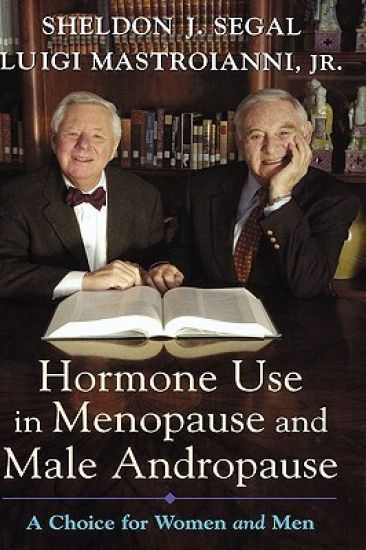
Hormone Use in Menopause and Male Andropause

Hormone Use in Menopause and Male Andropause

Sheldon J. Segal; Luigi Mastroianni

Oxford University Press Inc
2003
sidottu
This book, by two of the most distinguished figures in fertility and reproduction research, answers all the most common questions about menopause and andropause, and hormone resupplement therapy (HRT) for menopausal women. It offers explanations of all aspects of this subject, presenting balanced and reliable information about benefits, risks, and prospects for this field. Segal invented Norplant, the first long-term implantable contraceptive, and as the leader of Reproductive Biology at the Population Council, he orchestrated and coordinated the research and trials leading to basically every new contraceptive introduced over a period of about 25 years. Mastroianni did more than anyone else to develop in vitro fertizilation as a viable treatment option, and was for many years the chairman of the largest department of obstetrics and gynecology, and the director of the most successful IVF clinic. This book is unique in including coverage of the climacteric in men.
A Dream or Not!

A Dream or Not!

Sheldon Penner

Tellwell Talent
2023
pokkari
A man by the name of Sheldon Penner has a closet heaped high with skeletons that he's kept under lock and key for many years. Shame, would be a good word to describe how he feels now. It's much too late to change course, the damage has been done. His wife once told the Salt Lake City police in a letter that Sheldon was a smart and intelligent man, and any length of jail time would not alter his beliefs on fairness and true justice. Back in the day, Sheldon was a handsome man that was born and raised in Canada, but received his education from Walla Walla University. He married an American lady while still in college, and it was soon thereafter misfortune abounded. This woman that shares three sons with Sheldon hastily snatches the boys away with the courts consent. Then there was another lady that fed an insurance company lies until Sheldon's quiet forgiving attitude transformed into a more callas and defiant individual. Turning the other cheek was no more an option, it stung too much to have it exposed for everyone to slap. Sheldon believes in loyalty, honesty, truthfulness and kindness, but at times when these attributes don't divulge themselves, he snaps like a dry branch instead of being nimble like a yoga instructor. These retaliations caused much confusion and regret in his life. How did Sheldon respond to all the adversity he faced, that is the question? Are you interested in finding out?Sheldon Penner
Genetic Justice

Genetic Justice

Sheldon Krimsky; Tania Simoncelli

Columbia University Press
2010
sidottu
National DNA databanks were initially established to catalogue the identities of violent criminals and sex offenders. However, since the mid-1990s, forensic DNA databanks have in some cases expanded to include people merely arrested, regardless of whether they've been charged or convicted of a crime. The public is largely unaware of these changes and the advances that biotechnology and forensic DNA science have made possible. Yet many citizens are beginning to realize that the unfettered collection of DNA profiles might compromise our basic freedoms and rights. Two leading authors on medical ethics, science policy, and civil liberties take a hard look at how the United States has balanced the use of DNA technology, particularly the use of DNA databanks in criminal justice, with the privacy rights of its citizenry. Krimsky and Simoncelli analyze the constitutional, ethical, and sociopolitical implications of expanded DNA collection in the United States and compare these findings to trends in the United Kingdom, Japan, Australia, Germany, and Italy. They explore many controversial topics, including the legal precedent for taking DNA from juveniles, the search for possible family members of suspects in DNA databases, the launch of "DNA dragnets" among local populations, and the warrantless acquisition by police of so-called abandoned DNA in the search for suspects. Most intriguing, Krimsky and Simoncelli explode the myth that DNA profiling is infallible, which has profound implications for criminal justice.
Genetic Justice

Genetic Justice

Sheldon Krimsky; Tania Simoncelli

Columbia University Press
2012
pokkari
National DNA databanks were initially established to catalogue the identities of violent criminals and sex offenders. However, since the mid-1990s, forensic DNA databanks have in some cases expanded to include people merely arrested, regardless of whether they've been charged or convicted of a crime. The public is largely unaware of these changes and the advances that biotechnology and forensic DNA science have made possible. Yet many citizens are beginning to realize that the unfettered collection of DNA profiles might compromise our basic freedoms and rights. Two leading authors on medical ethics, science policy, and civil liberties take a hard look at how the United States has balanced the use of DNA technology, particularly the use of DNA databanks in criminal justice, with the privacy rights of its citizenry. Krimsky and Simoncelli analyze the constitutional, ethical, and sociopolitical implications of expanded DNA collection in the United States and compare these findings to trends in the United Kingdom, Japan, Australia, Germany, and Italy. They explore many controversial topics, including the legal precedent for taking DNA from juveniles, the search for possible family members of suspects in DNA databases, the launch of "DNA dragnets" among local populations, and the warrantless acquisition by police of so-called abandoned DNA in the search for suspects. Most intriguing, Krimsky and Simoncelli explode the myth that DNA profiling is infallible, which has profound implications for criminal justice.
Stem Cell Dialogues

Stem Cell Dialogues

Sheldon Krimsky

Columbia University Press
2015
sidottu
Stem cells and the emerging field of regenerative medicine are at the frontiers of modern medicine. These areas of scientific inquiry suggest that in the future, damaged tissue and organs might be repaired through personalized cell therapy as easily as the body repairs itself, revolutionizing the treatment of numerous diseases. Yet the use of stem cells is fraught with ethical and public policy dilemmas that challenge scientists, clinicians, the public health community, and people of good will everywhere. How shall we deal with these amazing biomedical advances, and how can we talk about potential breakthroughs with both moral and scientific intelligence? This book provides an innovative look at these vexing issues through a series of innovative Socratic dialogues that elucidate key scientific and ethical points in an approachable manner. Addressing the cultural and value issues underlying stem cell research while also educating readers about stem cells' biological function and medical applications, Stem Cell Dialogues features fictional characters engaging in compelling inquiry and debate. Participants investigate the scientific, political, and socioethical dimensions of stem cell science using actual language, analysis, and arguments taken from scientific, philosophical, and popular literature. Each dialogue centers on a specific, recognizable topic, such as the policies implemented by the George W. Bush administration restricting the use of embryonic stem cells; the potential role of stem cells in personalized medicine; the ethics of cloning; and the sale of eggs and embryos. Additionally, speakers debate the use of stem cells to treat paralysis, diabetes, stroke effects, macular degeneration, and cancer. Educational, entertaining, and rigorously researched (with 300 references to scientific literature), Stem Cell Dialogues should be included in any effort to help the public understand the science, ethics, and policy concerns of this promising field.
Stem Cell Dialogues

Stem Cell Dialogues

Sheldon Krimsky

Columbia University Press
2017
pokkari
Stem cells and the emerging field of regenerative medicine are at the frontiers of modern medicine. These areas of scientific inquiry suggest that in the future, damaged tissue and organs might be repaired through personalized cell therapy as easily as the body repairs itself, revolutionizing the treatment of numerous diseases. Yet the use of stem cells is fraught with ethical and public policy dilemmas that challenge scientists, clinicians, the public health community, and people of good will everywhere. How shall we deal with these amazing biomedical advances, and how can we talk about potential breakthroughs with both moral and scientific intelligence? This book provides an innovative look at these vexing issues through a series of innovative Socratic dialogues that elucidate key scientific and ethical points in an approachable manner. Addressing the cultural and value issues underlying stem cell research while also educating readers about stem cells' biological function and medical applications, Stem Cell Dialogues features fictional characters engaging in compelling inquiry and debate. Participants investigate the scientific, political, and socioethical dimensions of stem cell science using actual language, analysis, and arguments taken from scientific, philosophical, and popular literature. Each dialogue centers on a specific, recognizable topic, such as the policies implemented by the George W. Bush administration restricting the use of embryonic stem cells; the potential role of stem cells in personalized medicine; the ethics of cloning; and the sale of eggs and embryos. Additionally, speakers debate the use of stem cells to treat paralysis, diabetes, stroke effects, macular degeneration, and cancer. Educational, entertaining, and rigorously researched (with 300 references to scientific literature), Stem Cell Dialogues should be included in any effort to help the public understand the science, ethics, and policy concerns of this promising field.
A Rasa Reader

A Rasa Reader

Sheldon Pollock

Columbia University Press
2016
sidottu
From the early years of the Common Era to 1700, Indian intellectuals explored with unparalleled subtlety the place of emotion in art. Their investigations led to the deconstruction of art's formal structures and broader inquiries into the pleasure of tragic tales. Rasa, or taste, was the word they chose to describe art's aesthetics, and their passionate effort to pin down these phenomena became its own remarkable act of creation. This book is the first in any language to follow the evolution of rasa from its origins in dramaturgical thought-a concept for the stage-to its flourishing in literary thought-a concept for the page. A Rasa Reader incorporates primary texts by every significant thinker on classical Indian aesthetics, many never translated before. The arrangement of the selections captures the intellectual dynamism that has powered this debate for centuries. Headnotes explain the meaning and significance of each text, a comprehensive introduction summarizes major threads in intellectual-historical terms, and critical endnotes and an extensive bibliography add further depth to the selections. The Sanskrit theory of emotion in art is one of the most sophisticated in the ancient world, a precursor of the work being done today by critics and philosophers of aesthetics. A Rasa Reader's conceptual detail, historical precision, and clarity will appeal to any scholar interested in a full portrait of global intellectual development. A Rasa Reader is the inaugural book in the Historical Sourcebooks in Classical Indian Thought series, edited by Sheldon Pollock. These text-based books guide readers through the most important forms of classical Indian thought, from epistemology, rhetoric, and hermeneutics to astral science, yoga, and medicine. Each volume provides fresh translations of key works, headnotes to contextualize selections, a comprehensive analysis of major lines of development within the discipline, and exegetical and text-critical endnotes, as well as a bibliography. Designed for comparativists and interested general readers, Historical Sourcebooks is also a great resource for advanced scholars seeking authoritative commentary on challenging works.
A Rasa Reader

A Rasa Reader

Sheldon Pollock

Columbia University Press
2018
pokkari
From the early years of the Common Era to 1700, Indian intellectuals explored with unparalleled subtlety the place of emotion in art. Their investigations led to the deconstruction of art's formal structures and broader inquiries into the pleasure of tragic tales. Rasa, or taste, was the word they chose to describe art's aesthetics, and their passionate effort to pin down these phenomena became its own remarkable act of creation. This book is the first in any language to follow the evolution of rasa from its origins in dramaturgical thought-a concept for the stage-to its flourishing in literary thought-a concept for the page. A Rasa Reader incorporates primary texts by every significant thinker on classical Indian aesthetics, many never translated before. The arrangement of the selections captures the intellectual dynamism that has powered this debate for centuries. Headnotes explain the meaning and significance of each text, a comprehensive introduction summarizes major threads in intellectual-historical terms, and critical endnotes and an extensive bibliography add further depth to the selections. The Sanskrit theory of emotion in art is one of the most sophisticated in the ancient world, a precursor of the work being done today by critics and philosophers of aesthetics. A Rasa Reader's conceptual detail, historical precision, and clarity will appeal to any scholar interested in a full portrait of global intellectual development. A Rasa Reader is the inaugural book in the Historical Sourcebooks in Classical Indian Thought series, edited by Sheldon Pollock. These text-based books guide readers through the most important forms of classical Indian thought, from epistemology, rhetoric, and hermeneutics to astral science, yoga, and medicine. Each volume provides fresh translations of key works, headnotes to contextualize selections, a comprehensive analysis of major lines of development within the discipline, and exegetical and text-critical endnotes, as well as a bibliography. Designed for comparativists and interested general readers, Historical Sourcebooks is also a great resource for advanced scholars seeking authoritative commentary on challenging works.
Agricultural Biotechnology and the Environment

Agricultural Biotechnology and the Environment

Sheldon Krimsky; Roger Wrubel P

University of Illinois Press
1996
nidottu
Probing the profitable new science of creating--and altering--life forms "Extraordinarily well documented . . . remarkably clear. This is the most comprehensive coverage of these issues to date. It will be required reading for some time." -- Lawrence Busch, Michigan State University "Krimsky and Wrubel not only describe the components of agricultural biotechnology, they address and analyze controversies involving the risks and benefits of new technologies. Coverage of technical to social components of agricultural biotechnology is unusually complete and thorough. Their even-handed and comprehensive approach to these topics is rare and extremely valuable." -- Richard Weinzierl, University of Illinois Modern agriculture is being transformed by the genetic alteration of seeds, animals, and microorganisms, a process that has produced such products as flavor saver tomatoes and crops resistant to specific insects or herbicides. Agricultural Biotechnology and the Environment is the first comprehensive overview of the ongoing transformation of agriculture, exploring the impact of genetic engineering from scientific, social, ethical, and ecological perspectives. Sheldon Krimsky and Roger Wrubel detail the impact the new generation of products is expected to have on agricultural practice and the environment and assess the degree to which current trends in biotechnology match earlier expectations. They also analyze the social and political response to innovations resulting from genetic technology. Closely examined in each of three areas--transgenic plants, genetically engineered microorganisms, and transgenic animals--are technical and scientific problems, social controversies, and anticipated environmental impacts. An objective, detailed look at a subject of interest to a broad spectrum of readers, Agricultural Biotechnology and the Environment will be of interest to researchers in the new biotechnology fields as well as to educated general readers and policymakers. A volume in the series The Environment and the Human Condition
GMOs Decoded

GMOs Decoded

Sheldon Krimsky; Marion Nestle

MIT Press
2019
sidottu
The debate over genetically modified organisms: health and safety concerns, environmental impact, and scientific opinions.Since they were introduced to the market in the late 1990s, GMOs (genetically modified organisms, including genetically modified crops), have been subject to a barrage of criticism. Agriculture has welcomed this new technology, but public opposition has been loud and scientific opinion mixed. In GMOs Decoded, Sheldon Krimsky examines the controversies over GMOs-health and safety concerns, environmental issues, the implications for world hunger, and the scientific consensus (or lack of one). He explores the viewpoints of a range of GMO skeptics, from public advocacy groups and nongovernmental organizations to scientists with differing views on risk and environmental impact.Krimsky explains the differences between traditional plant breeding and "molecular breeding" through genetic engineering (GE); describes early GMO products, including the infamous Flavr Savr tomato; and discusses herbicide-, disease-, and insect-resistant GE plants. He considers the different American and European approaches to risk assessment, dueling scientific interpretations of plant genetics, and the controversy over labeling GMO products. He analyzes a key 2016 report from the National Academies of Sciences on GMO health effects and considers the controversy over biofortified rice (Golden Rice)-which some saw as a humanitarian project and others as an exercise in public relations. Do GMO crops hold promise or peril? By offering an accessible review of the risks and benefits of GMO crops, and a guide to the controversies over them, Krimsky helps readers judge for themselves.
The Rise and Fall of Nuclearism

The Rise and Fall of Nuclearism

Sheldon Ungar

Pennsylvania State University Press
1992
sidottu
The radical changes in the Soviet bloc and the ending of the Cold War have made the sheer absurdity of the arms race transparent to virtually all observers. Yet none of the current theories of the arms race provides a coherent and systematic account of how, in the belated words of Time magazine, such a "pathology" developed in the first place. Moreover, none of these theories can readily address—much less explain—the rapid shifts in attitudes toward nuclear weapons that occurred at the start and at the end of the 1980s.While not denying explanatory value to bureaucratic, technical, political, and economic factors, The Rise and Fall of Nuclearism focuses attention instead on the cultural dimensions of the arms race. It traces the long-term secular changes in Western societies that made the faith in "nuclearism" possible to begin with; and it draws on sociological concepts to explain how such a misplaced faith accrued to nuclear weapons and why this faith eventually came undone. The concept of "moral panic" is central to the argument. Ungar shows that moral panics were precipitated by authentic surges of fear responding to perceived Soviet challenges to American nuclear supremacy; these panics provided the political leverage for large-scale nuclear buildups and made possible the growth of the military-industrial complex in the United States. Elite efforts to orchestrate panics, however, typically failed or backfired. The key to understanding the episodic nature of the arms race, Ungar argues, lies in the dynamic oscillation between nuclear worship, which viewed the "bomb" as the source of salvation, and nuclear dread, which conjured up images of vaporized cities and an end to civilization. In the concluding chapter he discusses what role nuclear fear—about proliferation, for instance—may continue to play in the post-Cold War world.
The Rise and Fall of Nuclearism

The Rise and Fall of Nuclearism

Sheldon Ungar

Pennsylvania State University Press
1992
pokkari
The radical changes in the Soviet bloc and the ending of the Cold War have made the sheer absurdity of the arms race transparent to virtually all observers. Yet none of the current theories of the arms race provides a coherent and systematic account of how, in the belated words of Time magazine, such a "pathology" developed in the first place. Moreover, none of these theories can readily address—much less explain—the rapid shifts in attitudes toward nuclear weapons that occurred at the start and at the end of the 1980s.While not denying explanatory value to bureaucratic, technical, political, and economic factors, The Rise and Fall of Nuclearism focuses attention instead on the cultural dimensions of the arms race. It traces the long-term secular changes in Western societies that made the faith in "nuclearism" possible to begin with; and it draws on sociological concepts to explain how such a misplaced faith accrued to nuclear weapons and why this faith eventually came undone. The concept of "moral panic" is central to the argument. Ungar shows that moral panics were precipitated by authentic surges of fear responding to perceived Soviet challenges to American nuclear supremacy; these panics provided the political leverage for large-scale nuclear buildups and made possible the growth of the military-industrial complex in the United States. Elite efforts to orchestrate panics, however, typically failed or backfired. The key to understanding the episodic nature of the arms race, Ungar argues, lies in the dynamic oscillation between nuclear worship, which viewed the "bomb" as the source of salvation, and nuclear dread, which conjured up images of vaporized cities and an end to civilization. In the concluding chapter he discusses what role nuclear fear—about proliferation, for instance—may continue to play in the post-Cold War world.
Government, Ethics, and Managers

Government, Ethics, and Managers

Sheldon S. Steinberg; David T. Austern

Praeger Publishers Inc
1990
nidottu
Sheldon S. Steinberg and David T. Austern focus on the ethical and unethical behavior of elected and appointed government officials. The authors discuss the various types of ethical dilemmas that confront public sector managers, offer ways to analyze them, and describe management strategies designed to prevent unethical behavior. A series of ethical dilemmas which force the reader to examine his or her own ethical standards is followed by answers to the dilemmas which emphasize the importance of ethical choices. The authors also suggest ways to identify the susceptibility to corruption of a jurisdiction and present model policies, procedures, and legislation which could be effective in reducing the opportunity for unethical behavior.Steinberg and Austern begin by looking at the ethical dilemmas commonly faced by public officials and exploring the motivations for unethical practices. They then examine the costs of unethical behavior and profile three types of government practitioners: the corrupter, the functionary, and the ethicist. The remaining chapters address the use of investigation and management control to encourage ethical practices in public sector management. The authors discuss methods to ensure financial integrity, monitor ethical practices, and comply with ethical rules; emphasize the importance of investigation by management outside of law enforcement activities; and demonstrate the management controls necessary to ensure the ethical practice of government. Essential reading for public sector managers at all levels of government, this book is also an ideal supplemental text for advanced undergraduate and graduate courses in public administration.
Biotechnics and Society

Biotechnics and Society

Sheldon Krimsky

Praeger Publishers Inc
1991
sidottu
Impacts of technological change have historically been assessed only after the passage of a significant period of time. It is then that historians recreate the decisions that were made, sort out the influencing factors, and debate in hindsight the options that were available at the time. Sheldon Krimsky, consistent with the importance of his subject, telescopes this process by providing to contemporary readers a broad overview of the first ten years of the industrial revolution in applied molecular genetics. He discusses the birth and expectations of the biotechnology industry, the response to products of genetic engineering, perspectives on risk assessment from different sectors of the scientific community, and public initiatives to regulate new products. The author explores the social and political discourse on the direction of biotechnology, and offers the most detailed examination to date of the controversy over the environmental release of genetically engineered organisms. Finally, he takes a critical look at the conventional role of technology assessment and suggests an alternative model that fits more closely with the needs of an environmentally sensitive world. Krimsky's thought-provoking work offers readers a unique opportunity to understand what questions were being asked, what options were available, and what decisions were being made when the industrial application of genetic technologies was still in its infancy. His insider's perspective will interest those working in the fields of biology and social issues; science, technology, and society; and the sociology of science. Challenging, cautioning, and balanced, this book is required reading for all who are seriously concerned with the relationship of emerging technologies to society.
Biotechnics and Society

Biotechnics and Society

Sheldon Krimsky

Praeger Publishers Inc
1991
nidottu
Impacts of technological change have historically been assessed only after the passage of a significant period of time. It is then that historians recreate the decisions that were made, sort out the influencing factors, and debate in hindsight the options that were available at the time. Sheldon Krimsky, consistent with the importance of his subject, telescopes this process by providing to contemporary readers a broad overview of the first ten years of the industrial revolution in applied molecular genetics. He discusses the birth and expectations of the biotechnology industry, the response to products of genetic engineering, perspectives on risk assessment from different sectors of the scientific community, and public initiatives to regulate new products. The author explores the social and political discourse on the direction of biotechnology, and offers the most detailed examination to date of the controversy over the environmental release of genetically engineered organisms. Finally, he takes a critical look at the conventional role of technology assessment and suggests an alternative model that fits more closely with the needs of an environmentally sensitive world.Krimsky's thought-provoking work offers readers a unique opportunity to understand what questions were being asked, what options were available, and what decisions were being made when the industrial application of genetic technologies was still in its infancy. His insider's perspective will interest those working in the fields of biology and social issues; science, technology, and society; and the sociology of science. Challenging, cautioning, and balanced, this book is required reading for all who are seriously concerned with the relationship of emerging technologies to society.
Red Vienna and the Golden Age of Psychology, 1918-1938

Red Vienna and the Golden Age of Psychology, 1918-1938

Sheldon Gardner; Gwendolyn Stevens

Praeger Publishers Inc
1992
sidottu
A few years after Austria's disastrous defeat in the First World War, Vienna, a city hardly known for intellectual fervor or serious discourse, suddenly emerged as a mecca for psychology. At a time seemingly most unpropitious for scholarly speculation, interbellum Vienna, economically and spiritually bankrupt at its onset, enjoyed a brief, remarkable two decades of excellence and innovation in an unfamiliar realm, that of abstract ideas. The most notable beneficiary of this intellectual Zeitgeist was the field of psychology; Viennese psychology became famous and its gurus and gadflies became world figures.This is the first book to present that history within the context of the political and social events of the time. Sigmund Freud, Alfred Adler, Otto Rank, Karl Buhler, Erik Erikson, and Helene Deutsch were among the hundreds of famous psychologists who lived in Vienna and established training centers there. Not only were the historical events momentous, but Vienna's psychologists were often politically active and subversive. Since a majority of them were socialist and Jewish, Vienna's leading psychologists emigrated when Austria was annexed by Germany, abruptly ending the Golden Age.