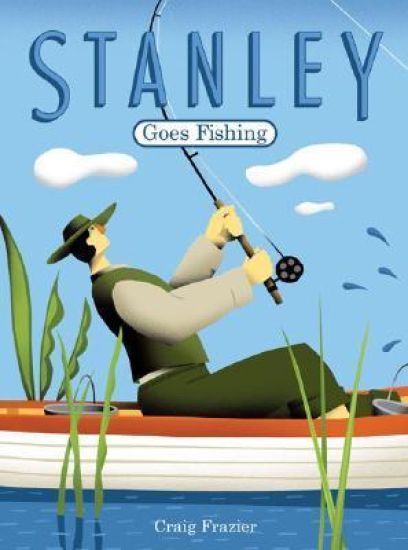
Early one morning, Stanley drives off with just one thing in mind: going fishing. He puts his boat in the stream and rows to all the best fishing spots, but not a single fish bites. Where are they? In the third book in his Stanley series, renowned graphic designer Craig Frazier once again uses his unique imagination to inspire readers to see and think in fresh new ways. And that's no fish story
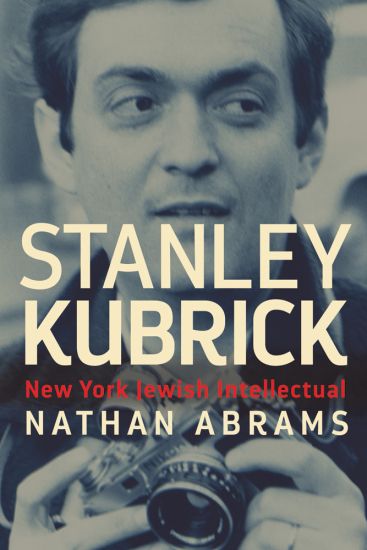
Stanley Kubrick is generally acknowledged as one of the world’s great directors. Yet few critics or scholars have considered how he emerged from a unique and vibrant cultural milieu: the New York Jewish intelligentsia. Stanley Kubrick reexamines the director’s work in context of his ethnic and cultural origins. Focusing on several of Kubrick’s key themes—including masculinity, ethical responsibility, and the nature of evil—it demonstrates how his films were in conversation with contemporary New York Jewish intellectuals who grappled with the same concerns. At the same time, it explores Kubrick’s fraught relationship with his Jewish identity and his reluctance to be pegged as an ethnic director, manifest in his removal of Jewish references and characters from stories he adapted. As he digs deep into rare Kubrick archives to reveal insights about the director’s life and times, film scholar Nathan Abrams also provides a nuanced account of Kubrick’s cinematic artistry. Each chapter offers a detailed analysis of one of Kubrick’s major films, including Lolita, Dr. Strangelove, 2001, A Clockwork Orange, Barry Lyndon, The Shining, Full Metal Jacket, and Eyes Wide Shut. Stanley Kubrick thus presents an illuminating look at one of the twentieth century’s most renowned and yet misunderstood directors.
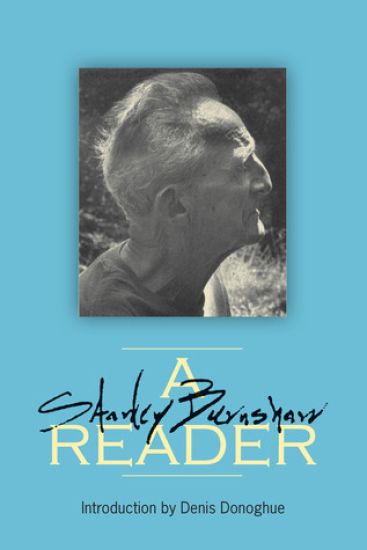
A Stanley Burnshaw Reader brings together selections from the major works of poetry and prose that have distinguished Burnshaw as one of the most important voices in twentieth-century letters. Included are essays from Burnshaw’s two pioneering critical works: The Seamless Web, praised by the New York Times Book Review as “a defense of poetry that removes it from the realm of man’s spiritual luxuries and places it preeminently among his instruments of survival”, and The Poem Itself, a book that deals with forty-five poets of the last century in an entirely novel way which, as Lionel Trilling observed, “allows the Englishspeaking reader an unprecedented intimacy with poems in the original tongues.” Along with a generous excerpt from Robert Frost Himself, this volume offers a representative selection of Burnshaw’s poetry and his translations of other poets’ work.A Stanley Burnshaw Reader affords those unfamiliar with Burnshaw an ideal introduction to his work. At the same time, readers who know his writings will discover new insights into his long and distinguished career.
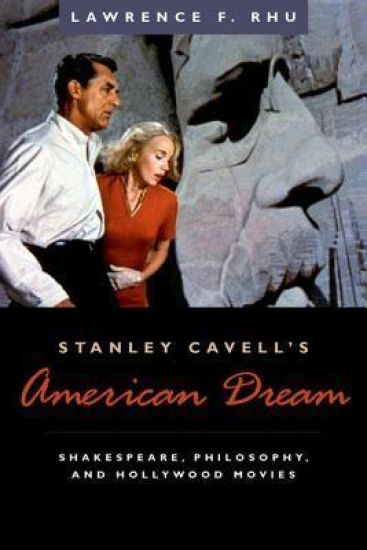
This book explores Cavell's writings along converging lines of thought rather than in isolated categories. The author claims that, after Cavell's celebrated reading of King Lear turned into a nightmarish meditation on Vietnam, he found a more audible voice. Noting that Cavell's keen ear for the expressive power of ordinary language makes him both a first-rate literary artist and a compelling philosopher of the everyday, he catches what holds Cavell's manifold interests together. Here the poetry of ideas and presence of mind that animate Cavell's writing receive readings attuned to the spirit of their composition and its enlivening powers.
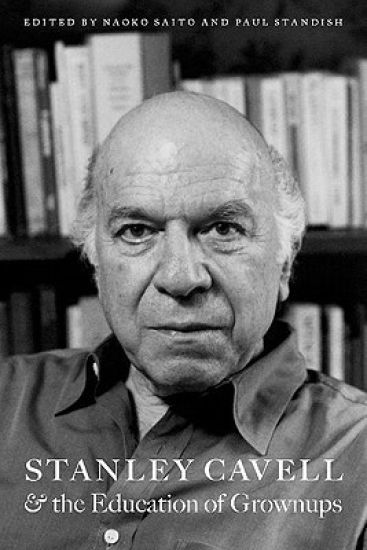
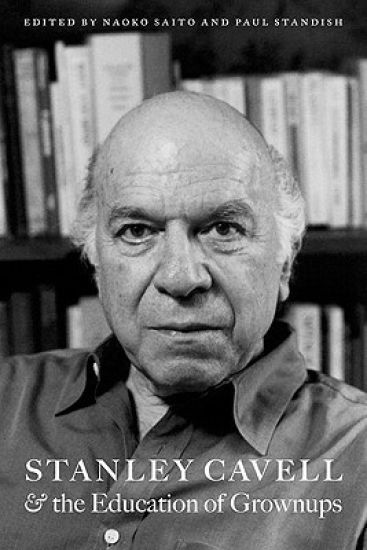
What could it mean to speak of philosophy as "the education of grownups"? This book takes Stanley Cavell's much-quoted, yet enigmatic phrase as the provocation for a series of explorations into themes of education that run throughout his work – through his response to Wittgenstein, Austin and ordinary language philosophy, through his readings of Thoreau and of the moral perfectionism he identifies with Emerson, through his discussions of literature and film. Hilary Putnam has described Cavell not only as one of the most creative thinkers of today but as amongst the few contemporary philosophers to explore the territory of philosophy as education. Yet in mainstream philosophy his work is apt to be referred to rather than engaged with, and the full import of his writings for education is still to be appreciated. Cavell engages in a sustained exploration of the nature of philosophy, and this is not separable from his preoccupation with what it is to teach and to learn, with the kinds of transformation these might imply, and with the significance of these things for our language and politics, for our lives as a whole. In recent years Cavell's work has been the subject of a number of books of essays, but this is the first to address directly the importance of education in his work. Such matters cannot fail to be of significance not only for the disciplinary fields of philosophy and education, but in politics, literature, and film studies – and in the humanities as a whole. A substantial introduction provides an overview of the philosophical purchase of questions of education in his work, while the essays are framed by two new pieces by Cavell himself. The book shows what it means to read Cavell, and simultaneously what it means to read philosophically, in itself a part of our education as grownups.
What could it mean to speak of philosophy as "the education of grownups"? This book takes Stanley Cavell's much-quoted, yet enigmatic phrase as the provocation for a series of explorations into themes of education that run throughout his work – through his response to Wittgenstein, Austin and ordinary language philosophy, through his readings of Thoreau and of the moral perfectionism he identifies with Emerson, through his discussions of literature and film. Hilary Putnam has described Cavell not only as one of the most creative thinkers of today but as amongst the few contemporary philosophers to explore the territory of philosophy as education. Yet in mainstream philosophy his work is apt to be referred to rather than engaged with, and the full import of his writings for education is still to be appreciated. Cavell engages in a sustained exploration of the nature of philosophy, and this is not separable from his preoccupation with what it is to teach and to learn, with the kinds of transformation these might imply, and with the significance of these things for our language and politics, for our lives as a whole. In recent years Cavell's work has been the subject of a number of books of essays, but this is the first to address directly the importance of education in his work. Such matters cannot fail to be of significance not only for the disciplinary fields of philosophy and education, but in politics, literature, and film studies – and in the humanities as a whole. A substantial introduction provides an overview of the philosophical purchase of questions of education in his work, while the essays are framed by two new pieces by Cavell himself. The book shows what it means to read Cavell, and simultaneously what it means to read philosophically, in itself a part of our education as grownups.
Australia's Prime Minister and premier diplomat in the 1930/1940s, this new biography presents him as a consistent internationalist and places him in a global context. Stanley Melbourne Bruce was at the centre of Imperial politics for more than two decades from the early 1920s until the end of the Second World War. This new biography presents Bruce as a consistent internationalist. Educated in Melbourne and Cambridge, Bruce, as a businessman, was alive to the importance of international commerce, and particularly Anglo-Australian trade. This lay at the core of his internationalism, which took the form in the 1920s of encouraging the political and economic integration of the British Empire. Bruce's punitive treatment of militant Australian trade unionists and his upholding of constitutionalism and law and order in the 1920s was part of an effort to defend one form of internationalism, commitment to the British Empire, against the competing international ideology of communism. While continuing to support a unified British Empire acting as a progressive force in world affairs, Bruce championed stronger international collaboration through the League of Nations and the United Nations and through cooperation between the Empire and the United States.
Stanley keeps his fire engine in tip-top condition - it has to be ready for anything! Join Stanley and Peggy as they rescue Little Woo (and his teddy) from a tree, extinguish Charlie's annual barbecue and help to make sure a spectacular fireworks show goes off safely with a bang and a sparkle.
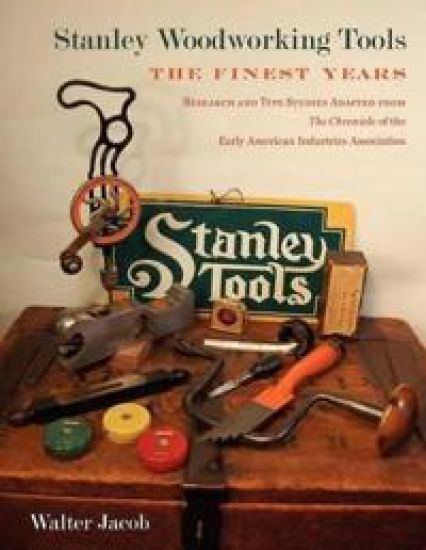
It's another busy day for Stanley and friends . Stanley has brought his toolbox - there's a hammer, a mallet, a screwdriver, a saw and many other tools. What do they all do?Join Stanley and Little Woo as they use a different tool on each page to fix the tree house in this simple, engaging new board book in the Stanley series.
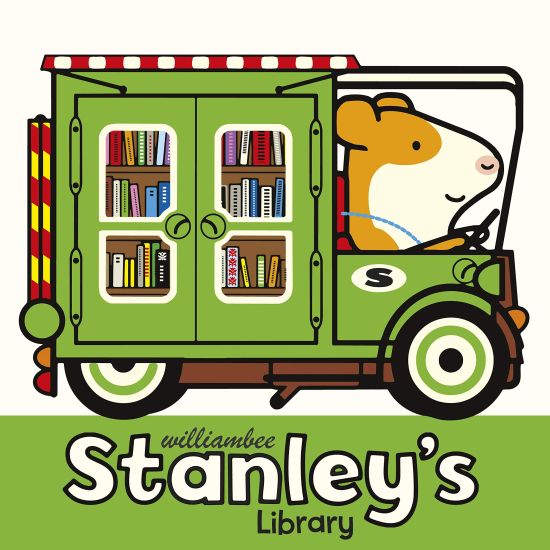
It's another busy day at Stanley's Library! Stanley loads his van with books and sets off to the village green.Who will visit today and which books will they choose? Later, Stanley arrives back at the library just in time for a special event . . .A wonderful first introduction to libraries, books and the joy of reading. Discover more Stanley books: Stanley's GarageStanley the BuilderStanley the FarmerStanley's CafeStanley's ShopStanley the PostmanStanley's SchoolStanley's TrainStanley's Fire Engine
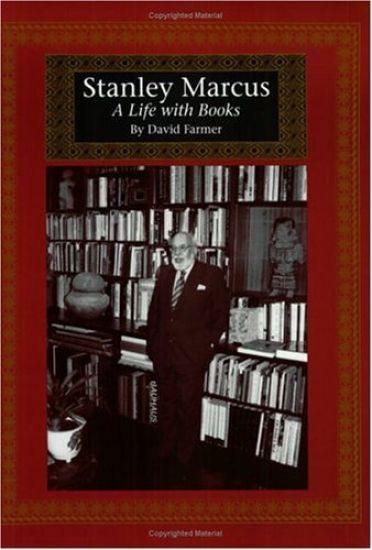
First published in a limited, fine-press edition by Still Point Press in 1993, Stanley Marcus: A Life with Books sparkles with the names of literary history, most but not all of them Texans—Tom Lea, Henry Nash Smith, J. Evetts Haley, Alfred Knopf, José Cisneros, Elizabeth Ann McMurray and McMurray’s Personal Bookstore, E. L. DeGolyer, Paul Horgan, and a host of others. Writing with skill and graceful style, David Farmer chronicles Marcus’ early fascination with books during his Harvard years, his founding of the Book Club of Texas, his friendship with J. Frank Dobie and his working relationship with El Paso’s Carl Hertzog, his own books—Minding the Store and Quest for the Best, and his Somesuch Press, noted for publishing exquisite miniature books.
STANLEY THE SPIDER GOES BACK INTO SPACE! The eight legged adventurer, hero of Noah's Rocket, has a brand new mission...to explore the mysterious planets of Fruton and Vegeton. The two planets - one inhabited by fruit, the other by vegetables.