Kirjojen hintavertailu. Mukana 11 529 225 kirjaa ja 12 kauppaa.

Kirjahaku

Etsi kirjoja tekijän nimen, kirjan nimen tai ISBN:n perusteella.

1000 tulosta hakusanalla Steven C Harbert

Lost Legends of Tahoe

Lost Legends of Tahoe

Steven C. Brandt

Createspace Independent Publishing Platform
2012
nidottu
Fifteen tales of Lake Tahoe with a healthy mix of hard facts of history and enjoyable imagination. Lake Tahoe is one of the special places in the world, a huge, pristine lake at 6,200 feet in elevation. It is a sight to see and experience.
Virtual Tribe

Virtual Tribe

Steven C. Dinero

McFarland Co Inc
2020
pokkari
In the post-colonial era, tribal peoples are particularly vulnerable to new technologies and industrialization, which threaten their cultures, homelands and ways of living. However, there is a surprising exception to this trend in the form of social media. This book explores how tribal and indigenous peoples across the globe are using social media such as Facebook, Instagram and WhatsApp in fresh and inventive ways unique to their values and lifestyles. These platforms help tribal peoples to communicate across boundaries and barriers as never before, and are helping to strengthen communal identity and development in the global age.
The Image of the Jew in the Wyoming Frontier Press
Significant numbers of Jews and other ethnic and racial minorities were uncommon in the more remote regions of the frontier American West. And yet, this did not mean that the early settlers of the region lacked an interest in these groups, their behaviors, their cultures and their beliefs. Gaining a full understanding of communal attitudes and interests in minority groups after the fact is not an easy task. However, the press is an ideal source, having played a key role in both reflecting as well as creating social attitudes and ideals during the late 19th and early 20th centuries. This book analyzes newspaper articles, editorials, and jokes published in Wyoming's nascent press from 1867 through 1918. Nearly 30,000 pieces of information were studied, all relating to the manner in which minorities, most especially though not solely Jews, were imaged by editors, journalists, and other writers. The outcome reveals an amalgam of classic anti-Semitic and racist tropes alongside seemingly benign romanticizations that similarly served to stereotype these minority communities. The study highlights that these attitudes were not confined to Wyoming or the American frontier, but were part of broader societal trends that continue to persist in various forms today.
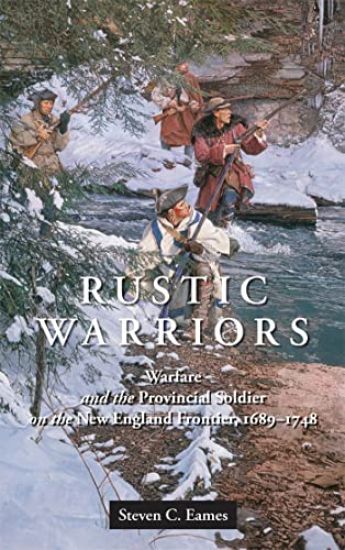
Rustic Warriors

Rustic Warriors

Steven C. Eames

NEW YORK UNIVERSITY PRESS
2025
pokkari
The early French Wars (1689-1748) in North America saw provincial soldiers, or British white settlers, in Massachusetts and New Hampshire fight against New France and her Native American allies with minimal involvement from England. Most British officers and government officials viewed the colonial soldiers as ill-disciplined, unprofessional, and incompetent: General John Forbes called them "a gathering from the scum of the worst people." Taking issue with historians who have criticized provincial soldiers' battlefield style, strategy, and conduct, Steven Eames demonstrates that what developed in early New England was in fact a unique way of war that selectively blended elements of European military strategy, frontier fighting, and native American warfare. This new form of warfare responded to and influenced the particular challenges, terrain, and demography of early New England. Drawing upon a wealth of primary materials on King William's War, Queen Anne's War, Dummer's War, and King George's War, Eames offers a bottom-up view of how war was conducted and how war was experienced in this particular period and place. Throughout Rustic Warriors, he uses early New England culture as a staging ground from which to better understand the ways in which New Englanders waged war, as well as to provide a fuller picture of the differences between provincial, French, and Native American approaches to war.
Concerto for Cootie

Concerto for Cootie

Steven C. Bowie

UNIVERSITY PRESS OF MISSISSIPPI
2025
sidottu
Jazz legend Cootie Williams left home to start his career as a professional musician at the age of fifteen. In 1940, after eleven years as one of the major soloists with the Duke Ellington orchestra, Williams was lured away to the band of Benny Goodman, one of the most popular bands in the country. At the time, it was a controversial move—it was still taboo for African Americans to share the bandstand with white people. Current references to the move usually reduce it to a song written by Raymond Scott, "When Cootie Left the Duke." In reality, it was a seismic event. The Black press predicted Black bands would collapse from raids on their ranks. White musicians were afraid they would be put out of work. And the white press stirred up visions of Black musicians mixing with white women in the new landscape of integrated orchestras. The twenty years trumpeter Williams spent as a band leader (1942-1962) have been covered in only the barest of details. His involvement in politics and the civil rights movement have not been detailed before. An astute talent scout, Williams and his band launched the careers of Eddie "Cleanhead" Vinson, Earl "Bud" Powell, Eddie "Lockjaw" Davis, and Pearl Bailey. He also was the first to record the music of a young Thelonious Monk, using two of Monk's compositions ("Epistrophy" and "‘Round Midnight") as theme songs for his band. Steven C. Bowie respectfully tells Williams’s story, from his Alabama ancestry onward, including many new details rediscovered from the historical archives of the African American press and those gleaned from the author’s interviews with his friends and colleagues.
Concerto for Cootie

Concerto for Cootie

Steven C. Bowie

UNIVERSITY PRESS OF MISSISSIPPI
2025
pokkari
Jazz legend Cootie Williams left home to start his career as a professional musician at the age of fifteen. In 1940, after eleven years as one of the major soloists with the Duke Ellington orchestra, Williams was lured away to the band of Benny Goodman, one of the most popular bands in the country. At the time, it was a controversial move—it was still taboo for African Americans to share the bandstand with white people. Current references to the move usually reduce it to a song written by Raymond Scott, "When Cootie Left the Duke." In reality, it was a seismic event. The Black press predicted Black bands would collapse from raids on their ranks. White musicians were afraid they would be put out of work. And the white press stirred up visions of Black musicians mixing with white women in the new landscape of integrated orchestras. The twenty years trumpeter Williams spent as a band leader (1942-1962) have been covered in only the barest of details. His involvement in politics and the civil rights movement have not been detailed before. An astute talent scout, Williams and his band launched the careers of Eddie "Cleanhead" Vinson, Earl "Bud" Powell, Eddie "Lockjaw" Davis, and Pearl Bailey. He also was the first to record the music of a young Thelonious Monk, using two of Monk's compositions ("Epistrophy" and "‘Round Midnight") as theme songs for his band. Steven C. Bowie respectfully tells Williams’s story, from his Alabama ancestry onward, including many new details rediscovered from the historical archives of the African American press and those gleaned from the author’s interviews with his friends and colleagues.