Kirjojen hintavertailu. Mukana 11 342 296 kirjaa ja 12 kauppaa.

Kirjahaku

Etsi kirjoja tekijän nimen, kirjan nimen tai ISBN:n perusteella.

1000 tulosta hakusanalla Steven J. Howell

Early German-American Evangelicalism

Early German-American Evangelicalism

Steven J. O'Malley

Scarecrow Press
1995
sidottu
The roots of American evangelical religion that have usually been traced to the Puritans also included numerous German immigrants. In this migration, a major stream of spirituality, heretofore unexplored in their primary sources, was the Reformed and Radical Pietism that originated in the Rhineland and contributed to the formation of the earliest indigenous expressions of American denominationalism. This volume contains annotated selections, most of which were previously unavailable in English, from Pietist authors representing that Rhineland spirituality. Each selection is preceded by a historical and theological introduction. The influence of each author upon the emerging expressions of German-American evangelicalism, the United Brethren in Christ and the Evangelical Association, is also indicated. These include the Otterbeins, Lampe, Tersteegen, and Stahlschmidt (reformed and reformed-leaning Pietists), the Berleberg Bible group (Radical Pietists), and Collenbusch and Hasenkamp (Neo-Pietists who were influenced by the Enlightenment).
Smashing Hitler's Panzers

Smashing Hitler's Panzers

Steven J. Zaloga

STACKPOLE BOOKS
2023
pokkari
In this riveting book, Steven Zaloga describes how American foot soldiers faced down Hitler’s elite armored spearhead—the Hitler Youth Panzer Division—in the snowy Ardennes forest during one of World War II’s biggest battles, the Battle of the Bulge. The Hitler Youth division was assigned the mission of the Führer’s Ardennes offensive: capture the main highway to the primary objective, Antwerp, whose seizure Hitler believed would end the war. Had the Germans taken the Belgian port, it would have cut off the Americans from the British and perhaps led to a second, more devastating Dunkirk. In Zaloga’s careful reconstruction, a succession of American infantry units—the 99th Division, the 2nd Division, and the 1st Division (the famous Big Red One)—fought a series of battles that denied Hitler the best roads to Antwerp and doomed his offensive. American G.I.s—some of them seeing combat for the very first time—had stymied Hitler’s panzers and grand plans.
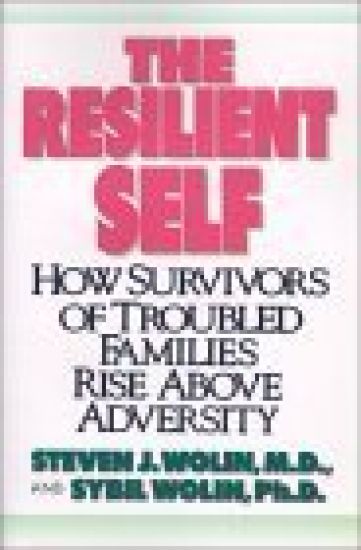
The Resilient Self: How Survivors of Troubled Families Rise Above Adversity
An informative and inspiring guide to rebounding from childhood hardships to find uncommon strength and courage "The Resilient Self reminds us all of the importance of being aware of and building on the strengths of our young people, whatever their early life experiences. We must work to give them hope and to craft services and programs that are respectful of the resiliencies so thoughtfully characterized by the Wolins. This guide, although based on the experiences of adults, offers extremely useful insights too for those working on behalf of children and adolescents."--Marian Wright Edelman, president, Children's Defense Fund "This book offers a strong sense of hope for everyone who has grown up in a troubled family. I salute the authors for their masterful synthesis of research, clinical experiences, and insights gleaned from the voices of poetry. The Wolins' book cautions the reader that no one emerges from troubled childhood without some scars, but it challenges us to finds ways in which we can transforms pain into joy in our lives."--Emmy E. Werner, Ph.D., author of Vulnerable But Invincible and Overcoming the Odds "This marvelous book can turn the tide for people injured during their childhoods, not by ignoring the ashes of the past, but by winnowing out the precious elements from which the phoenix can triumphantly rise. It is a book that has been badly needed, and for which many will long be grateful."--Timmen L. Cermak, M.D., former chairman, National Association for Children of Alcoholics "At last, a compassionate and realistic challenge to abandon the idea that one is a passive object of an unhappy childhood. The Resilient Self encourages readers to recognize and appreciate their strong, insightful, and creative survival."--Barbara Mathis, author of Between Sisters: Secret Rivals, Intimate Friends "The Resilient Self shows adult children of dysfunctional families that they can escape a painful past and become resilient survivors. It describes the strategies which have been used successfully by those who grew up in troubled homes but who managed to work well, play well, and love well as adults. I recognized myself in this book with a survivor's pride."--Anonymous survivor
Good and Evil Actions

Good and Evil Actions

Steven J. Jensen

The Catholic University of America Press
2010
nidottu
Modern philosophy has long dismissed the traditional moral notion that some actions are inherently good or evil, claiming rather that actions lack clear boundaries and have no set nature, whether good, evil, or anything else. We might expect to find resources to rebut these consequentialist assertions in the perennial philosophy of St. Thomas Aquinas. Unfortunately, the analysis of the moral species within Aquinas confounds even the most resolute. Thomists are far from unanimity on the very questions at issue, such as the role of intention in moral judgment and the importance of the exterior or 'physical' act. One influential reading of Aquinas assigns intention a central role; another extols a return to teleology and to the physical nature of the action. In ""Good and Evil Actions"", Steven J. Jensen navigates a path through the debate, retrieving what is of value from each interpretation. Intention receives its proper due, while leaving room for physical causality and teleology. Jensen provides a novel explanation of self-defense and develops a much needed account of the dignity of the human person. With exceptional clarity, he identifies the essential issues, resolves conflicting views, and reveals the truth as conveyed by Aquinas. In his foreword, Ralph McInerny praises the book as 'a remarkable compendium of the status quaestionis of a large number of prickly issues associated with Thomas Aquinas' theory of human action, a fair look at proposed solutions, and finally Jensen's own best thought on the matter'. This title tackles the Thomistic debate surrounding the inherent good and evil of human actions.
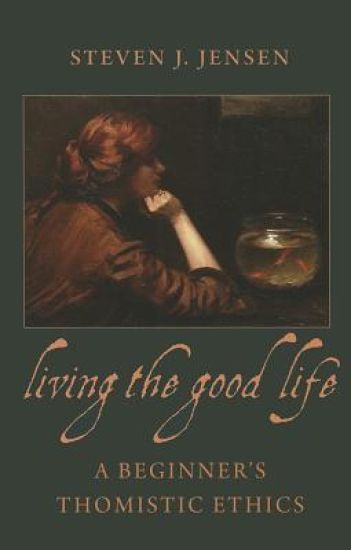
Living the Good Life

Living the Good Life

Steven J. Jensen

The Catholic University of America Press
2013
nidottu
Living the Good Life presents a brief introduction to virtue and vice, self-control and weakness, misery and happiness. The book contrasts the thought of Aquinas with popular views, such as moral relativism, values clarification, utilitarianism, Kantian deontology and situation ethics. Following the Socratic dictum ""know thyself,"" Steven J. Jensen investigates the interior workings of the human mind, revealing the interplay of reason, will and emotions. According to Aquinas, in a healthy ethical life, reason guides the emotions and will to the true human good. In an unhealthy life, emotional impulses distort the vision of reason, entrapping one in futile pursuits. In the human struggle to gain self-mastery, a person must overcome the capricious desires that enslave him to false goods. Jensen ably guides readers through Aquinas's philosophy and explains the distinction between the moral and intellectual virtues. The moral virtues train our various desires toward the true good, helping us discard our misguided cravings and teaching us to enjoy what is truly worth pursuing. The virtue of justice directs our hearts to the good of others, freeing us from egoism in order to seek a good shared with others. The intellectual virtues train the mind toward the truth, so that we can find fulfilment in human understanding. Most important, the virtue of prudence directs our deliberations to discover the true path of life.Intended as a text for students, beginners of philosophy will gain access to a key aspect of Aquinas's thought, namely, that true happiness is realised not in the animal life of passion and greed but only in the reasonable pursuit of human goods, in which we find true peace and rest from the distractions of this world.
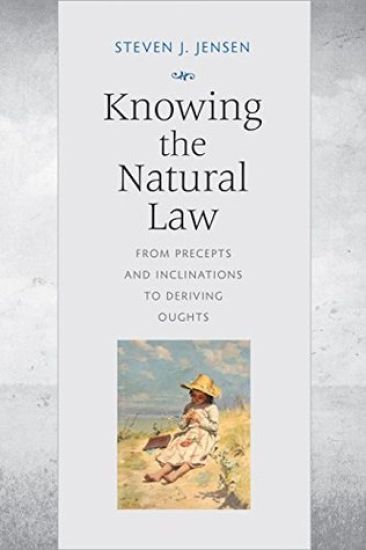
Knowing the Natural Law

Knowing the Natural Law

Steven J. Jensen

The Catholic University of America Press
2020
nidottu
Recent discussions of Thomas Aquinas's treatment of natural law have focused upon the ""self-evident"" character of the first principles, but few attempts have been made to determine in what manner they are self-evident. On some accounts, a self-evident precept must have, at most, a tenuous connection with speculative reason, especially our knowledge of God, and it must be untainted by the stain of ""deriving"" an ought from an is. Yet Aquinas himself had a robust account of the good, rooted in human nature. He saw no fundamental difference between is-statements and ought-statements, both of which he considered to be descriptive.Knowing the Natural Law traces the thought of Aquinas from an understanding of human nature to a knowledge of the human good, from there to an account of ought-statements, and finally to choice, which issues in human actions. The much discussed article on the precepts of the natural law (I-II, 94, 2) provides the framework for a natural law rooted in human nature and in speculative knowledge. Practical knowledge is itself threefold: potentially practical knowledge, virtually practical knowledge, and fully practical knowledge.This distinction within practical knowledge, typically overlooked or underutilized, reveals the steps by which the mind moves from speculative knowledge all the way to fully practical knowledge. The most significant sections of Knowing the Natural Law examine the nature of ought-statements, the imperative force of moral precepts, the special character of per se nota propositions as found within the natural law, and the final movement from knowledge to action.
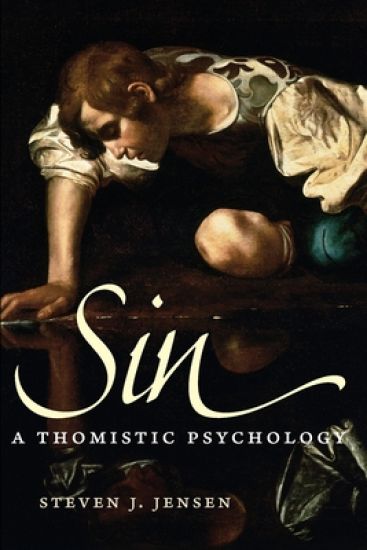
Sin

Sin

Steven J. Jensen

The Catholic University of America Press
2018
nidottu
If the human soul is made for good, then how do we choose evil? On the other hand, perhaps the human soul is not made for good. Perhaps the magnitude of human depravity reveals that the human soul may directly choose evil. Notably, Thomas Aquinas rejects this explanation for the prevalence of human sin. He insists that in all our desires we seek what is good. How, then, do we choose evil? Only by mistaking evil for good. This solution to the difficulty, however, leads Aquinas into another conundrum. How can we be held responsible for sins committed under a misunderstanding of the good? The sinner, it seems, has simply made an intellectual blunder. Sin has become an intellectual defect rather than a depravity of will and desire.Sin: A Thomistic Psychology grapples with these difficulties. A solution to the problem must address a host of issues. Does the ultimate good after which we all strive have unity, or is it simply a collection of basic goods? What is venial sin? What momentous choice must a child make in his first moral act? In what way do passion, a habitually evil will, and ignorance cause human beings to sin? What is the first cause of moral evil? Do human beings have free will to determine themselves to particular actions? The discussion of these topics focuses upon the interplay of reason, will, and the emotions, examining the inner workings of our moral deliberations. Ultimately, the book reveals how the failure to maintain balance in our deliberations subverts our fidelity to the one true good.
The Human Person

The Human Person

Steven J. Jensen

The Catholic University of America Press
2018
nidottu
The Human Person presents a brief introduction to the human mind, the soul, immortality, and free will. While delving into the thought of Thomas Aquinas, it addresses contemporary topics, such as skepticism, mechanism, animal language research, and determinism. Steven J. Jensen probes the primal questions of human nature. Are human beings free or determined? Is the capacity to reason distinctive to human beings or do animals also have some share of reason? Have animals really been taught to use language? The Human Person touches on topics that bear upon the very fabric of the universe. Are human beings merely well-ordered collections of chemicals or do they have a soul that gives them life and understanding? Is there any element in human beings that survives death? Can human minds get in touch with the objective world or just forever dwell in the domain of their subjective experiences? The book closes by considering the most fundamental question of all: are human beings merely cosmic accidents with no purpose or is there some meaning to human life? In this book, beginners of philosophy will learn the wonders of their own nature by studying Aquinas's thought on the human person.
The Natural Law

The Natural Law

Steven J. Jensen

THE CATHOLIC UNIVERSITY OF AMERICA PRESS
2025
nidottu
Drawing upon the timeless wisdom of Thomas Aquinas, The Natural Law offers clear insights into perplexing ethical dilemmas. The compelling conclusions of Aquinas emerge through a critical examination of contemporary ethical frameworks including moral relativism, utilitarianism, and Machiavellian politics. In part one, which elucidates the core principles of natural law ethics, the reader will discover fundamental truths underpinning the concepts of right and wrong, which are rooted in the very fabric of our humanity. Part two navigates the ethics of harm, grappling with contentious issues such as capital punishment, just war, and self-defense, while at the same time addressing moral quandaries like sacrificing one life in order to save another. This section also resolves thorny practical questions surrounding human actions. How can we tell the difference between an action and its consequences? How do we determine exactly what it means to kill another person? Part three ventures into the intricacies of human societies. The reader will explore the importance of authority and rules in guiding social interactions, from the nurturing bonds of the family to the shifting complexities of political society. The principles examined will shed light upon controversial topics within sexual ethics, such as transgenderism, faithful spousal intimacy, and cloning. The Natural Law invites readers on an engaging journey of critical inquiry. By challenging prevailing assumptions and provoking self-reflection, it will reshape your understanding of ethics and human nature, ultimately revealing your role and purpose within the universe.
Arms, Country, and Class

Arms, Country, and Class

Steven J. Rosswurm

Rutgers University Press
1989
nidottu
In 1949 and 1950, the Congress of Industrial Organizations (CIO) expelled many left-wing unions, representing 750,000 workers, because they were supposedly Communist-dominated. This collection of previously unpublished essays explores the history of those eleven left-led unions. Some essays consider specific aspects of several unions--the Longshoremen, the United Electricians (UE), the Fur Workers, and the Food and Tobacco Workers--while others take up the impact of the federal government's and the Catholic church's anticommunism upon the unions as a whole. This collection also addresses central domestic issues of twentieth-century America: race and government policy in the shaping of trade unionism; the impact of anticommunism and the cold war on race relations and working conditions; and the short- and long-range impact of the expulsions upon the labor movement. With groundbreaking essays that also concern the post-World War II period, Southern workers and workers in non-basic industries, this book will appeal to students of radicalism, race relations, anticommunism, and labor history.
The Living Universe

The Living Universe

Steven J. Dick; James E. Strick

Rutgers University Press
2005
nidottu
The Living Universe is a comprehensive, historically nuanced study of the formation of the new scientific discipline of exobiology and its transformation into astrobiology. Among many other themes, the authors analyze how research on the origin of life became wedded to the search for life on other planets and for extraterrestrial intelligence. Many scientific breakthroughs of the last forty years were either directly supported or indirectly spun off from NASA’s exobiology program, including cell symbiosis, the discovery of the Archaea, and the theories of Nuclear Winter and the asteroid extinction of the dinosaurs. Exobiology and astrobiology have generated public fascination, enormous public relations benefits for NASA, and––on the flip side of the coin––some of the most heated political wrangling ever seen in government science funding. Dick and Strick providea riveting overview of the search for life throughout the universe, with all of the Earthly complexities of a science-in-the-making and the imperfect humans called scientists. Their book will appeal to biologists, historians and philosophers of science, planetary scientists (including geologists), and an educated general readership interested in the investigation of life on other planets.
Across the Divide

Across the Divide

Steven J. Ramold

New York University Press
2013
sidottu
Union soldiers left home in 1861 with expectations that the conflict would be short, the purpose of the war was clear, and public support back home was universal. As the war continued, however, Union soldiers began to perceive a great difference between what they expected and what was actually occurring. Their family relationships were evolving, the purpose of the war was changing, and civilians were questioning the leadership of the government and Army to the point of debating whether the war should continue at all. Separated from Northern civilians by a series of literal and figurative divides, Union soldiers viewed the growing disparities between their own expectations and those of their families at home with growing concern and alarm. Instead of support for the war, an extensive and oft-violent anti-war movement emerged. Often at odds with those at home and with limited means of communication to their homes at their disposal, soldiers used letters, newspaper editorials, and political statements to influence the actions and beliefs of their home communities. When communication failed, soldiers sometimes took extremist positions on the war, its conduct, and how civilian attitudes about the conflict should be shaped. In this first study of the chasm between Union soldiers and northern civilians, Steven J. Ramold reveals the wide array of factors that prevented the Union Army and the civilians on whose behalf they were fighting from becoming a united front during the Civil War. In Across the Divide, Ramold illustrates how the divided spheres of Civil War experience created social and political conflict far removed from the better-known battlefields of the war.
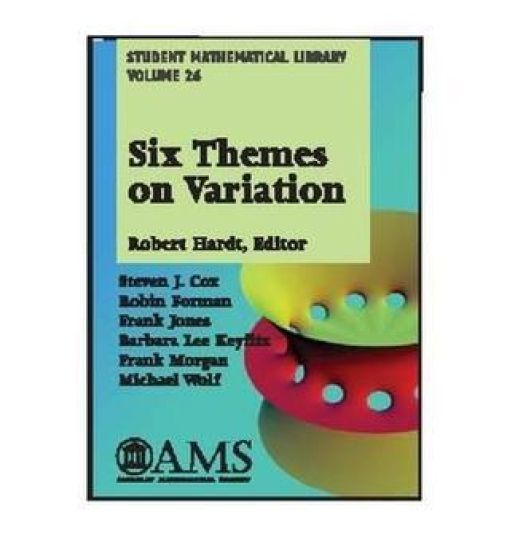
Six Themes On Variation

Six Themes On Variation

Steven J. (EDT) Cox; Robin Forman; Frank Jones

Amer Mathematical Society
2004
pokkari
The calculus of variations is a beautiful subject with a rich history and with origins in the minimization problems of calculus. Although it is now at the core of many modern mathematical fields, it does not have a well-defined place in most undergraduate mathematics curricula. This volume should nevertheless give the undergraduate reader a sense of its great character and importance. Interesting functionals, such as area or energy, often give rise to problems for which the most natural solution occurs by differentiating a one-parameter family of variations of some function.The critical points of the functional are related to the solutions of the associated Euler-Lagrange equation. These differential equations are at the heart of the calculus of variations and its applications to other subjects. Some of the topics addressed in this book are Morse theory, wave mechanics, minimal surfaces, soap bubbles, and modeling traffic flow. All are readily accessible to advanced undergraduates. This book is derived from a workshop sponsored by Rice University.It is suitable for advanced undergraduates, graduate students and research mathematicians interested in the calculus of variations and its applications to other subjects.
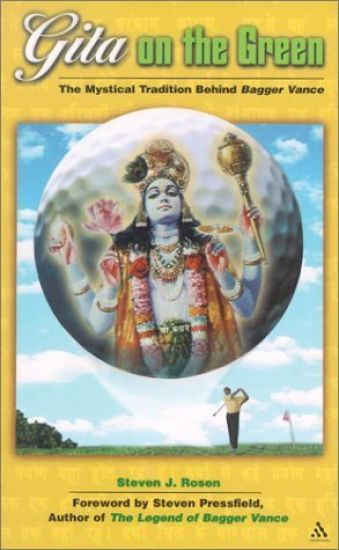
Gita on the Green

Gita on the Green

Steven J. Rosen

Continuum International Publishing Group Ltd.
2002
nidottu
In 1995, Steven Pressfield decided to introduce the Bhagavad-Gita to a contemporary audience, so he restructured the Gita in terms of a golf novel, The Legend of Bagger Vance. Now a major motion picture directed by Robert Redford and starring Matt Damon and Will Smith, The Legend of Bagger Vance is loosely based on the ancient Hindu epic, The Bhagavad-gita. Steven Rosen, in Gita on the Green: The Mystical Tradition Behind Bagger Vance, draws the story out further using some thirty years of Gita scholarship and a writing style that is both eloquent and thorough.
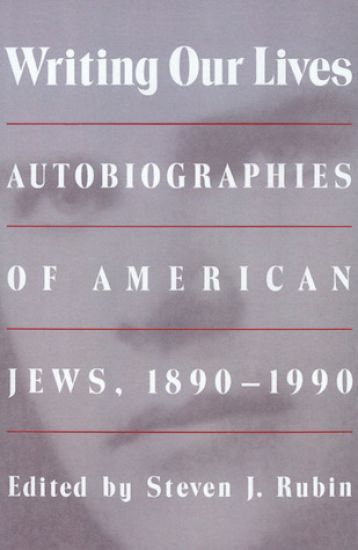
Writing Our Lives

Writing Our Lives

Steven J. Rubin

Jewish Publication Society
1991
sidottu
Twenty-eight selections from the writings of some of the best-known American-Jewish novelists, dramatists, critics, and historians span the social and cultural history of American Jews in the twentieth century. Often joyous, occasionally tragic, they provide a fascinating record—from immigration to assimilation, from life in the ghetto to the current movement by many to recapture their Jewish identity. At once personal and historical, the selections are poignant and moving testimonies to the perseverance of the American-Jewish people.
Ministerio con propósito para niños

Ministerio con propósito para niños

Steven J. Adams

Vida Publishers
2016
nidottu
Este libro presenta un proceso comprobado que proporciona una estructura para establecer y medir la salud del ministerio infantil. Ayuda a los líderes del ministerio y a sus equipos a responder cinco preguntas sencillas pero poderosas: ¿por qué?, ¿qué?, ¿quién?, ¿cómo? Y ¿dónde?Muchos ministerios de niños son un frenesí de actividad, dirigidos por dedicados voluntarios y personal que emplean largas horas y duro trabajo para el bien de los niños y los padres a quienes sirven. Sin embargo, a pesar de las buenas intenciones, muchos ministerios de niños actualmente no son eficaces.Carecen de propósito e intencionalidad. Un veterano por veinticinco años del ministerio de niños en la iglesia local, el pastor Steve Adams, ha ministrado a familias en múltiples iglesias, desde congregaciones diminutas hasta su actual posición en la iglesia Saddleback.En este libro, Steve aplica las revolucionarias perspectivas de Una iglesia con propósito al ministerio de niños y guía a los lectores en un viaje de descubrimiento y alteración, mostrándoles cómo desarrollar un proceso ministerial intencional que dirija a los niños hacia la salud espiritual a la vez que edifica un ambiente ministerial saludable para quienes trabajan con niños. Aprenderás cómo hacer y responder cinco preguntas sencillas pero poderosas:• ¿Por qué estamos en este viaje?• ¿Qué necesitamos para cumplir nuestra misión?• ¿A quiénes intentamos alcanzar?• ¿Cómo movilizaremos a nuestros niños hacia la salud espiritual?• ¿Dónde estamos ahora y hacia dónde vamos?No hay una clave única para un ministerio de niños exitoso ni tampoco hay un solo camino que funcione para todo el mundo. Pero hay un proceso demostrado que se puede seguir, y Steve muestra cómo ministerios infantiles en todo el mundo están alcanzando el potencial que Dios les ha dado al descubrir su propósito bíblico, evitando las trampas de la frustración y el agotamiento.