Freemasonry..."a beautiful system of morality, veiled in allegory and illustrated by symbols;" and seen by many outside the fraternity to be shielded in mystery and intrigue. Members have been presidents and kings, the famous and infamous, men, and yes, even a few women. Like everyone, they all have stories. Some have lived their lives in the relative obscurity of the workaday world. Others have, in a very real sense, saved the world. In the spectrum in between are a host of experiences and facts reminiscent of the Believe It Or Not series. Inside the covers of this volume you'll learn about the interesting, the unusual and even the strange events that have surrounded Freemasons' lives. Find out: Freemasons: their stories are interesting, sometimes unbelievable, sometimes a little weird, but never dull. Get the full picture in this trip through the tales from the craft.
Standard philosophical explanations of the concept of knowledge invoke a personal goal of having true beliefs, and explain the other requirements for knowledge as indicating the best way to achieve that goal. In this highly original book, Steven L. Reynolds argues instead that the concept of knowledge functions to express a naturally developing kind of social control, a complex social norm, and that the main purpose of our practice of saying and thinking that people 'know' is to improve our system for exchanging information, which is testimony. He makes illuminating comparisons of the knowledge norm of testimony with other complex social norms - such as those requiring proper clothing, respectful conversation, and the complementary virtues of tact and frankness - and shows how this account fits with our concept of knowledge as studied in recent analytic epistemology. His book will interest a range of readers in epistemology, psychology, and sociology.
Most people choose their surgeon with care, but very few think about the anesthesiologist, even though that physician's skills and approach can significantly influence surgical outcomes. Here Dr. Steven L. Orebaugh recommends steps we all can take to secure safe and effective anesthesia. What type of anesthesia is used-and how it is applied-directly affects postoperative comfort as well as mental clarity and rehabilitation. This book describes the various options for anesthesia and how they can be used together for the best possible outcome and optimal pain management. Dr. Orebaugh offers a brief history of the subject and a clear and careful overview of the types of anesthesia and their associated complications and risks. Dr. Orebaugh focuses especially on the benefits of regional anesthesia. When appropriately applied-whether alone or with other methods-spinal and peripheral nerve blocks often lead to better recovery and reduced pain. Studies show that as many as half of all surgical patients experience poorly controlled postoperative pain. Regional anesthetic nerve blocks can help significantly in managing this pain while reducing the side effects of general anesthetics and pain medications. A better understanding of anesthesia will reassure people contemplating surgery and equip them to take the necessary steps toward healthy recovery. Knowing their options, they can have informed conversations with their doctor and indicate a preference for a specific anesthetic treatment. Written by a compassionate and experienced anesthesiologist and backed by scientifically accurate information and the latest research, this book will help patients do just that.
Most people choose their surgeon with care, but very few think about the anesthesiologist, even though that physician's skills and approach can significantly influence surgical outcomes. Here Dr. Steven L. Orebaugh recommends steps we all can take to secure safe and effective anesthesia. What type of anesthesia is used-and how it is applied-directly affects postoperative comfort as well as mental clarity and rehabilitation. This book describes the various options for anesthesia and how they can be used together for the best possible outcome and optimal pain management. Dr. Orebaugh offers a brief history of the subject and a clear and careful overview of the types of anesthesia and their associated complications and risks. Dr. Orebaugh focuses especially on the benefits of regional anesthesia. When appropriately applied-whether alone or with other methods-spinal and peripheral nerve blocks often lead to better recovery and reduced pain. Studies show that as many as half of all surgical patients experience poorly controlled postoperative pain. Regional anesthetic nerve blocks can help significantly in managing this pain while reducing the side effects of general anesthetics and pain medications. A better understanding of anesthesia will reassure people contemplating surgery and equip them to take the necessary steps toward healthy recovery. Knowing their options, they can have informed conversations with their doctor and indicate a preference for a specific anesthetic treatment. Written by a compassionate and experienced anesthesiologist and backed by scientifically accurate information and the latest research, this book will help patients do just that.
This text is a companion to the 2nd edition of Intellectual Property Law And New Media: Free for a Fee. Moving the coverage of case analysis to this separate volume, enables the authors to focus their attention on important trial and legal procedures that apply extant law to, largely, new circumstances.Readers can focus on history and concepts while reading the main text, allowing them to bring understandings derived there to bear on the cases found in this analytic text. The approach offers relief from information overload and allows time and space to «shift gears» between concepts and cases. To aid understanding and learning, the authors provide focused interpretations and analysis throughout. The coverage allows these books to serve as an excellent resource for undergraduates studying interactive media, as well as being a primer for first year IP law students, a handbook for entrepreneurs, a guidebook for general lawyers to assist in referrals, and an interesting read for those simply curious about the field.The books are supplemented by freeforafee.com, a blog providing textual updates, online links to bibliographic materials, and extensive resource aggregation. Learning objectives for each chapter and a glossary of key terms are provided within the texts.
In this volume, author Steven L. Bindeman presents a survey of the key figures in postmodern antiphilosophy. Noting that the main thrust of their work can be found in their need to respond to the threat of nihilism, he is guided by the question, if the path to abstract truth is no longer viable, what then? He shows how the antiphilosophers turn their focus on the complexity of lived experience in place of the search for certainty, which was in their view what previously had guided the dominating discourse of the modernist philosophical tradition. Through close examination of a broad variety of texts, Bindeman illuminates how the antiphilosophers initiate a new way of doing philosophy, one which prefers to examine the question, Does it work? instead of, Is it true? Moreover, Bindeman demonstrates how the antiphilosophers are united in questioning the centrality of the great cornerstones of western metaphysics – time, self, universe, and God – because of their insistence that there is no way to reach beyond any of these words to the actual things to which they refer. Utilizing the exposed, significant fault in the foundation of all philosophical systems, The Antiphilosophers delivers new insight concerning the issue of how we should relate to the resultant chaos. Written with a rare combination of philosophical rigor and clarity of expression, Bindeman’s work will be of interest to students and scholars of postmodern philosophy.
Phenomenology and the Creative Process explores the subject of creativity from a vast range of perspectives. While the emphasis is placed on fundamental ideas taken from phenomenological philosophy and its precursors, the book also engages with related issues from the fields of psychology, physics, narrative studies, art, literature, cognitive science and neuroscience. Author Steven L. Bindeman’s objective is to employ an analysis of creativity from the dual perspectives of "identity" and "difference," in order to develop a pluralistic and open-ended understanding of the creative process. His central position is that while creativity can and should be studied as a physical, measurable phenomenon, we need to integrate quantitative studies with a phenomenological perspective that enables us to appreciate the distinctive experiential features of creative activities in order to fully appreciate the complex nature of the creative process. Bindeman’s approach is important in that it recognizes the value of phenomenological studies without being afraid to draw insights from other fields of inquiry.This book thus offers unique analysis of creative individuals and works, applying insights from phenomenological philosophers to enrich our understanding of the creative processes of great artists, philosophers, and scientists.
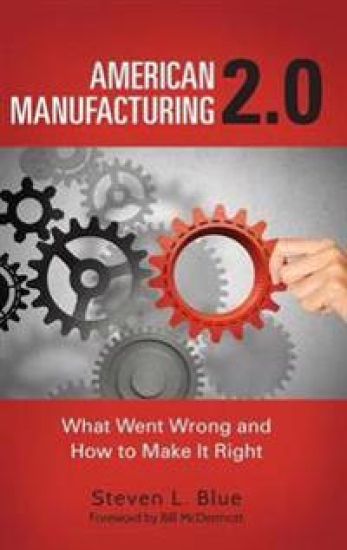
Written by a working CEO who increased earnings in some of the companies he led by 400 percent, this book provides a real-world prescription for prosperity and growth for any company, in any industry.For nearly two decades, America's industrial manufacturing sector has been in decline—and as a result, the nation's prosperity and strength is at risk. Meanwhile, China's manufacturing capabilities and competence continue to grow, threatening to overtake America as the world's most powerful and prosperous nation. Drawing on straightforward principles that can effectively be applied to a broad spectrum of manufacturing companies, author Steven L. Blue taps his leadership skills and proven processes honed over his career of growing companies—and saving them—to offer readers an inspiring vision for revitalizing the entire manufacturing sector.Using case studies and examples from his own experiences, both at Miller Ingenuity and in other roles earlier in his career, the author organizes his lessons in leadership, strategy, and change management into seven values of ingenuity: innovation, excellence, commitment, community, teamwork, respect, and integrity. The book explains how this highly integrated system of operating values can be implemented to turn around a company (if needed) or to propel it to extraordinary growth and prosperity.
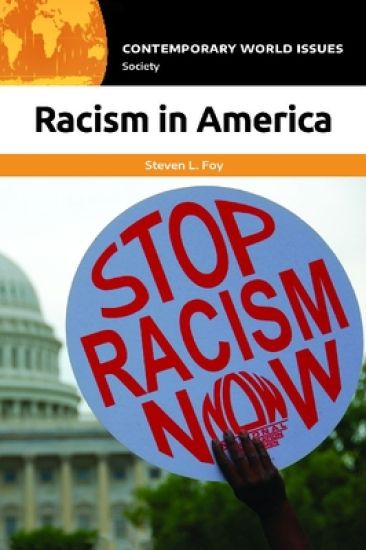
This one-stop resource situates racism within America's structural foundations and institutions to consider how racial discrimination and segregation have changed the trajectory of the USA from its colonial beginnings to the present day. It provides readers with contextual background for better understanding the history and underpinnings of racism in America; an introduction to the most important and high-profile problems, controversies, and solutions related to racism in American life; and perspectives from experts in a variety of fields related to race relations and African American history. Other features include profiles of important people and organizations fighting for racial equality and reconciliation, from Black Lives Matter to the American Civil Liberties Union. A detailed chronology pinpoints relevant events in American history, while an annotated bibliography guides students to the next step in their research.