Kirjojen hintavertailu. Mukana 11 717 486 kirjaa ja 12 kauppaa.

Kirjahaku

Etsi kirjoja tekijän nimen, kirjan nimen tai ISBN:n perusteella.

1000 tulosta hakusanalla Stuart M Kaminsky

Fabian's Tower; A Novel [By M. R. S. Kettle].

Fabian's Tower; A Novel [By M. R. S. Kettle].

Mary Rosa Stuart Kettle

British Library, Historical Print Editions
2011
pokkari
Title: Fabian's Tower; a novel by M. R. S. Kettle].Publisher: British Library, Historical Print EditionsThe British Library is the national library of the United Kingdom. It is one of the world's largest research libraries holding over 150 million items in all known languages and formats: books, journals, newspapers, sound recordings, patents, maps, stamps, prints and much more. Its collections include around 14 million books, along with substantial additional collections of manuscripts and historical items dating back as far as 300 BC.The FICTION & PROSE LITERATURE collection includes books from the British Library digitised by Microsoft. The collection provides readers with a perspective of the world from some of the 18th and 19th century's most talented writers. Written for a range of audiences, these works are a treasure for any curious reader looking to see the world through the eyes of ages past. Beyond the main body of works the collection also includes song-books, comedy, and works of satire. ++++The below data was compiled from various identification fields in the bibliographic record of this title. This data is provided as an additional tool in helping to insure edition identification: ++++ British Library Kettle, Mary Rosa Stuart; 1852. 3 vol.; 12 . 12626.a.4.
Fabian's Tower; A Novel [By M. R. S. Kettle].Vol.III

Fabian's Tower; A Novel [By M. R. S. Kettle].Vol.III

Mary Rosa Stuart Kettle

British Library, Historical Print Editions
2011
pokkari
Title: Fabian's Tower; a novel by M. R. S. Kettle].Publisher: British Library, Historical Print EditionsThe British Library is the national library of the United Kingdom. It is one of the world's largest research libraries holding over 150 million items in all known languages and formats: books, journals, newspapers, sound recordings, patents, maps, stamps, prints and much more. Its collections include around 14 million books, along with substantial additional collections of manuscripts and historical items dating back as far as 300 BC.The FICTION & PROSE LITERATURE collection includes books from the British Library digitised by Microsoft. The collection provides readers with a perspective of the world from some of the 18th and 19th century's most talented writers. Written for a range of audiences, these works are a treasure for any curious reader looking to see the world through the eyes of ages past. Beyond the main body of works the collection also includes song-books, comedy, and works of satire. ++++The below data was compiled from various identification fields in the bibliographic record of this title. This data is provided as an additional tool in helping to insure edition identification: ++++ British Library Kettle, Mary Rosa Stuart; 1852. 3 vol.; 12 . 12626.a.4.
The History of Modern Civilization. A handbook based upon M. G. D.'s "Histoire Sommaire de la Civilisation." With illustrations. [Edited by J. Verschoyle.]
Title: The History of Modern Civilization. A handbook based upon M. G. D.'s "Histoire Sommaire de la Civilisation." With illustrations. Edited by J. Verschoyle.]Publisher: British Library, Historical Print EditionsThe British Library is the national library of the United Kingdom. It is one of the world's largest research libraries holding over 150 million items in all known languages and formats: books, journals, newspapers, sound recordings, patents, maps, stamps, prints and much more. Its collections include around 14 million books, along with substantial additional collections of manuscripts and historical items dating back as far as 300 BC.The GENERAL HISTORICAL collection includes books from the British Library digitised by Microsoft. This varied collection includes material that gives readers a 19th century view of the world. Topics include health, education, economics, agriculture, environment, technology, culture, politics, labour and industry, mining, penal policy, and social order. ++++The below data was compiled from various identification fields in the bibliographic record of this title. This data is provided as an additional tool in helping to insure edition identification: ++++ British Library Ducoudray, Gustave; Verschoyle, John Stuart; 1891. xx, 585 p.; 8 . 9009.d.6.
The Illegitimate Tudor

The Illegitimate Tudor

James M. Stuart

Lulu.com
2019
sidottu
1524. King Henry VIII of the House of Tudors rules the Kingdom of England.Edward, a young man living a secluded life in York is led into exile after tragedy befalls his family. In his efforts to survive in a foreign land, he succumbs into a lawless life, but fate has different plans for him... Edward's past is haunting him, and guilt weighs on his conscience. Thus, when the opportunity arises he returns to his homeland to pursue vengeance no matter the cost... As the political schemes of dangerously ambitious individuals upset the Tudor Court, conspiracies will be uncovered, and the capricious King Henry VIII is ready to bring the whole realm in turmoil.'A gripping historical novel that depicts the divided loyalties and treacheries of Tudor England.'
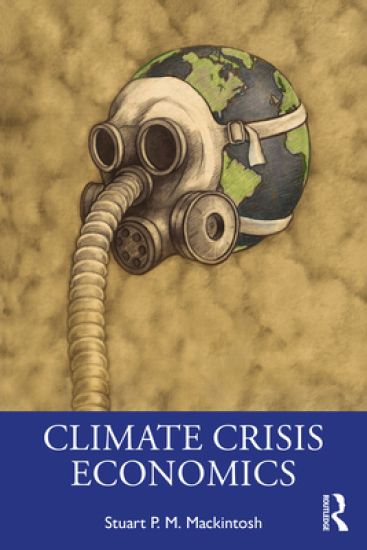
Climate Crisis Economics

Climate Crisis Economics

Stuart P. M. Mackintosh

Routledge
2021
nidottu
Climate Crisis Economics draws on economics, political economy, scientific literature, and data to gauge the extent to which our various communities – political, economic, business – are making the essential leap to a new narrative and policy approach that will accelerate us towards the necessary transition to a decarbonized economy and sustainable future.The book draws out policies and practices with both national and local examples, which will demonstrate various complementary approaches that are empowering states and people as they seek to pursue the carbon neutral goal. The author delineates a climate crisis economics approach that is fit for purpose and which can help achieve necessary climate change goals in the decades ahead. Ensuring economic and ecological sustainability is neither easy nor cost-free; there is no single solution to the climate crisis. All aspects of our economies, policies, business, and personal practices must come into alignment in order to succeed. Frustratingly, we know what is needed and we have many of the technologies and systems to make the leap to a carbon neutral economy, yet we still fail to act with alacrity. Leaders, communities, and businesses must shift their narratives in how they talk about and think about the climate crisis. In doing so, in making the narrative leap to a new understanding about what is possible and necessary, we can stop endangering our common future and single, fragile, global habitat, and instead set the stage for Green Globalisation 2.0 and a new, sustainable industrial revolution.Climate Crisis Economics will appeal to academics, students, investors, and professionals from varying disciplines including politics, international political economy, and international economics. Written in an accessible voice, it draws on work in fields outside of and in addition to politics and economics to make a case for climate crisis economics as an approach to addressing the climate change challenge ahead.The Open Access version of this book, available at www.taylorfrancis.com, has been made available under a Creative Commons Attribution-Non Commercial-No Derivatives 4.0 license. Thanks to the support of libraries working with Knowledge Unlatched www.knowledgeunlatched.org
Climate Crisis Economics

Climate Crisis Economics

Stuart P. M. Mackintosh

Routledge
2021
sidottu
Climate Crisis Economics draws on economics, political economy, scientific literature, and data to gauge the extent to which our various communities – political, economic, business – are making the essential leap to a new narrative and policy approach that will accelerate us towards the necessary transition to a decarbonized economy and sustainable future. The book draws out policies and practices with both national and local examples, which will demonstrate various complementary approaches that are empowering states and people as they seek to pursue the carbon neutral goal. The author delineates a climate crisis economics approach that is fit for purpose and which can help achieve necessary climate change goals in the decades ahead. Ensuring economic and ecological sustainability is neither easy nor cost-free; there is no single solution to the climate crisis. All aspects of our economies, policies, business, and personal practices must come into alignment in order to succeed. Frustratingly, we know what is needed and we have many of the technologies and systems to make the leap to a carbon neutral economy, yet we still fail to act with alacrity. Leaders, communities, and businesses must shift their narratives in how they talk about and think about the climate crisis. In doing so, in making the narrative leap to a new understanding about what is possible and necessary, we can stop endangering our common future and single, fragile, global habitat, and instead set the stage for Green Globalisation 2.0 and a new, sustainable industrial revolution. Climate Crisis Economics will appeal to academics, students, investors, and professionals from varying disciplines including politics, international political economy, and international economics. Written in an accessible voice, it draws on work in fields outside of and in addition to politics and economics to make a case for climate crisis economics as an approach to addressing the climate change challenge ahead. The Open Access version of this book, available at www.taylorfrancis.com, has been made available under a Creative Commons Attribution-Non Commercial-No Derivatives 4.0 license. Thanks to the support of libraries working with Knowledge Unlatched www.knowledgeunlatched.org
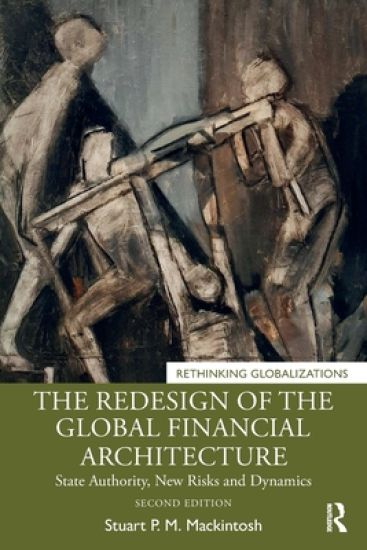
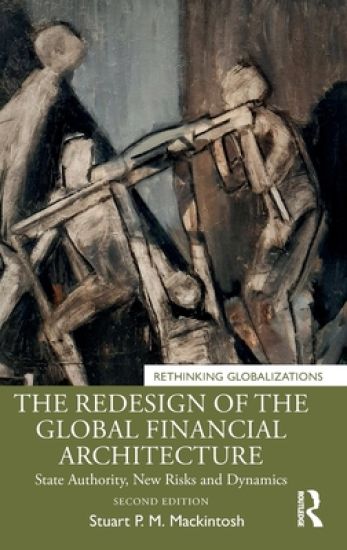
The Redesign of the Global Financial Architecture

The Redesign of the Global Financial Architecture

Stuart P. M. Mackintosh

TAYLOR FRANCIS LTD
2022
nidottu
More than ten years on from the most intense phase of the global financial crisis, and the collective international response in the G20 summit in London, a ‘new normal’ has emerged with systems in place to mitigate against further banking crises. This updated new edition analyzes this post-crisis international and national regulatory framework and asks whether the current paradigm is fit for purpose as new dangers gestate and develop.This new edition includes a discussion of the impact of the aggressively deregulatory and anti-globalist policies of the Trump administration and its pursuit of an ‘America First’ policy and explores its implications for the regulatory landscape constructed and tended by previous leaders. The author addresses new and future systemic risks, many outside the regulated banking sector, which have grown in importance since 2015. He develops possible future scenarios for the international regulatory architecture, both negative and positive, asking, ‘Are we better prepared for future banking crises?’ New risks, including the COVID-19 pandemic and economic crash, are testing the global system; and the G20, without US leadership, may be failing in this latest most severe crisis of our lifetimes. This book provides a unique narrative explanation drawn from leading actors of key events and policy changes as they unfolded immediately post-crisis. The author builds upon the first edition to capture key developments that have occurred during the past five years, while raising key questions and vulnerabilities, and looking at future risks and challenges that may emerge.This text will be of great interest to students, teachers and researchers of financial frameworks, globalisation and political economy.
The Redesign of the Global Financial Architecture

The Redesign of the Global Financial Architecture

Stuart P. M. Mackintosh

Routledge
2020
sidottu
More than ten years on from the most intense phase of the global financial crisis, and the collective international response in the G20 summit in London, a ‘new normal’ has emerged with systems in place to mitigate against further banking crises. This updated new edition analyzes this post-crisis international and national regulatory framework and asks whether the current paradigm is fit for purpose as new dangers gestate and develop.This new edition includes a discussion of the impact of the aggressively deregulatory and anti-globalist policies of the Trump administration and its pursuit of an ‘America First’ policy and explores its implications for the regulatory landscape constructed and tended by previous leaders. The author addresses new and future systemic risks, many outside the regulated banking sector, which have grown in importance since 2015. He develops possible future scenarios for the international regulatory architecture, both negative and positive, asking, ‘Are we better prepared for future banking crises?’ New risks, including the COVID-19 pandemic and economic crash, are testing the global system; and the G20, without US leadership, may be failing in this latest most severe crisis of our lifetimes. This book provides a unique narrative explanation drawn from leading actors of key events and policy changes as they unfolded immediately post-crisis. The author builds upon the first edition to capture key developments that have occurred during the past five years, while raising key questions and vulnerabilities, and looking at future risks and challenges that may emerge.This text will be of great interest to students, teachers and researchers of financial frameworks, globalisation and political economy.
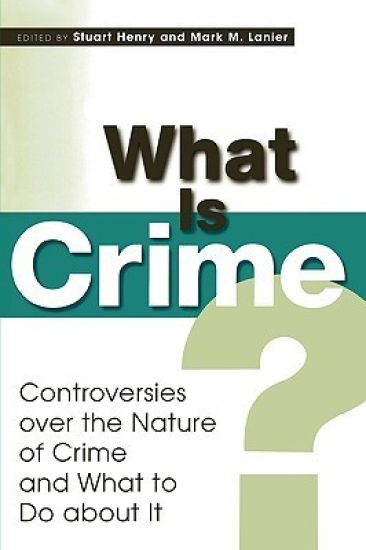
What Is Crime?

What Is Crime?

Stuart Henry; Mark M. Lanier

Rowman Littlefield
2001
nidottu
For decades, scholars have disagreed about what kinds of behavior count as crime. Is it simply a violation of the criminal law? Is it behavior that causes serious harm? Is the seriousness affected by how many people are harmed and does it make a difference who those people are? Are crimes less criminal if the victims are black, lower class, or foreigners? When corporations victimize workers is that a crime? What about when governments violate basic human rights of their citizens, and who then polices governments? In What Is Crime? the first book-length treatment of the topic, contributors debate the content of crime from diverse perspectives: consensus/moral, cultural/relative, conflict/power, anarchist/critical, feminist, racial/ethnic, postmodernist, and integrational. Henry and Lanier synthesize these perspectives and explore what each means for crime control policy.
Coordination Polymers

Coordination Polymers

Stuart R Batten; Suzanne M Neville; David R Turner

Royal Society of Chemistry
2008
sidottu
Awarded the 2009 Olle Prize! The field of coordination polymer research has undergone rapid expansion in recent years. No longer are these materials the vaguely defined 'insoluble material' at the bottom of your vessel that spell death for your reaction. They have gone from 'polymeric rubbish' to 'materials of the future'. Great leaps in the deliberate design of coordination polymers were made in the 1990s. These were allied with similar advances in related areas such as organic crystal engineering, metallosupramolecular chemistry and X-ray diffraction. No longer did we assemble things atom by atom. Whole molecules were used as building blocks and new materials were made. This is the first book to provide a broad overview of all the major facets of coordination polymer research in one place. It combines chapters on nets and interpenetration with wide-ranging surveys of transition metal and lanthanoid coordination polymers and their properties. The aim is to provide a flavour of each aspect whilst introducing the important concepts and developments using carefully selected examples. After an introduction, the text is split into three sections: -Design (nets, interpenetration, malleability) -Analysis (transition metal coordination polymers, lanthanoid coordination polymers, organometallic networks, organic-inorganic hybrids) -Application (magnetic properties, porosity, acentric and chiral networks, reactive coordination polymers, other properties). Written in the style of a tutorial review, the book is suitable for both senior specialists and new postgraduate students taking their first steps in the field. It also provides an authoritative and detailed reference source.
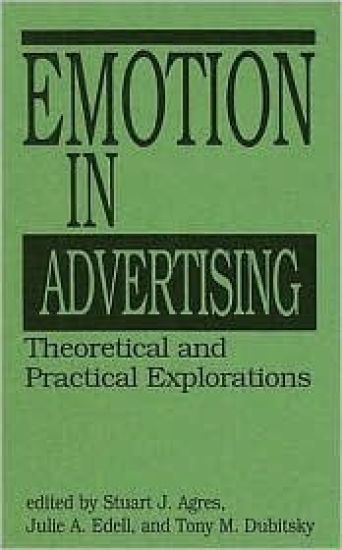
Emotion in Advertising

Emotion in Advertising

Stuart Agres; Tony M. Dubitsky; Julie A. Edell

Praeger Publishers Inc
1990
sidottu
Written by leading industry practitioners and academic researchers, this book explores the complex relationship between emotion and advertising. The chapters include both theoretical and empirical papers representing a broad spectrum of approaches and techniques. Some of the key topics include the measurement of mood, emotion and feeling in an advertising context, the effects of mood on recall and advertising effectiveness, the interaction of the message with the emotional make-up of the recipient,and the structural aspects of an ad and how they relate to emotional responses. Taken together, these papers represent the cutting edge of research in the area of advertising and emotion and a major contribution to the literature of consumer psychology.The volume is organized into six general sections. Part I provides an overview of the ways in which emotions affect the advertising environment. The next group of chapters investigates how emotional responses to advertising can and should be measured. The third section is comprised of empirical chapters which examine such issues as the potential role of facial expression in the arousal of emotion, differential emotional responses to storyboards, animatics and finished commercials, and the impact on emotional response of the introductory position of the brand name and product category within a commercial. In Part IV, the contributors look at how the emotional reactions to ads affect other constructs or behavior of interest to advertisers, including message recall and attitude toward the ad. The following section contains two chapters that explicitly examine how the emotional make-up of the viewer interacts with the emotional fabric of the ad. The final chapter presents an overview of the role of consumer psychology in the social sciences. Ideal as a set of readings for graduate students and researchers in consumer psychology and advertising research, this book would also be invaluable as a supplemental text for advanced undergraduate or graduate courses in cognitive psychology, social psychology, mass media/communications/journalism, or family economics.
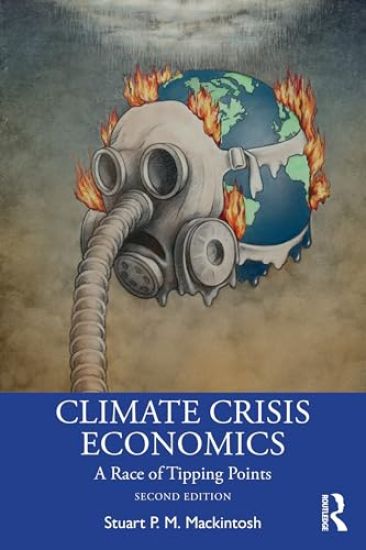
Climate Crisis Economics

Climate Crisis Economics

Stuart P. M. Mackintosh

TAYLOR FRANCIS LTD
2025
nidottu
Climate Crisis Economics: A Race of Tipping Points draws on economics, political economy, scientific literature, and data to gauge the extent to which our various communities – political, economic, and business – are making the essential leap to a new narrative and policy approach that will accelerate us towards the necessary transition to a decarbonised economy and sustainable future. Time is fast running out to avoid tipping points of no return, warns Mackintosh.The book draws out policies and practices with both national and local examples, which demonstrate various complementary approaches that are empowering states and people as they seek to pursue the carbon-neutral goal. The author delineates a climate crisis economics approach that is fit for purpose and which can help achieve necessary climate change goals in the decades ahead. This new 2nd edition has been thoroughly updated throughout, including new material on the Biden administration and countries outside the United States and Europe; new chapters on tipping point dangers, and the need for a just transition. It includes key questions for students and supplemental reading for each chapter.Written in an accessible voice, Climate Crisis Economics: A Race of Tipping Points makes the case for a new model of climate crisis economics, and new narratives to address the climate change dangers ahead. It will appeal to academics, students, investors, and professionals from varying disciplines including politics, international political economy, and international economics.
Climate Crisis Economics

Climate Crisis Economics

Stuart P. M. Mackintosh

TAYLOR FRANCIS LTD
2025
sidottu
Climate Crisis Economics: A Race of Tipping Points draws on economics, political economy, scientific literature, and data to gauge the extent to which our various communities – political, economic, and business – are making the essential leap to a new narrative and policy approach that will accelerate us towards the necessary transition to a decarbonised economy and sustainable future. Time is fast running out to avoid tipping points of no return, warns Mackintosh.The book draws out policies and practices with both national and local examples, which demonstrate various complementary approaches that are empowering states and people as they seek to pursue the carbon-neutral goal. The author delineates a climate crisis economics approach that is fit for purpose and which can help achieve necessary climate change goals in the decades ahead. This new 2nd edition has been thoroughly updated throughout, including new material on the Biden administration and countries outside the United States and Europe; new chapters on tipping point dangers, and the need for a just transition. It includes key questions for students and supplemental reading for each chapter.Written in an accessible voice, Climate Crisis Economics: A Race of Tipping Points makes the case for a new model of climate crisis economics, and new narratives to address the climate change dangers ahead. It will appeal to academics, students, investors, and professionals from varying disciplines including politics, international political economy, and international economics.