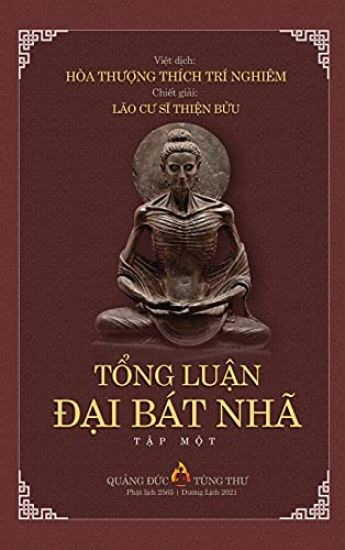
Tập s ch n y gồm c c b i viết từ nhiều năm qua của t c giả về Phật Gi o đ được đăng rải r c đ u đ tr n c c b o v trang mạng to n cầu.Những suy tư chứa đựng trong c c b i viết khởi sinh từ mảnh đất t m, giống như cỏ c y hoa l mọc l n từ l ng đất.Mọi thứ tr n đời n y đều từ t m sinh v rồi cũng từ t m diệt. Kh ng c ph p n o chẳng phải l t m. Con người nhận biết thế giới v mọi sự mọi vật th ng qua sự tiếp x c của s u căn mắt, tai, mũi, lưỡi, th n, v ], s u trần h nh sắc, m thanh, m i, vị, x c chạm, v ph p], nhưng kh ng thể thiếu s u thức nh n thức, nhĩ thức, tỉ thức, thiệt thức, th n thức, v thức]. Kh ng c s u thức th cho d s u căn c đối diện với s u trần cũng chỉ như l c i x c chết nằm y n ở đ chẳng hay biết g . Tất nhi n s u thức th mới chỉ l lục thức bề ngo i chứ chưa phải l b t thức, t ng thức s u nhiệm b n trong, nơi căn th n của mọi ph p. Nơi đ c i m ch ng ta gọi l ph p chỉ l ảnh hiện hay tướng sở tri của Thức A Lại Da, nghĩa l cũng chỉ l thức biến.Những g khởi sinh Từ Mảnh Đất T m chỉ l suy tư, nhận thức, v trải nghiệm của một người con Phật c được phước duy n đời n y gặp Phật Ph p v thọ nhận n đức gi o dưỡng của Cha Mẹ, Thầy, Tổ, thiện hữu tri thức v ph p giới ch ng sinh.Nếu c ch t lợi lạc n o Từ Mảnh Đất T m n y th xin hồi hướng cho tất cả mười phương ch ng sinh đều trọn th nh Phật Đạo.California, Mạnh Xu n năm Đinh Dậu, th ng 2 năm 2017Huỳnh Kim Quang
?d T Cell Cancer Immunotherapy: Evidence-Based Perspectives for Clinical Translation sets out and critically discusses the current clinical and relevant preclinical ?d T cell immunotherapy landscape. In five chapters, field experts discuss the challenges facing ?d T cell oncoimmunotherapy, propose solutions, and map next steps. Particular attention is given to summarizing our understanding of the complex, translationally relevant human ?d T cell biology, the evidence basis for designing ?d T cell combination trials and data-driven perspectives on what is known—and what isn’t—about ?d T cell therapeutic persistence. Various perspectives are provided on how issues of cytotoxic effector function, functional exhaustion, and cytokine addiction can be mitigated using gene engineering. A chapter is dedicated to the systematic review of all ?d T cell immunotherapy trials to date, and the cell therapy products that were used in these trials. The final chapter discusses allograft persistence-enhancement techniques in the context of ?d T cell therapy, covering lymphodepleting chemotherapy and synthetic stealth engineering. ?d T Cell Cancer Immunotherapy: Evidence-Based Perspectives for Clinical Translation gives an updated and comprehensive insight into the current state of ?dT cell immunotherapy, which is of interest to existing translational ?d T cell specialists, the proliferating range of academic scientists and commercial scientists entering the field, as well as clinicians who may encounter ?d T cell immunotherapy in the clinic, or are wishing to familiarize themselves with noncanonical lymphocyte immunotherapy.
?d T Cells in Health and Disease, Part A, provides a comprehensive overview of the biology, function, and clinical significance of ?d T cells, a unique subset of T lymphocytes with distinct roles in immune responses. This volume brings together leading experts to explore the fundamental aspects of ?d T cell development, activation, and regulation, as well as their involvement in maintaining health and contributing to disease.
?d T Cells in Health and Disease Part B, provides a comprehensive and up-to-date overview of the diverse roles that ?d T cells play in human physiology and pathology. This volume builds on foundational knowledge to explore advanced topics and recent discoveries in ?d T cell biology, with a particular focus on their mechanisms of action, functional diversity, and implications for clinical practice.
Tokyo Boogie-woogie and D.T. Suzuki seeks to understand the tensions between competing cultures, generations, and beliefs in Japan during the years following World War II, through the lens of one of its best-known figures and one of its most forgotten. Daisetsu Teitaro Suzuki (D.T. Suzuki) was a prolific scholar and translator of Buddhism, Zen, and Chinese and Japanese philosophy and religious history. In the postwar years, he was a central figure in the introduction of Buddhism to the United States and other English-language countries, frequently traveling and speaking to this end. His works helped define much of these interpretations of ‘Eastern Religion’ in English, as well as shape views of modern Japanese Buddhism. Against this famous figure, however, is a largely unknown or forgotten shape: Suzuki Alan Masaru. Alan was D.T. Suzuki’s adopted son and, though he remained within his father’s shadow, is mostly known as the lyricist of the iconic pop hit “Tokyo Boogie-woogie.” Perhaps due to his frequent scandals and the fraught nature of the relationship, Alan remains unmentioned and unstudied by scholars and historians. Yet by exploring the nature of the relationship between these two, Shoji Yamada digs into the conflicting memories and experiences of these generations in Japan.
Tokyo Boogie-woogie and D.T. Suzuki seeks to understand the tensions between competing cultures, generations, and beliefs in Japan during the years following World War II, through the lens of one of its best-known figures and one of its most forgotten. Daisetsu Teitaro Suzuki (D.T. Suzuki) was a prolific scholar and translator of Buddhism, Zen, and Chinese and Japanese philosophy and religious history. In the postwar years, he was a central figure in the introduction of Buddhism to the United States and other English-language countries, frequently traveling and speaking to this end. His works helped define much of these interpretations of ‘Eastern Religion’ in English, as well as shape views of modern Japanese Buddhism. Against this famous figure, however, is a largely unknown or forgotten shape: Suzuki Alan Masaru. Alan was D.T. Suzuki’s adopted son and, though he remained within his father’s shadow, is mostly known as the lyricist of the iconic pop hit “Tokyo Boogie-woogie.” Perhaps due to his frequent scandals and the fraught nature of the relationship, Alan remains unmentioned and unstudied by scholars and historians. Yet by exploring the nature of the relationship between these two, Shoji Yamada digs into the conflicting memories and experiences of these generations in Japan.
Daisetsu Teitaro Suzuki was a key figure in the introduction of Buddhism to the non-Asian world. Many outside Japan encountered Buddhism for the first time through his writings and teaching, and for nearly a century his work and legacy have contributed to the ongoing religious and cultural interchange between Japan and the rest of the world, particularly the United States and Europe. This second volume of Selected Works of D. T. Suzuki brings together Suzuki's writings on Pure Land Buddhism. At the center of the Pure Land tradition is the Buddha Amida and his miraculous realm known as paradise or the land of bliss," where sentient beings should aspire to be born in their next life and where liberation and enlightenment are assured. Suzuki, by highlighting certain themes in Pure Land Buddhism and deemphasizing others, shifted its focus from a future, otherworldly goal to religious experience in the present, wherein one realizes the nonduality between the Buddha and oneself and between paradise and this world. An introduction by James C. Dobbins analyzes Suzuki's cogent, distinctive, and thought-provoking interpretations, which helped stimulate new understandings of Pure Land Buddhism quite different from traditional doctrine.
Daisetsu Teitaro Suzuki was a key figure in the introduction of Buddhism to the non-Asian world. Many outside Japan encountered Buddhism for the first time through his writings and teaching, and for nearly a century his work and legacy have contributed to the ongoing religious and cultural interchange between Japan and the rest of the world, particularly the United States and Europe. This third volume of Selected Works of D. T. Suzuki brings together a diverse collection of Suzuki's letters, essays, and lectures about non-Buddhist religions and his thoughts on their relation to Buddhism, as well as his reflections on the nature of religion itself. Some of these writings have been translated into English for the first time in this volume. As a long-term resident of the United States, a world traveller, and a voracious consumer of information about all forms of religion, Suzuki was one of the foremost Japanese mediators of Eastern and Western religious cultures for nearly seven decades. An introduction by Jeff Wilson and Tomoe Moriya analyzes Suzuki's frequent encounters with texts and practitioners of many religions, considers how events in Suzuki's lifetime affected his interpretations of Christianity, Shinto, and other traditions, and demonstrates that his legacy as a scholar extends well beyond Buddhism.
Daisetsu Teitar?¯ Suzuki was a key figure in the introduction of Buddhism to the non-Asian world. Many outside Japan encountered Buddhism for the first time through his writings and teaching, and for nearly a century his work and legacy have contributed to the ongoing religious and cultural interchange between Japan and the rest of the world, particularly the United States and Europe. This fourth volume of Selected Works of D. T. Suzuki brings together a range of Suzuki’s writings in the area of Buddhist studies. Based on his text-critical work in the Chinese canon, these essays reflect his commitment to clarifying Mahayana Buddhist doctrines in Indian, Chinese, and Japanese historical contexts. Many of these innovative writings reflect Buddhological discourse in contemporary Japan and the West’s pre-war ignorance of Mahayana thought. Included is a translation into English for the first time of his "Mahayana Was Not Preached by Buddha." In addition to editing the essays and contributing the translation, Mark L. Blum presents an introduction that examines how Suzuki understood Mahayana discourse via Chinese sources and analyzes his problematic use of Sanskrit.
Daisetsu Teitaro Suzuki was a key figure in the introduction of Buddhism to the non-Asian world. Many outside of Japan encountered Buddhism for the first time through his writings and teaching, and for nearly a century his work and legacy have contributed to the ongoing religious and cultural interchange between Japan and the rest of the world, particularly the United States and Europe. Selected Works of D. T. Suzuki gathers the full range of Suzuki's writings both classic essays and lesser-known but equally significant articles. This first volume in the series presents a collection of Suzuki's writings on Zen Buddhist thought and practice. In an effort to ensure the continued relevance of Zen, Suzuki drew on his years of study and practice, placing the tradition into conversation with key trends in nineteenth- and twentieth-century thought. Richard M. Jaffe's in-depth introduction situates Suzuki's approach to Zen in the context of modern developments in religious thought, practice, and scholarship. The romanization of Buddhist names and technical terms has been updated, and Chinese and Japanese characters, which were removed from many post World War II editions of Suzuki's work, have been reinstated. This will be a valuable edition of Suzuki's writings for contemporary scholars and students of Buddhism.