
Kirjahaku
Etsi kirjoja tekijän nimen, kirjan nimen tai ISBN:n perusteella.
973 tulosta hakusanalla Tabitha Page
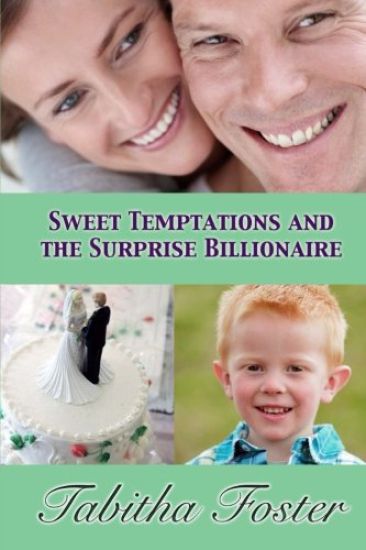
Always the baker...never the bride. Ambitious and fresh-faced beautiful, Liliana McCrory has spent the last couple of years entirely concentrated on building her business baking elaborate gourmet wedding cakes. Just when Liliana's almost all but given up on the idea of romance in her own life, she literally runs into the dapper best man at her most high profile wedding while carrying a tray of strawberry shortcakes. Despite the instant spark with the mystery man, the appearance of his fianc e by his side quickly dashes any thoughts of potential romance. Technology innovator and billionaire, Cole Montgomery, always puts family first. After the passing of his beloved wife, Katherine, he focused on rebuilding his family and giving his young son, Jackson, a new mother figure by becoming engaged to the high school sweetheart he recently reconnected with. However, a chance meeting with the radiant natural beauty and business savvy Liliana at his best friend's wedding plants seeds of doubt about his upcoming nuptials. When Cole hires Liliana to bake the cake for his own wedding, the two find themselves undeniably drawn to each other. As a surprising connection between the two is revealed, will Cole and Liliana listen to the voice in their hearts or risk missing out on the chance at a great love? Tabitha Foster is also the author of: Short Order Daddy, Surprise Billionaire The Billionaire's Surprise Christmas Twins The Billionaire's Surprise Virgin Pregnant Bride For more on Tabitha Foster, please visit www.chancespress.com.
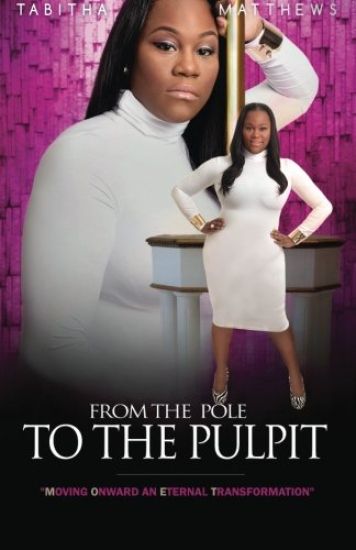
From the Pole to the Pulpit: Moving Onward an Eternal Transformation
Tabitha Matthews
Tabitha Matthews
2014
nidottu

Not Posted: S.E.A.S.O.N.S of the Untold, a Motivational Memoir
Tabitha D. James
1 Am She
2017
nidottu
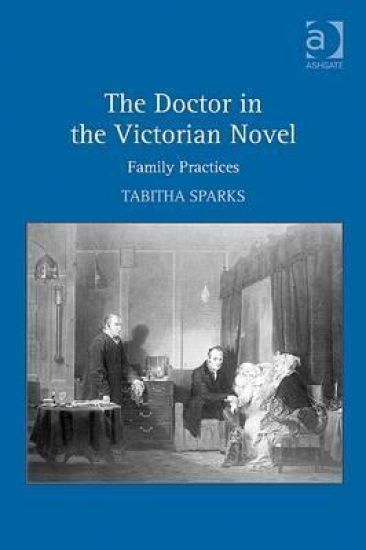
With the character of the doctor as her subject, Tabitha Sparks follows the decline of the marriage plot in the Victorian novel. As Victorians came to terms with the scientific revolution in medicine of the mid-to-late nineteenth century, the novel's progressive distance from the conventions of the marriage plot can be indexed through a rising identification of the doctor with scientific empiricism. A narrative's stance towards scientific reason, Sparks argues, is revealed by the fictional doctor's relationship to the marriage plot. Thus, novels that feature romantic doctors almost invariably deny the authority of empiricism, as is the case in George MacDonald's Adela Cathcart. In contrast, works such as Wilkie Collins's Heart and Science, which highlight clinically minded or even sinister doctors, uphold the determining logic of science and, in turn, threaten the novel's romantic plot. By focusing on the figure of the doctor rather than on a scientific theme or medical field, Sparks emulates the Victorian novel's personalization of tropes and belief systems, using the realism associated with the doctor to chart the sustainability of the Victorian novel's central imaginative structure, the marriage plot. As the doctors Sparks examines increasingly stand in for the encroachment of empirical knowledge on a morally formulated artistic genre, their alienation from the marriage plot and its interrelated decline succinctly herald the end of the Victorian era and the beginning of Modernism.
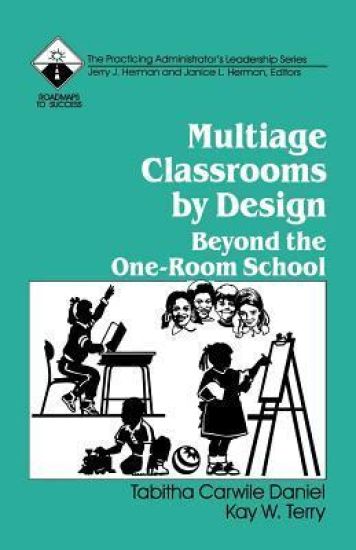
Multiage Classrooms by Design
Tabitha C. (Carwile) Daniel; Terry Kay W.
Corwin Press Inc
1995
nidottu
Multiage grouping - the placement of children in the same classroom who are at least one year apart in age - is designed to allow children of various ability and age levels to work in an environment designed to optimize their learning potential. The authors explore the workings of a multiage classroom and offer guidelines for planning this type of instruction.
Critics agree in the abstract that "metafiction" refers to any novel that draws attention to its own fictional construction, but metafiction has been largely associated with the postmodern era. In this innovative new book Tabitha Sparks identifies a sustained pattern of metafiction in the Victorian novel that illuminates the art and intentions of its female practitioners.From the mid-nineteenth century through the fin de siècle, novels by Victorian women such as Charlotte Brontë, Rhoda Broughton, Charlotte Riddell, Eliza Lynn Linton, and several New Women authors share a common but underexamined trope: the fictional characterization of the woman novelist or autobiographer. Victorian Metafiction reveals how these novels systemically dispute the assumptions that women wrote primarily about their emotions or were restricted to trivial, sentimental plots.Countering an established tradition that has read novels by women writers as heavily autobiographical and confessional, Sparks identifies the literary technique of metafiction in numerous novels by women writers and argues that women used metafictional self-consciousness to draw the reader’s attention to the book and not the novelist. By dislodging the narrative from these cultural prescriptions, Victorian Metafiction effectively argues how these women novelists presented the business and art of writing as the subject of the novel and wrote metafiction in order to establish their artistic integrity and professional authority.
Critics agree in the abstract that "metafiction" refers to any novel that draws attention to its own fictional construction, but metafiction has been largely associated with the postmodern era. In this innovative new book Tabitha Sparks identifies a sustained pattern of metafiction in the Victorian novel that illuminates the art and intentions of its female practitioners.From the mid-nineteenth century through the fin de siècle, novels by Victorian women such as Charlotte Brontë, Rhoda Broughton, Charlotte Riddell, Eliza Lynn Linton, and several New Women authors share a common but underexamined trope: the fictional characterization of the woman novelist or autobiographer. Victorian Metafiction reveals how these novels systemically dispute the assumptions that women wrote primarily about their emotions or were restricted to trivial, sentimental plots.Countering an established tradition that has read novels by women writers as heavily autobiographical and confessional, Sparks identifies the literary technique of metafiction in numerous novels by women writers and argues that women used metafictional self-consciousness to draw the reader’s attention to the book and not the novelist. By dislodging the narrative from these cultural prescriptions, Victorian Metafiction effectively argues how these women novelists presented the business and art of writing as the subject of the novel and wrote metafiction in order to establish their artistic integrity and professional authority.
This is a study of the genesis, evolution, adaptation and subordination of the Kikuyu squatter labourers, who comprised the majority of resident labourers on settler plantations and estates in the Rift Valley Province of the White Highlands. The story of the squatter presence in the White Highlands is essentially the story of the conflicts and contradictions that existed between two agrarian systems, the settler plantation economy and the squatter peasant option. Initially, the latter developed into a viable but much resented sub-system which operated within and, to some extent, in competition with settler agriculture. This study is largely concerned with the dynamics of the squatter presence in the White Highlands and with the initiative, self-assertion and resilience with which they faced their subordinate position as labourers. In their response to the machinations of the colonial system, the squatters were neither passive nor malleable but, on the contrary, actively resisted coercion and subordination as they struggled to carve out a living for themselves and their families…. It is a firm conviction of this study that Kikuyu squatters played a crucial role in the initial build-up of the events that led to the outbreak of the Mau Mau war. —from the introduction
This book explores the history of African womanhood in colonial Kenya. By focussing on key sociocultural institutions and practices around which the lives of women were organized, and on the protracted debates that surrounded these institutions and practices during the colonial period, it investigates the nature of indigenous, mission, and colonial control of African women. The pertinent institutions and practices include the legal and cultural status of women, clitoridectomy, dowry, marriage, maternity and motherhood, and formal education. By following the effects of the all-pervasive ideological shifts that colonialism produced in the lives of women, the study investigates the diverse ways in which a woman's personhood was enhanced, diminished, or placed in ambiguous predicaments by the consequences, intended and unintended, of colonial rule as administered by both the colonizers and the colonized. The study thus tries to historicize the reworkings of women's lives under colonial rule. The transformations that resulted from these reworkings involved the negotiation and redefinition of the meaning of individual liberties and of women's agency, along with the reconceptualization of kinship relations and of community. These changes resulted in—and often resulted from—increased mobility for Kenyan women, who were enabled to cross physical, cultural, economic, social, and psychological frontiers that had been closed to them prior to colonial rule. The conclusion to which the experiences of women in colonial Kenya points again and again is that for these women, the exercise of individual agency, whether it was newly acquired or repeatedly thwarted, depended in large measure on the unleashing of forces over which no one involved had control. Over and over, women found opportunities to act amid the conflicting policies, unintended consequences, and inconsistent compromises that characterized colonial rule.
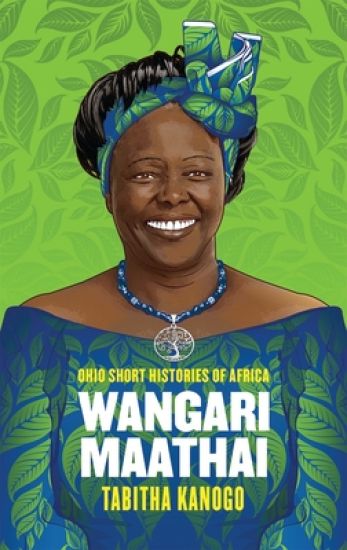
Wangari Muta Maathai is one of Africa's most celebrated female activists. Originally trained as a scientist in Kenya and abroad, Professor Maathai returned to her home country of Kenya with a renewed political consciousness. There, she began her long career as an activist, campaigning for environmental and social justice while speaking out against government corruption. In 2004, Maathai was awarded the Nobel Peace Prize for her leadership of the Green Belt Movement, a conservation effort that resulted in the restoration of African forests decimated during the colonial era. In this biography, Tabitha Kanogo follows Wangari Maathai from her modest, rural Kenyan upbringing to her rise as a national figure campaigning for environmental and ecological conservation, sustainable development, democracy, human rights, gender equality, and the eradication of poverty until her death in 2011.
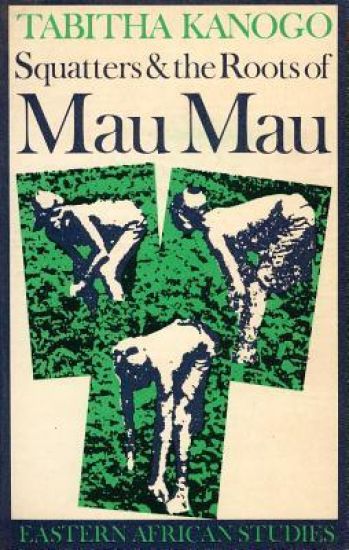
A social history of the Kikuyu squatters in the 'White Highlands'. The author follows the story of the squatters farming the land in the 'White Highlands' at first unused by the Europeans. After 1923 the white settlers demanded more labour from the squatters and began to restrict their use of theland for cultivation and animal husbandry until by the early 1940s most of the squatters livestock had gone. Kanogo traces the squatters' increasing poverty and disillusion and their involvement in Mau Mau, particularly that of the women. North America: Ohio U Press; Kenya: EAEP
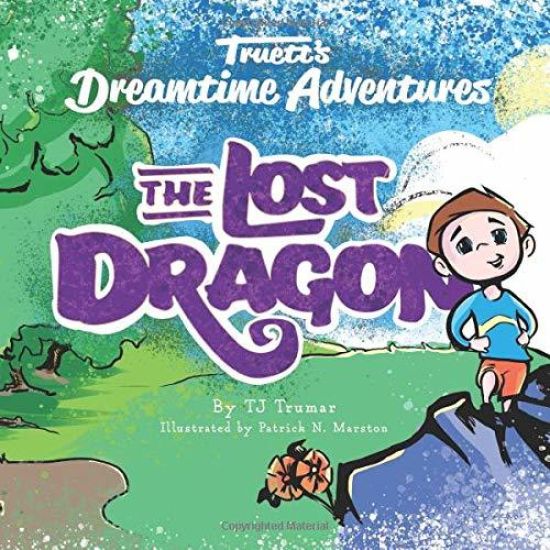
Truett's Dreamtime Adventures: The Lost Dragon
Tabitha Embree; Jessica Meredith
Bowkers
2018
nidottu
Looking for FUN and ADVENTURE?What would you do if you found a lost baby dragon in the woods? Join an adventurous boy named Truett as he takes on the task of reuniting a loving mother with her blue-striped son that will bring warm, fuzzy, dragon- hug feelings with every page.

After he was tucked into bed, Truett's mind went to work and produced another action-packed dream. He was driving super fast cars with his dad in a race to the finish line Who would win? Readers, start your engines
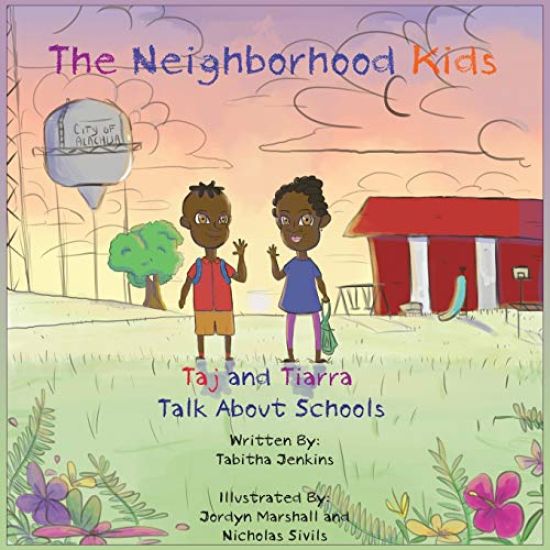
The Neighborhood Kids: Taj and Tiarra Talk about Schools
Tabitha Jenkins
Tabitha Jenkins
2018
nidottu
The Neighborhood Kids series is a collection of stories written in dedication to the amazingly bright and promising kids in Alachua, FL. Young readers will be encouraged and empowered as they join twins Taj and Tiarra through fun adventures and valuable life lessons. Their playful rhymes are fun to read while giving kids practice with sight words. These inspiring stories can be used to create conversations that build positive self-images, a strong sense of pride and ambitious visions for the future.No other reading gives purpose and identity like the reading we do as children. By giving our children the right motivating tools to help them expand early imaginations, we allow them to unlock their full powerful potential. Although the stories are set with a small-town backdrop, Taj and Tiarra want kids to know that the size of your town does not determine the size your possibilities.