Kirjojen hintavertailu. Mukana 11 342 296 kirjaa ja 12 kauppaa.

Kirjahaku

Etsi kirjoja tekijän nimen, kirjan nimen tai ISBN:n perusteella.

1000 tulosta hakusanalla Thomas W. Foley

The World Calling

The World Calling

Thomas W. Ogletree

Westminster/John Knox Press,U.S.
2004
nidottu
Thomas Ogletree has devoted much of his career to exploring the significance of Ernst Troeltsch's seminal work, The Social Teaching of the Christian Churches. The articles in The World Calling use a Troeltschian lens to explore fundamental issues underlying any Christian social witness in the context of American democratic institutions.
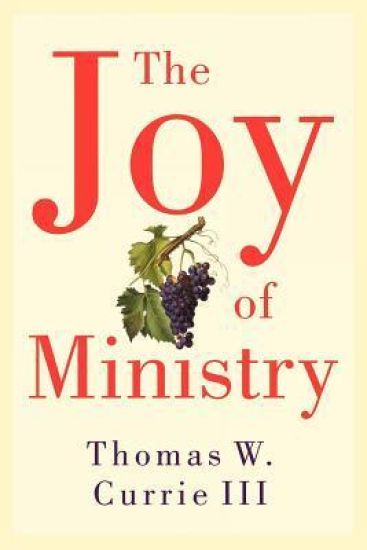
The Joy of Ministry

The Joy of Ministry

Thomas W. Currie III

Westminster/John Knox Press,U.S.
2008
nidottu
Clergy burnout still abounds. Now comes an antidote: a collection of reflections centering on a lost note today--"joy" in ministry. The Joy of Ministry contains eight theological reflections on ministry to help pastors recognize their identities and the joy in the midst of their ministry of sharing the gospel. Rooted in the writings of Karl Barth and Fyodor Dostoyevsky, Thomas Currie III reminds readers of the basis for the church's ministry, namely, what God has done in Jesus Christ, and the ways in which the gospel joy is expressed in the ministry of the church.
Deuteronomy

Deuteronomy

Thomas W. Mann

Westminster/John Knox Press,U.S.
1995
nidottu
Deuteronomy, Thomas Mann notes, is more than a relic of ancient history. It is a living document that deals with issues that have relevance for the modern-day reader, including justice and the vision of the Great Society, individual responsibility versus the importance of community, and the nature of loyalty to God and to the world. By examining these and other issues, readers will draw striking parallels between the world of Israel several millennia ago and today. This absorbing and readable book will stimulate discussion about the Deuteronomistic prescriptions for a healthy society and their applicability to contemporary life and society.Books in the Westminster Bible Companion series assist laity in their study of the Bible as a guide to Christian faith and practice. Each volume explains the biblical book in its original historical context and explores its significance for faithful living today. These books are ideal for individual study and for Bible study classes and groups.
Prayers for the Road

Prayers for the Road

Thomas W. Currie III

Westminster/John Knox Press,U.S.
2000
nidottu
Parents, friends of college-aged students, and teens leaving for college will find these meditations on the Psalms filled with wisdom and insight. They are inspirational, clearly written, and easy to use for daily devotions. Space is provided for journaling, inviting the reader to become personally involved with each Psalm text.
Searching for Truth

Searching for Truth

Thomas W. Currie III

Westminster/John Knox Press,U.S.
2001
nidottu
How can we speak the truth as truth, yet speak it in love? How can we avoid the temptation either to think that we alone possess the truth or to trim the truth to make it less offensive to the world? These are some of the questions that this clearly written book attempts to answer, questions about the challenge of claiming and trusting the truthfulness of gospel in a time when all such truth claims are suspect.The Foundations of Christian Faith series consists of twelve volumes on major theological themes such as the Trinity, the Holy Spirit, and the person and work of Jesus Christ. This series enables readers to learn about contemporary theology in ways that are clear, enjoyable, and meaningful. It examines the doctrines of the Christian faith and stimulates readers not only to think more deeply about their faith but also to understand their faith in relationship to contemporary challenges and questions. Individuals and study groups alike will find these guides invaluable in their search for depth and integrity in their Christian faith.
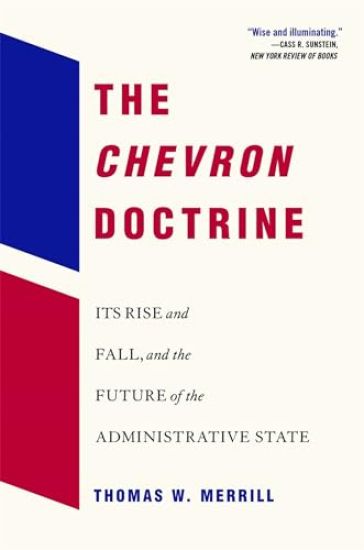
The Chevron Doctrine

The Chevron Doctrine

Thomas W. Merrill

HARVARD UNIVERSITY PRESS
2022
sidottu
A leading expert on the administrative state describes the past, present, and future of the immensely consequential—and equally controversial—legal doctrine that has come to define how Congress’s laws are applied by the executive branch.The Constitution makes Congress the principal federal lawmaker. But for a variety of reasons, including partisan gridlock, Congress increasingly fails to keep up with the challenges facing our society. Power has inevitably shifted to the executive branch agencies that interpret laws already on the books and to the courts that review the agencies’ interpretations.Since the Supreme Court’s 1984 decision in Chevron v. Natural Resources Defense Council, this judicial review has been highly deferential: courts must uphold agency interpretations of unclear laws as long as these interpretations are “reasonable.” But the Chevron doctrine faces backlash from constitutional scholars and, now, from Supreme Court justices who insist that courts, not administrative agencies, have the authority to say what the law is. Critics of the administrative state also charge that Chevron deference enables unaccountable bureaucratic power. Thomas Merrill reviews the history and immense consequences of the Chevron doctrine and suggests a way forward. Recognizing that Congress cannot help relying on agencies to carry out laws, Merrill rejects the notion of discarding the administrative state. Instead, he focuses on what should be the proper relationship between agencies and courts in interpreting laws, given the strengths and weaknesses of these institutions. Courts are better at enforcing the rule of law and constitutional values; agencies have more policy expertise and receive more public input. And, unlike courts, agencies are subject to at least some political discipline.The best solution, Merrill suggests, is not of the either-or variety. Neither executive agencies nor courts alone should pick up the slack of our increasingly ineffectual legislature.
The Chevron Doctrine

The Chevron Doctrine

Thomas W. Merrill

HARVARD UNIVERSITY PRESS
2024
nidottu
“Wise and illuminating…Merrill’s treatment of the rise of Chevron, and its various twists and turns over the decades, is keenly insightful.” —Cass R. Sunstein, New York Review of Books “Merrill is one of the brightest and best scholars of administrative law in his generation. This book...is must-reading for any citizen who has an interest in the constitutionality of the administrative state.” —Steven G. Calabresi, Northwestern University Pritzker School of Law “A model of how to conduct rigorous, level-headed, and fair-minded analysis of a subject that has generated enormous legal controversy. There is no more judicious mind among American legal scholars than Thomas Merrill’s.”—Nicholas Parrillo, Yale Law School “A must-read for practicing or prospective administrative lawyers. They, as well as a broader audience, will find much good sense in the author’s judicious treatment of perennial questions of lawful government.”—Michael S. Greve, Claremont Review of Books The Constitution makes Congress the principal federal lawmaker. But for a variety of reasons, including partisan gridlock, Congress increasingly fails to keep up with the challenges facing our society. Power has shifted to the executive branch agencies that interpret laws and to the courts that review their interpretations. Since the Supreme Court’s 1984 decision in Chevron v. Natural Resources Defense Council, this judicial review has been highly deferential: courts must uphold agency interpretations of unclear laws so long as these are “reasonable.” But the Chevron doctrine faces backlash from constitutional scholars and, now, from Supreme Court justices who insist that courts, not administrative agencies, have the authority to say what the law is. Critics of the administrative state charge that Chevron deference enables unaccountable bureaucratic power. In this groundbreaking book, Thomas Merrill reviews the history and consequences of the Chevron doctrine and suggests a way forward.
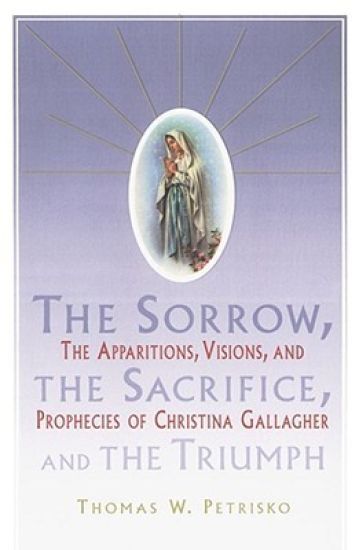
The Sorrow, the Sacrifice, and the Triumph
A Modern Mystic Speaks Christina Gallagher, a humble County Mayo housewife, is a prophetic figure for one times. She speaks about the warnings she has received from the Virgin Mary and of the divine wrath to come. She exhorts all to repent, to pray, to do penance, and to trust profoundly in God's mercy. Apparitions and visions are a part of the history of the Catholic Church, Marian apparitions were reported as early as the first century, and there have been sightings at Fatima, Portugal: Lourdes, France, and Mediugoric, Yugoslavia, which have transformed these locations into centers for religions pilgrimages. While more than 300 apparitions have been reported from around the world in this century. Christina Gallagher's experience has been singular. Beginning with her first vision of Jesus Christ in 1985 and of the Virgin Mary in 1988, Christina has received messages from Marry, Jasus, and various saints. Christina has been marked by the stigmata -- the wounds of Christ -- and has suffered greatly as a messenger of God. This book is the account of the revelation that God wishes to give the world through Christina Gallagher. Christina's fascinating experiences have included vivid visions of Heaven and Hell; encounters with angels, the Devil, and demons; and warnings about war and mass destruction and the coming of the Antichrist. "The Sorrow, the Sacrifice, and the Triumph" is, above all, an eloquent plea for the renewal of faith and the attainment of peace.
Visual Ecology

Visual Ecology

Thomas W. Cronin; Sönke Johnsen; Justin Marshall; Eric J. Warrant

PRINCETON UNIVERSITY PRESS
2014
sidottu
Visual ecology is the study of how animals use visual systems to meet their ecological needs, how these systems have evolved, and how they are specialized for particular visual tasks. Visual Ecology provides the first up-to-date synthesis of the field to appear in more than three decades. Featuring some 225 illustrations, including more than 140 in color, spread throughout the text, this comprehensive and accessible book begins by discussing the basic properties of light and the optical environment. It then looks at how photoreceptors intercept light and convert it to usable biological signals, how the pigments and cells of vision vary among animals, and how the properties of these components affect a given receptor's sensitivity to light. The book goes on to examine how eyes and photoreceptors become specialized for an array of visual tasks, such as navigation, evading prey, mate choice, and communication. A timely and much-needed resource for students and researchers alike, Visual Ecology also includes a glossary and a wealth of examples drawn from the full diversity of visual systems. * The most up-to-date overview of visual ecology available* Features some 225 illustrations, including more than 140 in color, spread throughout the text* Guides readers from the basic physics of light to the role of visual systems in animal behavior* Includes a glossary and a wealth of real-world examples
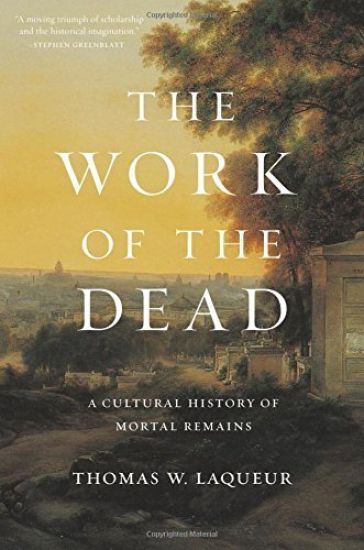
The Work of the Dead

The Work of the Dead

Thomas W. Laqueur

PRINCETON UNIVERSITY PRESS
2015
sidottu
The Greek philosopher Diogenes said that when he died his body should be tossed over the city walls for beasts to scavenge. Why should he or anyone else care what became of his corpse? In The Work of the Dead, acclaimed cultural historian Thomas Laqueur examines why humanity has universally rejected Diogenes's argument. No culture has been indifferent to mortal remains. Even in our supposedly disenchanted scientific age, the dead body still matters--for individuals, communities, and nations. A remarkably ambitious history, The Work of the Dead offers a compelling and richly detailed account of how and why the living have cared for the dead, from antiquity to the twentieth century. The book draws on a vast range of sources--from mortuary archaeology, medical tracts, letters, songs, poems, and novels to painting and landscapes in order to recover the work that the dead do for the living: making human communities that connect the past and the future. Laqueur shows how the churchyard became the dominant resting place of the dead during the Middle Ages and why the cemetery largely supplanted it during the modern period. He traces how and why since the nineteenth century we have come to gather the names of the dead on great lists and memorials and why being buried without a name has become so disturbing. And finally, he tells how modern cremation, begun as a fantasy of stripping death of its history, ultimately failed--and how even the ashes of the victims of the Holocaust have been preserved in culture. A fascinating chronicle of how we shape the dead and are in turn shaped by them, this is a landmark work of cultural history.
The Work of the Dead

The Work of the Dead

Thomas W. Laqueur

Princeton University Press
2018
pokkari
The meaning of our concern for mortal remains—from antiquity through the twentieth centuryThe Greek philosopher Diogenes said that when he died his body should be tossed over the city walls for beasts to scavenge. Why should he or anyone else care what became of his corpse? In The Work of the Dead, acclaimed cultural historian Thomas Laqueur examines why humanity has universally rejected Diogenes's argument. No culture has been indifferent to mortal remains. Even in our supposedly disenchanted scientific age, the dead body still matters—for individuals, communities, and nations. A remarkably ambitious history, The Work of the Dead offers a compelling and richly detailed account of how and why the living have cared for the dead, from antiquity to the twentieth century.The book draws on a vast range of sources—from mortuary archaeology, medical tracts, letters, songs, poems, and novels to painting and landscapes in order to recover the work that the dead do for the living: making human communities that connect the past and the future. Laqueur shows how the churchyard became the dominant resting place of the dead during the Middle Ages and why the cemetery largely supplanted it during the modern period. He traces how and why since the nineteenth century we have come to gather the names of the dead on great lists and memorials and why being buried without a name has become so disturbing. And finally, he tells how modern cremation, begun as a fantasy of stripping death of its history, ultimately failed—and how even the ashes of the victims of the Holocaust have been preserved in culture.A fascinating chronicle of how we shape the dead and are in turn shaped by them, this is a landmark work of cultural history.
The United Nations in Bangladesh

The United Nations in Bangladesh

Thomas W. Oliver

Princeton University Press
2015
pokkari
This book provides the first analytic account of the United Nations relief operation in Bangladesh. Written by a United Nations staff member involved in the operation, it reflects his direct access to archives and thus offers a doubly valuable description of the inner workings of an international organization. The unusually large relief program in Bangladesh has been described as "a rare example of international cooperation that has enlarged the scope of constructive United Nations action." Originally published in 1978. The Princeton Legacy Library uses the latest print-on-demand technology to again make available previously out-of-print books from the distinguished backlist of Princeton University Press. These editions preserve the original texts of these important books while presenting them in durable paperback and hardcover editions. The goal of the Princeton Legacy Library is to vastly increase access to the rich scholarly heritage found in the thousands of books published by Princeton University Press since its founding in 1905.
The United Nations in Bangladesh

The United Nations in Bangladesh

Thomas W. Oliver

Princeton University Press
2016
sidottu
This book provides the first analytic account of the United Nations relief operation in Bangladesh. Written by a United Nations staff member involved in the operation, it reflects his direct access to archives and thus offers a doubly valuable description of the inner workings of an international organization. The unusually large relief program in Bangladesh has been described as "a rare example of international cooperation that has enlarged the scope of constructive United Nations action." Originally published in 1978. The Princeton Legacy Library uses the latest print-on-demand technology to again make available previously out-of-print books from the distinguished backlist of Princeton University Press. These editions preserve the original texts of these important books while presenting them in durable paperback and hardcover editions. The goal of the Princeton Legacy Library is to vastly increase access to the rich scholarly heritage found in the thousands of books published by Princeton University Press since its founding in 1905.
Walk With The Wind

Walk With The Wind

Thomas W Savage

Thomas William Savage
2018
pokkari
This riveting story is told through the eyes of "Tateh," a young bull elk calf that is born into the wilds of Southwest Montana. Experience the incredible exploits of this young elk as he grows to become a great leader of his kind.His life is one of challenge and near tragedy as he struggles to survive the often violent life that is nature. Under the guidance of great bulls and mysterious spirit guides, this brave young bull grows to understand the never-ending circle of life and the oneness that he and all living things share. Enter the brutally honest world that is nature, and walk the journey of his courageous young bull as by his grandeur he brings all four-legged ones to a great oneness with their most feared enemy, man. You will laugh and you will cry, but having shared the journey of Tateh, you will never again view nature as you once did.
As a Black Prince on Bloody Fields

As a Black Prince on Bloody Fields

Thomas W. Jensen

Chained Swan
2014
nidottu
An uncertain sixteen year-old in black armor steels himself to lead the vanguard of his father's army on a muddy battlefield. It is a stormy day in August, 1346. He is Edward Plantagenet, called "the Black Prince." The place is "The Valley of the Clerks," near the town of Crecy, France. This is the story of his youth and adulthood as he tells it, from a childhood among lions in the Tower of London to his love for a woman whose life is as wild and exceptional as his own. She is Joan, called "the Fair Maid of Kent," renowned for her beauty.At 26, after years of vast social and economic change and the desolation of the Black Death, Edward returns to France in another desperate gambit to save his father's kingdom and discover who he truly is. Before Henry V and Agincourt there was Edward and Crecy and Poitiers. And Joan.As a Black Prince on Bloody Fields is an imagined personal memoir written from primary historical sources. It won the Utah Arts Council First Prize for Novel (under the title "Edward and Joan").
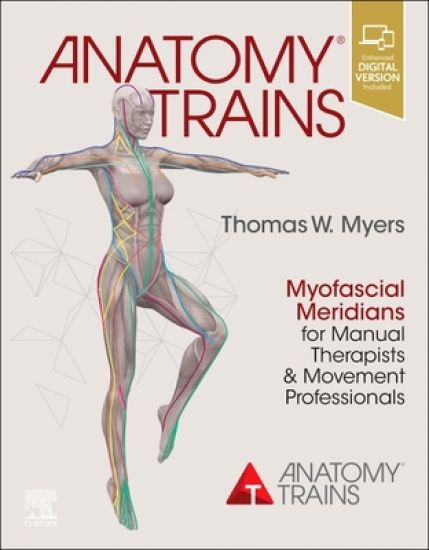
Anatomy Trains

Anatomy Trains

Thomas W. Myers

Elsevier Health Sciences
2020
nidottu
Get a multi-dimensional understanding of musculoskeletal anatomy with Anatomy Trains: Myofascial Meridians for Manual Therapists & Movement Professionals, 4th Edition. This hugely successful, one-of-a-kind title continues to center on the application of anatomy trains across a variety of clinical assessment and treatment approaches - demonstrating how painful problems in one area of the body can be linked to a "silent area" away from the problem, and ultimately giving rise to new treatment strategies. This edition has been fully updated with the latest evidence-based research and includes new coverage of anatomy trains in motion using Pilates-evolved movement, anatomy trains in horses and dogs, and the updated fascial compendium on elements, properties, neurology, and origins of the fascial system. It also offers a new, larger library of videos, including animations and webinars with the author. In all, this unique exploration of the role of fascial in healthy movement and postural distortion is an essential read for physical therapists, massage therapists, craniosacral therapists, yoga instructors, osteopathologists, manual therapists, athletic and personal trainers, dance instructors, chiropractors, acupuncturists, and any professional working in the field of movement. Revolutionary approach to the study of human anatomy provides a holistic map of myoanatomy to help improve the outcomes of physical therapies that are traditionally used to manage pain and other musculoskeletal disorders. Relevant theory descriptions are applied to all common types of movement, posture analysis, and physical treatment modalities. Intuitive content organization allows students to reference the concept quickly or gain a more detailed understanding of any given area according to need. Section on myofascial force transmission in gait dynamics is written by guest author James Earls. Robust appendices discuss the relevance of the Anatomy Trains concept to the work of Dr Louis Schultz (Meridians of Latitude), Ida Rolf (Structural Integration), and correspondences with acupuncture meridians. New photos and images of fascial tissues, adhesions, and layers provide a better understanding of text content. Revised and expanded content reflects the most up-to-date research and latest evidence for the scientific basis of common clinical findings. New, larger library of videos includes animations and webinars with the author. New Anatomy Trains in Motion section by guest author Karin Gurtner uses Pilates-evolved movement to explore strength and plasticity along myofascial meridians. New addition: Anatomy Trains in Quadrupeds (horses and dogs) is mapped for equine and pet therapies by Rikke Schultz, DVM, Tove Due, DVM, and Vibeke Elbrønd, DVM, PhD. New appendix: Updated fascial compendium on elements, properties, neurology, and origins of the fascial system. NEW! enhanced eBook version is included with print purchase, which allows students to access all of the text, figures, and references from the book on a variety of devices.
Ethnic Identity and Minority Protection

Ethnic Identity and Minority Protection

Thomas W. Simon

Lexington Books
2012
sidottu
In Ethnic Identity and Minority Protection: Designation, Discrimination, and Brutalization, Thomas W. Simon examines a new framework for considering ethnic conflicts. In contrast to the more traditional theories of justice, Simon’s theory of injustice shifts focus away from group identity toward group harms, effectively making many problems, such as how to define minorities in international law, dramatically more manageable. Simon argues that instead of promoting legislative devices like proportional representation for minorities, it is more fruitful to seek adjudicative solutions to racial and ethnic-related conflicts. For example, resources could be shifted to quasi-judicial human-rights treaty bodies that have adopted an injustice approach. This injustice approach provides the foundation for Kosovo’s case for remedial secession, and helps to sort out the competing entitlement claims of Malays in different countries. Indeed, the priority of Thomas W. Simon’s Ethnic Identity and Minority Protection is to ensure the tales of designation and discrimination told at the beginning of the work do not become the stories of brutalization told at the end. In short, the challenge tackled in this text is to assure that reason reigns over hate.
Ethnic Identity and Minority Protection

Ethnic Identity and Minority Protection

Thomas W. Simon

Lexington Books
2013
nidottu
In Ethnic Identity and Minority Protection: Designation, Discrimination, and Brutalization, Thomas W. Simon examines a new framework for considering ethnic conflicts. In contrast to the more traditional theories of justice, Simon’s theory of injustice shifts focus away from group identity toward group harms, effectively making many problems, such as how to define minorities in international law, dramatically more manageable. Simon argues that instead of promoting legislative devices like proportional representation for minorities, it is more fruitful to seek adjudicative solutions to racial and ethnic-related conflicts. For example, resources could be shifted to quasi-judicial human-rights treaty bodies that have adopted an injustice approach. This injustice approach provides the foundation for Kosovo’s case for remedial secession, and helps to sort out the competing entitlement claims of Malays in different countries. Indeed, the priority of Thomas W. Simon’s Ethnic Identity and Minority Protection is to ensure the tales of designation and discrimination told at the beginning of the work do not become the stories of brutalization told at the end. In short, the challenge tackled in this text is to assure that reason reigns over hate.